
ZARU: Bridging Global Payment Gaps From Salesforce
At Web3 Enabler, we see ZARU: bridging global payment gaps in a way that is particularly meaningful for African markets and for Salesforce-based businesses worldwide. As a new South African stablecoin, ZARU is emerging at a time when cross-border payments are still slow, costly, and operationally painful for many enterprises. Our mission is to make blockchain mainstream inside existing systems like Salesforce, and ZARU fits naturally into that vision.
In this post, we break down what ZARU is, why its launch matters for global payments, and how our blockchain payment infrastructure, gasless wallets, and on/off-ramp tooling will integrate ZARU to help companies move value between the US, Europe, Africa, and beyond. We will also explain how you can participate in our journey as a public investor through a regulated crowdfunding offering.
Who We Are: Web3 Enabler’s Role in ZARU: Bridging Global Payments
We are Web3 Enabler, founded and led by Alex Hochberger, a Salesforce-focused blockchain company operating as a Salesforce ISV partner. Our core focus is helping enterprises accept and manage blockchain payments and digital assets directly inside Salesforce, without changing how their teams already work. This is where ZARU: bridging global opportunities aligns directly with our existing products and roadmap.
We have two flagship offerings today. First, our blockchain payments solution enables online treasury payments and commerce, allowing organizations to collect payments from anywhere in the world into their Salesforce ecosystem. Second, our Digital Asset Wallet product serves private banks and wealth managers that need to track clients’ held-away crypto holdings. Together, these tools create the foundation for incorporating new assets like ZARU into production-grade workflows.
Why ZARU Matters: Moving Beyond USD and Euro Stablecoins
Most of the global stablecoin conversation today centers around US dollar and euro-denominated assets. The United States dollar dominates because so much global trade is denominated in USD, and widely used stablecoins like Tether and USDC mirror that reality. In Europe, we are also seeing growth in euro-based stablecoins, including those issued by major players such as Circle. However, many other currencies are still underrepresented on-chain.
ZARU: bridging global gaps introduces a South African stablecoin that brings local currency representation into the blockchain economy for the African market. A coalition of companies in Africa is working to build ZARU, which is currently being tested at institutional scale and is expected to be available on public chains shortly. For enterprises with African counterparties, this adds a critical new option: stay on-chain while remaining closer to local currency exposure, instead of being forced into dollars or euros.
Technical Foundations: How ZARU Fits into Our Asset Tokens and Networks
Inside Web3 Enabler, we maintain a curated list called asset tokens. These are the eligible assets that our clients can choose to work with across tracking, payments, and reporting. Each asset is marked to market by CoinGecko on a periodic basis, ensuring that positions, balances, and valuations seen inside Salesforce are tied to reliable market data.
As ZARU: bridging global demand takes shape, our plan is to list ZARU as one of these asset tokens. The initial implementation is expected to reference a contract on Solana, and over time we anticipate ZARU could expand to Ethereum and potentially other networks, following the pattern of other stablecoins. This multichain vision aligns closely with what we have been building in areas like Stablecoin Interoperability Salesforce: Bridging Wallets and Workflows and USDC Payments Workflow: Automating Global Settlements, where interoperability and unified operations are key themes.
Circle, Programmable Wallets, and Our Gasless Wallet Experience
One of the most promising aspects of ZARU: bridging global adoption is the emerging partnership activity around it. We have noticed a partnership with Circle, and we are optimistic that this will open serious integration opportunities between ZARU, USDC, and our existing infrastructure. Circle is already a foundational partner for our current product stack.
Our blockchain payment solution now includes a gasless wallet built on top of Circle’s programmable wallets. For low to moderate transaction volumes, we cover the gas fees for users on supported networks. Today, this gasless wallet operates on Solana and BASE, making it simpler for businesses to adopt crypto payments without needing to manage network fees directly. This model can directly support flows where a company wants to move between USDC and ZARU while keeping user experience friction low, much like we already streamline flows described in Cross Border Settlement Automation: Accelerating International Payments.
Concrete Payment Flows: USDC, ZARU, and BASE
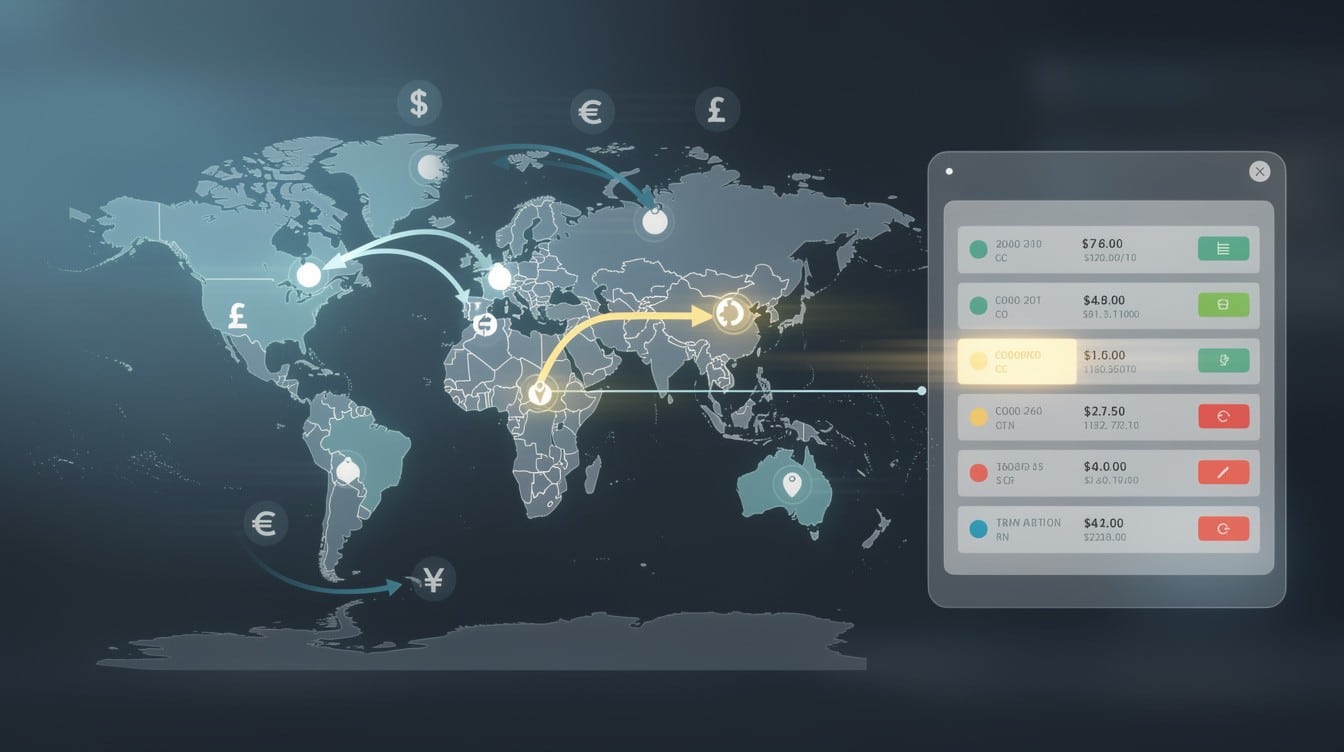
To understand ZARU: bridging global payments in practice, consider how an enterprise might move value across borders using our stack. A user can begin with USDC in any supported wallet or exchange, use a centralized or decentralized exchange to swap into ZARU, and then send ZARU as a payment across the BASE network using our gasless wallet. The complexity of gas fees and network management is abstracted away for the end user.
Even more realistically, we see a scenario where a US-based business on-ramps into USDC, sends USDC over a network like BASE, and then an African counterparty converts into ZARU if they want to remain on-chain while staying closer to their regional currency exposure. This is precisely the sort of flow we built our Salesforce integration for, similar in concept to the cross-border vendor experiences we discuss in B2B Crypto Payments: Enabling Faster Vendor Transactions and the governance approaches outlined in Establishing Stablecoin Payments Governance Across FinOps.
Liquidation Wallets: Automatic Off-Ramps to Bank Accounts
One of the persistent blockers to ZARU: bridging global commerce from blockchain into traditional finance is getting funds into bank accounts quickly and reliably. Our liquidation wallet feature directly addresses this challenge by automatically off-ramping crypto into fiat and depositing it into a designated bank account. At present, these liquidation wallets are supported in the US, Europe, Mexico and Brazil.
In practice, this means a business can collect crypto payments and simply receive fiat into its bank account, without having to run a trading desk or manage manual conversion workflows. We are extending this capability and, with our upcoming Valor integration, will have a solution for Africa as well. This complements the local rail and conversion strategies we have explored in depth in How to Receive US ACH Payments in Mexico: Rails, Conversion, and Compliance, and it provides a clear path to bring ZARU-denominated flows into conventional financial operations.
Virtual On-Ramps: Making US-to-Africa Payments Feel Domestic
Most American companies are familiar with domestic payments like ACH and wires, but far fewer are comfortable initiating international bank transfers. That is a problem when a US company wants to pay a South African partner, contractor, or vendor. ZARU: bridging global expectations for a “local” payment experience is where our virtual on-ramp model becomes powerful.
With a virtual on-ramp, an overseas company gets an ACH or wire transfer account that is treated as part of its own holdings. The US payer simply sends an ACH or wire to that account as if they were paying any other domestic counterparty. From there, the funds are credited into the overseas company’s crypto wallet, typically as USDC on a network like BASE. From this position, a South African company can use their Valor account to swap into ZARU or move into fiat. We are preparing a demo to showcase these flows, which mirror automation patterns we have described in Salesforce Payments API Integration: Connect Crypto Payments to Your CRM and How Stablecoins for Ecommerce Are Redefining Global Transactions.
Use Cases: Contractors, Clients, and Global Commerce
When you combine liquidation wallets and virtual on-ramps, ZARU: bridging global relationships becomes more than a technical story; it becomes a practical business solution. A US company can pay a South African company using familiar ACH rails, the funds are converted into USDC, sent over BASE, and arrive at the South African firm’s Valor account. From there, the recipient can opt to swap to ZARU or cash out to local fiat, depending on business needs.
This pattern scales across different relationships: contractors, B2B suppliers, and end-clients. For example, a global services firm can centralize its receivables and payables inside Salesforce while using Web3 Enabler’s tooling to orchestrate the underlying blockchain movements. These scenarios build on the same architecture that powers our work on How to Implement Enterprise Blockchain Solutions and the asset-centric operations in Tokenization in Financial Services Cloud: Asset Tokenization and Custody Workflows.
Salesforce Integration: Operationalizing ZARU Inside CRM Workflows
Because we are a Salesforce ISV partner, we design everything to feel native inside Salesforce clouds. ZARU: bridging global deals means more when sales, finance, and service teams can see and act on payments without leaving their core system of record. Our asset tokens list, CoinGecko pricing feeds, and blockchain payment flows are modeled directly in Salesforce data structures.
This enables unified customer visibility: sales teams can see which counterparties prefer ZARU, USDC, or other stablecoins, and service teams can monitor payment status and wallets. We complement this with tooling such as Sales Cloud Data Integration for Unified Customer Insights and Real-Time Wallet Visibility in Service Cloud: Arming Agents with Live Crypto Balances, which together ensure that blockchain data appears where your teams already work.
Risk, Compliance, and KYC Considerations
No discussion of ZARU: bridging global adoption would be complete without acknowledging compliance and KYC. Our tools are built with enterprise requirements in mind, including KYC and regulatory expectations that apply to cross-border and crypto-enabled flows. While the transcript focuses primarily on product and payment flows, it is important to understand that these operations sit within broader governance and risk frameworks.
We have previously detailed how to design compliant architectures in Salesforce-centric environments in resources like KYC Compliant Salesforce Blockchain: A Practical Compliance Blueprint and Cryptocurrency Onboarding KYC: Faster Verifications With Confidence. These best practices carry forward as organizations begin to consider exposure to new assets like ZARU for African operations.
Our Reg CF Crowdfunding: How to Invest in Web3 Enabler
As we execute on ZARU: bridging global strategies and expand into the African market, we are also opening our own growth to public participation. In the United States, we are registered with the SEC to raise capital under Reg CF, a crowdfunding exemption that allows non-accredited investors to participate subject to defined limits. This structure lets us raise limited amounts of capital without going fully public, while still adhering to certain reporting obligations.
If you are interested in investing, you can visit republic.com to find our offering. From our campaign page, you can review details about the raise, our financials, and our roadmap, then place an investment. The minimum investment is $400, and we are targeting an initial milestone of $50,000. The discussion section on the republic.com page is the best place to ask questions specifically about the raise, our SEC filings, and other offering documents.
Getting Started: Pilots, Use Cases, and Next Steps
If ZARU: bridging global payment rails into your Salesforce environment aligns with your strategy, we invite you to speak with us about a pilot. For organizations already running Salesforce, we can collaborate to define a use case, configure blockchain payments, set up asset tokens like ZARU and USDC, and prove out end-to-end flows from ACH on-ramp through to on-chain settlement and off-ramp into banks.
From there, you can expand into adjacent capabilities such as Stablecoins in Salesforce Service Cloud: Streamlining Claims, Payouts, and Support, marketing-driven token campaigns with Stablecoins in Salesforce Marketing Cloud: Tokenized Promotions and Loyalty, or incentive and commission models using Digital Assets in Sales Cloud: Token-Based Contracts and Commissions. Across all of these, our focus remains the same: making blockchain mainstream and enabling your company to accept, track, and manage crypto payments as seamlessly as any other payment method.
Looking Ahead: ZARU and the Future of Global Payments
ZARU: bridging global participation in African markets is one part of a broader shift: stablecoins are evolving from speculative tools into core payment infrastructure for enterprises. By integrating ZARU alongside established assets like USDC, connecting them to networks such as Solana and BASE, and embedding the entire experience inside Salesforce, we are helping businesses move from experimentation to production.
We are excited to share more demonstrations of virtual on-ramps, liquidation wallets, and ZARU-enabled cross-border flows in the coming days. In the meantime, you can explore how these ideas connect to our broader work in How to Drive Enterprise Blockchain Adoption Successfully and discover new engagement models using NFTs in Experience Cloud: Community Ownership, Access and Rewarding Engagement. As these capabilities mature, our goal remains clear: to enable your company to accept and manage blockchain payments, including ZARU, as naturally as any other part of your financial stack.