


Your business is expanding globally, but your payment infrastructure isn’t keeping pace. Traditional cross-border methods drain your margins with high fees and settlement delays that frustrate customers.
At Web3 Enabler, we’ve seen firsthand how blockchain-powered payments transform global operations. When you integrate stablecoin transactions directly into Salesforce, you eliminate intermediaries and settle payments in minutes instead of days.
The Real Cost of Waiting for Traditional Cross-Border Payments
Why Your Friday Wire Transfer Costs More Than You Think
Your finance team processes a $500,000 wire transfer to a supplier in Southeast Asia on Friday afternoon. The bank quotes 3–5 business days for settlement. Meanwhile, your supplier waits for funds before shipping inventory, your cash flow sits frozen, and you’ve paid $3,500 to $35,000 in fees across the transaction chain. This scenario repeats thousands of times daily across enterprises globally, and it costs businesses far more than most executives realize.
The Infrastructure Problem That Hasn’t Changed
According to Fortune Business Insights, the payment gateway market will reach USD 90.28 billion by 2034, yet the infrastructure moving that money hasn’t fundamentally changed in decades. Traditional banking rails still depend on correspondent banks, clearing houses, and intermediaries that add cost, delay, and opacity at every step. You’re competing against companies that have already moved faster.
Speed Transforms Your Operations
When stablecoin transactions settle in 10 seconds to 5 minutes and run 24/7 without weekend or holiday delays, the business impact compounds quickly. A supplier receives payment instantly and fulfills orders same-day instead of waiting until Tuesday. A global team reconciles regional transactions in real-time instead of closing books days after month-end. Your customers now expect transparency-they want to see exactly when their payment clears, not receive vague ETAs from banking intermediaries. Traditional methods can’t deliver this.
The Fee Structure Makes the Case Compelling
Standard cross-border transfers cost 2% to 7% depending on corridors and bank relationships, while blockchain-based transfers show network fees under $1 plus roughly 0.3% to 0.6% in processor fees.
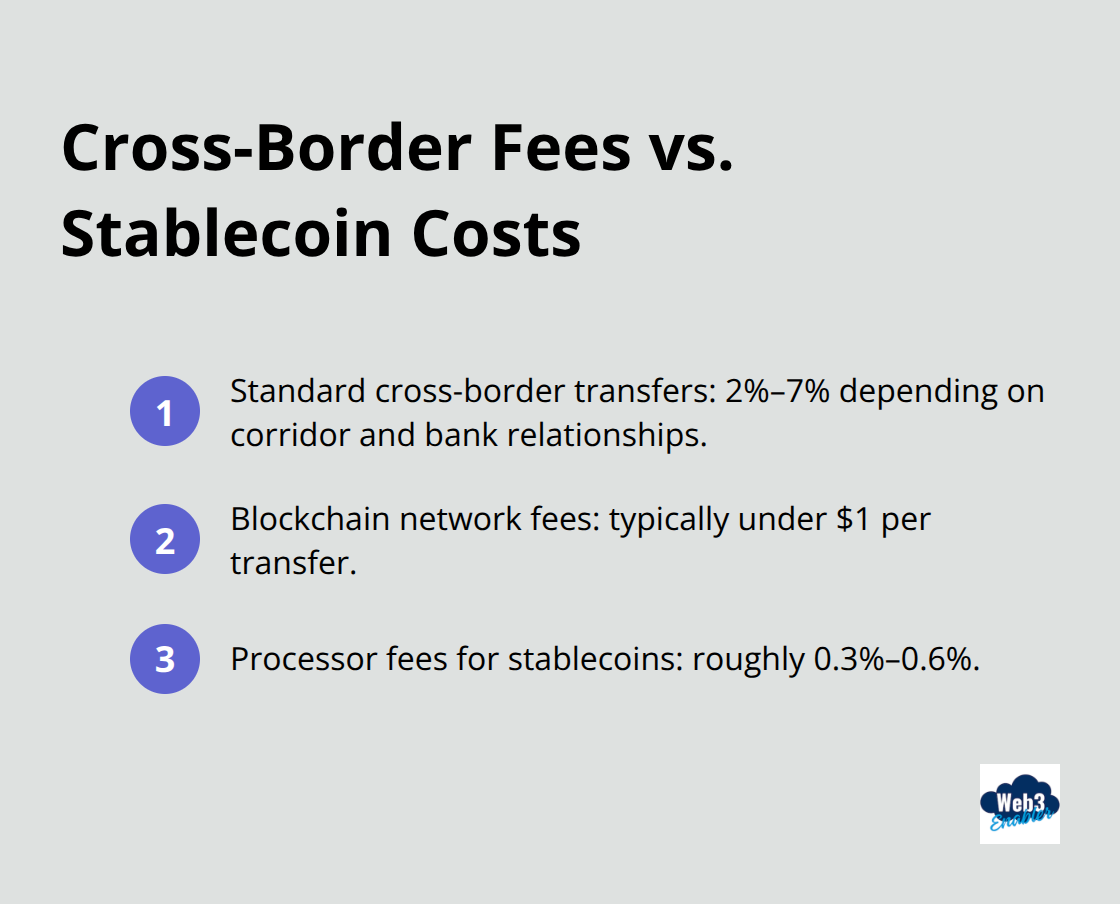
For a $1 million monthly volume across multiple regions, that’s a potential $15,000 to $70,000 in annual savings. But the real advantage isn’t just cost-it’s velocity. When payments settle in minutes instead of days, you eliminate cash flow gaps, reduce working capital needs, and free up finance teams to focus on strategy instead of chasing wire status updates.
What Happens When You Integrate Blockchain Into Salesforce
Enterprises handling significant cross-border volume can’t afford to ignore this shift anymore. The question isn’t whether blockchain payments work-it’s how to integrate them into the systems your teams already use daily. Web3 Enabler brings stablecoin transactions directly into Salesforce, so your finance and operations teams accept and send payments without leaving the CRM. This integration transforms how you manage global settlements and liquidity visibility.
How Stablecoin Settlements Work in Minutes
Stablecoin payments can be settled within minutes and operate 24/7 without interruption from weekends or holidays. This isn’t a marginal improvement over traditional banking-it’s a fundamental shift in how global capital moves. When a $2 million payment to a manufacturing partner in Vietnam clears in 4 minutes instead of waiting until Tuesday for correspondent banks to process it, your operations team confirms shipment same-day and adjusts inventory forecasts in real-time. The operational ripple effects compound across finance, supply chain, and customer success teams.
Eliminate Working Capital Gaps and Gain Instant Visibility
Your finance team no longer maintains buffer balances to cover payment delays, which reduces idle working capital significantly. Your treasury function gains actual visibility into when funds arrive rather than relying on estimated settlement windows. Salesforce becomes the single source of truth for payment status, reconciliation, and cash position across all regions, eliminating the manual spreadsheet reconciliation that currently consumes hours each month.
Real-Time Reconciliation Cuts Month-End Close Time
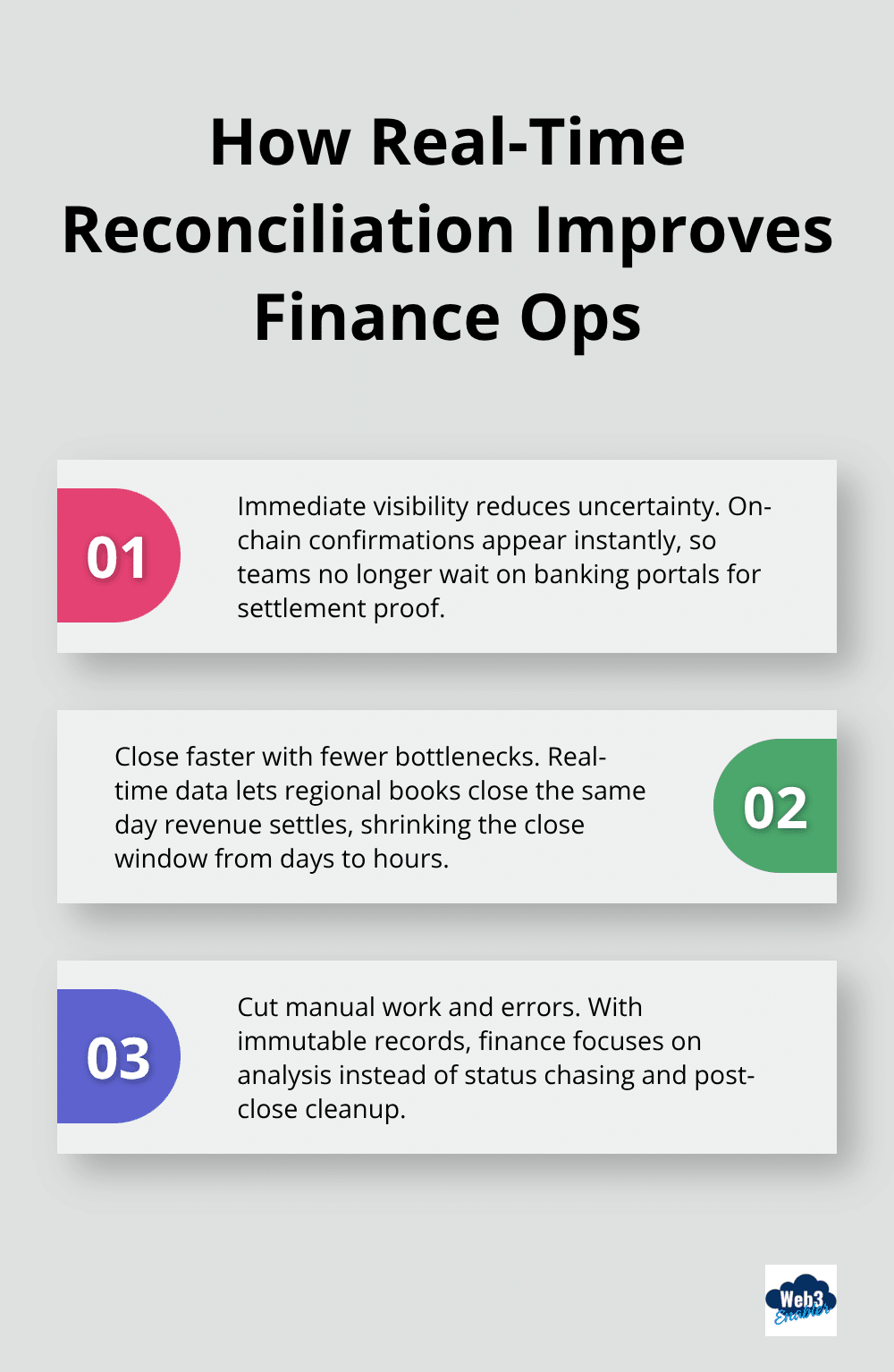
Traditional cross-border payments force your accounting team to wait days after transactions appear in bank portals before confirming settlement. With blockchain-based stablecoin transfers, transactions become immediately visible and immutable on-chain. Your revenue and finance teams can reconcile transactions in real-time rather than performing post-close catch-up work. A global SaaS company processing recurring invoices across 12 time zones can now close regional books the same day invoices settle instead of waiting for banking confirmations three days later. This acceleration reduces your month-end close window from five business days to two, freeing accounting resources for strategic analysis instead of transaction chasing.
Consolidate Payment Systems Into One Platform
Finance teams currently juggle multiple systems: Salesforce for customer and transaction records, separate banking portals for payment status, accounting software for reconciliation, and treasury dashboards for liquidity tracking. Bringing blockchain payments directly into Salesforce eliminates this fragmentation, so your teams accept and send stablecoin transactions without context-switching. Your operations team sets up automated settlement rules once in Salesforce, and payments route to the correct suppliers or customer wallets according to predefined logic. Your compliance team maintains full auditability within native Salesforce objects, triggering alerts for transactions exceeding thresholds or hitting restricted geographies. Your revenue team automates on-chain revenue recognition tied to actual settlement confirmation rather than estimated delivery dates.
Unlock Compliance and Auditability Within Your CRM
This integration removes the coordination friction that currently requires your finance and operations teams to manually validate payments across disconnected platforms. When you consolidate payments into Salesforce, your compliance workflows gain complete visibility into transaction flows, settlement confirmations, and fund movements-all within a single auditable environment. Your teams no longer chase payment confirmations across email, banking portals, and spreadsheets. Instead, they work with immutable on-chain records that Salesforce surfaces directly in your workflows, reducing operational risk and accelerating your ability to respond to regulatory inquiries or internal audits.
Bringing Blockchain Payments Into Your Salesforce Workflow
Your finance team currently manages payments across three separate systems: Salesforce holds customer and transaction records, your banking portal tracks payment status, and accounting software handles reconciliation. This fragmentation creates delays, manual errors, and compliance blind spots that cost your organization time and money. Web3 Enabler integrates stablecoin payments directly into Salesforce, so your teams accept and send payments without context-switching between platforms. When a customer in Singapore initiates a purchase through Commerce Cloud, the payment settles on-chain in minutes, and your revenue recognition logic automatically triggers in Salesforce the moment funds confirm. Your finance team no longer waits for banking confirmations three days later-they close regional books the same day transactions settle.
Consolidate Payment Systems Into One Auditable Environment
This integration consolidates payment systems into one auditable environment where compliance workflows gain complete visibility into transaction flows, settlement confirmations, and fund movements, all within native Salesforce objects. Your teams no longer chase payment confirmations across email, banking portals, and spreadsheets. Instead, they work with immutable on-chain records that Salesforce surfaces directly in your workflows, reducing operational risk and accelerating your ability to respond to regulatory inquiries or internal audits.
Automate Settlement Rules Across Global Vendors
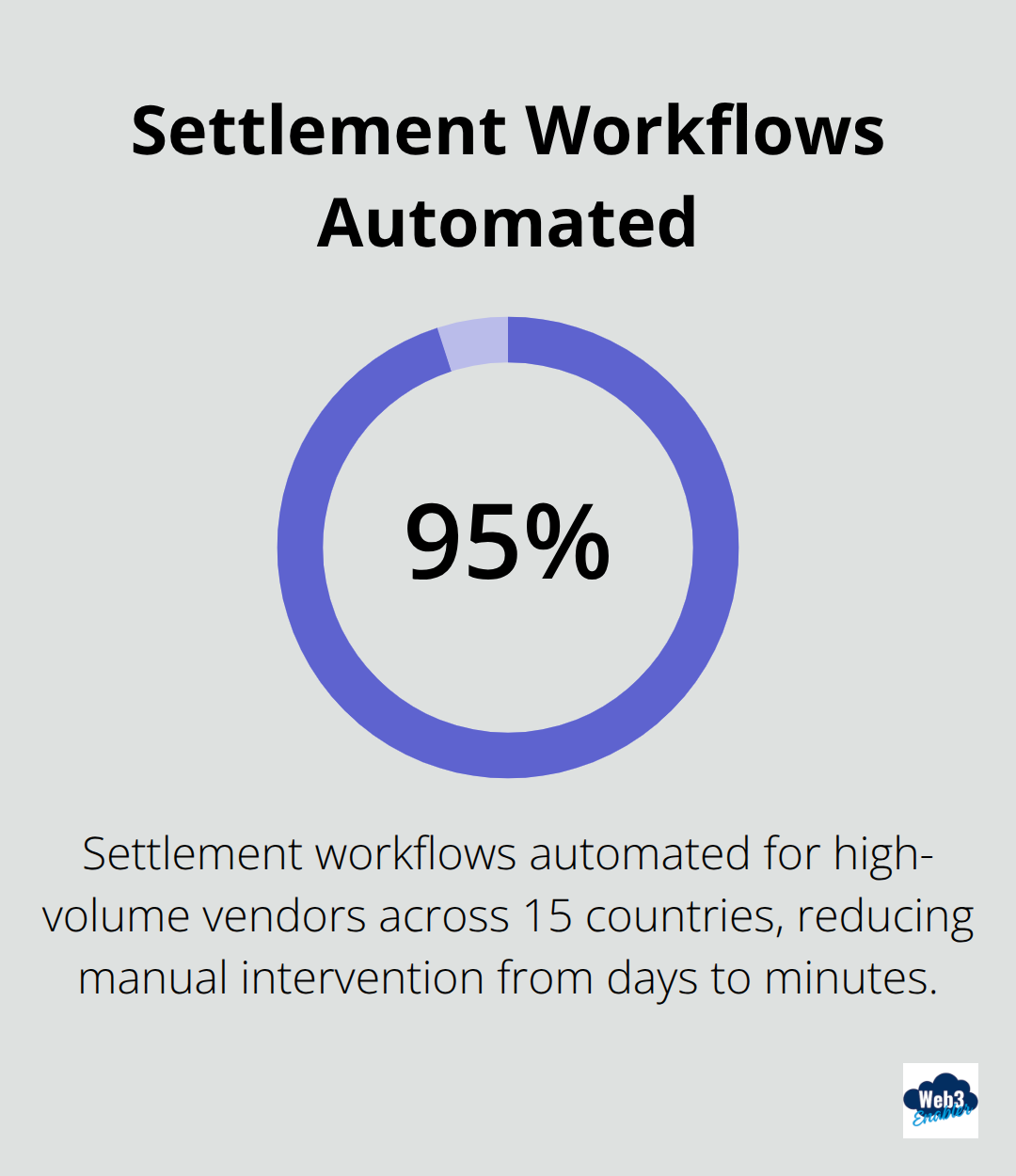
Settlement automation transforms how your organization manages global liquidity. Instead of manually routing payments to suppliers based on email requests or spreadsheet tracking, you define settlement rules once in Salesforce and payments route automatically to the correct wallets according to predefined logic tied to invoice amounts, vendor location, or approval thresholds. A manufacturing company processing payouts to 200 vendors across 15 countries can now automate 95 percent of settlement workflows, reducing manual intervention from days to minutes.
Gain Real-Time Visibility Into Cash Positions
Your treasury function gains real-time visibility into cash positions across all regions-not estimated positions based on banking delays, but actual on-chain confirmations that Salesforce surfaces in your dashboards and reports. When you combine this with Financial Services Cloud, advisors access real-time insights into client wallet balances and stablecoin positions, enabling them to deliver more informed guidance on international investments or cross-border fund movements (without the delays that traditional banking systems impose).
Accelerate Month-End Close and Reduce Working Capital Needs
The operational impact compounds quickly: your accounting team reduces month-end close time by three days, your operations team eliminates working capital buffer balances that previously sat idle, and your compliance team maintains full auditability of every transaction without chasing confirmations across disconnected platforms. Your revenue team automates on-chain revenue recognition tied to actual settlement confirmation rather than estimated delivery dates, freeing accounting resources for strategic analysis instead of transaction chasing.
Final Thoughts
The shift toward faster, cheaper cross-border payments has already arrived. Traditional banking infrastructure that once dominated global transactions now competes against blockchain-based alternatives that settle in minutes, operate around the clock, and cost a fraction of what wire transfers demand. Organizations that continue relying solely on legacy methods will find themselves at a competitive disadvantage as customers and partners expect instant, transparent transactions.
The real opportunity lies in integrating these capabilities directly into the systems your teams already use. Cross-border payments in Salesforce eliminate the fragmentation that currently forces your finance, operations, and compliance teams to juggle multiple platforms. When stablecoin transactions settle on-chain and surface immediately in your CRM, your organization gains genuine visibility into global cash positions, accelerates month-end close cycles, and reduces working capital tied up in payment delays.
We at Web3 Enabler have built the only native blockchain platform available on the Salesforce AppExchange, bringing stablecoin payments directly into Financial Services Cloud, Commerce Cloud, and Revenue Cloud. Your teams can accept and send payments, automate settlement rules, and maintain complete auditability without leaving Salesforce-and Web3 Enabler makes this transition straightforward for organizations ready to capture the operational and financial benefits that faster settlements deliver.