
Web3 Enabler: Blockchain Apps for Salesforce Enterprises
At Web3 Enabler, we are a Salesforce ISV focused on bringing blockchain and stablecoin capabilities directly into the Salesforce ecosystem. When we talk about “web3 enabler: blockchain apps,” we mean Salesforce-native, blockchain-native apps built to meet enterprise standards and clear Salesforce’s rigorous AppExchange security review. Our mission is to make stablecoin payments, crypto treasury, and digital asset visibility first-class citizens inside Salesforce.
In this post, we share how our CEO Alex Hochberger positions Web3 Enabler within the Salesforce AppExchange, walk through our product suite, and explain why we are raising a Reg CF round to accelerate expansion, particularly across Africa–UK and Africa–EU payment corridors.
Why Salesforce Is the Ideal Platform for Enterprise Blockchain
Salesforce is the largest CRM company in the world, with 150,000 corporate customers and usage across 91% of the Fortune 500. Unlike simple CRM tools, Salesforce is a full business automation platform. It typically enters an organization by powering Sales Cloud or Service Cloud and then expands into invoicing, e?commerce, and industry-specific workflows across the business.
Salesforce customers rely heavily on the AppExchange: 90% of those 150,000 companies—about 135,000 firms—use at least one AppExchange app. In that $150 billion annual marketplace, ISVs like us provide specialized solutions that Salesforce does not ship out of the box. This is exactly where a focused “web3 enabler: blockchain” provider can unlock measurable value for enterprises looking to integrate stablecoins and digital assets into their existing Salesforce processes.
The AppExchange Gap: Native Blockchain for Salesforce
While there are a handful of Web3 or blockchain-related tools in the AppExchange, Web3 Enabler is unique in being both Salesforce native and blockchain native. Other listings are generally one-off connectors. Our applications are architected from the ground up to run inside Salesforce and speak directly to on-chain assets, stablecoins, and crypto wallets.
The enterprise has not yet broadly adopted blockchain or Web3, but as Alex Hochberger explains, when it does, the AppExchange will be the route to market—and we intend to dominate that space. Our current listings and security-cleared apps form an integrated platform for payments, invoicing, and digital asset visibility, building on core Salesforce capabilities and complementary solutions like Crypto Payments Automation Tools That Cut Costs and Speed Settlements and Stablecoin Integration Salesforce: Seamless Blockchain on Your CRM.
Blockchain Payments: Treasury, Vendors, and Cross-Border Flows
Our flagship product, blockchain payments, turns Salesforce into a treasury-grade environment for stablecoin and crypto transactions. It allows you to operate a Salesforce-native wallet, connect external wallets, tie in exchange accounts, and orchestrate payments to vendors, contractors, and customers—all from within Salesforce.
For many enterprises, the use cases are simple but high impact: “I want to get paid overseas and have funds land directly in my bank account,” or “I need to pay a handful of overseas contractors in stablecoins.” Blockchain payments addresses these needs and dovetails with broader workflows such as those we outline in USDC Payments Process: A Complete End-To-End Workflow and Crypto Based International Transfers: Lower Costs, Faster Settlements.
Liquidation Wallets and Gasless Wallets
For organizations that want crypto exposure to disappear at the edge, blockchain payments supports a liquidation wallet that connects straight to your bank account. You can receive stablecoins, have them automatically converted, and see fiat arrive in your bank with no manual intervention required. This is especially powerful for international receivables where traditional rails are slow and expensive.
When you want to pay contractors or vendors abroad, we connect your native wallet, powered by Circle, and link your ACH or wire rails so you can move fiat in and out easily. Payments are then sent with gasless wallets on networks like Solana or Base, insulating your business users from the complexity of on-chain fees while still benefiting from speed and cost efficiency. For finance and operations teams, these flows can be complemented with reporting capabilities similar to those we describe in USDC Payments Reporting Salesforce: Transparent Crypto Revenue Metrics and Salesforce Payments Integration: Enabling Seamless Cross-Channel Payments.
Blockchain Payments for Sales Cloud and the Core CRM Stack
Most Salesforce customers run either Sales Cloud or Service Cloud as their primary entry point. To align with this reality, we provide blockchain payments for Sales Cloud, a free add-on that extends blockchain payments into the sales organization’s day-to-day workflows.
This add-on connects directly to Sales Cloud objects so sales reps can quote, close, and collect using stablecoins without leaving Salesforce. At the same time, customers running just the Salesforce platform without Sales Cloud or Service Cloud can still deploy the base blockchain payments product. The result is a unified “web3 enabler: blockchain” capability that works across the most common Salesforce deployments, including invoicing flows like those we cover in Stablecoin Invoicing Salesforce: Automate Crypto Billing Across The Org and Crypto Enabled Invoicing Salesforce: Invoicing Reimagined Inside CRM.
Extending to Commerce Cloud and Revenue Cloud
We have completed security review for two additional add-ons: blockchain payments for Commerce Cloud and blockchain payments for Revenue Cloud. These extensions allow us to plug stablecoin payments into two critical revenue-generating areas: B2B and D2C e?commerce, and automated invoicing and billing.
With Commerce Cloud, our focus is on B2B and D2C e?commerce, especially international settlement. If you use Commerce Cloud to handle overseas customers, they can now place orders and pay via stablecoins while Salesforce ties everything out in one system of record. On the Revenue Cloud side, invoices can automatically generate Web3 payment links or requests, accept stablecoins, and mark the invoice as paid once funds land—closing the loop with the same discipline we outline in Stablecoin Invoicing Salesforce: Automate Billing With Digital Assets and Revenue Recognition Blockchain Integration: Automating On-Chain Revenue in Revenue Cloud.
Automated Invoicing and Settlement Logic
Blockchain payments for Revenue Cloud connects directly into the invoicing objects your team already uses. You send invoices as usual; customers can then pay in stablecoins, and the system immediately credits the payment and applies it following your normal business practices.
This approach means no extra per-cloud fees to make the integration work. Instead, we map into the cloud-specific objects and ensure that no matter which combination of Sales Cloud, Service Cloud, Revenue Cloud, or Commerce Cloud you are running, blockchain payments installs cleanly. It also fits into a broader strategy of bridging fiat and crypto balances, as we discuss in Fiat Stablecoins Salesforce: Bridging Fiat and Crypto for Your ERP and Payments API Salesforce: Seamless Connectivity to Crypto Rails.
Digital Asset Wallet for FSC: Crypto Visibility for Wealth and Banking
Beyond payments, our Digital Asset Wallet applications for FSC or Financial Service Cloud focus on visibility—specifically, giving wealth managers and private bankers a clear view of held-away crypto assets. Financial Service Cloud serves wealth management, banks, and insurance providers, and is rapidly expanding within banking and insurance segments.
Know Your Customer procedures increasingly require a full understanding of clients’ external holdings, yet most institutions have no robust tooling for crypto. Digital Asset Wallet fills this gap and brings structured crypto data into Salesforce. For a deeper dive on how this works in practice, see Crypto Holdings in Salesforce: Visualizing Treasury Crypto Across Your Apps, Crypto Visibility Salesforce: A Clear View of Client Crypto Holdings, and our overview video Digital Asset Wallet: Transforming Wealth Management.
Supporting Both Managed Package and Standard Object FSC
Salesforce has evolved Financial Service Cloud over time. Earlier deployments used a managed package (installed like an app), while newer deployments use standard objects that behave like the rest of the Salesforce platform. Because a large portion of the existing FSC install base remains on the managed package, we support both the STD and PKG variants of Digital Asset Wallet.
Functionally, these versions do the same thing: they ingest crypto holdings data so wealth managers and financial institutions can see a full client balance sheet, including digital assets. Under the hood, after we build functionality, we switch tracks on GitHub and relink to the appropriate FSC architecture. This dual-path design is part of how we keep “web3 enabler: blockchain” tooling aligned with the real-world heterogeneity of enterprise Salesforce deployments, and connects naturally to governance and KYC concerns addressed in Ensuring KYC Compliant Salesforce Blockchain Across Your Crypto Workflows and Salesforce blockchain governance in Practice: Aligning Policy and Payments.
Open Source Wallets: Cardano and XRP for Salesforce
Two additional apps in our portfolio—Cardano for Salesforce (the Ada Wallet) and XRP for Salesforce—are fully open source and community-sponsored. They not only bring Cardano and XRP functionality natively into Salesforce; they also serve as living proof that our stack repeatedly clears AppExchange security review.
The Cardano and Ada Wallet work was funded via Project Catalyst, while XRP for Salesforce is sponsored by the XRP Ledger Foundation. Both can be installed via GitHub or directly from the AppExchange. They give teams a way to experiment with blockchain in Salesforce using free tools, and they augment the broader “web3 enabler: blockchain” ecosystem that includes enterprise-ready payments and digital asset visibility solutions.
Why We Are Focused on Africa–UK and Africa–EU Corridors
We are seeing strong interest from the private sector, large public companies, and even governments as they start to embrace stablecoins or CBDCs, depending on the jurisdiction. One of the most pressing real-world problems where our Salesforce-native blockchain tools help today is cross-border payments to and from Africa.
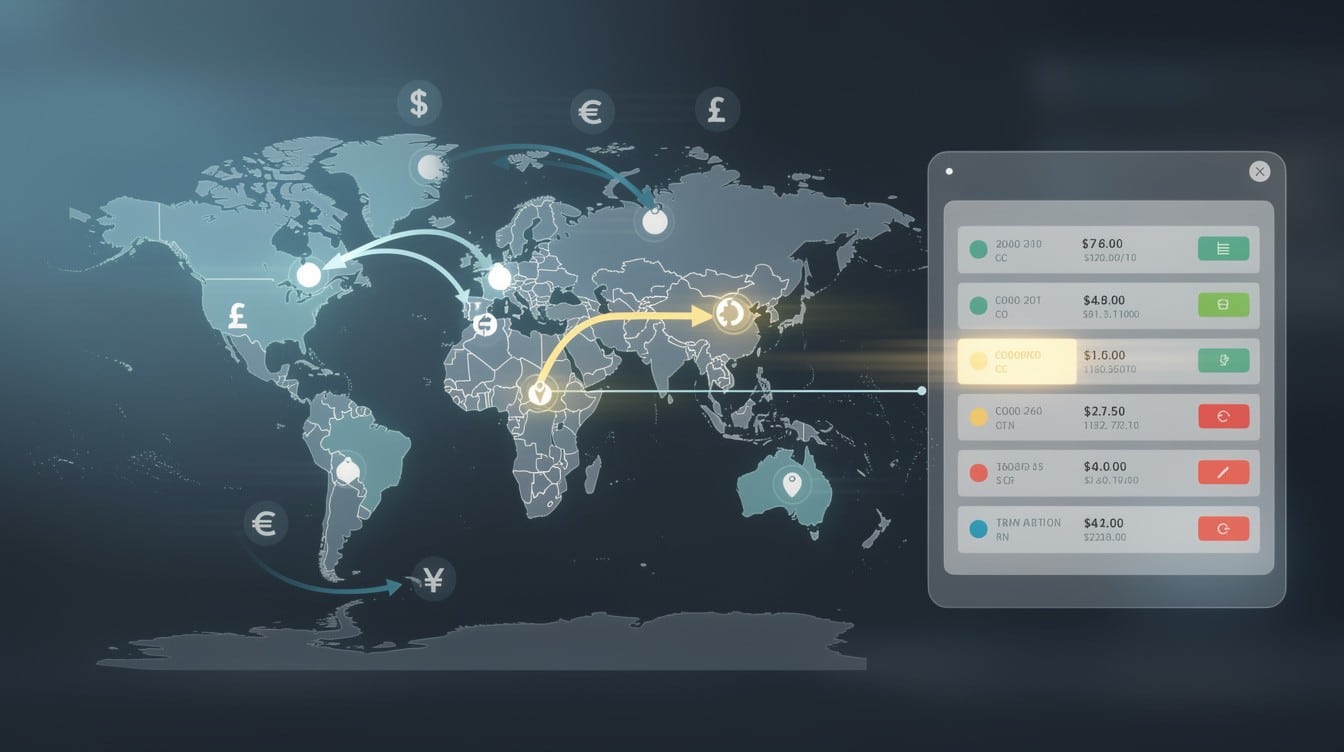
Right now, sending money between Africa and the UK or Africa and the EU often comes with banking fees of 8–10% and settlement times of three to five days. Historically, funds could even “disappear into the ether” for a week before arriving. These pain points create an ideal environment for stablecoin-based settlement atop Salesforce workflows, and they align closely with use cases such as those described in USDC Remittance Salesforce: Faster Cross-Border Settlements and How to Accept SEPA Payments in Brazil: A Practical Guide.
Beachheads in Anglophone and Francophone Africa
Our immediate go-to-market focus is on Africa–UK and Africa–French payment corridors, working across both Anglophone and Francophone Africa. These regions may not match the raw market size of the US or EU, but they present a clear and urgent need for faster, cheaper, more transparent settlement.
By embedding stablecoin and blockchain rails directly into Salesforce via our “web3 enabler: blockchain” stack, companies in these regions can see funds in motion, reduce fees, and shorten settlement times while keeping all customer, payment, and invoicing data inside their existing CRM and ERP workflows.
Our Reg CF Raise: Fueling Market Expansion
To capitalize on this opportunity and scale our presence, especially across Africa-focused Salesforce events and on-the-ground engagement, we are conducting a Reg CF raise approved by the SEC. This allows us to raise capital from the general public, not just institutional investors or accredited participants.
The initial goal is $50,000, which will fund the next few conferences and travel required to deepen our Africa initiatives. If we meet that target, we plan to extend the raise to a few hundred thousand dollars and broaden participation, potentially at a higher valuation. For more details or to participate, you can visit our offering page via Web3 Enabler: Join Our Fundraiser Now, and then proceed to the investment portal at republic.com as described by Alex Hochberger.
How to Participate via republic.com
Our Reg CF offering is hosted on republic.com, where investors can participate with as little as $400. This vehicle is specifically designed for compliant crowdfunding, aligning with SEC rules for Reg CF raises while giving a broad community of believers in the stablecoin future a way to back our growth.
If you believe that stablecoins, cross-border blockchain payments, and digital asset visibility will become part of enterprise infrastructure—and that Salesforce will remain the operating backbone of that infrastructure—then our “web3 enabler: blockchain” portfolio is built for that future. We are on the ground at events such as ETH Denver and Salesforce gatherings to tell this story and bring more enterprises into the ecosystem.
The Road Ahead for Web3 Enabler: Blockchain in Salesforce
From blockchain payments and stablecoin invoicing to Digital Asset Wallet in Financial Service Cloud and open source wallets for Cardano and XRP, we are committed to making Salesforce the most capable enterprise platform for blockchain-enabled operations. Our focus is always on native, secure, and workflow-aligned integrations that feel like a natural extension of your existing CRM, not a bolt-on experiment.
As adoption accelerates, we expect more organizations to standardize on Salesforce for governance, KYC, invoicing, and reporting around digital assets—pulling together themes across our resources like Ensuring KYC Compliant Salesforce Blockchain Across Your Crypto Workflows and Crypto Holdings in Salesforce: Visualizing Treasury Crypto Across Your Apps. We are building for that landscape today, so that when enterprises are ready, the tools, security clearances, and proven implementations are already in place.