



Your finance team spends hours on invoicing, currency conversions, and payment delays. Stablecoin invoicing in Salesforce changes that by automating crypto billing directly into your existing workflows.
At Web3 Enabler, we’ve seen how this simple shift cuts payment times from days to minutes and slashes transaction costs. No more banking intermediaries, no more FX headaches-just faster cash flow for your business.
Why Stablecoin Invoicing Actually Saves Money
The Real Cost of Moving Money Across Borders
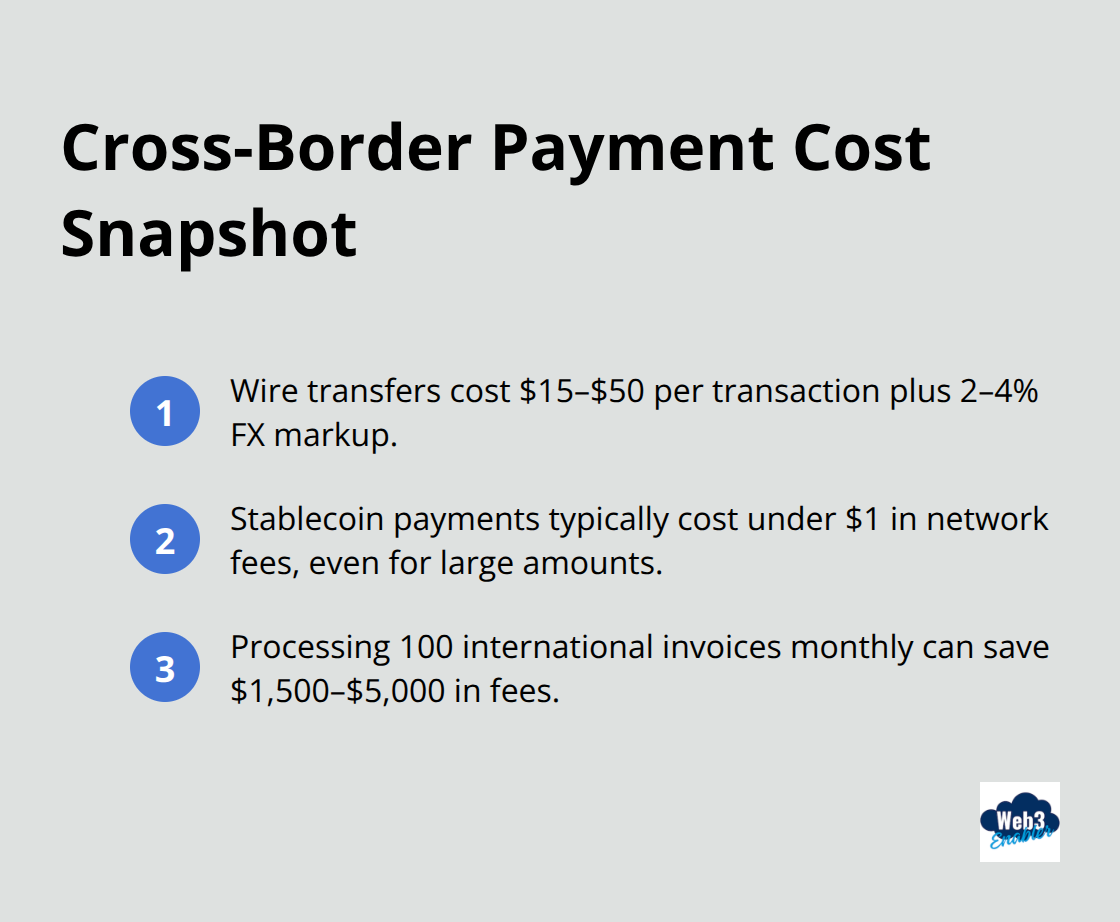
Global wire transfers cost between 15 and 50 dollars per transaction, plus FX markups that typically range from 2 to 4 percent on top of the actual exchange rate. Stablecoin transfers, by contrast, cost pennies. A USDC payment across Ethereum or a Layer 2 network runs you less than a dollar in network fees, even for six-figure amounts. For a company processing 100 international invoices monthly, that’s a difference of 1,500 to 5,000 dollars per month in pure transaction costs.
Wire transfers also take 1 to 3 business days to settle, meaning your cash sits in limbo while banks shuffle money between correspondent accounts. Stablecoins settle in minutes. That faster settlement directly improves your cash conversion cycle, which matters enormously when you manage payroll across multiple countries or wait on supplier payments to fund operations.
Eliminating the FX Conversion Trap
The real operational win comes from removing currency conversion friction. Traditional invoicing in foreign currencies forces your finance team to lock in exchange rates, monitor FX movements, and reconcile the gap between quoted rates and actual settlement rates. With stablecoins pegged to the US dollar, there’s no guessing game. You invoice in USDC or USDT, the customer pays in the same asset, and your accounting system records a clean, verifiable transaction with zero FX slippage.
Stripe and Modern Treasury both support stablecoin settlement directly into your existing payment infrastructure, meaning you can accept crypto invoices while settling into fiat in your bank account if you prefer. This removes the false choice between crypto payments and traditional accounting.
Reaching Markets Traditional Banking Can’t Touch
For organizations with subsidiaries or remote teams in emerging markets, stablecoins bypass capital controls and banking restrictions that make traditional wire transfers impossible. A supplier in a region with limited US banking access receives payment instantly to a digital wallet, then converts locally if needed. Your finance team gets an auditable on-chain record that satisfies compliance requirements without the back-and-forth emails and manual reconciliation that plague traditional cross-border payments.
These operational improvements stack up fast. The next section shows how you actually implement stablecoin invoicing inside Salesforce to capture these gains.
How Stablecoin Invoicing Integrates with Salesforce
Layer Crypto Payments onto Your Existing Workflows
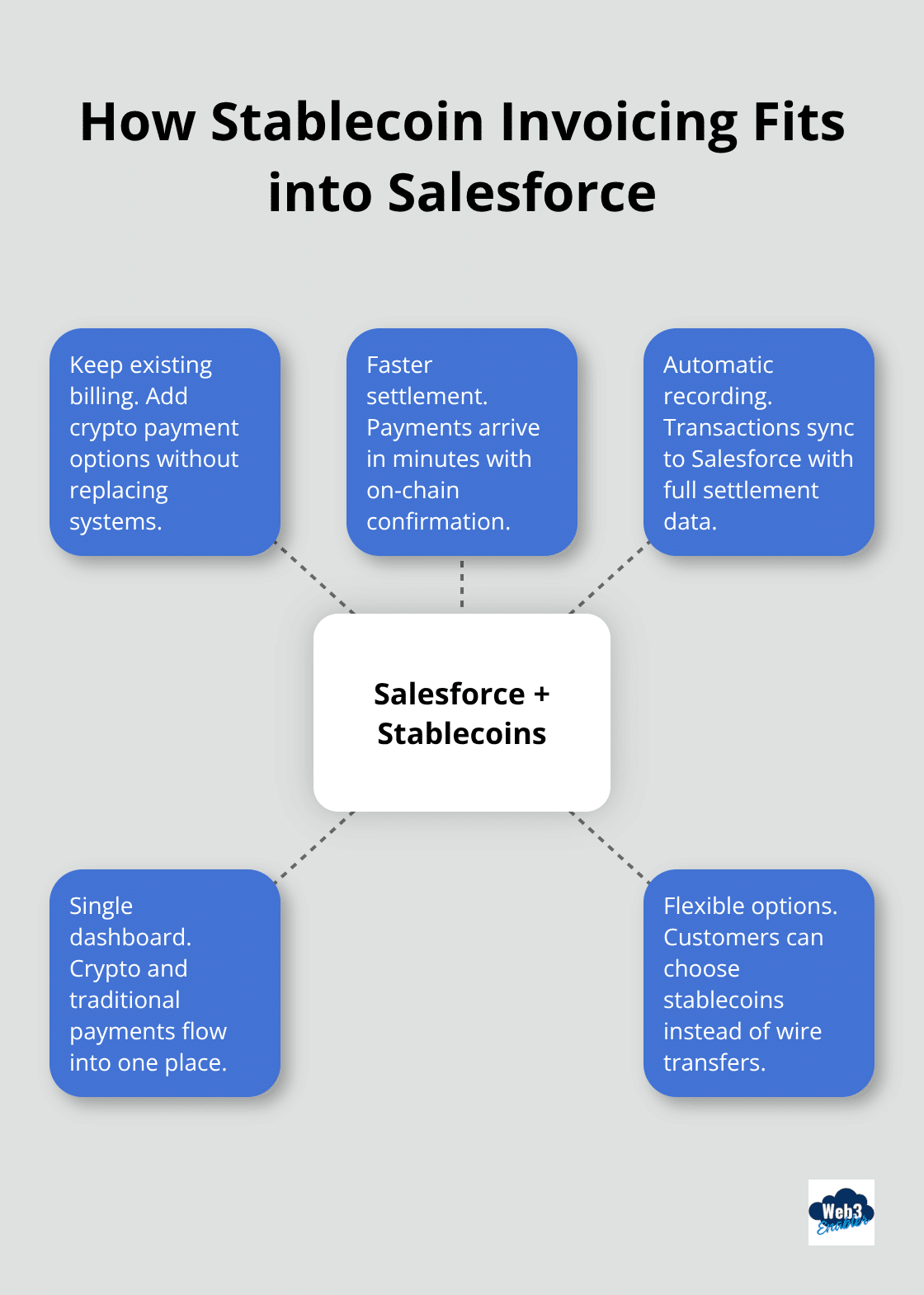
Stablecoin invoicing in Salesforce doesn’t require you to replace your existing billing system. Instead, you add crypto payment capabilities to the invoicing workflows you already use. When a customer receives an invoice through Salesforce Billing, they now have the option to pay in stablecoins instead of waiting for a wire transfer. The payment hits your digital wallet in minutes, and your Salesforce instance automatically records the transaction with full settlement data. Your finance team no longer juggles separate systems for crypto and traditional payments-everything flows into one dashboard.
Gain Real-Time Visibility into Cash Position
The real operational shift happens in real-time visibility and settlement certainty. Traditional invoicing leaves your cash position murky until settlement clears three business days later. With stablecoins, you see the exact moment payment arrives on-chain, which feeds directly into your cash flow forecasts and aging reports. Stablecoin capabilities let you accept crypto while settling fiat if you prefer, eliminating the false choice between blockchain efficiency and traditional accounting.
Automate Reconciliation with Structured Payment Data
When you invoice internationally, structured remittance data travels with each payment-invoice numbers, PO references, everything automatically matches to open items in your system. This eliminates the manual reconciliation work that currently consumes hours of your finance team’s week. Platforms handling stablecoin payments include built-in AML and sanctions checks, so you avoid creating audit nightmares.
Reduce Operational Friction Across Finance Teams
For organizations processing high volumes of cross-border invoices, this automation directly reduces headcount pressure on finance operations and speeds cash conversion cycles that impact working capital. Your team stops chasing payment confirmations and starts focusing on strategy. The next section shows you exactly which real-world scenarios benefit most from this shift.
Real-World Applications and Results
International Companies Cut Administrative Overhead by 70 Percent
International companies with distributed suppliers and remote teams see the biggest operational wins from stablecoin invoicing. A manufacturing firm processes 200 monthly invoices to vendors across Southeast Asia, Eastern Europe, and Latin America and typically spends 8 to 12 hours per week on currency conversions, payment confirmations, and reconciliation work. Stablecoin settlement cuts administrative overhead by improving transaction efficiency. Payments arrive in 10 minutes instead of 72 hours, which means cash flow visibility improves dramatically.
Your finance team stops chasing wire transfer status updates and starts using that freed-up time for actual financial analysis. The compliance angle matters too. Traditional wire transfers generate scattered documentation across multiple banks and intermediaries, making audit trails fragmented and painful to reconstruct. When a business sends stablecoins, the transaction is recorded on a blockchain that satisfies regulatory requirements without extra work.
Compliance Records Become Auditable and Permanent
When your CFO needs proof of payment for a specific invoice, you pull the on-chain transaction hash instead of requesting statements from three different correspondent banks. Organizations using stablecoin settlement through platforms with built-in AML and sanctions screening eliminate the manual compliance review work that traditionally happens after payment arrives. Structured remittance data embedded in stablecoin transactions automatically matches payments to invoices, which means your accounts payable staff no longer reconciles mismatched deposits against outstanding invoices.
For a 50-person finance team at a mid-market company, this automation removes 200 to 300 hours of manual work annually. The operational reality is stark: teams using stablecoin invoicing report faster payment settlement compared to wire transfers, and the cost savings compound quickly when you process volume internationally.
Cash Flow Timing Becomes Your Competitive Advantage
The real competitive edge comes from cash flow timing. A SaaS company billing enterprise customers monthly can now offer stablecoin payment options that settle faster, improving working capital metrics and reducing days sales outstanding. Your finance team gets visibility into actual cash position within minutes rather than waiting for multiple settlement windows.
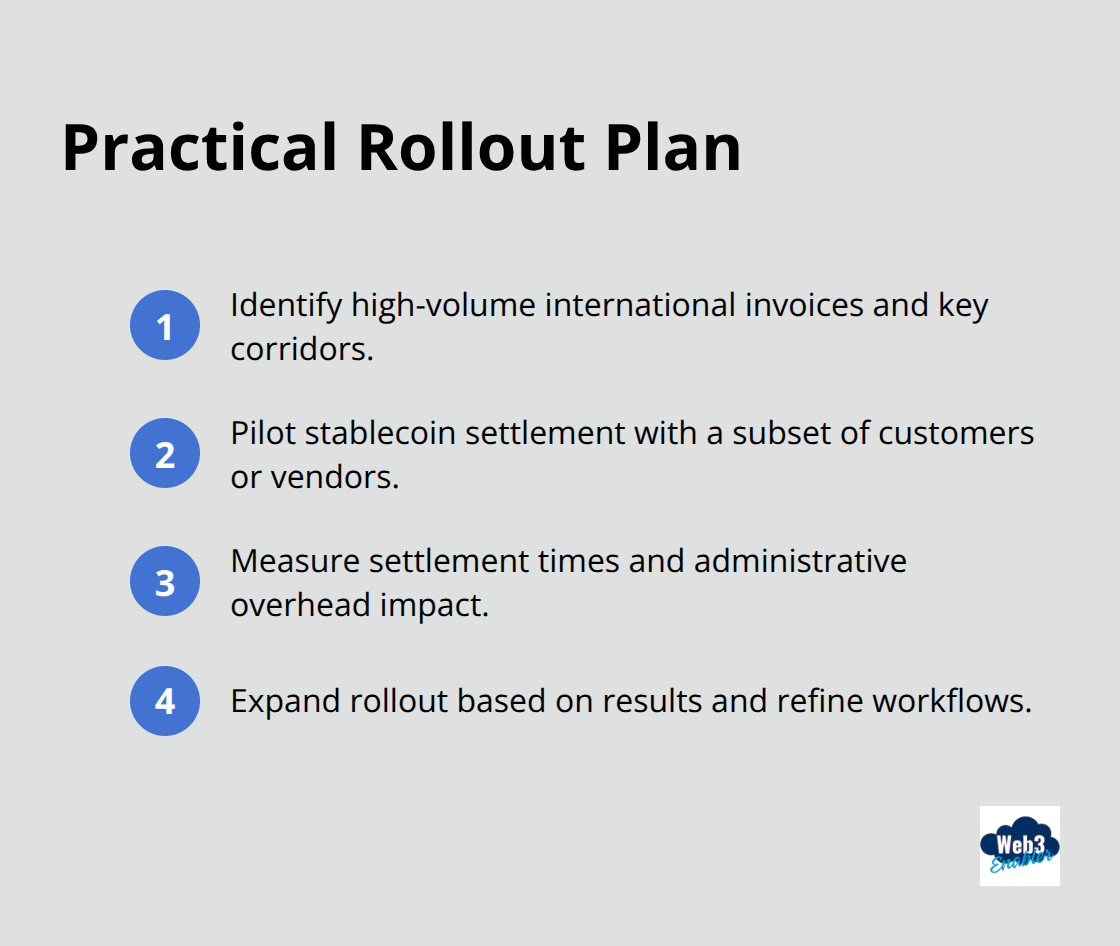
This matters most for businesses managing tight cash flow or those with significant international exposure where traditional banking delays compound across time zones. The practical next step is identifying which invoices and payment corridors benefit most from stablecoin settlement, then piloting with a subset of customers or vendors before rolling out org-wide.
FAQ: Stablecoin Invoicing in Salesforce
How does Salesforce automate reconciliation for stablecoin invoices?
When an invoice is paid via stablecoin, the transaction carries a data payload (like an Invoice ID) on-chain. Salesforce Native tools like Web3 Enabler listen for this specific payload. The moment the payment hits the ledger, Salesforce matches the transaction hash to the unique record, automatically updating the Invoice status to Paid. This eliminates the manual reconciliation that usually happens when finance teams review bank statements.
Do my customers need to hold ETH or SOL to pay their USDC invoices?
In 2026, the answer is usually no. Thanks to widespread Gas Abstraction technology, many modern stablecoin payment gateways allow the customer to pay the network fee using the stablecoin itself. This means if they owe 1,000 USDC, they pay 1,000.05 USDC, and the extra 5 cents covers the gas fee. Your customer does not need to manage multiple tokens just to settle a bill.
How do we handle the property tax status of stablecoins in Salesforce?
While the GENIUS Act (2025) stabilized the regulatory landscape, the IRS still treats stablecoins as property. To stay compliant, Salesforce records the Fair Market Value (FMV) of the stablecoin at the exact second it is received. This value becomes your cost basis. By tracking this natively in Salesforce, your finance team can generate a capital gains/loss report at year-end with one click.
Is stablecoin invoicing compatible with the Salesforce Spring ’26 release?
Absolutely. The Spring ’26 release added native LWC support directly into Dashboards, which is used to provide real-time On-Chain Cash Flow visuals. You can now see your live treasury balances alongside your traditional sales pipeline within a single unified view.
Can we set up automated dunning for late crypto payments?
Yes. Using Salesforce Flow, you can trigger automated reminders if a stablecoin payment has not hit the wallet by the due date. You can even include a dynamic QR code in the email reminder that points directly to the specific invoice amount and your corporate wallet, making it a one-tap process for the customer.
Final Thoughts
Stablecoin invoicing in Salesforce transforms how your organization handles cash flow without forcing you to abandon the systems your team already knows. Wire transfers take days and drain thousands monthly in fees and FX markups, while stablecoin payments settle in minutes for pennies. Your finance team stops chasing payment confirmations and starts focusing on work that actually moves the needle for your business.
The operational wins compound fast once you start processing invoices this way, especially across international corridors where traditional banking creates bottlenecks. On-chain transactions create permanent, auditable records that satisfy compliance requirements without manual back-and-forth with banks. Start with a pilot targeting your highest-volume international invoices or most time-sensitive payment corridors, measure the impact on settlement times and administrative overhead, then expand based on what you learn.
Visit Web3 Enabler to explore how stablecoin invoicing Salesforce can work for your organization and discuss a custom implementation that fits your payment flows.