
Web3 Enabler: Transforming International Transactions
At ETH Denver in Denver, Colorado, we at Web3 Enabler are demonstrating in real time how “Web3 Enabler: Transforming International Transactions” is not just a slogan, but our operating model. As the Salesforce partner for blockchain, we are focused on bringing practical stable coin payment solutions directly into Salesforce so businesses can cut international transaction costs, simplify compliance, and unlock new global opportunities.
This post walks through what we are doing today with stable coins, how our Salesforce-native approach works for finance and operations teams, and why we have opened a regulated crowd round so more people can participate in our growth alongside institutional investors.
Why International Payments Are Broken For Global Businesses
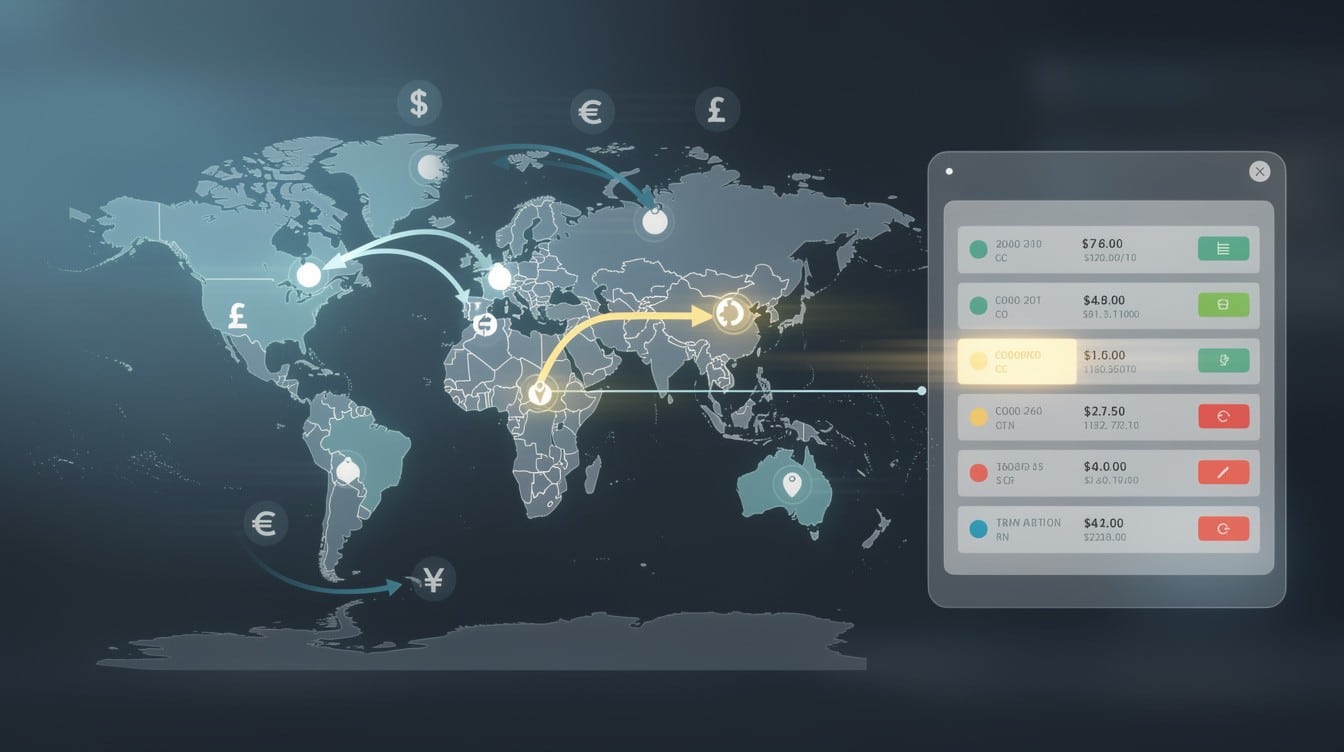
For businesses operating only in the US, payments can feel easy: you move dollars around the country for pennies, and banks often make domestic transfers effectively free. But the moment you go cross-border, the reality changes. Wire fees often jump to $25, $35, or even $50 per transaction, with additional FX charges layered on top.
In a typical US and Europe deal, you may see a visible 1% transaction fee, but then receive a 2–3% worse exchange rate than market, turning a single transfer into a 3–4% hit. When you shift to regions like Latin America and Africa, the costs can be even more punishing. Some of the teams we speak with in Africa are spending 8–10% of the transaction amount just to get paid.
How Stable Coins And Virtual On-Ramps Change The Game
Our mission as “Web3 Enabler: Transforming International Transactions” is to replace this inefficient legacy infrastructure with stable coin rails that are simpler, faster, and dramatically cheaper. A stable coin is a cryptocurrency pegged to a fiat currency like the dollar, euro, or yen—most commonly the dollar. It is a digital token that moves on a blockchain, which from a business user’s point of view functions as a shared database that all validators see and maintain consistently.
By routing payments through blockchain-based stable coins, you can send money globally for pennies while accessing the best exchange rates available because multiple liquidity providers compete to convert your value. This is not theoretical; it is what our clients are doing today with our Salesforce-native integrations, combined with trusted liquidity partners and established assets such as USDC issued by Circle.
Virtual On-Ramps For Africa, Latin America, Europe, And Beyond
One of the most powerful tools we are deploying now is the “virtual on-ramp.” Imagine you are an African company serving global clients. Instead of asking those clients to wire money internationally and pay excessive fees, you can give your US customers ACH instructions and your European customers SEP instructions. They pay locally in their own familiar rails.
Behind the scenes, those incoming ACH and SEP payments are converted into blockchain stable coins and sent directly to your wallet. You receive value quickly, at far lower cost, and with significantly less friction. For more detail on how we think about cross-border rails end to end, explore our perspective in Crypto Based International Transfers: Lower Costs, Faster Settlements.
Liquidity Partners, USDC, And Regulatory Clarity
To make this work at scale, robust liquidity is essential. We work with several liquidity partners—often called bridges—to ensure that when you convert, for example, 100,000 USDC, there is $100,000 of fiat backing it in a bank account. These partners are responsible for maintaining sufficient liquidity so conversions are smooth, reliable, and fully redeemable.
By deliberately focusing on mainstream partners, major crypto brands, and established rails, we help businesses operate on solid ground. Circle is not going to run out of money, and regulations such as the Genius Act are designed to ensure there are ample dollars in reserve and in short-term treasuries to support ongoing redemption and operations. The Clarity Act is expected to further define how yield-bearing coins are treated, which we view as a significant opportunity for global treasury strategies over time.
Running Global Stable Coin Payments 100% Inside Salesforce
What can you do today with Web3 Enabler inside Salesforce? You can send and receive money anywhere in the world from directly within your CRM. Funds can originate from your bank account through either a standard on-ramp or a virtual on-ramp. A standard on-ramp sends assets to your own wallet, while a virtual on-ramp targets another party’s wallet as the destination.
This means you can set up virtual on-ramps for clients who pay you, or connect payouts for vendors who want to receive stable coins. On the other side, your counterparties can plug into instant off-ramps to their bank accounts or to their own crypto wallets. The entire process—receiving, sending, converting, and tracking—remains inside the Salesforce ecosystem, tightly connected to your finance and operations workflows. To see how this connects across omni-channel experiences, read Salesforce Payments Integration: Enabling Seamless Cross-Channel Payments.
Why CRM-Native Crypto Rails Are A Compliance Advantage
Running these flows within Salesforce is not just convenient—it is a compliance advantage. When you effectively run your own “mini-bank” for digital assets, KYC requirements are unavoidable. KYC stands for “know your customer,” and your CRM is already the system of record where customer identity and relationship data live.
By triggering transactions in your CRM and then pushing them to your ERP or general ledger, you keep KYC, transaction data, and approvals aligned in one auditable trail. This helps you comply more easily with know your customer obligations while cutting international costs and eliminating the frustration of clunky bank wire portals and manual confirmation phone calls. For a deeper dive into the compliance architecture, you can review Ensuring KYC Compliant Salesforce Blockchain Across Your Crypto Workflows and our practical blueprint in KYC Compliant Salesforce Blockchain: A Practical Compliance Blueprint.
Approvals, Governance, And Reporting Directly In Salesforce
One of the recurring themes we hear from finance teams is the need for clear approvals and strong governance around crypto and stable coin usage. Our approach as “web3 enabler: transforming” is to keep governance where business users already live: Salesforce. Your approval processes, access controls, and reporting can all be managed from there.
Every payment is logged, reportable, and trackable inside Salesforce. Finance can see who approved what, when, and under which conditions. Compliance can validate that KYC data is complete. Executives can view dashboards of global activity across traditional and digital rails. This is exactly the type of alignment we explore in Salesforce blockchain governance in Practice: Aligning Policy and Payments and in our coverage of crypto visibility at Crypto Visibility Salesforce: A Clear View of Client Crypto Holdings.
Connecting Wallets, Stable Coins, And Treasury Networks
At ETH Denver, we have been meeting with a broad range of ecosystem partners to ensure our clients can plug into the right networks as adoption grows. We connected with the Global Settlement team, as well as leaders from Hedera and Canton, and engaged directly with wallet providers such as ledger. These conversations are all about preparing our clients for a multi-network future, while keeping day-to-day operations simple inside Salesforce.
We design our integrations so that your digital asset wallets, liquidity providers, and on/off-ramps feel like extensions of your existing CRM workflows. Over time, this architecture will support expanded use cases, including real world assets, real estate, and more. To understand how wallet strategies fit within broader digital asset programs, we recommend our video Digital Asset Wallet: Transforming Wealth Management and our article on Stablecoin Interoperability Salesforce: Bridging Wallets and Workflows.
From NFTs To Real World Assets: Practical Use Cases Emerging
We have also spent ETH Denver sharing insights with teams building in the NFT and broader crypto space. While the speculative hype cycle may feel like it has cooled, the practical use cases are only now emerging in force. This includes tokenization of real world assets such as real estate and other illiquid holdings, all of which benefit from the same rails we use for stable coin payments.
Our role as Web3 Enabler is to ensure that, as these assets move on-chain, enterprises can still manage customer relationships, compliance, and settlement flows within Salesforce. For those exploring tokenization strategy, our piece Tokenization in Financial Services Cloud: Asset Tokenization and Custody Workflows provides additional perspective on custody, workflows, and integration patterns that line up with our “web3 enabler: transforming” vision.
Investing In Web3 Enabler Through A Regulated Crowd Round
Beyond product development and ecosystem partnerships, we are giving the broader community a way to participate in our growth. We are running a crowd round, meaning individuals do not have to be accredited to invest, although the offering is regulated and subject to size limits. This is fundamentally different from a rewards-style crowdfunding campaign; it is a bona fide investment.
As of the recorded discussion, we had $5,900 pledged toward a $50,000 minimum campaign success target, with room to grow toward the current regulatory maximum. While we are simultaneously raising capital from family offices and other large investors outside of this platform, the crowd round is specifically about opening the door to the general public who believe in our mission of “web3 enabler: transforming international transactions.” More information is available via Republic at republic.com/web3-enabler and in our overview video Web3 Enabler: Join Our Fundraiser Now.
How The Republic Group SPV And Crowd Safe Work
When you invest through this campaign, you receive a Crowd Safe security rather than common stock on day one. That Crowd Safe is aggregated by the Republic Group into an SPV—a Special Purpose Vehicle—that appears on our cap table as a single line item. This keeps our cap table clean while allowing many individual investors to participate behind that single entry.
Later, when we either reach a specified valuation milestone or conduct a formal priced round, the Crowd Safe converts into equity—standard stock. At that point, you become a shareholder who participates in outcomes such as an acquisition or an eventual IPO. Our current crowd round is capped with a pre-money valuation cap of $10 million, which we believe offers meaningful upside potential if we execute on our roadmap.
Potential Return Scenarios In The Salesforce Ecosystem
The Salesforce ecosystem has a robust history of meaningful exits. Deals at the $50 million level are not uncommon and, in fact, can occur frequently. If Web3 Enabler were to sell for $50 million under the current round structure, that would represent roughly a 5X improvement relative to our $10 million cap.
There are also examples of companies in the ecosystem exiting for around $1 billion at least once or twice a year. In that type of scenario, the return potential could approach 100X relative to our current cap. While outcomes are never guaranteed and all investments carry risk, this structure is designed to give early supporters of “web3 enabler: transforming” a clear path to participate in meaningful upside if we achieve scale.
Use Cases We Are Enabling For Current Salesforce Customers
For companies already running Salesforce, we are ready to help you deploy these capabilities today. You can use stable coins to receive international B2B payments more efficiently, pay vendors without incurring excessive cross-border fees, and move funds between regions using modern rails that plug into your existing workflows. Our article B2B Crypto Payments: Enabling Faster Vendor Transactions outlines how this looks from a vendor management standpoint.
On the receivables side, you can generate crypto-enabled invoices, automate billing with digital assets, and connect stable coin flows directly to your ERP. To see how invoicing and bridging to ERP systems come together, explore Crypto Enabled Invoicing Salesforce: Invoicing Reimagined Inside CRM and Fiat Stablecoins Salesforce: Bridging Fiat and Crypto for Your ERP.
Payments Automation, APIs, And Visibility Across Rails
As volumes grow, automation and integration become vitally important. Our payments APIs are designed to expose crypto rails alongside traditional methods so that Salesforce can orchestrate the entire payment lifecycle. This includes initiating payments, monitoring status, triggering off-ramps, and updating back-office systems without manual intervention.
These capabilities are detailed further in Payments API Salesforce: Seamless Connectivity to Crypto Rails and Crypto Payments Automation Tools That Cut Costs and Speed Settlements. Together, they support our broader goal of “web3 enabler: transforming” day-to-day finance operations from siloed, manual tasks into unified, automated workflows with full visibility.
Cross-Border Rails For Specific Corridors Like Mexico
Some payment corridors present unique challenges, such as receiving US ACH payments in markets that traditionally rely on more expensive or slower rails. By combining our virtual on-ramp model with local banking infrastructure, we help clients route funds from the US into regions such as Mexico efficiently, with built-in compliance and conversion logic.
For example, the mechanics of receiving US-origin ACH and converting it into local currency or stable coins while remaining compliant are discussed in How to Receive US ACH Payments in Mexico: Rails, Conversion, and Compliance. These targeted solutions reinforce the broader story of “web3 enabler: transforming” global payments one corridor at a time.
Data, Governance, And Future-Proof Customer Insights
Underpinning all of this is data. When payments, KYC, wallets, and tokenized assets are tied to Salesforce records, you unlock a rich view of your customers and counterparties. Sales, finance, and compliance can work from a single source of truth while preparing for more advanced tokenization and digital asset use cases down the line.
Our work on sales data integration and stable coin workflows is captured in resources such as Sales Cloud Data Integration for Unified Customer Insights and Stablecoin Integration Salesforce: Seamless Blockchain on Your CRM. Together, they illustrate how “web3 enabler: transforming” is not just about cheaper transactions—it is about smarter, more connected businesses.
Looking Ahead From ETH Denver And BitAngels
ETH Denver has been a powerful venue for these conversations. We have spent our time with investors—both existing and prospective—ecosystem partners, and builders pushing forward in areas from Global Settlement to NFT infrastructure. Alongside that, we are preparing to present to BitAngels, engaging directly with a community of investors focused on blockchain innovation.
For us at Web3 Enabler, this moment is about turning years of conceptual discussion into practical, enterprise-ready deployments. If your company runs Salesforce and you are ready to start using stable coin payments, virtual on-ramps, and integrated crypto workflows, we are here to help you onboard. “Web3 enabler: transforming” is the lens we use for every product decision, partnership conversation, and investor engagement—and we are just getting started.