
Web3 Enabler: Invest in Blockchain Innovation from ETH Denver
At ETH Denver in Denver, Colorado, we at Web3 Enabler are showing in real time what it means to be the Salesforce partner for blockchain. We are connecting directly with investors, clients, and ecosystem partners to demonstrate how stable coin payments, global on-ramps, and compliant workflows inside Salesforce can transform international business. For those who see the opportunity early, our crowd round opens a concrete path to join this journey: Web3 Enabler: invest alongside us as we bring practical blockchain innovation into enterprise CRM.
Across meetings with investors, founders, and infrastructure teams, we are reinforcing a simple message: the hype cycle may be over, but the practical use cases are just beginning. Our focus is not on speculation, but on turning Salesforce into the control center for cross-border payments, treasury, and compliance. From Africa to Europe to Latin America and beyond, we are enabling companies to move money faster, cheaper, and more transparently—while offering the broader public a regulated way to participate in our growth.
Why Stable Coin Payments Matter for Global Business
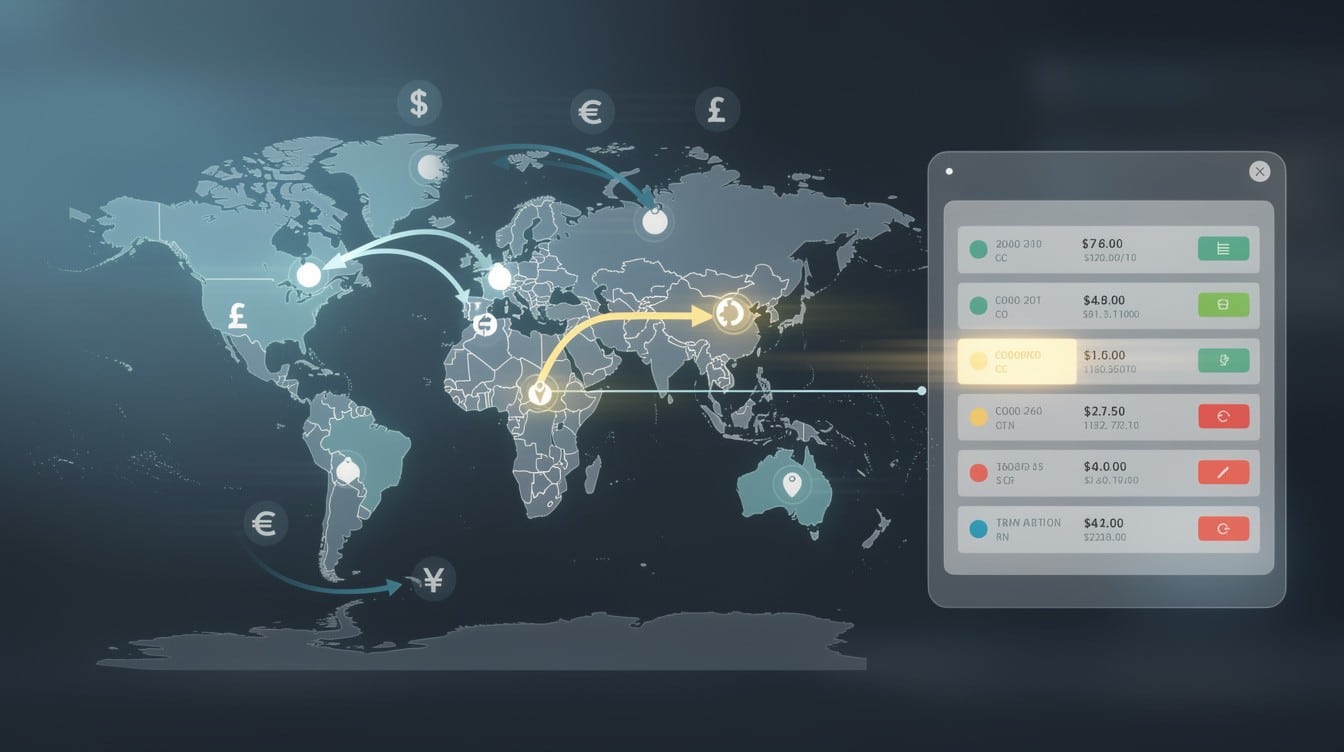
For companies operating solely in the US, the pain of international payments is easy to overlook. Domestically, we enjoy the luxury of sending the global reserve currency around the country for pennies or even for free. But once payments cross borders, everything changes—wire fees can jump to $25, $35, even $50 per transaction, and foreign exchange spreads quietly eat another 2–3% on top of published transaction fees.
When you move beyond US and Europe flows into Latin America and Africa, the situation gets worse. Some of the businesses we have spoken with in Africa are paying 8–10% of every transaction in fees just to get paid or send funds. This is where stable coin payments shine. By moving value as digital tokens on blockchain rails, businesses can bypass legacy banking constraints, bringing costs down to pennies while accessing far better exchange rates through competitive liquidity partners. For teams that want to go deeper into this transformation, we break down specific flows in resources like Crypto Based International Transfers: Lower Costs, Faster Settlements and our detailed USDC Payments Process: A Complete End-To-End Workflow.
How Virtual On-Ramps Empower Africa, Latin America, and Beyond
To address these pain points for regions like Africa and Latin America, we are deploying what we call virtual on-ramps. Imagine you are an African company serving US and Europe clients. Instead of asking them to grapple with new systems, you give them familiar instructions: US clients can use ACH, European clients can use SEPA. They simply set up their payment methods, and behind the scenes the incoming funds are converted into blockchain stable coins and sent directly to your wallet.
From your clients’ perspective, they are paying through the same rails they already use. From your perspective, you are receiving near-instant, low-fee payments in stable coins that you can then convert, spend, or deploy as needed. This model dramatically cuts fees, accelerates settlement, and removes the friction of local banking bottlenecks. For companies navigating Europe-to-Brazil or multi-region flows, we complement this approach with practical guidance in content such as How to Accept SEPA Payments in Brazil: A Practical Guide and dedicated workflows for USDC Remittance Salesforce: Faster Cross-Border Settlements.
What Stable Coins Really Are (And Why They’re Safe to Use)
At ETH Denver, we spend a lot of time demystifying stable coins and blockchain for business leaders. A stable coin is a cryptocurrency pegged to a fiat currency like the dollar, euro, or yen—most often the US dollar. The cryptocurrency itself is simply a digital token, and it moves on a blockchain, which you can think of as a shared database that many validators maintain together so everyone can see and agree on the same data.
From the user’s point of view, there is no need to master the complexities of proof of stake, proof of work, or consensus algorithms. What matters is that this shared database allows you to send value globally for pennies while tapping the best available exchange rates. Our liquidity partners—bridges and other providers—ensure that if you convert 100,000 USDC, there is $100,000 of fiat ready to back it. By sticking with mainstream partners, major brands, and proven rails, we align with the standards set by Circle and the expectations embedded in regulations like the Genius Act and the Clarity Act. For treasury leaders and controllers, we expand on this topic in content like Fiat Stablecoins Salesforce: Bridging Fiat and Crypto for Your ERP and visualization tools covered in Crypto Holdings in Salesforce: Visualizing Treasury Crypto Across Your Apps.
Bringing Blockchain Directly into Salesforce
Our core mission as Web3 Enabler is to make Salesforce the control tower for blockchain-based payments and assets. Today, you can send money anywhere in the world directly from Salesforce. You can onboard funds from your bank account using a standard on-ramp that sends value to your wallet or a virtual on-ramp that directs funds to your counterparty. Vendors and clients can be configured with their preferred setup—virtual on-ramps for incoming payments, instant off-ramps to bank accounts, or direct connections to their crypto wallet.
All of this activity is monitored and tracked inside the Salesforce ecosystem. Approval workflows, transaction logs, and reporting are unified with customer data, so finance teams can execute cross-border payments without ever leaving the CRM. For companies looking to operationalize this, we show the full automation stack in resources such as Stablecoin Integration Salesforce: Seamless Blockchain on Your CRM and our deep dive on Salesforce Payments Integration: Enabling Seamless Cross-Channel Payments.
KYC, Compliance, and CRM-First Transactions
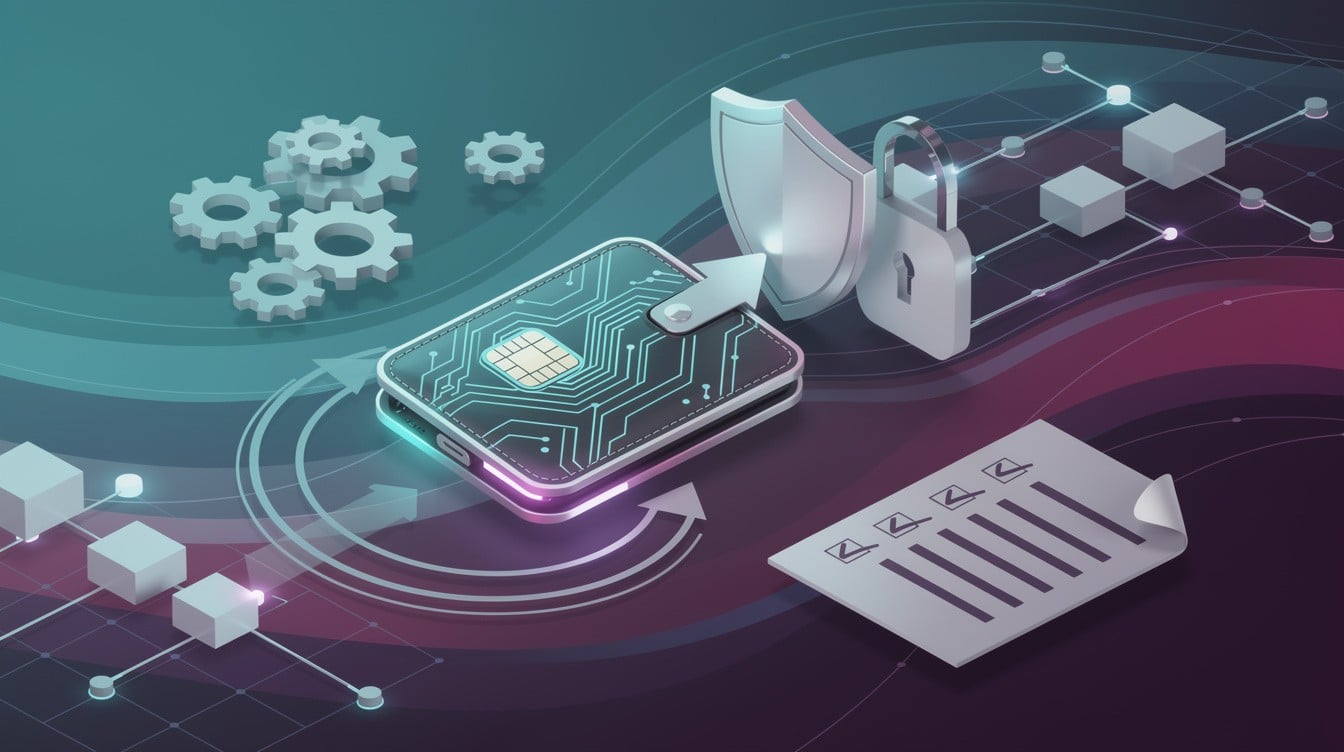
Compliance is not an afterthought in our architecture—it is a design principle. Know your customer, or KYC, is essential when you are effectively running your own banking workflows. Because Salesforce is already the system of record for customer data, running transactions directly in the CRM, then pushing them to your ERP or general ledger, is the most natural way to stay compliant.
By aligning payment execution with the same profiles, approvals, and audit trails you use for sales and service, you eliminate the need for clunky bank portals, manual voice confirmations, and opaque wire logs. Every approval is recorded, every transaction is reportable, and every counterpart is tied to a fully documented Salesforce record. For organizations formalizing these policies, we outline governance approaches in Salesforce blockchain governance in Practice: Aligning Policy and Payments and compliance frameworks in Ensuring KYC Compliant Salesforce Blockchain Across Your Crypto Workflows.
From Invoicing to Revenue: End-to-End Crypto Workflows
Once payments are flowing through Salesforce, the next step is to reimagine invoicing and revenue operations around stable coins and digital assets. We support issuing and tracking invoices that can be settled in stable coins while still fitting cleanly into existing billing, collections, and revenue recognition processes. This makes it possible to reap the benefits of blockchain rails without disrupting how finance teams report and close the books.
For many teams, this starts with stable coin invoicing and grows into broader crypto-enabled billing. We detail these scenarios in resources like Stablecoin Invoicing Salesforce: Automate Crypto Billing Across The Org and Crypto Enabled Invoicing Salesforce: Invoicing Reimagined Inside CRM, then take it further into accounting and reporting with our guide on Revenue Recognition Blockchain Integration: Automating On-Chain Revenue in Revenue Cloud.
Real-World Assets, NFTs, and the Next Wave of Use Cases
ETH Denver is a powerful reminder that crypto is not “over”—it is evolving. In our conversations with teams across the NFT, real world assets, and broader crypto space, we are seeing a shift from speculative hype to grounded, enterprise-ready use cases. From tokenized real estate to new forms of asset-backed payment flows, the potential for blockchain-based representations of value is only growing.
Our role at Web3 Enabler is to make these innovations manageable for organizations that already live in Salesforce. Whether it is tracking client NFT holdings alongside traditional accounts, or designing payment rails around tokenized assets, Salesforce becomes the interface where relationship data, asset visibility, and payment execution meet. We explore some of this convergence in content like Crypto Visibility Salesforce: A Clear View of Client Crypto Holdings and in our explainer video Digital Asset Wallet: Transforming Wealth Management.
Our ETH Denver Network: From Global Settlement to Hedera and Canton
One of the most valuable aspects of ETH Denver is the opportunity to align directly with the teams building the next generation of blockchain infrastructure. This year we met with the Global Settlement team, as well as the Hedera and Canton communities, exploring how their networks and tooling can help us expand the rails we offer inside Salesforce.
We also engaged with wallet providers and the ledger team, strengthening integrations that keep end-user experiences simple while expanding the range of supported assets and networks. Combined with conversations across the NFT space and other crypto projects, these relationships are helping us shape a roadmap that keeps Web3 Enabler at the forefront of enterprise blockchain integration for Salesforce customers worldwide.
Web3 Enabler: Invest via Our Regulated Crowd Round
Alongside product and ecosystem conversations, ETH Denver is also a launchpad for our fundraising. We are opening a crowd round so that a wider community—not just accredited investors—can participate. This is a regulated raise with size limits per investor, structured around a crowd safe that rolls all participants into a single entry on our cap table via a Special Purpose Vehicle (SPV) managed by the Republic Group on Republic.
At the time of recording, we had $5,900 pledged toward a $50,000 campaign minimum, with an ambition to reach $100,000–$200,000 to accelerate awareness and adoption, particularly in Africa. This sits alongside a separate, larger raise with family offices and institutional investors. The pre-money valuation cap for this crowd round is $10 million, which we believe positions early backers for meaningful upside if we execute on our vision of becoming the Salesforce standard for blockchain payments and assets.
Understanding the Return Potential in the Salesforce Ecosystem
Our thesis for Web3 Enabler: invest early, and you gain exposure to a category that has already produced significant outcomes within the Salesforce ecosystem. Salesforce-native companies have historically seen exits in the tens of millions of dollars on a weekly cadence, and billion-dollar outcomes at least once or twice a year. Using that context, a $50 million exit would represent roughly a 5X return from our current crowd round cap, while a $1 billion outcome would equate to approximately 100X.
While no outcome is guaranteed, the structure of the crowd safe means that if we hit certain valuation triggers—through a major fundraise, acquisition, or public listing—it converts into standard stock. At that point, investors become shareholders, participating in distributions if we sell the company, go public, or otherwise generate liquidity events. For those wanting more detail on how our products drive the underlying value, we recommend our explainer on Crypto Payments Automation Tools That Cut Costs and Speed Settlements and our fundraising overview video Web3 Enabler: Join Our Fundraiser Now.
Why We Are Raising Awareness in Africa and Emerging Markets
A key use of proceeds from this crowd round is driving awareness and adoption in regions like Africa, where the gap between current payment infrastructure and blockchain-enabled alternatives is especially stark. When businesses are losing 8–10% of every transaction to fees and unfavorable FX, the savings from moving to stable coin rails are not incremental—they are transformative.
By combining virtual on-ramps, instant off-ramps, and Salesforce-native workflows, we can give these companies access to the same quality of global financial infrastructure that large enterprises enjoy, without requiring them to fight their local banking systems. Our guides on cross-border connectivity, including Payments API Salesforce: Seamless Connectivity to Crypto Rails and USDC Payments Reporting Salesforce: Transparent Crypto Revenue Metrics, show how these tools come together in practice for finance and operations teams.
How Companies Running Salesforce Can Get Started
If your organization already runs Salesforce and you are ready to modernize international payments, we are here to help you get started. We support configurations where you send and receive stable coin-based payments directly in Salesforce while staying aligned with your existing KYC, approval, and reporting policies. From there, you can extend into use cases like stable coin invoicing, automated remittances, and integrated crypto treasury management.
Our goal is to make this transition as simple as possible for finance and operations teams. With our Salesforce-native approach, your staff can execute complex cross-border flows using familiar interfaces and processes. As you scale, you can layer on advanced capabilities like automated revenue handling and crypto visibility. For a deeper view into how this looks across an entire organization, explore Stablecoin Invoicing Salesforce: Automate Billing With Digital Assets and our broader strategy resources culminating in Crypto Holdings in Salesforce: Visualizing Treasury Crypto Across Your Apps.
Looking Ahead from ETH Denver and BitAngels
ETH Denver is just the start of this next chapter for Web3 Enabler. From here, we are heading into forums like BitAngels to present our vision and connect with additional investors and partners who share our belief in practical, enterprise-focused blockchain adoption. The momentum we are seeing—from liquidity partners to network teams to Salesforce customers—confirms that now is the right time to build this bridge between traditional business systems and blockchain rails.
If you share that conviction, we invite you to follow our progress, explore how Salesforce blockchain integration can modernize your organization’s payments and compliance, and consider participating in our crowd round on Republic. Web3 Enabler: invest with us as we turn proven crypto infrastructure into everyday tools for global business.