
Web3 Enabler: Blockchain Apps for Salesforce’s Enterprise Future
At Web3 Enabler, we are building the missing bridge between enterprise CRM and Web3. Under the leadership of our founder and CEO, Alex Hochberger, we have positioned Web3 Enabler: blockchain applications as Salesforce-native products that live directly on the AppExchange. As the only Salesforce ISV that is both Salesforce native and blockchain native, we are focused on enabling stablecoin and crypto-powered payments, digital asset data, and treasury workflows entirely inside Salesforce.
Salesforce is the largest CRM platform in the world, used by around 150,000 companies and 91% of the Fortune 500. Roughly 90% of those customers already rely on AppExchange apps. By putting Web3 Enabler: blockchain tools natively into that ecosystem, we allow enterprises to adopt digital assets with the same trust, security review standards, and automation capabilities they already expect from Salesforce.
Why Salesforce and the AppExchange Are the Right Home for Web3
Salesforce is much more than a sales tool. It is a full business automation platform used to orchestrate sales, service, invoicing, e-commerce, and industry-specific workflows. Core offerings like Sales Cloud and Service Cloud typically form the entry point into the ecosystem, while add-ons such as Revenue Cloud and Commerce Cloud extend into billing and digital commerce. Industry solutions like Health Cloud and Financial Services Cloud (FSC) then tailor this platform to the unique needs of sectors such as healthcare, banking, insurance, and wealth management.
Within this broader landscape, the AppExchange acts as a $150 billion annual marketplace where ISVs like Web3 Enabler sell applications that plug directly into customers’ existing Salesforce instances. Salesforce rigorously security-reviews these offerings and shares revenue with partners, creating strong incentives for robust, enterprise-grade products. Our Web3 Enabler: blockchain apps have passed these reviews multiple times, allowing enterprises to adopt digital asset capabilities through a channel they already know and trust.
The Gap: Enterprise Has Not Yet Fully Embraced Web3
Despite the rapid growth of crypto and blockchain, enterprise adoption remains early. There are only a handful of Web3 or blockchain-related tools on the AppExchange, and most are simple connectors into external platforms. By contrast, our products are built as first-class Salesforce apps and as first-class blockchain tools. Web3 Enabler: blockchain capabilities are embedded directly into Salesforce objects, workflows, and automation engines rather than sitting at the edge.
This means that when enterprises are ready to adopt stablecoins, CBDCs, or other digital assets at scale, the infrastructure is already in place. We can connect treasury functions, invoicing, e-commerce checkout, and cross-border payments to on-chain rails without forcing teams to leave their CRM. For organizations interested in how this changes their payments stack, we explore many of these patterns in our piece Salesforce Payments Integration: Enabling Seamless Cross-Channel Payments.
Blockchain Payments: Treasury and Cross-Border Flows Inside Salesforce
Our flagship product category is blockchain payments. These apps are built to make it simple for enterprises to send and receive stablecoin and other crypto payments to vendors, contractors, and customers without leaving Salesforce. Web3 Enabler: blockchain payments tools give organizations a Salesforce-native wallet, the ability to connect to external wallets, and integration to exchange accounts for settlement.
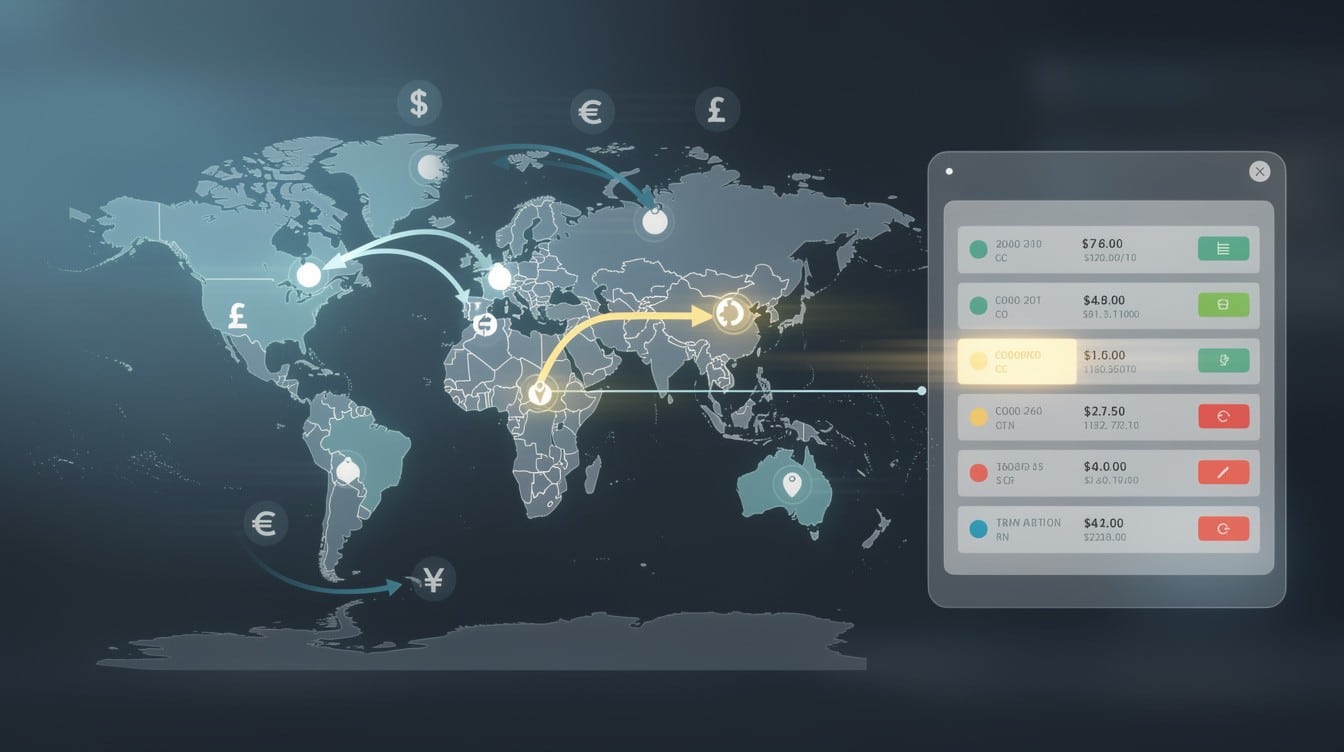
In practice, most enterprises start with straightforward use cases. A common scenario is collecting payments from overseas customers and having those funds land as fiat in a bank account. With blockchain payments, a company can designate a liquidation wallet tied to their bank. The customer pays in crypto or stablecoins; the funds are automatically converted and deposited into the bank account with no extra workflow overhead. For teams evaluating the impact on fees and settlement speed, we provide a deeper look in Crypto Based International Transfers: Lower Costs, Faster Settlements.
Blockchain Payments for Sales Cloud and Beyond
Most Salesforce customers are using Sales Cloud or Service Cloud, which makes it critical that Web3 Enabler: blockchain workflows integrate smoothly into the sales process. Blockchain payments for Sales Cloud is a free add-on that sits on top of our core blockchain payments product. It connects sales users directly into payment capabilities and ensures that opportunities, accounts, and invoices all align with actual incoming and outgoing on-chain funds.
We designed this approach so that customers with different Salesforce configurations can still use the same underlying blockchain payments engine. Some customers run only the Salesforce platform without Sales Cloud or Service Cloud; they can still deploy blockchain payments at the core level. Others run complex, multi-cloud deployments with Revenue Cloud and Commerce Cloud. For these, our add-ons plug directly into their specialized objects and processes, enabling crypto-based settlement while preserving existing Salesforce automation. You can explore how this maps to invoicing in Crypto Enabled Invoicing Salesforce: Invoicing Reimagined Inside CRM.
Commerce Cloud and Revenue Cloud: Ecommerce and Invoicing on Stablecoins
We are expanding Web3 Enabler: blockchain coverage with new add-ons focused on Commerce Cloud and Revenue Cloud. Blockchain payments for Commerce Cloud targets B2B and D2C e-commerce flows, particularly high-value B2B and international orders. If you are using Commerce Cloud to sell into overseas markets, your customers can now place orders and pay via stablecoins, while Salesforce keeps the order, payment, and reconciliation data in sync.
Blockchain payments for Revenue Cloud follows a similar pattern but focuses on invoicing and revenue lifecycle management. A company can issue an invoice from Revenue Cloud, allow the customer to pay via a Web3 payment flow in stablecoins, and have that payment automatically credited to the invoice upon receipt. Our app connects to the relevant cloud-specific Salesforce objects so that once deployed, payments follow the same patterns as existing business rules. For organizations looking to automate this end to end, we discuss it further in Stablecoin Invoicing Salesforce: Automate Billing With Digital Assets.
Gasless Wallets and Contractor Payments Across Borders
Beyond simple receivables, many enterprises need to pay contractors and vendors in multiple countries. Web3 Enabler: blockchain infrastructure supports these outflows as well. Companies can connect native wallets powered by Circle, bridge ACH or wire rails to move fiat in and out, and then send payments to contractors overseas. Our use of gasless wallets on networks like Solana and Base lets payees receive funds without worrying about gas logistics.
For teams facing high traditional banking fees and slow settlement times, this can be transformative. Instead of spending 8–10% on cross-border fees and waiting three to five days for funds to clear, stablecoin-based flows can shorten timelines and reduce costs substantially while still tying neatly into Salesforce data models. We examine many of these cost and speed dynamics in Crypto Payments Automation Tools That Cut Costs and Speed Settlements.
Digital Asset Wallet for Financial Services Cloud
In the financial sector, wealth managers, private bankers, and insurance professionals rely on Financial Services Cloud to manage customer relationships. A critical part of know your customer (KYC) in this context is understanding “held away” assets—those that are not directly custodied by the advisory firm. Until now, there has been no robust way to bring crypto holdings into this picture inside FSC.
Our Digital Asset Wallet for FSC solves that problem by pulling crypto holdings into Financial Services Cloud so that wealth managers and private bankers can see a more complete view of client assets. Web3 Enabler: blockchain data services integrate directly into FSC’s data model, supporting both the older managed package-based FSC and the newer standard-object-based version. For a visual and functional deep dive into how this works in practice, we offer the video Digital Asset Wallet: Transforming Wealth Management.
Supporting Both FSC Architectures: Managed Package and Standard Objects
Salesforce originally delivered Financial Services Cloud as a managed package, installed like an AppExchange app and layered on top of the core data model. Over time, this architecture revealed scaling limitations compared to building on standard Salesforce objects. In response, Salesforce introduced an updated FSC built with standard objects that align more directly with the rest of the platform.
To support the entire FSC install base, we maintain two parallel versions of Digital Asset Wallet: one for the managed package (PKG) and one for the standard object model (STD). Functionally, they behave the same for end users; internally, we adjust the underlying GitHub branches and object mappings to match each architecture. This dual support underscores our commitment to meeting enterprises where they are in their Salesforce journey. For firms interested in KYC and compliance implications, we share detailed guidance in Ensuring KYC Compliant Salesforce Blockchain Across Your Crypto Workflows.
Cardano for Salesforce and XRP for Salesforce: Open Source Building Blocks
In addition to our commercial apps, we maintain several community-sponsored, open source tools that further demonstrate Web3 Enabler: blockchain capabilities. Cardano for Salesforce, also known as the Ada Wallet, was funded by Project Catalyst. This app brings Cardano-native functionality into Salesforce and is available as open source via GitHub or through the AppExchange. A grant proposal in Fund 15 is scoped to extend its capabilities once the updated voting procedures, revised after issues in Fund 14, are fully in place.
XRP for Salesforce, funded by the XRP Ledger Foundation, similarly brings XRP natively into Salesforce. Like the Ada Wallet, it is available on the AppExchange and as open source code that enterprises can inspect and adapt. These applications serve as live demonstrations that our team has repeatedly cleared AppExchange security reviews and can successfully embed different blockchain ecosystems into the Salesforce environment. More generally, they showcase how multi-chain stablecoin and token integrations can fit into CRM workflows, a topic we explore further in Stablecoin Integration Salesforce: Seamless Blockchain on Your CRM.
Target Markets: Africa–UK and Africa–French Corridors
While the American and EU markets are larger in absolute terms, we see an immediate and pressing opportunity in the Africa-UK and Africa-French corridors. In many of these Anglophone and Francophone markets, cross-border banking fees between Africa and Europe frequently run 8–10%, with transfers still taking three to five days. Historically, funds often seemed to disappear into the ether for a week before settlement, with limited transparency in between.
Web3 Enabler: blockchain payments provide a compelling alternative. By offering stablecoin-based settlement for B2B trade, contractor payments, and recurring invoices, we enable businesses to reduce fees and gain clearer visibility into their funds as they move. Salesforce events and customer deployments in Africa are central to our go-to-market strategy, which is why we are concentrating our near-term expansion efforts on these corridors. For organizations navigating these kinds of international flows, we explore related mechanics in B2B Crypto Payments: Enabling Faster Vendor Transactions.
Our Reg CF Raise on republic.com
To accelerate this expansion, we are conducting a Reg CF raise approved by the SEC and open to the general public. Our current goal is to raise $50,000 to cover near-term travel, Salesforce events in Africa, and other go-to-market activities in our target regions. If we meet this initial target, we intend to extend the raise up to a few hundred thousand dollars, potentially at a higher valuation.
Anyone who believes, as we do, that stablecoins and digital assets will be integral to enterprise infrastructure can participate with as little as $400. The raise is hosted at republic.com, where investors can review full details, disclosures, and terms. For those who prefer a more narrative overview of our fundraising and strategy, we share additional context in Web3 Enabler: Join Our Fundraiser Now.
How Web3 Enabler Fits the Future of Enterprise Stablecoins
The private sector, public companies, and increasingly governments are beginning to embrace stablecoins and, in some regions, CBDCs. When these instruments become mainstream in corporate finance and operations, Salesforce customers will need a way to incorporate them into their existing processes without building new systems from scratch. Web3 Enabler: blockchain apps are designed precisely for that moment.
By living natively in the AppExchange, our tools allow enterprises to manage crypto and stablecoin flows directly alongside leads, accounts, invoices, and cases. We tie payments, digital asset balances, and cross-border disbursements into the same automation engines that already run sales and service. For teams thinking about how to connect their ERP, banking, and Web3 rails over time, we discuss patterns and integration strategies in Fiat Stablecoins Salesforce: Bridging Fiat and Crypto for Your ERP.
Looking Ahead: Events, Ecosystems, and Enterprise Adoption
We are continuing to deepen our engagement with both the Salesforce and Web3 communities. Participation in ecosystem events such as ETH Denver allows us to demonstrate our products, gather feedback from developers and enterprises, and refine our roadmap based on real-world use cases. As Web3 Enabler: blockchain apps expand across more Salesforce clouds and industries, we expect to see broader adoption from corporates that want to modernize their treasury and payment infrastructure.
From blockchain payments integrated with Sales Cloud, Commerce Cloud, and Revenue Cloud to Digital Asset Wallet for Financial Services Cloud and our open source Cardano and XRP tools, we are building a cohesive platform for enterprise Web3. For organizations evaluating how to align governance, compliance, and payment policies with these new capabilities, resources like Salesforce blockchain governance in Practice: Aligning Policy and Payments and KYC Compliant Salesforce Blockchain: A Practical Compliance Blueprint provide practical next steps.