


Your revenue team is probably drowning in spreadsheets, manual reconciliations, and payment delays that make international deals feel like they take forever.
Salesforce Revenue Cloud with blockchain integration changes that. We at Web3 Enabler have seen firsthand how distributed ledger technology cuts through the noise, giving you real-time visibility, faster settlements, and payment rails that actually work across borders without the crypto complexity.
Why Your Revenue Systems Are Stuck in the Past
The Patchwork Problem
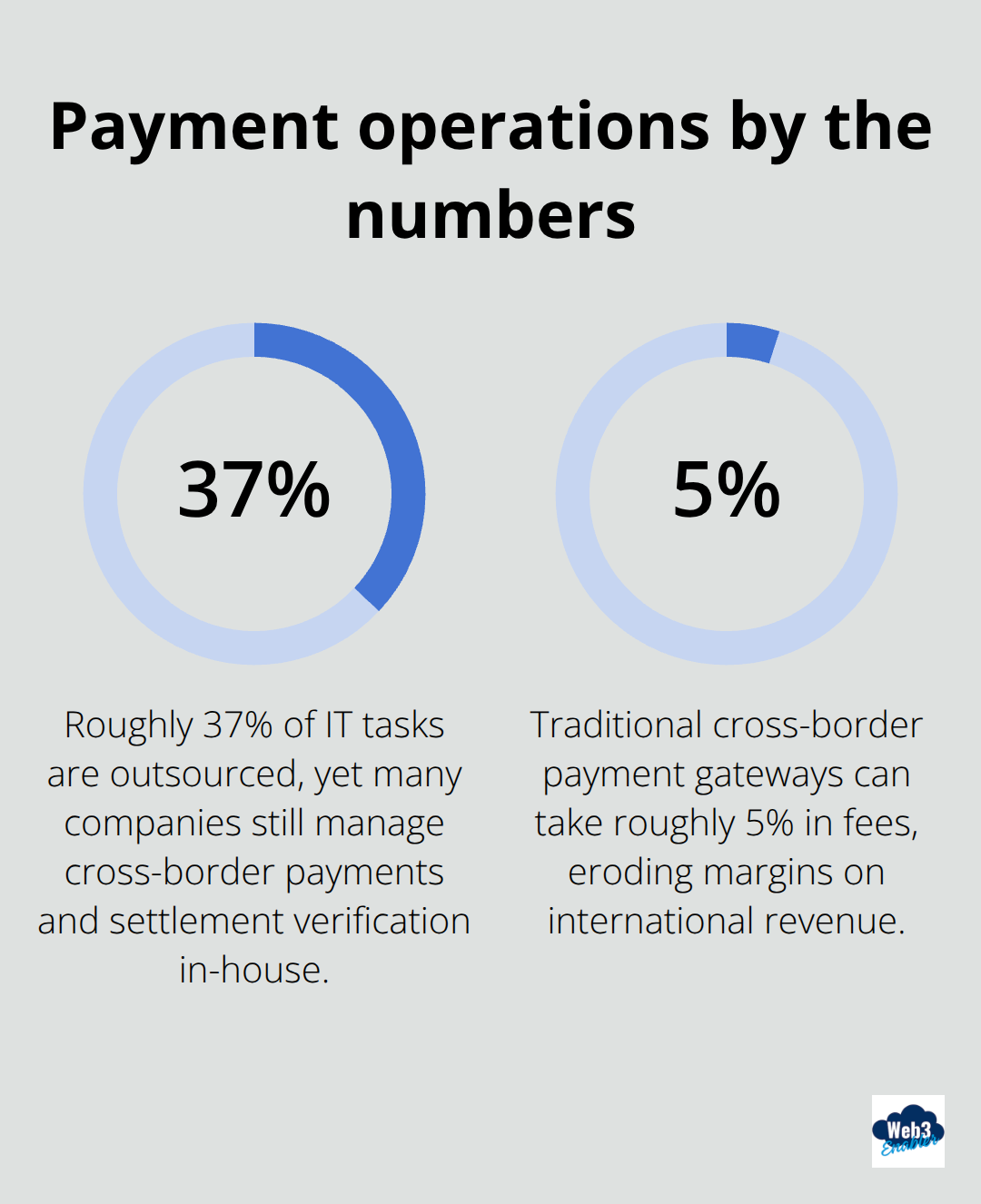
Your current revenue operations likely rely on a patchwork of disconnected tools. Invoices live in Revenue Cloud, payment confirmations arrive via email, reconciliation happens in spreadsheets, and international transfers take days while fees eat into margins. According to Forbes, roughly 37% of IT tasks are outsourced, yet many companies still manually manage cross-border payments and settlement verification in-house. That’s expensive and error-prone.
The global IT outsourcing market was valued at $618.13 billion in 2025 and is projected to grow to $752.08 billion by 2031, partly because companies desperately need faster, more transparent ways to handle financial workflows. Your team wastes hours hunting through email chains, waiting for bank confirmations, and reconciling mismatched records across systems.
Blockchain Creates Immutable Records
Blockchain solves this by creating an immutable record of every transaction, payment, and settlement in real time. No more waiting for bank confirmations or hunting through email chains to prove a payment went through. Every step of your revenue cycle-from invoice creation to final settlement-lives on a distributed ledger that all parties can see and trust.
This isn’t about crypto speculation or replacing your bank account. It’s about recording your existing business processes on a transparent, tamper-proof system so your team stops wasting time on verification and reconciliation. Your revenue operations become auditable, fast, and trustworthy without the complexity.
Stablecoins Make Cross-Border Payments Practical
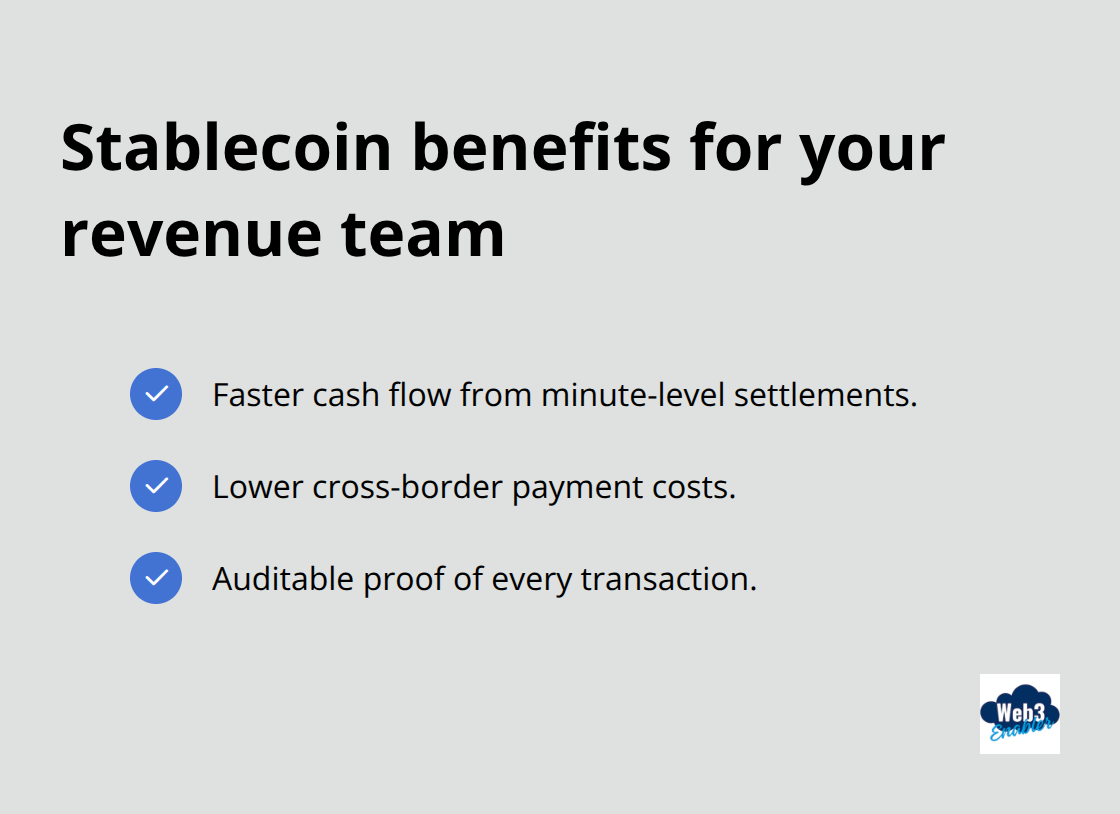
Stablecoins make this practical for business. USDC and similar assets backed 1:1 by reserves eliminate price volatility, so you’re not gambling on exchange rates when you send payment to a supplier in Singapore or invoice a customer in Frankfurt. Cross-border fees drop from roughly 5% with traditional gateways to under 0.1% with blockchain-based stablecoin rails, and settlements happen in minutes instead of days.
The Genius Act, passed in 2025, created a federal framework for stablecoins in the US with AML and CFT compliance built in, giving enterprise teams the regulatory confidence to adopt these payment rails at scale. The EU’s MiCA regulations, live since 2023, provide similar protections across Europe. Your revenue team gets faster cash flow, lower costs, and auditable proof of every transaction-all without learning blockchain jargon or managing crypto wallets themselves.
Now that you understand why your current systems fall short, let’s look at how Salesforce Revenue Cloud actually integrates blockchain to fix these problems.
How Blockchain Stays Inside Your Salesforce Stack
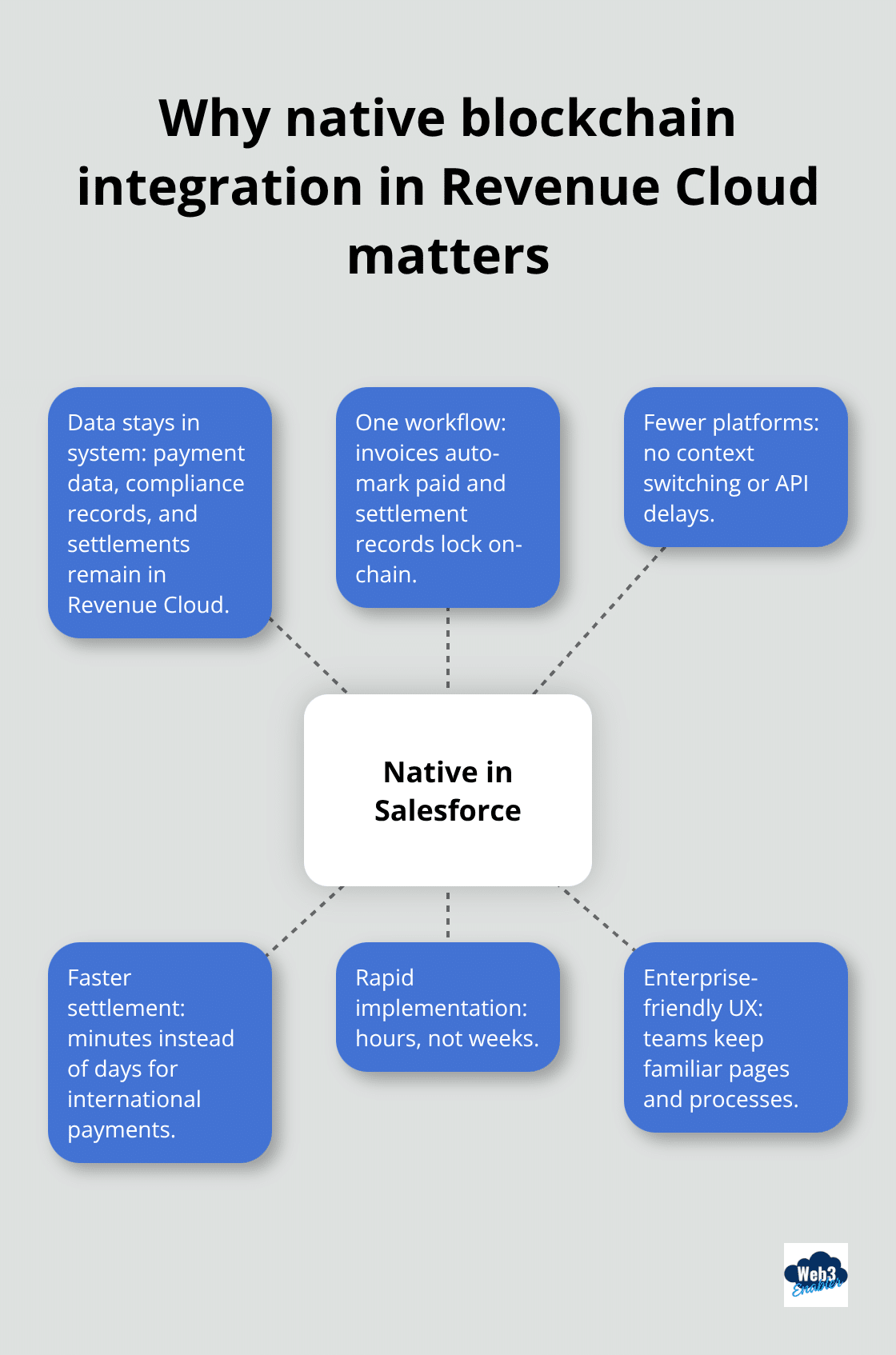
Here’s what sets blockchain-native Salesforce solutions apart from bolting on a third-party crypto payment gateway like Bitpay or Stripe plus Blackthorn: native blockchain solutions run directly inside Salesforce Revenue Cloud, meaning your payment data, compliance records, and settlement confirmations stay within the system. Your revenue team works in Revenue Cloud exactly as they do today, but now invoices, payments, and audit trails live on an immutable ledger that both your finance team and external auditors can verify instantly. No jumping between platforms, no API delays, no manual data syncing across disconnected tools. When a stablecoin payment arrives from an international customer, the transaction settles in minutes instead of days, the invoice automatically marks as paid in Revenue Cloud, and the settlement record locks onto the blockchain in a single workflow. This native integration cuts implementation time to hours instead of weeks and eliminates the friction that makes most crypto payment solutions feel clunky for enterprise teams.
Compliance and auditing shift from manual to automatic
Traditional revenue operations require your team to manually reconcile bank statements, match invoices to payments, and build audit trails through spreadsheets and email. Blockchain flips this: every transaction-from invoice creation to final settlement-gets recorded on-chain with a cryptographic fingerprint that proves it happened exactly when and how you say it did. Regulators and external auditors can verify the entire revenue cycle without requesting endless documentation. The Genius Act framework and EU MiCA regulations mean stablecoin payments now carry the same regulatory weight as traditional wire transfers, so your finance team gains compliance confidence without hiring blockchain specialists. Real-time payment tracking also lets your team spot failed transactions instantly rather than discovering them days later when reconciling bank feeds, reducing late-payment disputes and improving cash flow visibility across regions.
Real-time visibility replaces status guessing
Your CFO currently has zero visibility into cross-border payments until they clear the banking system-sometimes 3 to 5 business days later. With blockchain-enabled Revenue Cloud, settlement happens in minutes and appears instantly in your dashboard. You see exactly which invoices have been paid, which are pending, and which stablecoin transfers are in flight, all within Salesforce. Your revenue recognition process accelerates because you no longer wait for bank confirmations to close monthly books, and your treasury team can manage global cash positions in real time rather than relying on outdated bank reports.
Your existing workflows stay intact
Blockchain integration doesn’t mean your team learns new software or processes. Your finance operations team continues working in Revenue Cloud with the same page layouts, dashboards, and approval workflows they use today. The blockchain layer sits underneath, recording every transaction on an immutable ledger without disrupting how your team actually works. This approach (sometimes called middleware integration) connects your existing database to the blockchain, so events like invoice creation, payment receipt, and settlement automatically lock onto the distributed ledger without manual intervention. Your team focuses on revenue strategy, not blockchain mechanics.
The real power emerges when you move from visibility and compliance to actually accepting and sending payments faster. Let’s look at how your business applies these capabilities.
What Stablecoin Revenue Actually Looks Like in Practice
Volatility and Compliance Stop Being Obstacles
Your first instinct when hearing stablecoin payments is probably to worry about volatility, compliance nightmares, or explaining crypto to your board. Stop. USDC and similar stablecoins backed 1:1 by reserves eliminate the volatility problem entirely-you move dollars digitally without gambling on exchange rates. The Genius Act framework passed in 2025 handles compliance at the federal level, and EU MiCA regulations do the same across Europe, so your legal team gains regulatory certainty without navigating a blockchain research project. What actually matters is this: when an international customer sends you a stablecoin payment inside Revenue Cloud, the transaction settles in minutes instead of three to five business days, your invoice marks paid automatically, and the settlement record locks onto the blockchain with cryptographic proof.
Real Margin Recovery From Lower Payment Fees
A B2B SaaS provider using blockchain-based stablecoin rails for cross-border payments reduced fees from roughly 5% with traditional gateways to under 0.1%, which on a million-dollar annual payment volume translates to $49,900 in recovered margin annually. Your finance team stops waiting for bank confirmations and starts recognizing revenue the moment the customer pays. International supplier payments accelerate too-a manufacturing company paying vendors across three continents previously faced settlement delays of four to seven days and fees averaging 3-4% per transaction.
Switching to stablecoin payments cut that to near-instant settlement with fees under 0.1%, improving cash flow visibility and letting treasury teams manage global positions in real time rather than guessing based on outdated bank reports.
Native Integration Means Your Team Works Unchanged
Your team doesn’t manage wallets or learn blockchain syntax; they work inside Revenue Cloud exactly as they do today. Web3 Enabler’s Blockchain Payments for Revenue Cloud integrates natively, meaning payment data, compliance records, and audit trails stay within Salesforce without jumping between platforms or syncing data manually across disconnected tools. Installation happens in hours, not weeks, because you run blockchain logic directly inside the system your team already uses rather than bolting on a third-party gateway like Bitpay.
Revenue Recognition Accelerates Without Banking Delays
Revenue recognition accelerates because you no longer wait for banking systems to catch up. Under traditional wire transfers, your CFO can’t close monthly books until cross-border payments clear, sometimes days after customers submitted payment. With blockchain settlement, that window collapses to minutes. Your audit trail becomes automatically verifiable too-every transaction from invoice creation through final settlement lives on an immutable ledger that regulators and external auditors can inspect instantly without requesting boxes of documentation. A fast-growing B2B SaaS company recording usage events and subscription billing on a blockchain Layer 2 network gained independent proof of uptime and usage data for enterprise clients, enabling transparent SLA guarantees and eliminating disputes over billing accuracy. Smart contracts automated their subscription rules, so failed payments paused access instantly and uptime misses triggered automatic refunds without manual intervention. That level of transparency directly reduces chargeback disputes, accelerates customer onboarding for high-touch accounts, and gives your revenue team time to focus on strategy instead of firefighting payment exceptions.
Micro-Transaction Pricing Becomes Economically Viable
Stablecoin payments unlock micro-transaction pricing models that traditional gateways make impractical. When payment processing costs drop from 5% to under 0.1%, you can charge for granular usage or API calls without watching fees destroy your margin. Your treasury function becomes simpler, not more complex, because you don’t manage multiple currency hedges or wait for correspondent bank clearances-you send USDC, it arrives minutes later at full value, and both parties have cryptographic proof it happened. Digital payments growth accelerates when you remove friction from settlement, giving your revenue operations team capacity to focus on scaling customer acquisition and retention instead of managing payment exceptions.
Final Thoughts
Enterprise adoption of Salesforce Revenue Cloud blockchain solutions is happening right now, not in some distant future. Companies across manufacturing, SaaS, and financial services already run stablecoin payments and settlement verification inside their existing systems, and the Genius Act framework plus EU MiCA regulations removed the regulatory uncertainty that kept most finance teams hesitant. Your revenue team doesn’t need to become blockchain experts or manage crypto wallets-they work inside Revenue Cloud exactly as they do today, but payments settle in minutes instead of days, fees drop from 5% to under 0.1% on cross-border transactions, and audit trails become automatically verifiable without manual reconciliation.
The real competitive advantage goes to teams that move first. When your revenue operations run on transparent, auditable infrastructure while competitors still hunt through email chains and spreadsheets, you close books faster, spot payment exceptions instantly, and give your CFO real-time visibility into global cash positions. Stablecoin infrastructure keeps improving, settlement times keep shrinking, and enterprise-grade compliance tools make adoption easier for finance teams that previously saw blockchain as too risky or complex.
If you’re ready to explore how Salesforce Revenue Cloud blockchain can simplify your revenue operations, Web3 Enabler specializes in native Salesforce blockchain solutions that integrate payments, compliance, and automation without the friction of third-party gateways. Your revenue team goes live in hours, not weeks.