


 Digital finance moves fast, but traditional payment systems crawl at a snail’s pace. Cross-border transactions take days, cost a fortune, and shut down on weekends like it’s still 1995.
We at Web3 Enabler see the importance of stablecoins changing this game completely. These digital currencies offer the speed of crypto without the wild price swings that make CFOs break out in cold sweats.
How Do Stablecoins Actually Work
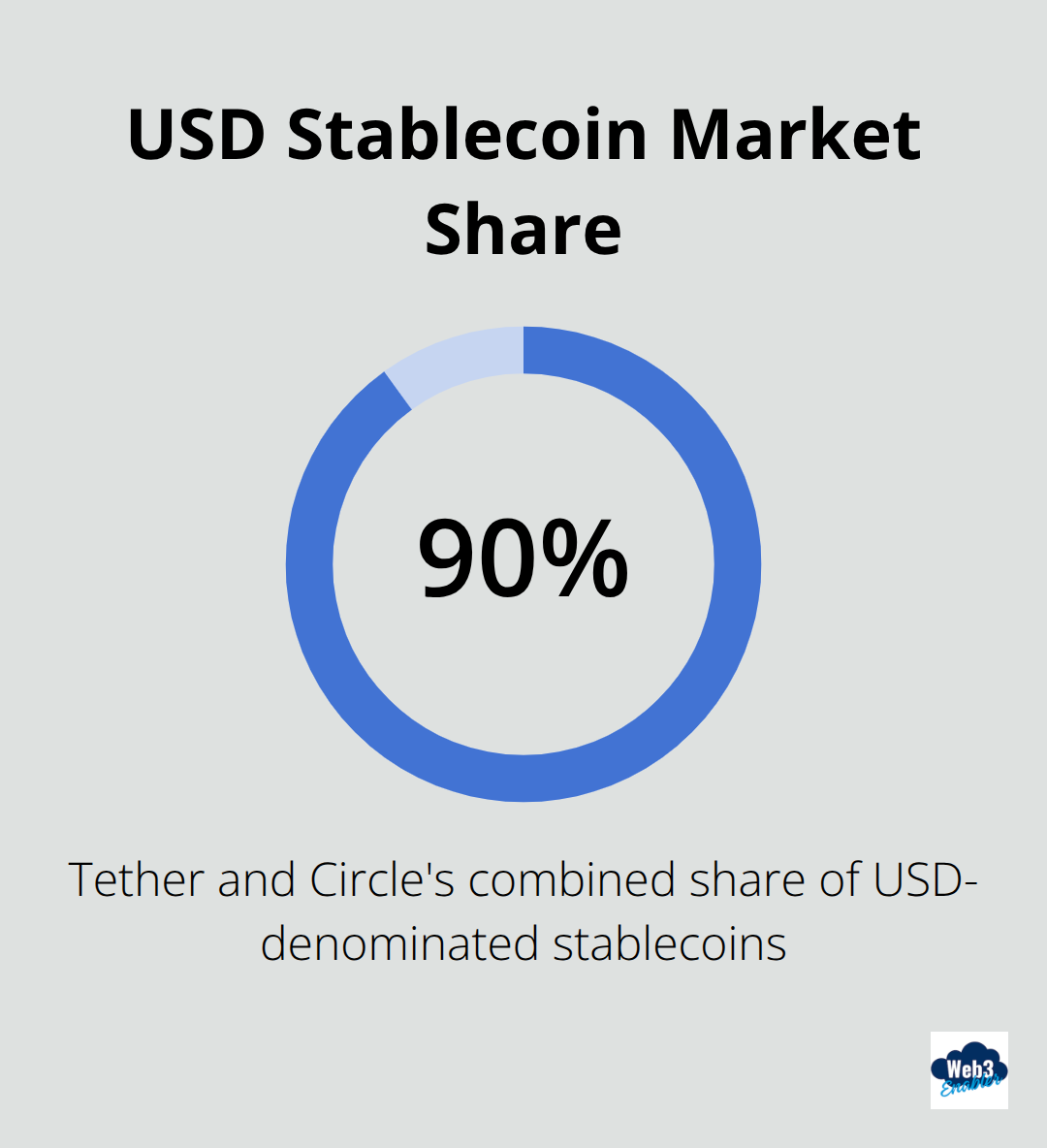
Stablecoins are cryptocurrencies that maintain steady value against specific assets, typically the U.S. dollar. The U.S. dollar-denominated stablecoin market has reached significant size, with Tether and Circle controlling around 90% of this massive market. These digital assets solve the volatility problem that makes traditional cryptocurrencies impractical for business use.
While Bitcoin swings wildly, stablecoins stay put at their target price through three main methods.
The Three Stablecoin Models That Matter
Fiat-backed stablecoins like USDC and USDT dominate because they work simply. Each coin has backing from real dollars or U.S. Treasury bonds that sit in bank accounts. The GENIUS Act, signed into law in July 2025, now requires stablecoin issuers to maintain these 1:1 reserves and provide monthly reports. Crypto-backed stablecoins use other cryptocurrencies as collateral but require over-collateralization to handle price swings. Algorithmic stablecoins rely on smart contracts and market incentives, though the TerraUSD collapse in 2022 showed how spectacularly this approach can fail.
How Price Stability Actually Works
The stability mechanism is straightforward for fiat-backed coins. When demand increases and price rises above $1, issuers mint new coins and sell them, which brings the price back down. When demand drops and price falls below $1, they buy coins back and burn them, which reduces supply. This arbitrage opportunity keeps prices stable because traders profit from fixing any deviations.
Market Growth Signals Business Trust
J.P. Morgan Global Research projects the stablecoin market could grow to between $500 billion and $750 billion in the next few years. Stablecoin transaction volumes surged as business adoption increases. This growth stems from the reliable stability mechanism that businesses actually trust, unlike the wild west of traditional crypto markets.
Now that you understand how stablecoins maintain their stability, let’s explore why traditional finance desperately needs this innovation.
Why Traditional Finance Moves So Slowly
Traditional banking systems operate like they’re stuck in the 1980s while businesses need financial operations that match today’s speed. Cross-border wire transfers through SWIFT networks take three to five business days and cost between $15 to $50 per transaction, with banks adding foreign exchange markups of 2-4% on top. Over 2.3 billion people globally remain unbanked, which creates massive gaps in financial access that traditional systems refuse to address. Weekend shutdowns and holiday closures mean urgent payments wait until Monday morning, and this costs businesses millions in delayed cash flow and missed opportunities.
Banking Hours Stop Business Dead
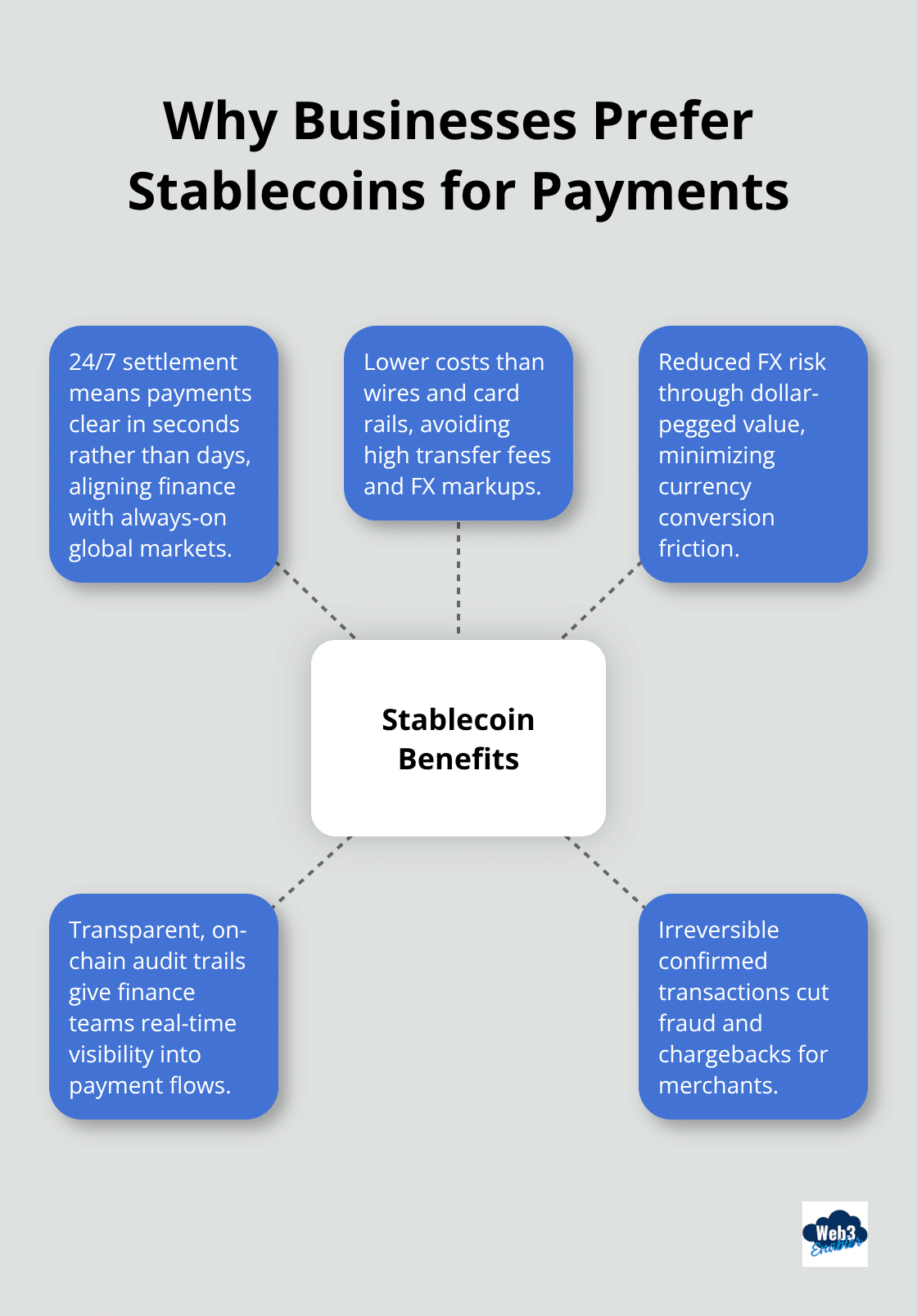
Financial markets operate 24/7, but traditional banking infrastructure shuts down evenings and weekends like a corner store from 1995. Currency markets move constantly, yet businesses can’t access their funds or make payments outside banking hours. This creates artificial delays that cost companies real money through missed trading opportunities, delayed supplier payments, and frustrated customers who expect instant service. Stablecoins operate continuously on blockchain networks that never sleep and settle transactions in seconds rather than days.
Major retailers like Gucci and Chipotle now accept stablecoin payments through platforms like Shopify and Stripe, which bypasses traditional payment delays entirely.
Currency Risk Destroys Profit Margins
International businesses lose substantial revenue to currency volatility and exchange rate manipulation by traditional banks. Companies like SpaceX use stablecoins for corporate treasury operations because predictable dollar-pegged values eliminate currency conversion friction and reduce exposure to exchange rate fluctuations. Migrant workers who send remittances home face fees up to 7% through traditional channels, while stablecoin transfers cost fractions of a percent. The transparency of blockchain transactions also eliminates hidden fees that banks bury in exchange rate spreads (giving businesses clear visibility into actual payment costs).
Speed Matters More Than Ever
Swift transfers between many markets take 3-5 days, while blockchain settlements complete in under 3 minutes. Once confirmed, stablecoin transactions are irreversible, and this reduces exposure to fraud and chargebacks that businesses face with credit card payments. The fast settlement nature benefits industries that require timely payments, such as logistics and online marketplaces where delays can break entire supply chains.
These fundamental limitations of traditional finance create perfect conditions for stablecoin adoption in real business applications.
How Companies Actually Use Stablecoins Today
Corporate treasurers at Fortune 500 companies now hold stablecoins as part of their cash management strategies because these digital assets offer immediate liquidity without the volatility concerns of traditional crypto. Tesla and MicroStrategy pioneered corporate stablecoin adoption, with Tesla accepting USDC for vehicle purchases and maintaining stablecoin reserves for operational flexibility. Companies use stablecoins for foreign exchange transactions that occur outside traditional financial systems, and treasury departments can move funds between subsidiaries instantly rather than wait three business days for international transfers to clear.
Treasury Operations Get Real-Time Control
Modern CFOs demand instant access to corporate funds, and stablecoins deliver this through programmable money that operates outside banking limitations. Companies like Stripe actively use stablecoins to modernize treasury operations because dollar-pegged stability eliminates currency conversion friction while maintaining 24/7 accessibility. Corporate treasurers can now execute same-day settlements for supplier payments, employee reimbursements, and intercompany transfers without paying weekend premium fees or waiting for Monday morning banking hours. The transparency of blockchain transactions provides audit trails that traditional banking systems cannot match (giving finance teams complete visibility into payment flows and timing).
Global Payroll Becomes Instant and Affordable
International businesses pay remote contractors and employees through stablecoin platforms that reduce transaction costs from $25-50 per wire transfer to under $1 per payment. Companies with distributed workforces save thousands monthly when they eliminate traditional remittance fees that can reach 7% through conventional banking channels. Freelancers and remote workers receive payments within minutes instead of waiting up to seven business days for international transfers, which improves cash flow and employee satisfaction.

Supply Chain Payments Speed Up Operations
Logistics companies use stablecoins to pay carriers and vendors instantly upon delivery confirmation (reducing payment delays that previously created working capital constraints throughout the supply chain). Major retailers like Gucci and Chipotle now accept stablecoin payments through platforms like Shopify and Stripe, which bypasses traditional payment delays entirely. The irreversible nature of confirmed stablecoin transactions reduces exposure to fraud and chargebacks that cost merchants $31 billion yearly, while programmable features allow companies to automate payment conditions like delivery confirmation.
Final Thoughts
The importance of stablecoins becomes undeniable when transaction volumes hit $5 trillion monthly and major corporations abandon traditional payment rails. Companies save thousands monthly through instant settlements that cost under $1 instead of $50 wire transfers. The GENIUS Act provides regulatory framework that gives CFOs confidence to adopt these digital payment solutions without compliance headaches.
Tesla accepts stablecoin payments while Gucci processes customer transactions through blockchain networks that never sleep. Remote teams receive payments in minutes rather than wait five business days for international transfers to clear. Supply chains operate with instant vendor payments that eliminate working capital constraints across entire networks.
J.P. Morgan projects stablecoin markets will reach $750 billion as businesses ditch slow banking systems for programmable money. We at Web3 Enabler help companies integrate these payment innovations through blockchain solutions that connect stablecoin functionality with existing corporate systems. This shift represents the biggest change in business finance since credit cards replaced cash payments (and smart companies are already making the move).