

 Crypto markets can feel like riding a rollercoaster blindfolded. One day you’re up 20%, the next you’re questioning your life choices.
But what if there was a way to get all the blockchain benefits without the heart palpitations? We at Web3 Enabler believe the advantages of stablecoins make them the perfect bridge between traditional finance and crypto innovation.
These digital assets offer portfolio stability while keeping you plugged into the future of money.
What Makes Stablecoins Actually Stable
Stablecoins flip the crypto script completely. While Bitcoin swings 5% before your morning coffee cools down, stablecoins maintain their value through three distinct mechanisms. Fiat-collateralized stablecoins like USDC and USDT back each token with real dollars that sit in bank accounts. Think of USDC as the responsible older sibling – Circle publishes monthly attestations that show exactly what assets back each coin. USDT processes the highest volume at $27.6 trillion in 2024, but Tether’s transparency track record makes some institutional investors nervous.
The Three Flavors of Stability
Crypto-collateralized stablecoins like DAI use other cryptocurrencies as collateral, which sounds counterintuitive until you realize they over-collateralize by 150-200%. Algorithmic stablecoins promised stability through market mechanics alone, but TerraUSD’s spectacular 2022 collapse proved that math without reserves equals disaster. The lesson? Stick with asset-backed options for serious portfolio allocation.
Smart Money Picks Winners
Institutional adoption tells the real story. USDC dominates regulated markets because Circle maintains full reserves in short-term U.S. Treasury bills and cash equivalents. USDT wins on liquidity and global reach, processes transactions 24/7 across every major exchange. The global stablecoin market continues growing rapidly, with 99% pegged to the U.S. dollar.

Your choice depends on priorities: maximum transparency with USDC or maximum liquidity with USDT. But here’s where things get interesting for your portfolio strategy.
Why Stablecoins Outperform Traditional Assets
Stablecoins deliver three portfolio advantages that traditional crypto and banking cannot match. First, volatility drops to near-zero levels while you maintain blockchain benefits. USDC and USDT maintain their dollar peg within 0.1% deviation, compared to Bitcoin’s average daily volatility of 4.2%. This stability means your portfolio allocation stays predictable while you earn blockchain-speed execution.
Second, settlement times shrink from days to minutes. Traditional wire transfers take 1-5 business days and cost $15-50 per transaction, while stablecoin transfers settle in seconds to minutes for under $1. Standard Chartered reports that businesses reduce settlement risk and improve cash flow management significantly when they use stablecoins for supplier payments.
Speed Transforms Operations
Settlement speed transforms business operations completely. Traditional banks shut down nights and weekends, but stablecoins process payments 24/7 across 180+ countries. Companies like Stripe actively use stablecoins to modernize treasury operations and eliminate correspondent bank delays.
The efficiency gain compounds when you handle multiple international suppliers or receive payments from global clients. Your business maintains operational flexibility without bank processing windows or intermediary bank fees that can reach $75 per international wire transfer.
Cost Structure Revolution
Cross-border payment costs drop from 6-8% to under 1% when you use stablecoins (according to Bank for International Settlements data). This reduction makes previously uneconomical transactions profitable.

Small businesses can now afford to pay international freelancers $500 without losing $40 to fees.
The cost advantage becomes more pronounced at scale – a $100,000 international payment saves approximately $6,000 in traditional bank fees. Stablecoins processed $27.6 trillion in 2024, surpassing Visa and Mastercard combined.
Portfolio Integration Benefits
These operational advantages translate directly into portfolio performance. You eliminate currency conversion spreads that typically cost 2-4% on international transactions. Your capital deployment becomes more efficient when settlement delays disappear and transaction costs drop to negligible levels.
Smart portfolio managers now use these cost and speed advantages to implement sophisticated strategies that were previously impossible with traditional banking infrastructure.
How to Deploy Stablecoins Strategically
Dollar-cost averaging transforms into surgical precision when you use stablecoins instead of traditional bank transfers. Your market timing improves dramatically because you eliminate 2-5 day bank settlement delays that often cause you to miss optimal entry points. Major exchanges like Coinbase Pro offer zero-fee conversions between USDC and other cryptocurrencies, which means your DCA strategy costs less than typical bank wire fees plus exchange spreads.
International Treasury Management
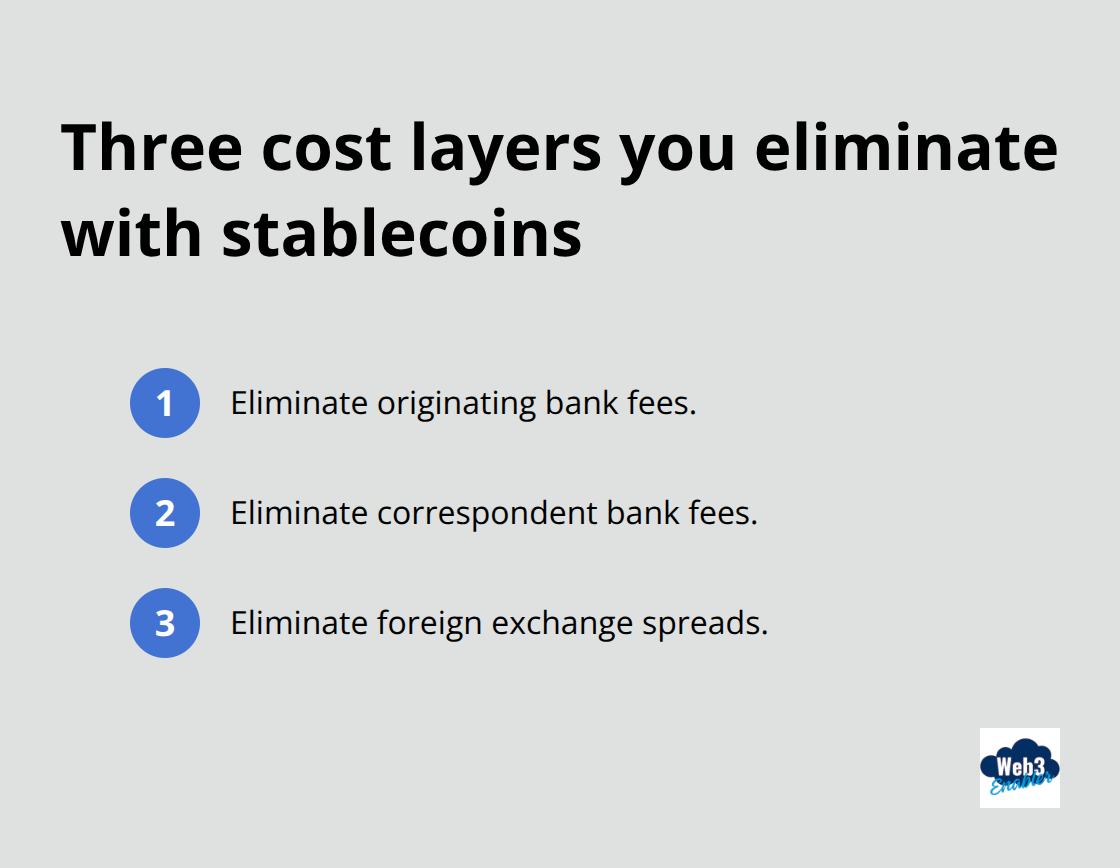
Companies that process significant volumes in international payments can save substantial amounts when they switch from correspondent banks to stablecoin rails. The strategy works because you eliminate three cost layers: originating bank fees, correspondent bank fees, and foreign exchange spreads. Enterprise clients can reduce payment processing time from 3-7 days to under 30 minutes when they use USDC for supplier payments across multiple countries.
Your cash flow improves because suppliers receive payments instantly rather than wait for international wire confirmations.
Market Volatility Protection
Stablecoins outperform traditional hedges during crypto market crashes because you maintain blockchain network access while you avoid volatility. During crypto corrections, portfolios with stablecoin allocations typically show less drawdown than pure crypto positions. The hedge works both ways – when traditional markets crash, your stablecoin reserves let you deploy capital instantly into discounted crypto assets without bank transfer delays.
Crisis-Tested Stability
Citizens in hyperinflation regions use stablecoins as inflation protection, with significant adoption growth where local currencies lose substantial value annually. These real-world stress tests prove stablecoins maintain their peg even when traditional financial systems face challenges. Your portfolio gains access to this same stability mechanism that protects wealth during currency crises, especially as blockchain technology continues expanding into corporate treasury management.
Final Thoughts
The advantages of stablecoins extend far beyond simple price stability. These digital assets deliver measurable portfolio benefits through reduced volatility, faster settlement times, and dramatically lower transaction costs. Your business gains access to 24/7 global payment rails while it maintains predictable value storage that traditional cryptocurrencies cannot provide.
Institutional adoption accelerates as major corporations recognize stablecoins process $27.6 trillion annually with superior efficiency compared to legacy systems. Companies now integrate stablecoins into treasury operations, international payments, and hedging strategies that were previously impossible with traditional financial infrastructure. The regulatory landscape continues to evolve with frameworks like the GENIUS Act and EU MiCA (which provide clearer guidelines for enterprise adoption).
Web3 Enabler helps businesses bridge this gap between traditional operations and blockchain innovation through solutions that support stablecoin payments and global treasury management. The future belongs to companies that adopt these efficiency gains early while competitors struggle with outdated payment systems. Smart businesses recognize that stablecoin integration transforms their operational capabilities and competitive position.