



Your Salesforce instance handles customer relationships. Stablecoins handle payments without the drama of volatility or wire transfer delays.
At Web3 Enabler, we’ve watched businesses struggle with slow international payments and currency swings. Stablecoin adoption in Salesforce changes that game entirely-turning your CRM into a payment powerhouse that actually works at global speed.
Why Stablecoins Actually Matter Right Now
International payments are broken. A wire transfer takes three to five business days, costs anywhere from $15 to $50 per transaction, and leaves your money floating in correspondent banking limbo while currency rates shift beneath you. A stablecoin payment settles in minutes for a fraction of the cost.
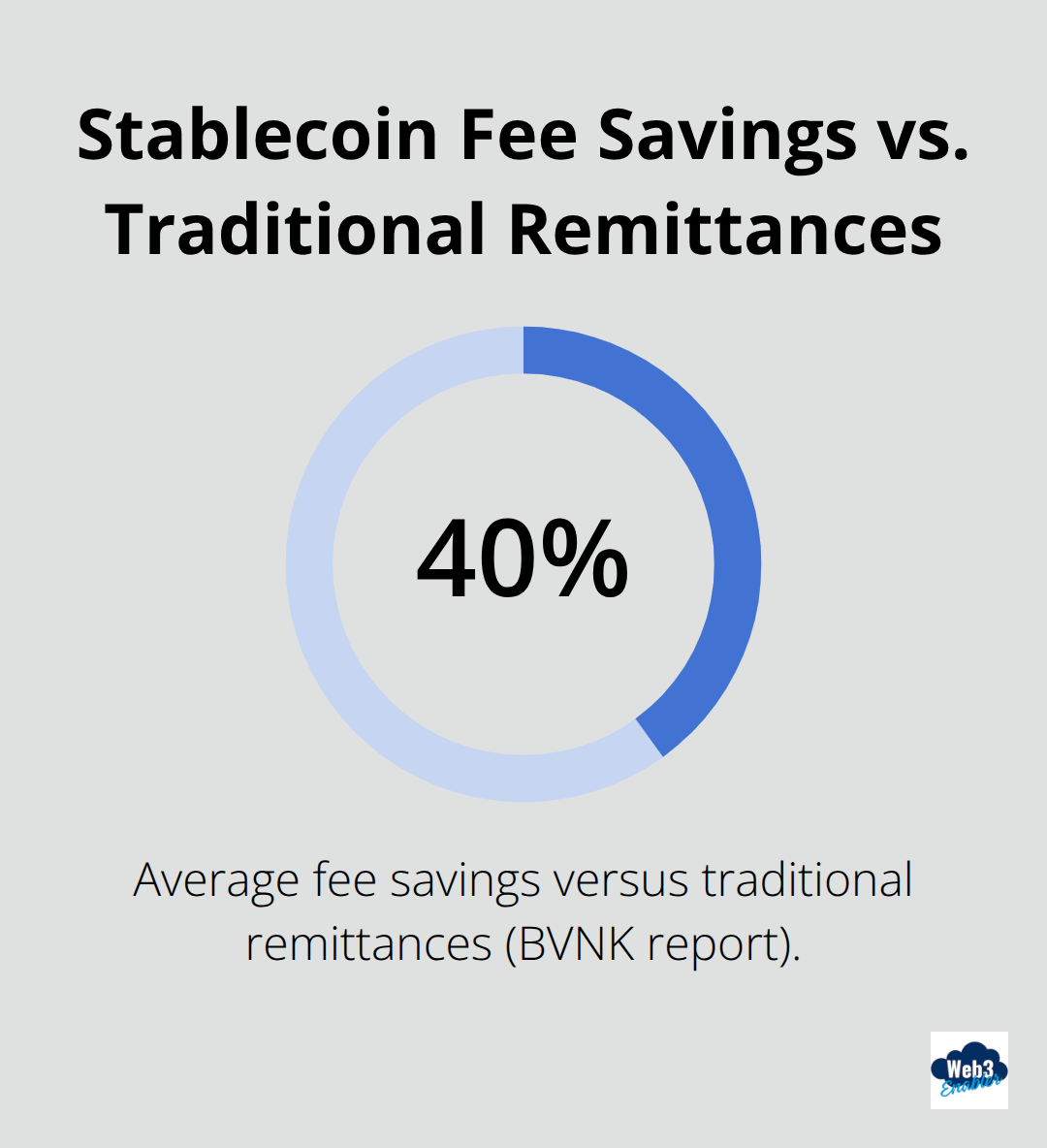
According to the BVNK Stablecoin Utility Report, stablecoin users reported about 40% average fee savings versus traditional remittances. That’s not theoretical savings-that’s real money staying in your business instead of vanishing into banking infrastructure that hasn’t fundamentally changed since the 1970s. For companies managing cross-border supplier payments, payroll for distributed teams, or marketplace settlements, this difference compounds fast. A manufacturing company pays suppliers across five countries and cuts settlement costs by tens of thousands annually just by switching to stablecoins. Those numbers reflect operational reality, not speculation.
Currency volatility stops eating your margins
When you send a traditional wire transfer to pay a contractor in Mexico or an invoice to a vendor in Southeast Asia, the exchange rate shifts daily. Stablecoins are pegged 1:1 to the US dollar, so your $10,000 payment stays $10,000 regardless of what happens in currency markets. Companies with global operations currently hedge currency exposure through forward contracts, options, or simply accept the loss when rates move against them. Stablecoins eliminate that complexity entirely. The Genius Act of 2025 established the first federal US framework for stablecoins, mandating 1:1 reserves and AML/CFT compliance. This regulatory clarity means enterprises can confidently use stablecoins for treasury and operations without the legal uncertainty that plagued crypto adoption five years ago. EU MiCA regulations from 2023 provide equally robust protections, supporting cross-border adoption across Europe. When your payment rail is regulated and reserve-backed, the volatility excuse evaporates.
Speed unlocks new business models
Three-to-five-day settlement windows force companies to maintain larger cash reserves than they actually need. A SaaS company collects payments from 50 customers across 30 countries and sits on float for days while transfers clear. Stablecoin payments settle in minutes, so working capital improves immediately. These aren’t early adopters experimenting-they’re workers and businesses treating stablecoins as functional currency for actual income. When you integrate stablecoin payments directly into Salesforce, you compress this timeline even further. Payments initiate from within your CRM, settlement happens on-chain in minutes, and your accounting records update in real time. No manual reconciliation, no three-day waiting period, no currency conversion friction.
Real businesses are already moving
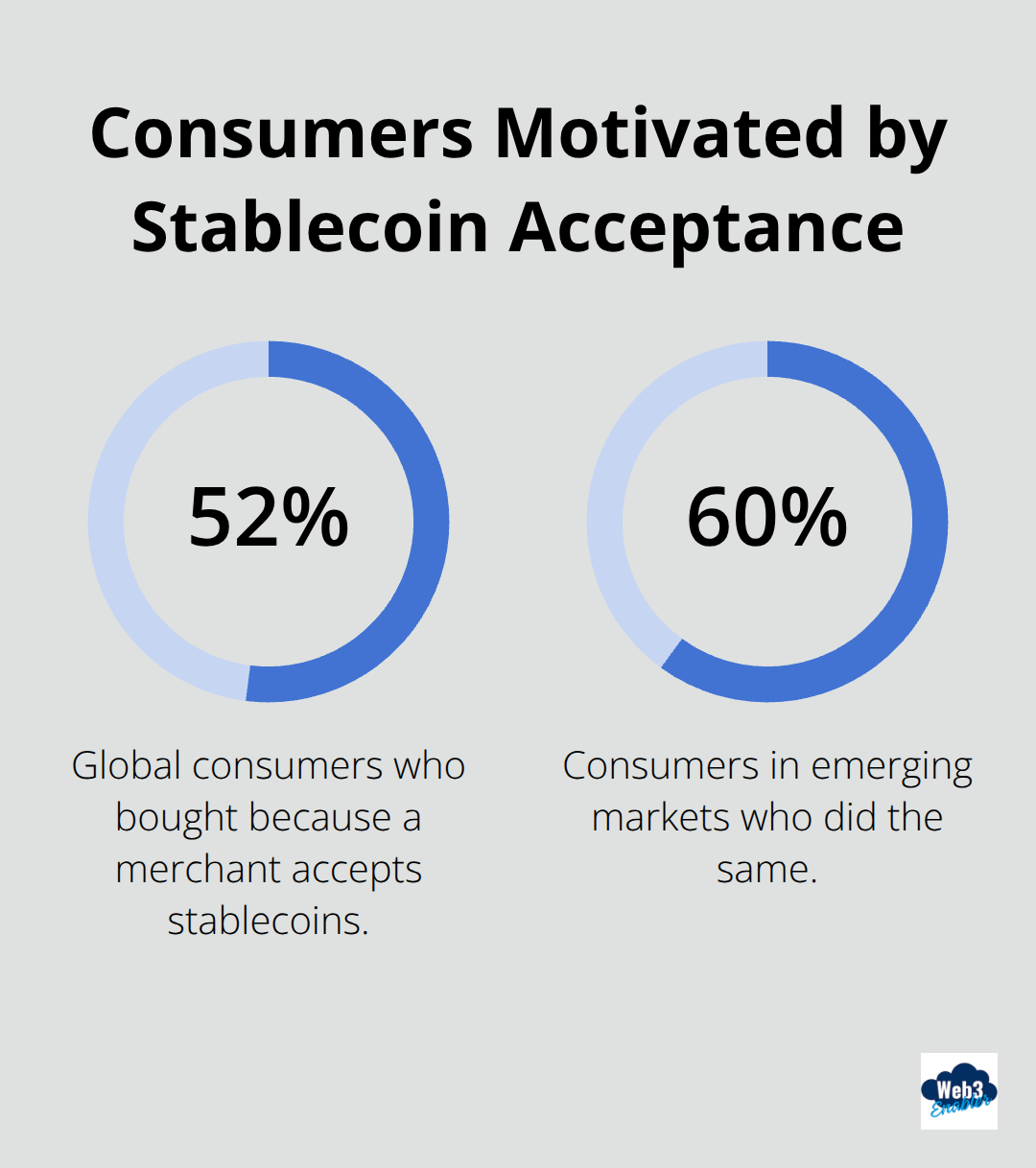
The shift from traditional payments to stablecoins isn’t coming-it’s happening now. More tellingly, 52% of respondents bought something specifically because a merchant accepts stablecoins, rising to 60% in emerging markets. This consumer behavior signals something important: stablecoins work better for actual transactions than traditional payment methods in many scenarios. Marketplace sellers report improved sales volume when they accept stablecoins. Freelancers and distributed teams receive payments faster and cheaper. Companies paying international invoices cut costs and settlement time dramatically. These aren’t hypothetical benefits-they’re operational improvements that show up in cash flow statements and profit margins. The question isn’t whether stablecoins matter for your business. The question is how quickly you integrate them into your existing workflows, starting with the platform where you already manage customer relationships and transactions.
How Stablecoins Actually Integrate Into Salesforce
Native Salesforce integration means stablecoin payments happen inside your existing CRM without jumping between platforms or learning new tools. Salesforce-native stablecoin solutions available on the Salesforce AppExchange eliminate external gateways that create data silos and reconciliation headaches. When you send a stablecoin payment from within Salesforce, your customer record, transaction history, and payment status all update automatically in real time. No manual data entry, no waiting for settlement confirmations to arrive via email, no separate accounting system that never quite matches your CRM.
The setup itself takes hours, not weeks. You can move from AppExchange listing to live stablecoin payments in a single day, which means your team starts moving money faster while implementation costs stay minimal. Supported stablecoins like USDT and USDC work with compatible wallets, so your customers and vendors receive payments immediately without needing to understand blockchain infrastructure. The friction that kills most fintech adoption simply vanishes when the technology lives inside the platform your team already uses every day.
Compliance stops being an afterthought
Regulatory requirements integrate directly into the workflow, not added as a separate box to check later. KYC and KYB verification flows through trusted partners, so you avoid manually reviewing documents or maintaining separate compliance databases. Stablecoin regulations establish robust protections across major markets, with mandates for reserves and AML/CFT compliance in the US and EU MiCA regulations from 2023 establishing equally robust protections across Europe. This regulatory foundation means your payments operate within federal frameworks and cross-border standards rather than gray zones.
Security works the same way. Custody relies on regulated partners like BitGo Trust Company using omnibus arrangements, which protects your customer assets while your cap-table management stays streamlined. For highly sensitive stablecoin data within Salesforce, BYOK (Bring Your Own Key) and HYOK (Hold Your Own Key) encryption let you maintain full key control outside Salesforce infrastructure. This matters for regulated industries where data sovereignty isn’t optional.

You generate and manage encryption keys yourself, meaning even if data is compromised, attackers cannot decrypt without keys you control separately. Rapid key rotation schedules and robust access controls within your key management system keep audit readiness tight. The separation of keys and data reduces risk fundamentally and supports compliance with GDPR, DORA, NIS2, and PCI DSS standards that apply to payment operations.
Your accounting actually closes on time
Real-time settlement means your books match your cash position instantly instead of sitting in uncertainty for days. When a stablecoin payment settles on-chain in minutes, your Salesforce accounting records update without manual reconciliation. Cross-border supplier payments, payroll for distributed teams, and marketplace settlements all compress into workflows that actually match how modern business operates. Manufacturing companies paying suppliers across multiple countries see the operational difference immediately-settlement costs drop, working capital improves, and currency exposure vanishes.
The speed advantage compounds when you manage multiple payment corridors simultaneously. A company collecting invoices from 30 countries no longer maintains excess cash reserves waiting for transfers to clear. That freed capital goes back into operations instead of sitting in banking infrastructure designed for a different era. Your finance team spends less time chasing payment status emails and more time on strategy. This operational shift sets the stage for exploring how different industries leverage these capabilities to transform their specific business challenges.
Stablecoin Adoption Across Industries
Financial Services Firms Move Stablecoins Into Production
Financial services firms operate stablecoins in production workflows, not testing labs. Wealth advisors using Salesforce Financial Services Cloud now see live visibility of client crypto holdings directly in portfolio dashboards, eliminating the spreadsheet chaos that plagued crypto asset tracking for years. A financial advisor managing $50 million in assets across traditional stocks, bonds, and crypto holdings previously toggled between three separate systems to get a complete picture. Native Salesforce integration collapses that friction into a single dashboard where advisor oversight happens in real time. Client coin allocations update automatically, rebalancing triggers activate without manual intervention, and compliance reporting generates without extracting data to external tools. This matters because advisors spend less time on reconciliation and more time on client strategy.
E-Commerce Merchants Capture New Revenue
E-commerce merchants accept stablecoins and report measurable conversion improvements. The BVNK Stablecoin Utility Report found that 52% of consumers bought something specifically because a merchant accepts stablecoins, jumping to 60% in emerging markets. For Salesforce Commerce Cloud retailers, this translates directly into revenue.
A marketplace seller accepts USDC or USDT and removes payment friction for international customers who already hold stablecoins, eliminating the conversion step that kills transactions. Stablecoin payments also solve the velocity problem in high-volume commerce. A platform processes 10,000 daily transactions across 25 countries and no longer waits days for settlement. Money arrives in minutes, inventory replenishment accelerates, and working capital cycles tighten measurably.
Enterprise B2B Payments Unlock Working Capital
Enterprise B2B payments show the most dramatic operational shifts. Manufacturing companies pay suppliers across multiple countries and cut settlement costs by roughly 40% according to the BVNK data, but the real win is the working capital unlock. A mid-market manufacturer maintains $2 million in float reserves for in-flight payments and suddenly frees that capital when settlement compresses from five days to five minutes. Cross-border supplier invoices, payroll for distributed teams, and marketplace settlements all operate faster and cheaper when stablecoin rails integrate directly into Salesforce. This is where regulatory clarity matters most. The Genius Act of 2025 established the first federal US framework for stablecoins with mandated high-quality reserves and AML/KYC compliance, while EU MiCA regulations provide equally robust protections across Europe. Enterprise finance teams now confidently route payments through stablecoin infrastructure because the regulatory foundation exists.
Integration Eliminates Adoption Friction
Stablecoins work best when they live inside existing business software rather than requiring separate tools and manual workflows. Integration eliminates the adoption friction that killed previous fintech initiatives. Financial advisors manage crypto client assets, e-commerce platforms expand international reach, and B2B operations optimize working capital-all within the platforms where teams already work every day. This convergence of stablecoin capability and existing infrastructure transforms how businesses handle payments across sectors.
Final Thoughts
Stablecoin adoption in Salesforce transforms how financial services firms, e-commerce merchants, and enterprise B2B operations move money faster and cheaper than traditional rails allow. The regulatory foundation exists, the technology works, and the cost savings show up in your cash flow statements. What remains is implementation, and you can start today with a single high-friction payment corridor.
Identify where settlement speed or cost reduction delivers immediate operational value-whether that’s international supplier payments stuck in limbo, client asset tracking across multiple systems, or e-commerce checkout abandonment from emerging markets. Pilot stablecoin integration within that specific workflow, and the setup takes hours rather than months, which means you validate the approach before scaling across your entire payment infrastructure. Your Salesforce instance already contains the customer relationships, transaction history, and compliance data you need, so native stablecoin solutions eliminate the external gateways that create data silos and reconciliation nightmares.
We at Web3 Enabler specialize in connecting blockchain technology with existing corporate infrastructure through Salesforce-native solutions available on the Salesforce AppExchange. Explore how Web3 Enabler accelerates your stablecoin adoption and moves your business from planning into operational improvement. The question isn’t whether stablecoins matter for your business anymore-it’s how quickly you move from planning to execution.