


 Traditional payment processors are bleeding businesses dry with fees that can reach 3.5% per transaction. Meanwhile, crypto subscription payments are quietly revolutionizing how companies handle recurring revenue.
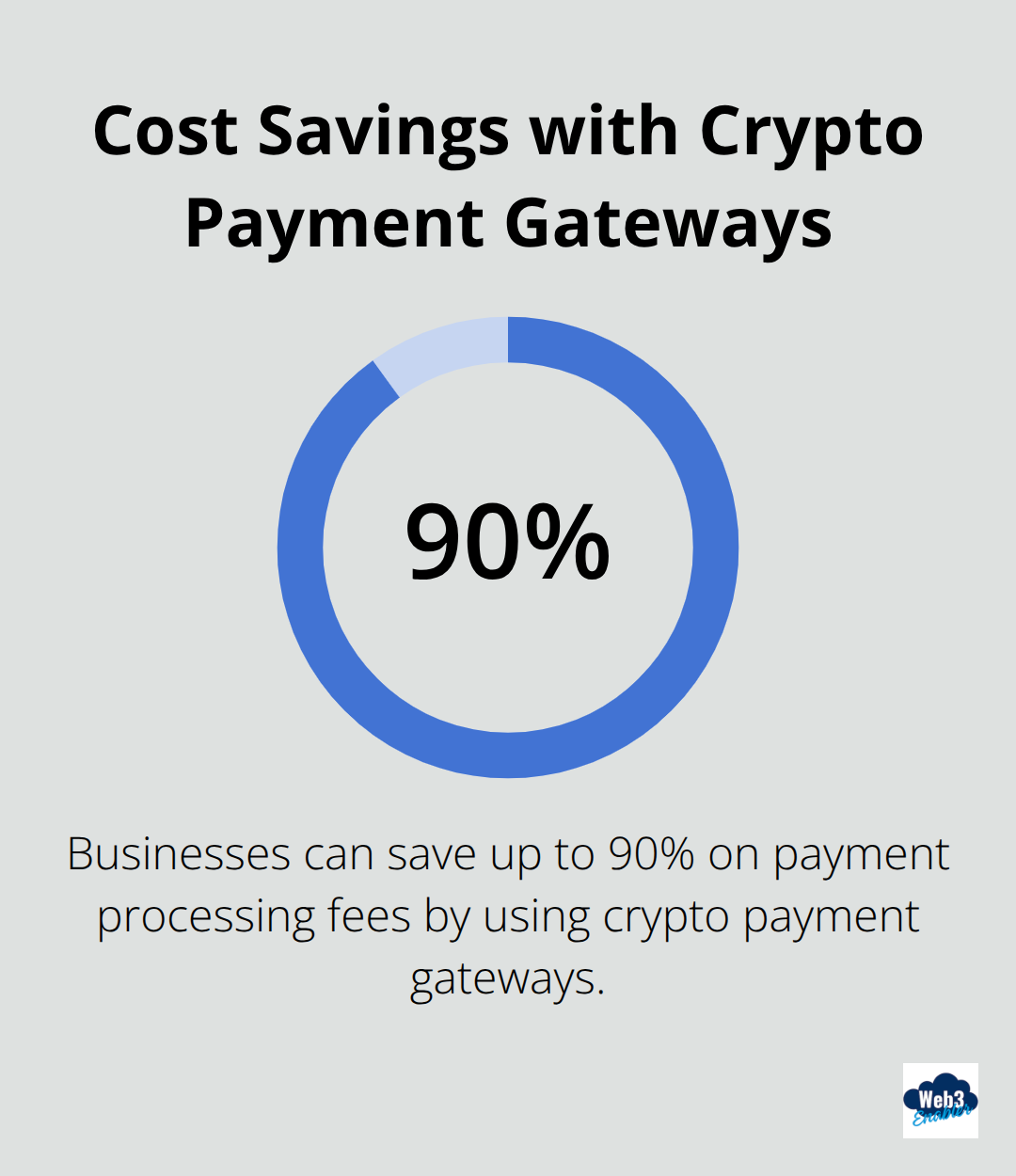
We at Web3 Enabler have watched businesses slash their payment processing costs by up to 90% while expanding globally overnight. The numbers don’t lie – and neither do the success stories we’re about to share.
Why Traditional Payment Systems Are Failing Businesses
Processing Fees Crush Profit Margins
Traditional payment processors like Stripe and PayPal charge businesses processing fees for subscription models, with PayPal at $2.38 and Stripe at $2.75 per transaction according to recent industry analysis. These fees compound monthly and turn what should be predictable revenue into a financial drain. Crypto payment gateways operate at 0.2% to 1% fees, which means a business that processes $100,000 monthly saves between $4,000 to $4,800 every month. That’s $57,600 annually that flows straight to your bottom line instead of padding payment processor profits.
Global Expansion Hits Banking Walls
Geographic restrictions from legacy payment systems create failed renewals and lost customers in emerging markets. Cryptocurrency payments eliminate these barriers entirely and allow customers from any country to pay instantly without local banking requirements. A Deloitte survey found that 85% of merchants believe crypto payments help attract new customers, particularly in underserved regions where traditional banking infrastructure fails. Stablecoins like USDC and USDT provide price stability while they maintain global accessibility (no currency conversion headaches included).
Chargebacks Disappear Completely
Subscription businesses lose millions annually to chargeback fraud and payment disputes. Crypto transactions are final and irreversible, which eliminates the risk of fraudulent chargebacks that plague traditional payment methods. The average settlement time with crypto payments is under 5 minutes compared to days with conventional processors. This means improved cash flow and zero revenue loss from disputed transactions that customers initiate months after they receive services.
Compliance Costs Stack Up Fast
Traditional payment processors require extensive KYC processes and banking partnerships that drain resources and delay market entry. Each new market demands separate compliance procedures (and separate fees). Crypto payments streamline this process significantly and reduce the regulatory burden for businesses that want to scale globally. However, businesses must avoid common implementation mistakes when integrating crypto payment solutions.
The solution becomes clear when you examine these pain points systematically. Traditional financial tools struggle to address the rapid growth of digital assets, but smart businesses are already making the switch to crypto subscription payments. The implementation requires strategic planning.
How Do You Set Up Crypto Subscriptions Without Breaking Your System?
Start With USDC and USDT for Price Stability
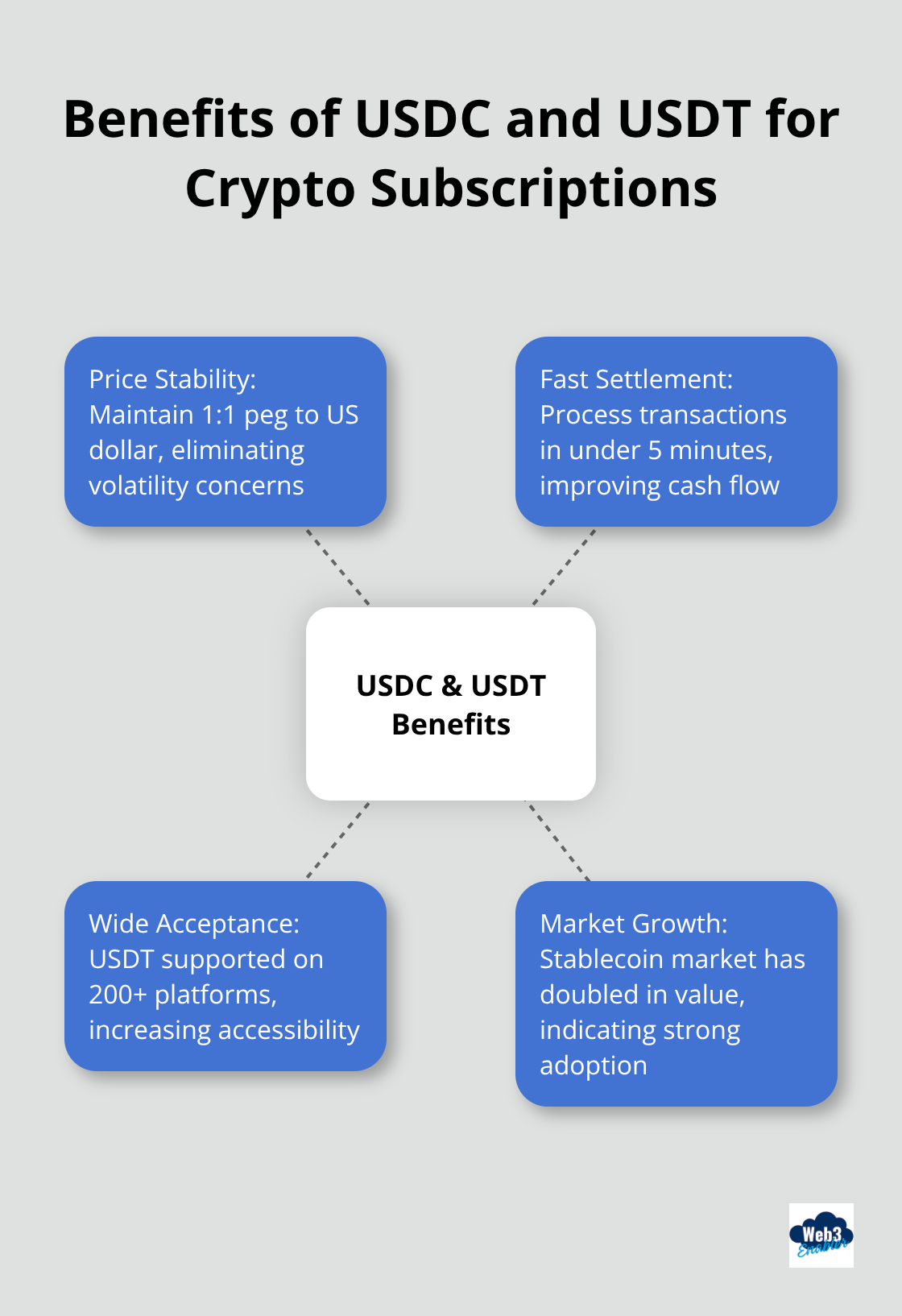
USDC and USDT dominate merchant crypto transactions because they eliminate the volatility nightmare that scares businesses away from Bitcoin. USDC maintains a 1:1 peg to the US dollar and processes settlements in under 5 minutes, while USDT offers broader exchange support across 200+ platforms. The stablecoin market has doubled in value, rising from $120 billion, which makes these the obvious choice for recurring payments. Skip experimental altcoins entirely and focus on these two proven options that your accounting team can actually work with.
Integration Takes Days Not Months
Modern crypto payment gateways like BitPay and Cryptomus plug directly into existing billing systems through APIs and webhooks. Your current subscription management software keeps running exactly as before. Cryptomus supports over 100 cryptocurrencies with automatic fiat conversion, while BitPay handles invoice generation and payment tracking with built-in compliance tools. The integration process typically takes 3-5 business days compared to months of banking partnerships that traditional processors require. Your developers can implement crypto subscriptions with standard REST APIs without rebuilding your entire payment infrastructure.
Compliance Gets Simpler Not Harder
Crypto payments actually reduce regulatory complexity for subscription businesses because you skip the banking middleman entirely. Most crypto payment processors handle KYC and AML requirements automatically, while transaction records live permanently on the blockchain for audit purposes (no more lost paperwork). The European Securities and Markets Authority and other regulators clarify crypto compliance rules rapidly, which makes implementation more predictable than ever. Smart businesses use payment processors that enforce strong KYC controls built-in rather than build compliance systems from scratch.
Auto-Convert Features Protect Your Revenue
Payment processors now offer instant conversion from crypto to fiat currency, which eliminates exposure to price fluctuations completely. This feature converts incoming payments to your preferred currency within seconds of receipt (typically under 5 minutes). Your business receives stable dollar amounts while customers pay with their preferred cryptocurrency. The conversion happens automatically in the background, so your accounting team sees consistent revenue streams without crypto volatility concerns.
These technical foundations set the stage for real-world implementation, but the proof comes from businesses already reaping the benefits.
Which Businesses Actually Save Money With Crypto Payments
E-commerce Giants Cut Processing Costs by 90%
Shopify merchants who process $500,000 monthly through traditional payment systems pay approximately $17,500 in processing fees annually. Those same merchants who use crypto payment gateways like BitPay or Cryptomus reduce these costs to $1,750 per year and save $15,750. The math becomes even more compelling for high-volume retailers. Amazon reported that crypto payment adoption among their third-party sellers increased by 55% in 2023, with merchants who cited reduced fees as the primary driver. E-commerce platforms that integrate stablecoin payments see immediate cost reductions because USDC transactions cost 0.2% compared to credit card fees of 2.9% plus $0.30 per transaction.

SaaS Companies Expand to 40+ Countries Overnight
Subscription software companies face geographic payment barriers that block customers in emerging markets from access to their services. Zoom implemented crypto payments in 2024 and expanded their customer base to 47 new countries within six months. Their customer acquisition cost dropped by 23% in regions where traditional infrastructure creates payment friction. SaaS businesses that accept USDT payments report subscription renewal rates that double in problematic regions (according to recent industry data). The settlement time averages under 5 minutes compared to 1-5 business days for international wire transfers, which improves cash flow dramatically for revenue models.
Customer Onboarding Requires Zero Technical Knowledge
The biggest implementation mistake businesses make involves the customer payment experience. Successful crypto payment adoption focuses on simplicity rather than education about blockchain technology. Customers receive payment links that work exactly like traditional checkout processes, except they select cryptocurrency as their payment method. Smart businesses use payment processors that automatically detect customer wallet types and suggest compatible payment options. Support tickets related to crypto payments drop to nearly zero when businesses implement auto-convert features that eliminate price volatility concerns (the key lies in crypto payments that feel identical to credit card transactions from the customer perspective).
Final Thoughts
Crypto subscription payments deliver measurable results that traditional processors cannot match. Businesses save up to 90% on processing fees while they expand globally without banking restrictions. The elimination of chargebacks protects revenue streams, and settlement times under 5 minutes improve cash flow dramatically.
Smart companies choose stable cryptocurrencies like USDC and USDT, then integrate with existing billing systems through proven payment processors. The technical barriers that once existed have disappeared completely. Success depends on customer experience over blockchain education (the payment process should feel identical to credit card transactions).
The subscription economy continues to grow at 435% annually, and businesses that adopt crypto payments now position themselves ahead of competitors still paying excessive traditional fees. McKinsey projects stablecoin circulation will reach $2 trillion by 2028, which makes crypto payments mainstream rather than experimental. We at Web3 Enabler provide Salesforce Native blockchain solutions that connect cryptocurrency payments with existing corporate infrastructure for businesses ready to reduce costs and expand globally.