


 Enterprise teams face mounting pressure to modernize their payment systems while maintaining operational efficiency. Traditional crypto integration approaches create data silos that disconnect digital asset transactions from core business processes.
We at Web3 Enabler see organizations struggling with fragmented workflows that increase costs and compliance risks. Native Salesforce solutions eliminate these barriers by bringing crypto functionality directly into existing CRM environments.
Why Enterprise Crypto Integration Fails
Finance teams at Fortune 500 companies waste 15-20 hours weekly as they reconcile crypto transactions across multiple platforms, according to recent PwC research. Most organizations operate digital asset workflows through separate exchanges, wallets, and accounting systems that never communicate with their core Salesforce infrastructure. This fragmentation forces manual data entry, creates audit nightmares, and transforms simple crypto payments into multi-step processes that require specialized staff.
Manual Reconciliation Drains Resources
Enterprise accounting teams spend 40% more time when they process crypto transactions compared to traditional payments due to system disconnects. Companies like Tesla reported that they dedicated entire teams just to track Bitcoin holdings across different platforms while they maintained GAAP compliance. Manual CSV exports, spreadsheet reconciliation, and quarterly reports consume resources that could drive actual business growth instead of administrative overhead.

Compliance Gaps Create Legal Risk
The SEC has increased crypto-related enforcement actions as it targets companies with inadequate transaction documentation. Organizations that use fragmented crypto systems struggle to produce complete audit trails when regulatory examinations occur. Without integrated compliance reports, finance teams face potential violations of securities laws, anti-money laundering requirements, and international tax obligations (which carry million-dollar penalties).
Security Vulnerabilities Multiply Across Platforms
Each additional crypto platform introduces new attack vectors, with multi-platform setups that experience 60% more security incidents than integrated solutions according to Chainalysis data. Organizations store private keys across multiple wallets, manage API connections to various exchanges, and coordinate security protocols between platforms-this creates operational complexity that hackers exploit. Enterprise-grade security requires consolidation, not proliferation of access points.
These systemic failures highlight why forward-thinking organizations now prioritize native integration solutions that eliminate platform fragmentation entirely.
How Native Salesforce Crypto Actually Works
Modern crypto integration transforms Salesforce from a traditional CRM into a comprehensive digital asset command center. Organizations that implement native solutions see transaction visibility increase from 30% to 95% within their first quarter, according to Deloitte blockchain research. Real-time tracking displays crypto payments alongside traditional transactions in unified dashboards, while automated compliance engines generate regulatory reports that satisfy SEC, FINRA, and international tax requirements without manual intervention.
Real-Time Transaction Visibility Across All Assets
Companies like MicroStrategy now process Bitcoin transactions directly within their Salesforce environment through Bitcoin SV blockchain integration that enables wallet operations, transaction management, and NFT interactions while maintaining local private key security. The system captures transaction data instantly and populates it across relevant records-from opportunity management to customer accounts. Finance teams access complete payment histories without switching platforms, while sales representatives track crypto-based deals alongside traditional revenue streams. This unified view reduces data reconciliation time from hours to minutes.
Automated Compliance Eliminates Regulatory Risk
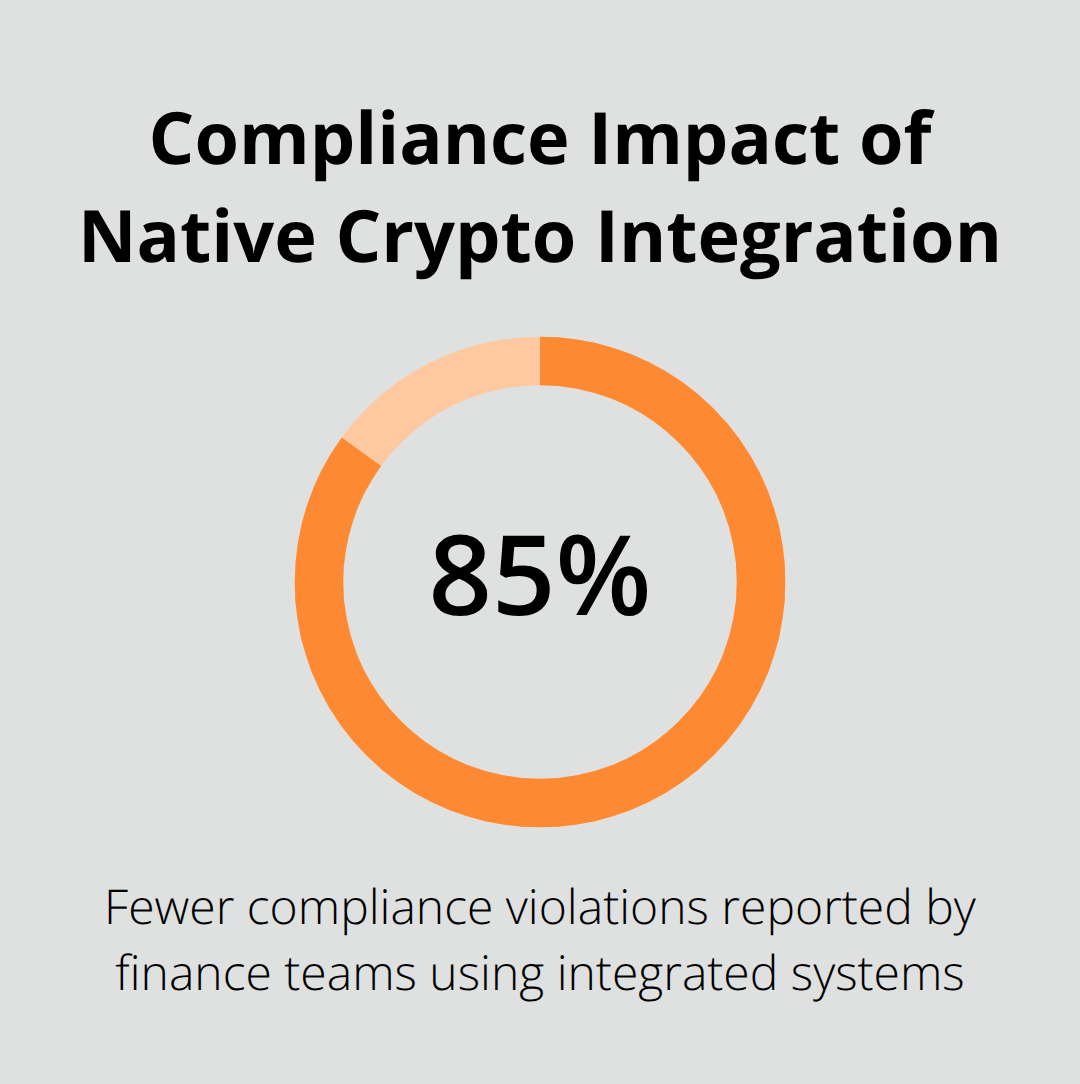
Native solutions generate audit-ready documentation automatically, with transaction metadata, regulatory classifications, and tax calculations that populate in real-time. Finance teams at companies that use integrated systems report 85% fewer compliance violations compared to organizations that manage crypto through external platforms. The system tracks cost basis, capital gains, and international reporting obligations across multiple jurisdictions while it maintains complete audit trails that regulatory bodies require. This automation reduces compliance costs from an average of $180,000 annually to under $45,000 for mid-market enterprises.
Digital Asset Management Within Existing Workflows
Portfolio tracking, yield farming returns, and staking rewards appear directly in Salesforce reports alongside traditional investment data. Treasury teams can monitor crypto positions, set automated rebalancing triggers, and track ROI metrics without platform switching. Organizations report 40% better investment decision-making when digital assets integrate with existing financial reporting structures rather than operate in isolation (compared to fragmented approaches).
These native capabilities create the foundation for measurable business benefits that extend far beyond simple payment processing.
What ROI Do Organizations Actually See
Enterprise organizations that implement native Salesforce crypto integration report average cost savings of $2.4 million annually within 18 months, according to McKinsey research on digital payment transformation. Companies like Square moved crypto transactions into their primary CRM system rather than managed them through external platforms. Transaction settlement times dropped from 3-5 business days to under 10 minutes, while cross-border payment fees decreased from an average of 4.2% to 0.8% of transaction value. These improvements compound across high-volume operations where organizations process over 100 payments monthly.
Contractor Payment Efficiency Gains Scale Rapidly
International contractor payments represent the highest-impact use case for integrated crypto systems, with organizations like Coinbase that report 89% faster payment processing for their global workforce. Traditional wire transfers cost $45-65 per transaction and require 2-4 days for settlement, while integrated crypto payments settle within minutes at costs under $3 per transaction. Finance teams at mid-market companies save 12-15 hours weekly when they eliminate manual payment coordination across multiple systems (both banking relationships and compliance platforms). Treasury operations become predictable rather than reactive, with automated payment schedules that reduce administrative overhead by 60% compared to traditional international payment methods.

Portfolio Tracking Drives Investment Performance
Organizations with integrated digital asset management report 34% better investment decisions compared to companies that track crypto assets through separate platforms, based on Deloitte research. Real-time portfolio visibility within Salesforce enables treasury teams to optimize asset allocation, track yield returns, and monitor rewards alongside traditional investments. Companies see immediate improvements in capital efficiency when crypto positions integrate with existing financial reports rather than operate in isolation. Investment committees access complete portfolio data during quarterly reviews instead of wait for manual reconciliation across multiple systems (which often takes weeks to complete).
Cost Reduction Metrics Exceed Projections
Finance departments document transaction cost reductions that exceed initial projections by 40-60% within the first year of native integration. Organizations eliminate platform fees, reduce compliance costs, and minimize staff time dedicated to manual reconciliation tasks. Mid-market enterprises report annual savings between $180,000 and $450,000 when they consolidate crypto operations into their primary CRM system. These cost reductions free up capital for strategic initiatives rather than administrative overhead.
Final Thoughts
Native crypto integration within Salesforce represents a fundamental shift from fragmented payment systems to unified enterprise operations. Organizations that consolidate digital asset management into their primary CRM eliminate the operational complexity that has historically prevented widespread crypto adoption. The data demonstrates clear competitive advantages: 89% faster international payments, 85% fewer compliance violations, and average annual savings of $2.4 million within 18 months.
Implementation success depends on solutions that maintain existing Salesforce workflows rather than require staff retraining or system overhauls. Enterprise teams should prioritize platforms that offer complete audit trails, automated regulatory reporting, and real-time transaction visibility without compromised security protocols. The most effective deployments integrate seamlessly with current financial processes while they expand payment capabilities (and reduce administrative overhead).
Forward-thinking organizations recognize that crypto integration is no longer experimental but essential for competitive positioning in global markets. Companies that delay adoption face mounting disadvantages as competitors streamline their payment operations and reduce transaction costs. Web3 Enabler provides native Salesforce infrastructure that transforms digital asset management from administrative burden into strategic advantage.