



Implementing blockchain in business transforms how companies handle payments and operations. The technology cuts transaction times from days to minutes while reducing costs by up to 40%.
We at Web3 Enabler see businesses struggling with slow vendor payments and delayed client collections. This guide walks you through practical implementation steps that deliver real results within 90 days.
What Blockchain Actually Does for Business
Blockchain technology creates a shared digital ledger that multiple parties can access simultaneously without intermediaries. This distributed system records every transaction permanently and makes it impossible to alter or delete records after confirmation. For modern businesses, this means payments settle in minutes rather than the 1-5 business days that traditional systems require.
Real Cost Savings That Matter
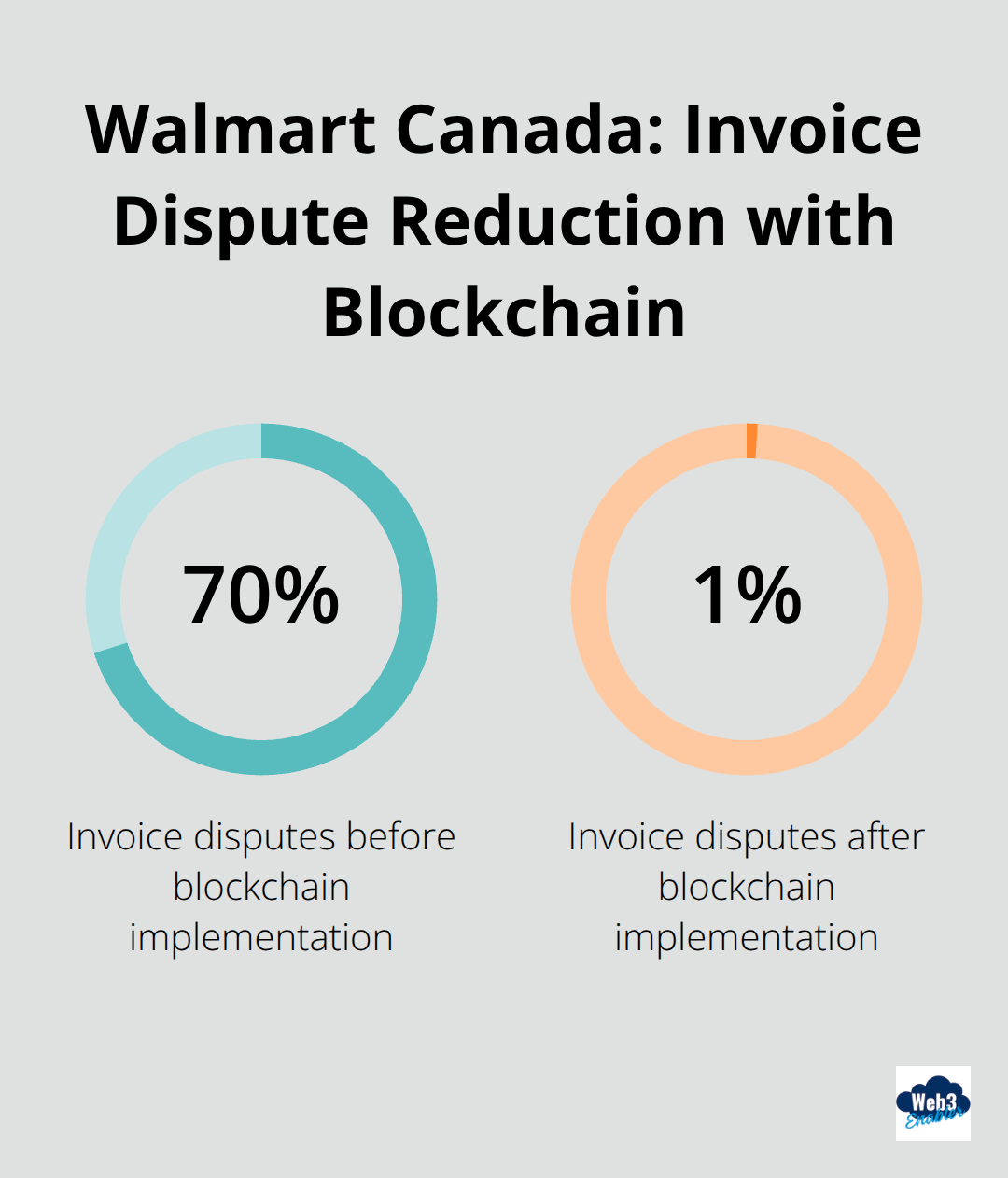
The financial impact becomes clear when you examine actual transaction costs. Traditional SWIFT bank transfers charge around $25 per transaction, while blockchain payments cost pennies. Traditional banks charge 3-8% per transaction for cross-border payments, making blockchain’s cost reduction particularly significant. Walmart Canada reduced invoice disputes from 70% to just 1% after the company implemented blockchain for payment reconciliation. Financial institutions currently face an average cost of $6 million for data breaches (according to IBM’s 2024 Cost of a Data Breach Report), which makes blockchain’s enhanced security particularly valuable.
Security Through Distribution
Traditional payment systems store data in central databases and create single points of failure that attract cybercriminals. Blockchain eliminates this vulnerability through distribution across multiple nodes. Each transaction requires consensus from the network before confirmation, which makes fraud nearly impossible. The chargeback rates for blockchain transactions approach zero due to their immutable nature, compared to high dispute rates in legacy systems. This distributed approach operates 24/7/365, unlike traditional systems that limit operations to business hours.
Implementation Timeline Reality
Nine out of ten firms currently explore blockchain payment solutions, but success requires realistic expectations. Implementation typically takes 60-90 days for basic payment processes, not the weeks some vendors promise. Integration with existing CRM and ERP systems presents the biggest challenge, with over 55% of enterprises citing this as a major barrier. Companies that focus on low-risk pilot projects like automated vendor payments see results faster than those who attempt comprehensive overhauls immediately.
The next step involves evaluating your specific business needs and current payment processes to determine the best approach for your organization.
Which Implementation Strategy Fits Your Business
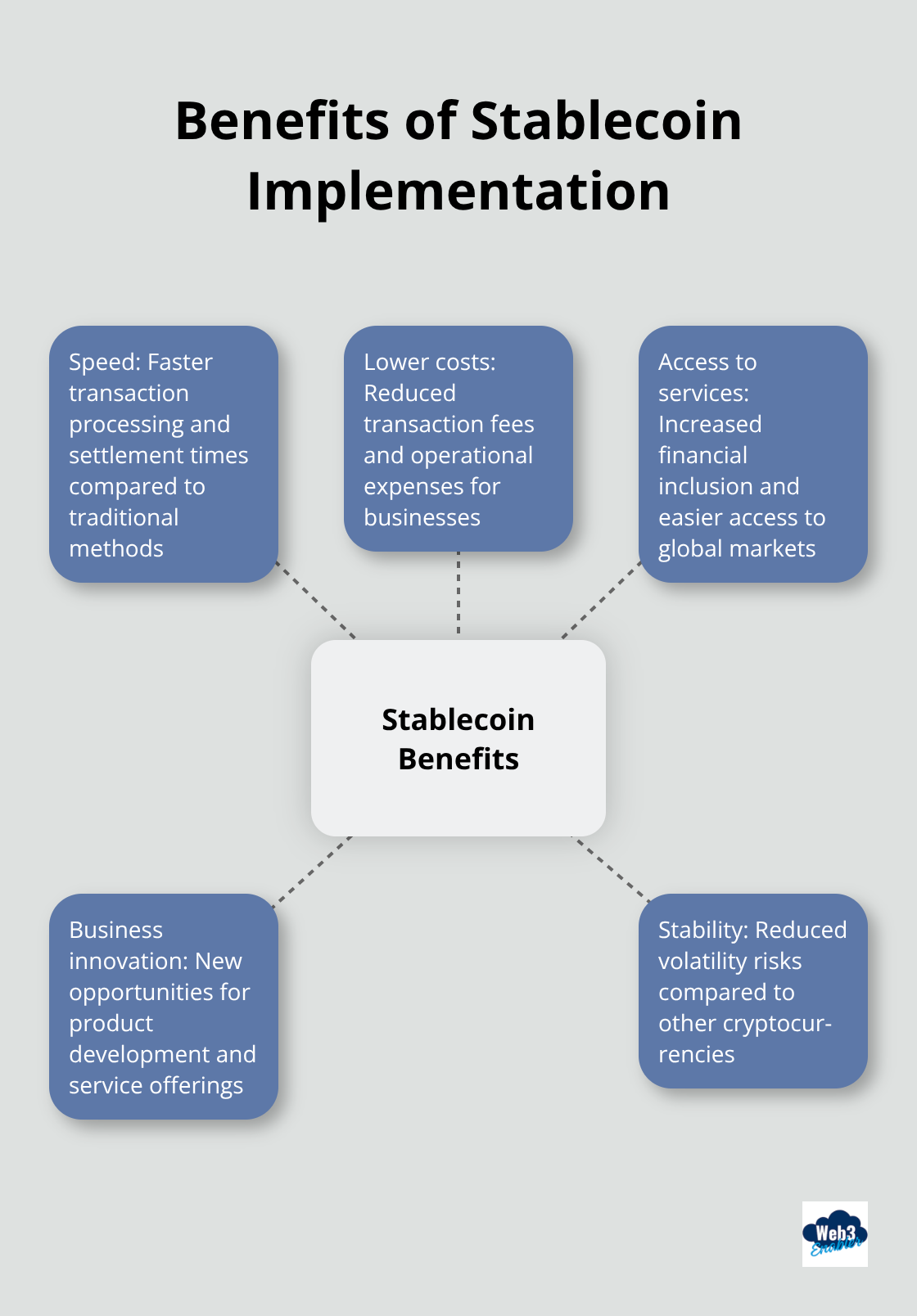
Start with transaction volume analysis before you choose any blockchain solution. Companies that process over 100 payments monthly see the strongest ROI from blockchain implementation, while businesses with fewer transactions often struggle to justify the initial setup costs. McKinsey research shows stablecoin benefits include speed, lower costs, access to services, business innovation, and stability, which makes payment-focused implementations the safest starting point for most organizations.
Assess Your Current Payment Pain Points
Traditional payment delays cost businesses real money through cash flow constraints and administrative overhead. Companies that spend more than 40 hours monthly on payment reconciliation benefit most from blockchain automation. Cross-border payments present the strongest use case, where traditional systems charge 3-8% fees compared to blockchain’s sub-1% costs. Walmart Canada’s success in reducing invoice disputes from 70% to 1% demonstrates blockchain’s impact on payment accuracy and dispute resolution.
Integration Options That Actually Work
Salesforce users gain significant advantages through native blockchain integration rather than third-party bolt-on solutions. The Salesforce AppExchange generates $140 billion in annual sales, which proves the platform’s business impact potential. Companies that use Salesforce CRM with high transaction volumes in retail, manufacturing, and finance sectors see fastest implementation success. Focus your budget on platforms like NOWPayments that support over 300 cryptocurrencies with 0.5% transaction fees, rather than building custom solutions that typically cost 10x more and take six months longer to deploy.
Resource Allocation for Real Results
Dedicate 20% of your implementation budget to team training and change management, not just technology costs. Stanford University research confirms that businesses that automate payment processes through blockchain reduce processing times by 30%, but only when staff understand the new workflows. Plan for 60-90 day implementation timelines for basic payment processing (despite vendor promises of faster deployment). Companies that allocate insufficient training resources face 40% higher failure rates during the first year of blockchain adoption.
The success of your blockchain implementation depends heavily on how well you execute the technical setup and team preparation phases that follow.
How to Deploy Blockchain Payments in Your Business
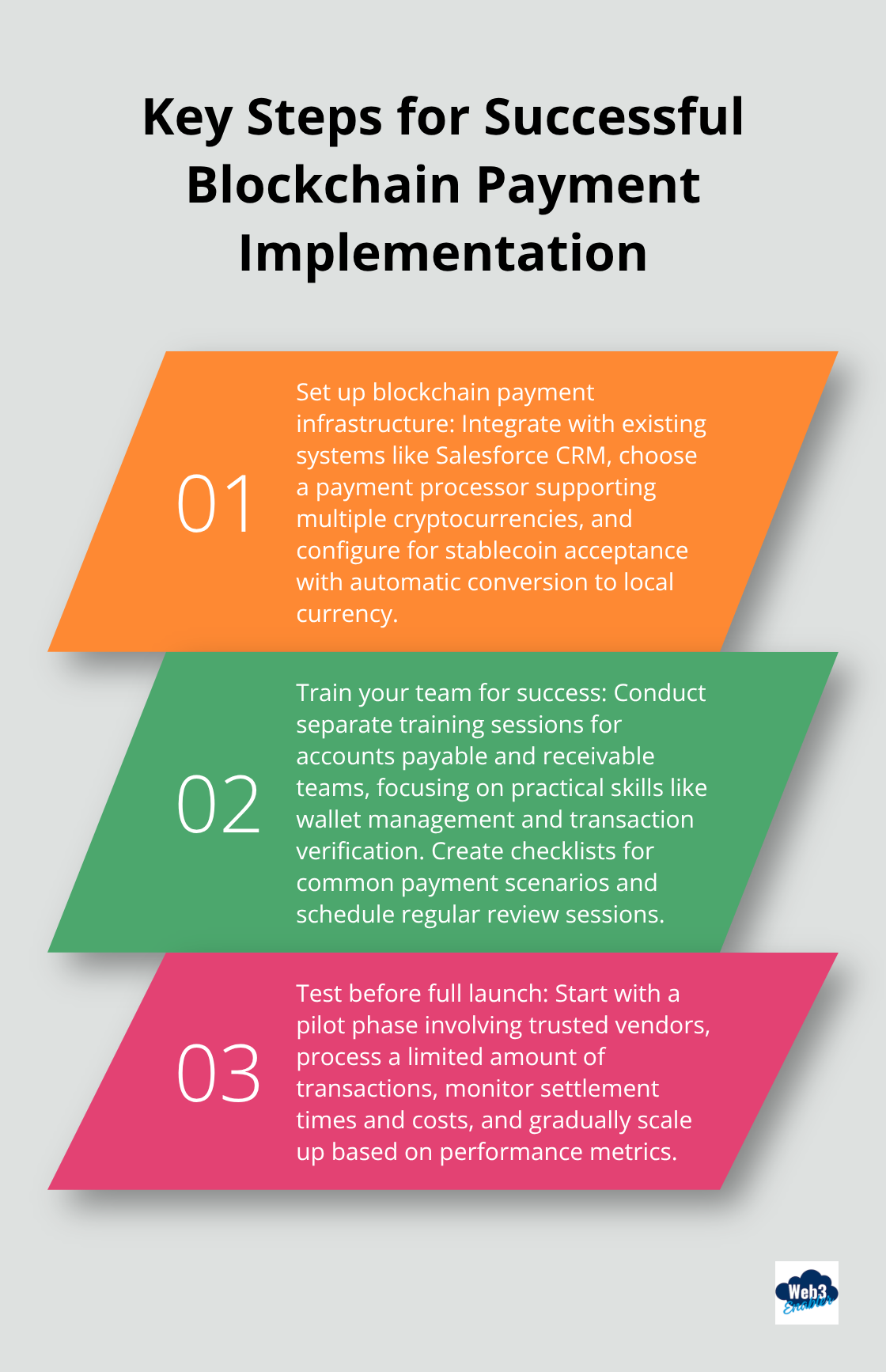
Start your blockchain payment infrastructure setup with Salesforce integration if you already use the platform. Companies that use Salesforce CRM benefit from streamlined integration capabilities compared to custom solutions. We at Web3 Enabler offer the only native blockchain solution on the Salesforce AppExchange, which eliminates the technical complexity that stops most implementations. Choose platforms like NOWPayments that support over 300 cryptocurrencies with 0.5% transaction fees rather than build from scratch. Configure your payment processor to accept major stablecoins first – USDC and USDT handle the majority of business transactions according to recent market data. Set up automatic conversion to your local currency to avoid volatility risks during the initial deployment phase.
Train Your Team for Success
Train your accounts payable and receivable teams separately with hands-on practice sessions that last 2-3 hours each. Companies that dedicate insufficient resources to staff preparation face higher failure rates during the first year according to enterprise blockchain studies. Focus sessions on wallet management, transaction verification, and dispute resolution processes rather than technical blockchain concepts. Create simple checklists for common payment scenarios – vendor payments, client invoices, and refund processes. Schedule weekly review sessions for the first month after launch to address questions immediately. Research shows that businesses that automate payment processes through blockchain reduce processing times significantly, but only when staff understand new workflows completely.
Test Before Full Launch
Test your blockchain payment system with three trusted vendors before full deployment. Process $1,000-5,000 in transactions during your pilot phase to identify integration issues early. Monitor settlement times closely – blockchain payments should settle within minutes compared to 1-5 business days for traditional methods. Track transaction costs against your previous payment processor fees to measure ROI immediately. Launch with 20% of your vendor payments initially, then scale up weekly based on performance metrics. Companies that rush full deployment without adequate tests experience more technical issues and staff resistance during the first quarter.
Monitor Performance Metrics
Track key performance indicators from day one to measure blockchain implementation success. Monitor transaction settlement times, processing costs, and dispute rates compared to your previous payment system. Document cost savings from reduced transaction fees – traditional systems charge 3-8% for cross-border payments while blockchain costs remain under 1%. Measure staff productivity improvements as payment reconciliation time decreases from hours to minutes. Review security incidents and fraud attempts to quantify blockchain’s enhanced protection compared to traditional payment methods.
Final Thoughts
Implementing blockchain in business delivers measurable results within 90 days when you execute it properly. Companies that follow this structured approach see transaction costs drop by 40% and settlement times reduce from days to minutes. The financial impact becomes clear immediately – blockchain payments cost pennies compared to traditional SWIFT transfers at $25 per transaction.
Your business gains competitive advantages through enhanced security, 24/7 payment processing, and near-zero chargeback rates. The distributed ledger system eliminates single points of failure that cost financial institutions an average of $6 million per data breach (IBM 2024 Cost of a Data Breach Report). Companies like Walmart Canada demonstrate real outcomes, reducing invoice disputes from 70% to just 1% through blockchain implementation.
Long-term growth opportunities expand as the blockchain market grows from $31 billion in 2024 to over $390 billion by 2030. McKinsey predicts stablecoin usage will reach $2 trillion by 2028, which creates massive opportunities for early adopters. Scale your blockchain operations from vendor payments to client invoices, then international transactions with Web3 Enabler for seamless expansion.