



Your finance team and sales team are probably working in completely separate worlds right now. That’s costing you money and slowing down your cash flow decisions.
We at Web3 Enabler built Sales Cloud treasury features to fix this exact problem. When you connect your payment data directly to customer records and automate cash matching, your whole operation moves faster.
Why Your Finance and Sales Teams Need to Stop Working Separately
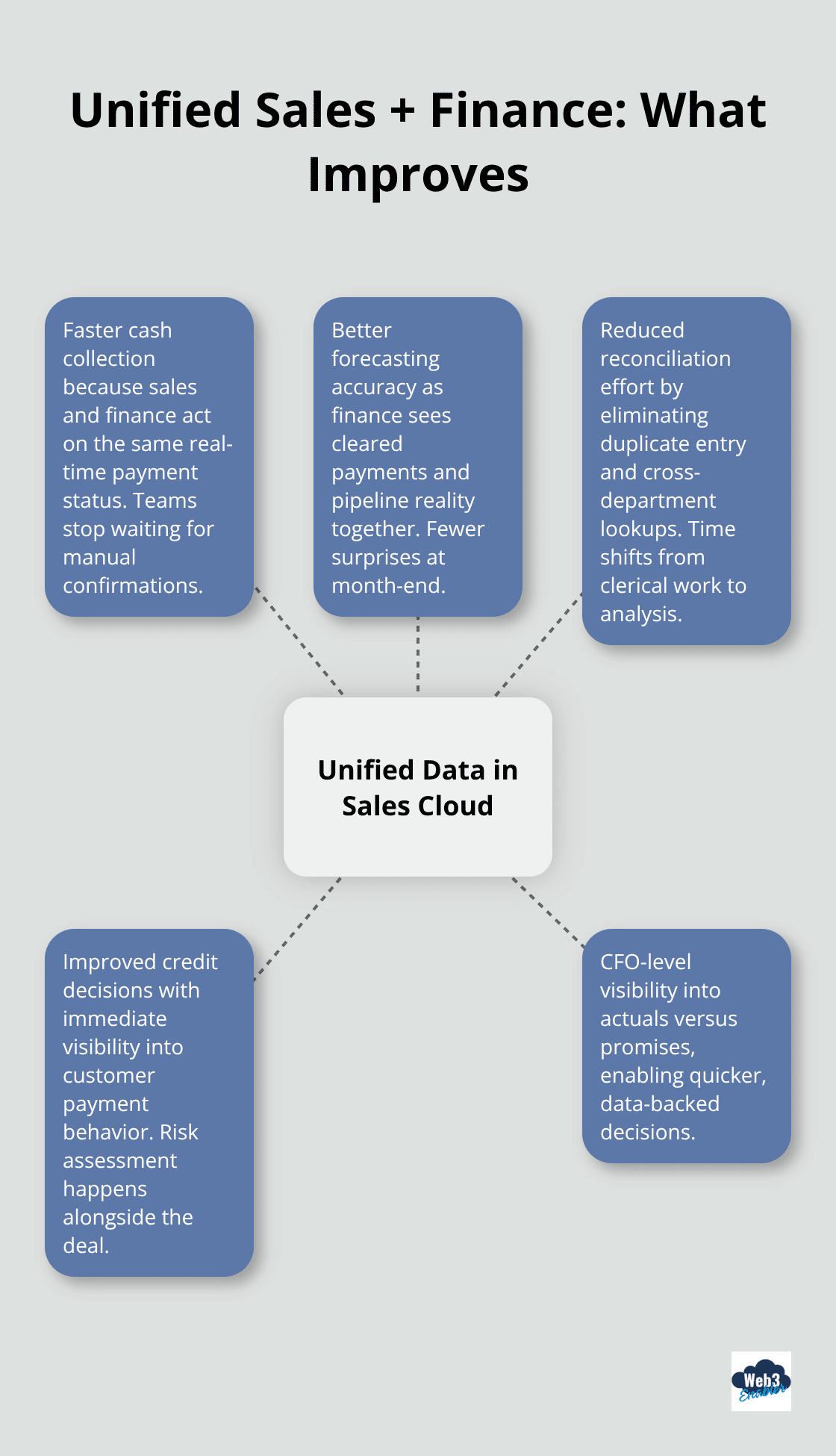
Right now, your sales team closes deals while your finance team scrambles three weeks later to match payments and reconcile accounts. That gap costs you money. Salesforce’s own customer base-which includes about 90% of Fortune 500 companies-shows that organizations integrating sales and finance data see measurably faster cash collection and better forecasting accuracy. When payment data lives inside Sales Cloud alongside customer records, your team stops chasing spreadsheets and starts making decisions in real time. A sales rep can see whether a customer’s payment cleared, a finance manager can forecast cash flow without manual lookups, and your CFO gets visibility into what’s actually coming in versus what’s promised.
The Real Cost of Disconnected Systems
Most companies run finance and sales on separate islands. Sales Cloud tracks deals and customer interactions, while your accounting system tracks payments in isolation. This disconnect means your team spends hours every month reconciling data that should already be connected. App Maisters reported that organizations integrating CRM with ERP systems saw a 160% productivity increase in order-to-cash cycles, which translates directly to faster cash inflow and lower working capital needs. When you automate cash matching within Sales Cloud, you cut manual reconciliation from days to minutes. Your team stops entering the same customer data twice, stops guessing whether a payment belongs to which invoice, and stops waiting for confirmation from another department. The finance team gains real-time visibility into which deals have actually converted to cash, and sales receives immediate feedback on customer payment behavior. That feedback loop tightens your sales cycle and improves your credit decisions.
Stablecoins Accelerate Settlement Speed
Payment settlement happens faster when you move beyond traditional banking rails. Cross-border transactions settle using stablecoins, and that speed matters for cash forecasting. Your treasury team can see on-chain transactions reflected in Sales Cloud in real time, which means your cash position updates instantly instead of waiting for bank confirmations. This unified view is where the real efficiency gain happens-not because blockchain is flashy, but because your entire operation sees the same data at the same time.
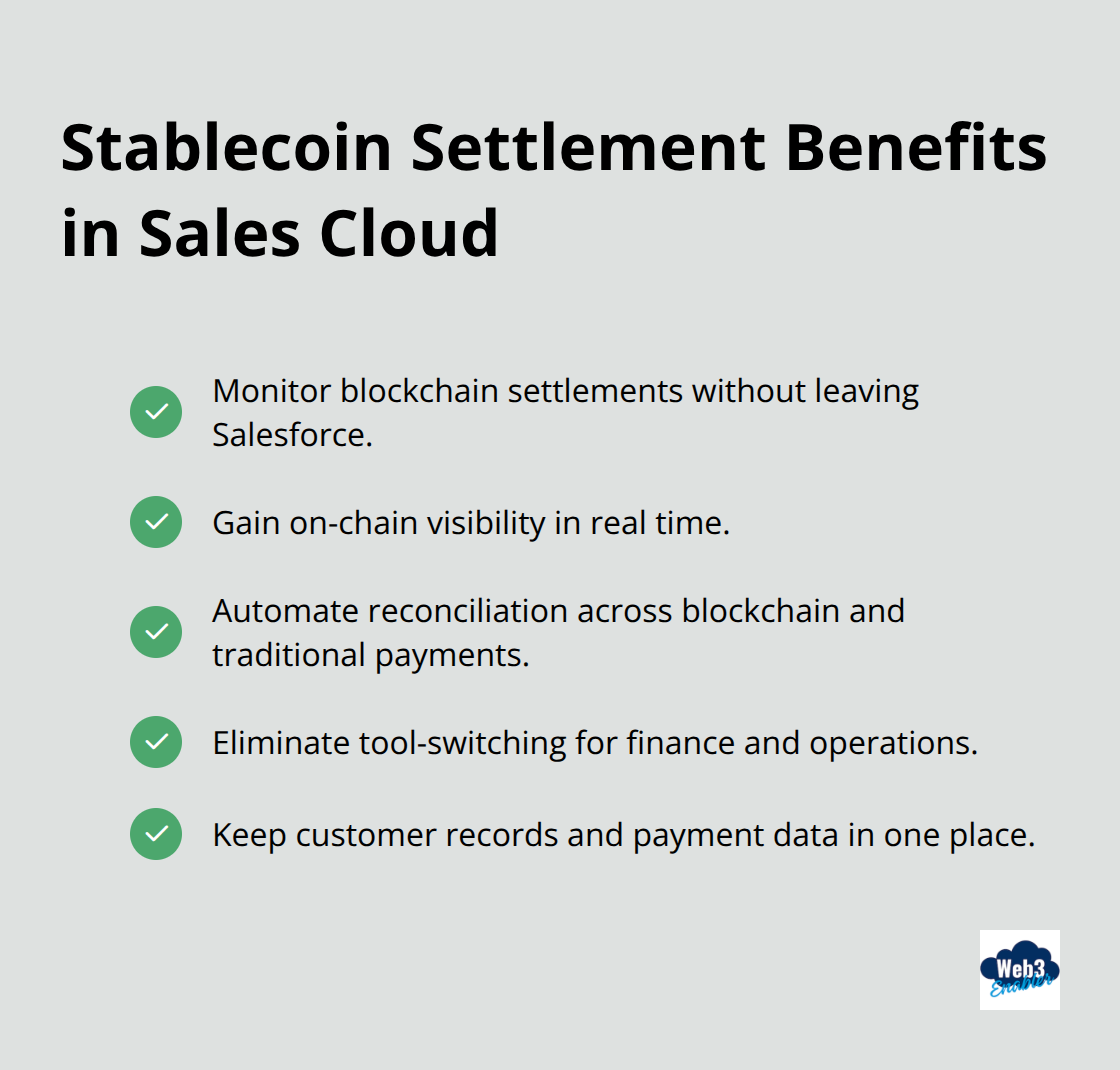
Web3 Enabler brings this capability directly into Salesforce, so your team monitors blockchain-based settlements alongside traditional payments without switching tools. Your finance team gains on-chain visibility without leaving the CRM, and your operations team automates reconciliation across both payment types in a single system.
How Blockchain Settlements Speed Up Your Cash Position
Stablecoins move money faster than traditional banking rails, and that speed directly improves your cash forecasting. When a customer pays you via stablecoin on Ethereum, BASE, or XRP Ledger, the transaction settles in minutes instead of days. Your finance team sees the payment reflected in Sales Cloud in real time, which means your cash position updates instantly. This matters because you stop guessing about incoming cash and start making decisions based on what’s actually cleared. If you’re running a global operation with customers across multiple time zones and currencies, stablecoin settlements eliminate the delays of wire transfers and currency conversions that typically add three to five business days to international payments. Your working capital improves because you’re not stuck waiting for correspondent banks to process transactions through multiple intermediaries.
Real-Time Liquidity Visibility Transforms Forecasting
Your treasury team needs accurate cash position data to make smart decisions about debt, investments, and payroll timing. When payment data sits in a separate accounting system, you’re always working with a lag. You close the books on Friday and discover Monday morning that a major customer payment didn’t clear as expected. With on-chain transactions visible directly in Sales Cloud, your finance team monitors cash inflows as they happen. On-chain visibility in your CRM eliminates the need to toggle between a blockchain explorer and your accounting software to verify settlements. Your team automates reconciliation by matching blockchain transaction records to customer invoices within Salesforce, cutting manual verification from hours to seconds. This automation matters especially for high-volume operations where manual matching creates bottlenecks. When you process fifty international payments monthly, blockchain’s immutable transaction record eliminates disputes about whether a payment was sent, received, or lost in transit. Your finance team reduces operational risk because every transaction has a verifiable on-chain record that feeds directly into your audit trail.
Lower Costs Through Eliminated Intermediaries
Traditional cross-border payments charge you multiple fees: wire transfer fees, correspondent banking fees, currency conversion spreads, and sometimes even intermediary fees that nobody can fully explain. Stablecoin payments cut out the middlemen. A payment from a customer in Singapore to your account settles directly without routing through multiple banks. The cost difference is substantial. Wire transfers typically cost fifteen to forty dollars per transaction plus currency conversion spreads of one to three percent. Stablecoin payments on public blockchains cost under a dollar in transaction fees. If you’re handling a hundred international payments monthly, that’s a difference of thousands of dollars annually. Beyond the per-transaction savings, blockchain eliminates the manual reconciliation work that your finance team currently handles. Your accounts payable team stops receiving payment notifications from a bank, cross-referencing them with customer records, and manually updating your accounting system. Automated reconciliation within Salesforce frees your team to focus on analysis instead of data entry. Your operational costs drop because you’re replacing expensive manual processes with automated reconciliation that happens in real time.
Connecting Payment Data to Customer Records
Your sales and finance teams gain a unified view when you connect blockchain payments directly to customer records in Sales Cloud. A sales rep can see whether a customer’s payment cleared without waiting for finance to send a report. A finance manager can forecast cash flow without manual lookups across multiple systems. This connection transforms how your organization handles customer relationships and cash management. When payment data lives alongside customer interaction history, your team makes faster credit decisions and identifies payment patterns that inform future negotiations. The next step is automating the cash matching process itself-turning those connected records into a system that works for you without constant manual intervention.
Building Treasury Operations Into Sales Cloud
Your payment infrastructure needs to live inside Sales Cloud, not in a separate accounting system that your sales team never sees. The technical setup is straightforward: you map blockchain transaction data to customer records, automate the cash matching logic, and monitor on-chain activity in real time. Web3 Enabler brings this capability directly into Salesforce as a native app on AppExchange, which means your team works inside the CRM they already use instead of toggling between tools.
Connect Customer Records to Blockchain Wallets
Start by documenting which customers will pay via blockchain and which wallet addresses or stablecoin accounts belong to them. This mapping becomes the foundation for all downstream automation. Your finance team should maintain this information in a custom field on the Account object in Sales Cloud, which makes it available to every process and report that touches customer records. If a customer operates multiple wallets across different blockchains like Ethereum, BASE, or XRP Ledger, create a junction object that links accounts to multiple wallet addresses. This structure lets your team handle customers who split payments across different chains or currencies.
The mapping should also capture which stablecoins each customer prefers to use, since that information affects your settlement strategy and liquidity planning. Once the mapping is live, your automation rules match incoming transactions to customers automatically instead of requiring manual intervention. Your finance team spends an hour setting up these relationships initially, then never manually matches that customer’s payments again. For organizations handling fifty or more international payments monthly, this setup alone cuts reconciliation time from hours to minutes because your team stops guessing which customer sent which payment.
Automate Cash Application Across All Payments
Your accounts receivable team should never manually enter a payment that came through blockchain. Instead, build a Salesforce flow that triggers when a blockchain transaction arrives, matches it to the correct customer and invoice, and updates your cash position automatically. The flow checks whether the payment amount matches an open invoice, applies the payment to that invoice, and updates the customer record to reflect the cleared transaction. If a payment doesn’t match a specific invoice, route it to an unapplied cash account that your team can review later.
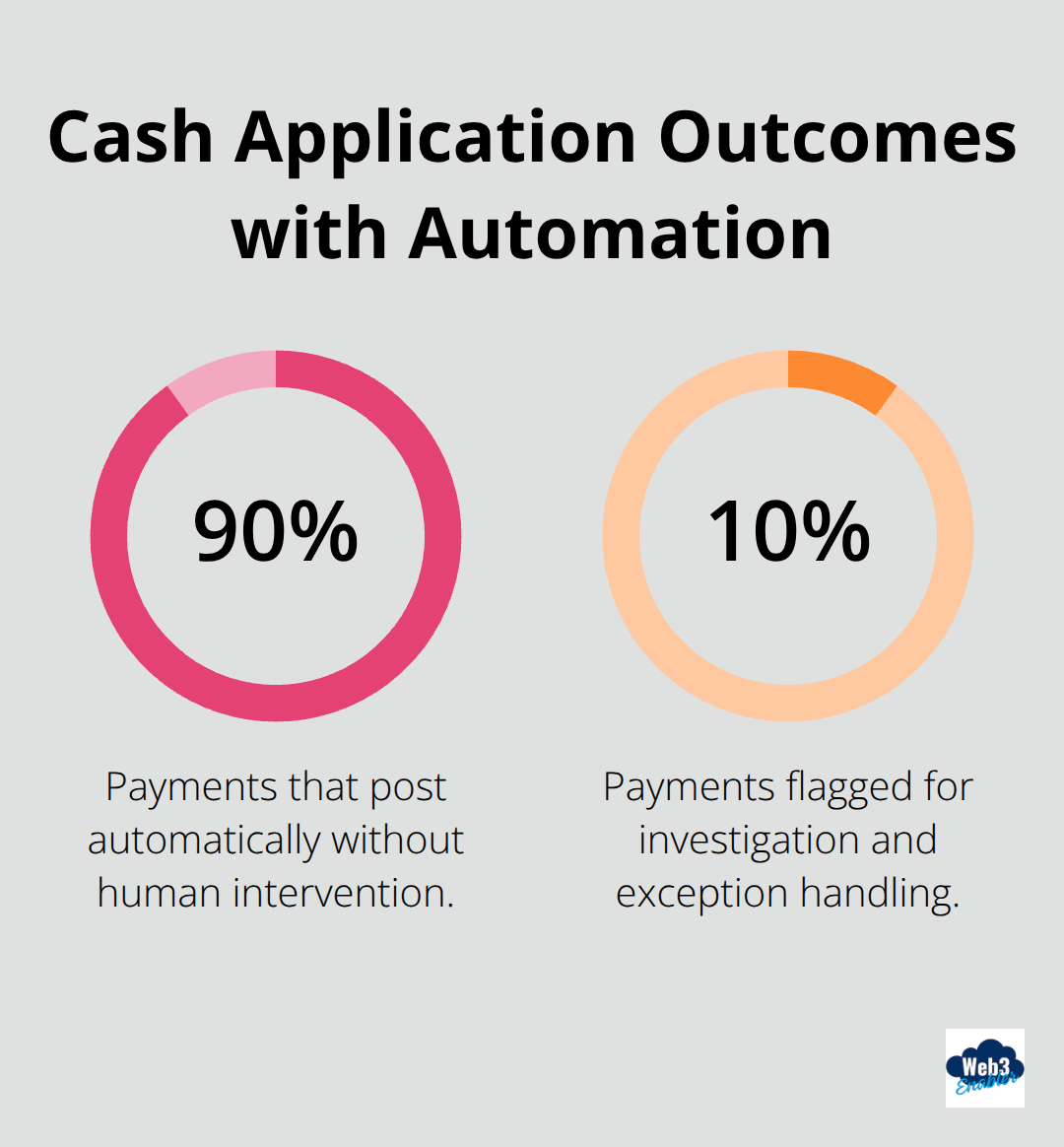
This exception handling matters because customers sometimes send partial payments or combine multiple invoices into a single transaction. Your automation handles the straightforward cases automatically while flagging unusual activity for human review. The result is that ninety percent of your payments post automatically while your team focuses on the ten percent that need investigation. Salesforce’s process automation and flows execute this logic without requiring custom code, which means your Salesforce admin can build it without involving your development team.
If your organization processes a hundred payments monthly, automating cash application saves your accounts receivable team roughly forty hours per month that they can redirect toward customer service or analysis.
Monitor On-Chain Transactions in Real Time
Your finance team needs visibility into blockchain transactions the moment they settle, not days later when the bank confirms them. Web3 Enabler surfaces on-chain transaction details directly in Sales Cloud, so your team monitors settlements in real time without visiting a blockchain explorer. When a customer pays you via stablecoin, the transaction appears in their customer record with full details including the wallet address, transaction hash, timestamp, and amount.
This visibility transforms reconciliation from a batch process that happens weekly or monthly into a continuous process that happens as transactions occur. Your finance team reconciles cash instantly because they watch transactions settle in real time instead of waiting for bank statements. For international operations, this matters tremendously because traditional wire transfers take several days to clear, during which your finance team has no visibility into whether the payment is in transit or lost. Blockchain payments settle in minutes, so your cash position updates immediately.
Your team builds a dashboard in Sales Cloud that shows incoming blockchain transactions, matched invoices, and cash application status. This dashboard becomes your real-time reconciliation tool that replaces the spreadsheets and bank statement reviews your team currently uses. When your CFO asks about cash position at ten in the morning, your finance manager pulls up the dashboard and sees exactly what cleared overnight instead of reporting based on yesterday’s bank data.
Final Thoughts
Your Sales Cloud treasury operations move faster when payment data lives inside your CRM instead of scattered across separate platforms. Finance teams gain visibility into which deals convert to cash, sales teams understand customer payment behavior instantly, and CFOs see accurate forecasts instead of guesses. Blockchain payments amplify this efficiency by eliminating delays built into traditional banking, with stablecoin settlements clearing in minutes instead of days and transforming how you manage working capital.
Start by mapping customer wallet addresses to account records, then build flows that match incoming transactions to invoices automatically. Monitor on-chain activity in real time through dashboards that replace your current reconciliation spreadsheets, and watch your team redirect hours spent on manual work toward strategic analysis. These steps transform treasury from a back-office function into a capability that accelerates your entire business.
Web3 Enabler brings this capability directly into Salesforce as a native app on AppExchange, so your team implements blockchain payments without leaving the CRM you already use. Your finance team gains on-chain visibility, your operations team automates reconciliation, and your organization competes on speed and efficiency instead of manual processes.