


![Why Payment Automation is Essential for Salesforce Users [2025]](https://web3enabler.com/wp-content/uploads/emplibot/payment-automation-hero-1763035751.jpeg)
Your Salesforce CRM handles leads, opportunities, and customer data like a dream. But when it comes to getting paid? That’s where things get messy.
Manual invoicing, chasing payments, and juggling multiple systems turns your revenue operations into a time-sucking nightmare. We at Web3 Enabler see this pain point everywhere.
Payment automation changes everything by connecting your sales process directly to your cash flow.
Why Salesforce Payment Processing Falls Short
Most Salesforce organizations run their payment operations like it’s still 2010. Sales reps close deals in Salesforce, then jump to QuickBooks for invoices, chase payments through email, and manually update opportunity records when money finally arrives. This disconnected approach creates a productivity nightmare that costs businesses real money.
Manual Workflows Drain Resources Fast
The average finance team spends significant time on manual invoice processing and payment tracking. Research shows businesses waste substantial time on payment administration when systems don’t talk to each other. Your sales team closes a $50,000 deal, but finance still needs to recreate customer data in separate software, generate invoices manually, and track payments in spreadsheets. This redundant work costs companies money in lost productivity.
Integration Headaches Create Data Chaos
Third-party payment processors rarely integrate cleanly with Salesforce. Stripe, PayPal, and traditional merchant services require custom development work that breaks during updates. Payment data sits isolated from customer records, which makes cash flow forecasting impossible.

Finance teams can’t see which customers pay fastest, sales can’t track commission accurately, and executives lack real-time revenue visibility. Many businesses still rely on manual data entry between payment systems and CRM platforms.
Security Gaps Multiply Risk Exposure
Disconnected payment systems create compliance nightmares. Customer payment information lives in multiple databases with different security standards. Each additional system multiplies your audit burden and increases breach risk. Companies with fragmented payment workflows experience more compliance violations than those with integrated systems. When payment data doesn’t sync automatically with Salesforce, your team inevitably shortcuts security protocols to meet deadlines.
The good news? Payment automation solves these problems by bringing your entire revenue cycle into one unified system.
How Payment Automation Transforms Revenue Operations
Payment automation transforms Salesforce organizations from reactive payment chasers into proactive revenue machines. Research shows businesses using payment automation experience significant increases in operational efficiency, while these systems can deliver substantial operational cost savings. Companies that implement automated payment solutions see improved invoice approval times, with some businesses reporting dramatically reduced payment processing times. Organizations continue adopting these systems as digital payment methods gain traction across industries.
Revenue Acceleration Through Instant Processing
Automated payment systems compress payment cycles from weeks to minutes. Stablecoin transactions process in seconds rather than the traditional 3-5 business days for bank transfers, while they maintain transaction costs of just pennies per dollar compared to traditional remittance fees. Your cash flow improves immediately when customers can pay invoices directly from Salesforce without switching systems. Research reveals that manual payment processing negatively impacts business operations, but automation eliminates these bottlenecks entirely.
Administrative Efficiency Multiplies Team Productivity
Payment automation eliminates data entry between systems and reduces human error in financial reporting. Finance teams stop recreating customer information across multiple platforms, while sales reps get automatic commission tracking tied to actual payments received. The elimination of manual payment processing delivers significant cost savings for mid-sized companies. Your team focuses on strategic work instead of chasing down payment status updates, and executives get real-time revenue visibility without waiting for month-end reconciliation reports.
Enhanced Customer Experience Drives Satisfaction
Automated payment systems provide customers with seamless payment experiences that strengthen business relationships. Customers access numerous available payment methods globally through modern payment automation platforms, which eliminates friction in international transactions. This automation reduces processing time dramatically for cross-border transactions. The transparency that blockchain-based payment systems provide through immutable transaction records builds trust and reduces disputes.
The question becomes: which payment automation approach fits your Salesforce organization best?
Which Payment Automation Strategy Works Best
Your payment automation strategy depends on your organization’s technical resources and integration requirements. Native Salesforce solutions like Salesforce Billing provide seamless data flow but limit payment processor options to Salesforce-approved vendors. Third-party integrations offer broader payment method support but require custom development work that often breaks during Salesforce updates. Companies with dedicated IT teams typically choose third-party solutions, while organizations that prioritize simplicity select native options.
Essential Features That Actually Matter
Payment automation tools must support bulk transaction processing to avoid Salesforce governor limits during high-volume periods. Look for solutions that handle automatic retry logic when payments fail, as finance teams applying AI deliver faster insights and stronger controls. The system should provide real-time payment status updates directly in Salesforce opportunity records, which eliminates the need for finance teams to check external dashboards. Compliance features matter more than flashy interfaces – your automation platform needs to maintain audit trails and support multiple currencies without manual configuration.
Implementation Success Requires Sandbox Testing
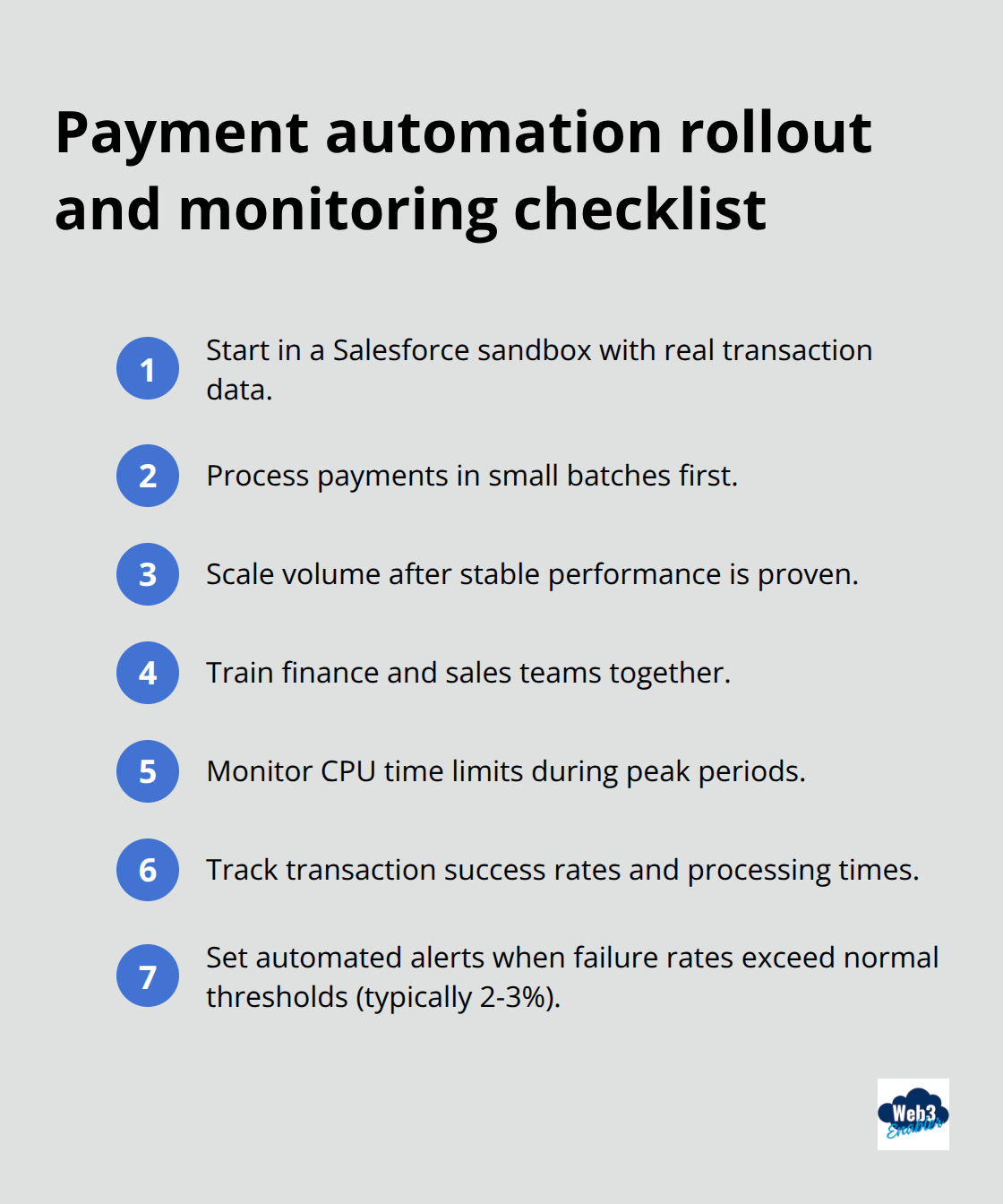
Start your payment automation rollout in a Salesforce sandbox environment with real transaction data to identify bottlenecks before production deployment. Configure your automation to process payments in small batches initially, then scale volume as system performance proves stable. Train finance and sales teams simultaneously on the new workflows, as user adoption determines automation success more than technical capabilities.
Performance Monitoring Prevents System Slowdowns
Monitor CPU time limits during peak transaction periods to prevent system slowdowns that frustrate users and delay payments. Track transaction success rates and payment processing times to identify performance bottlenecks before they impact customer experience. Set up automated alerts when payment failure rates exceed normal thresholds (typically 2-3% for healthy systems). Your monitoring dashboard should display real-time metrics that help finance teams spot issues immediately rather than discovering problems during month-end reconciliation.
Final Thoughts
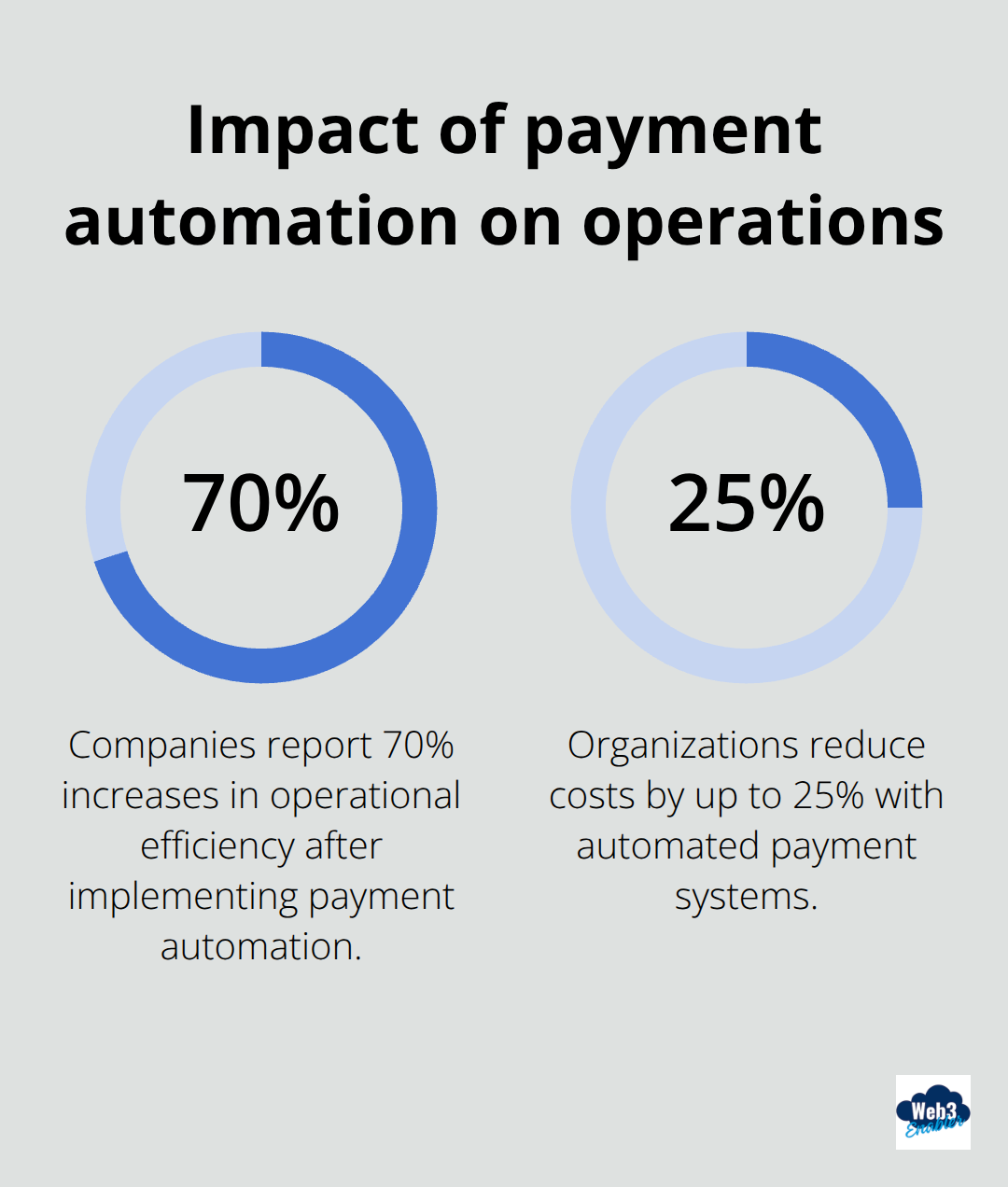
Payment automation transforms Salesforce organizations from manual payment processors into efficient revenue machines. Companies that implement these systems report 70% increases in operational efficiency while they reduce costs by up to 25%. The shift from weeks-long payment cycles to instant processing fundamentally changes how businesses manage cash flow and customer relationships.
The future of Salesforce payment technology points toward blockchain integration and stablecoin adoption. These technologies eliminate traditional banking delays and reduce transaction costs to pennies per dollar (compared to traditional remittance fees averaging 6.49% globally). Organizations that embrace payment automation now position themselves ahead of competitors still trapped in manual workflows.
We at Web3 Enabler specialize in connecting blockchain technology with existing Salesforce infrastructure through native solutions. Our tools enable businesses to accept stablecoin payments and send global payments faster while they maintain full compliance within Salesforce. Start with a sandbox implementation to test automated workflows, then scale gradually as your team adapts to streamlined processes.