

Ripple’s US expansion crypto payments strategy is reshaping how businesses handle money transfers. The company’s recent legal wins have opened doors to mainstream adoption across American financial institutions.
We at Web3 Enabler see this as a turning point for corporate payment systems. Traditional banking delays are becoming obsolete as instant settlement takes center stage.
What Changed for Ripple in America
Ripple’s December 2024 legal settlement with the SEC removed the biggest obstacle to US expansion. The ruling classified XRP as a non-security and gave American banks the green light to integrate Ripple’s payment technology without regulatory fear. This clarity triggered immediate adoption across major financial institutions.
CIBC Canada already processes real-time cross-border payments through RippleNet, while Travelex Bank launched ODL services in Brazil in August 2022. The company’s conditional national trust bank charter from the Office of the Comptroller of the Currency (December 2025) positions Ripple alongside established players like Circle and Fidelity Digital Assets.
Traditional Banks Embrace Speed
RippleNet now serves over 300 financial institutions across 70 countries and processed more than $70 billion in cross-border transactions during 2025. The On-Demand Liquidity service eliminates pre-funding requirements that typically lock up bank capital for days.
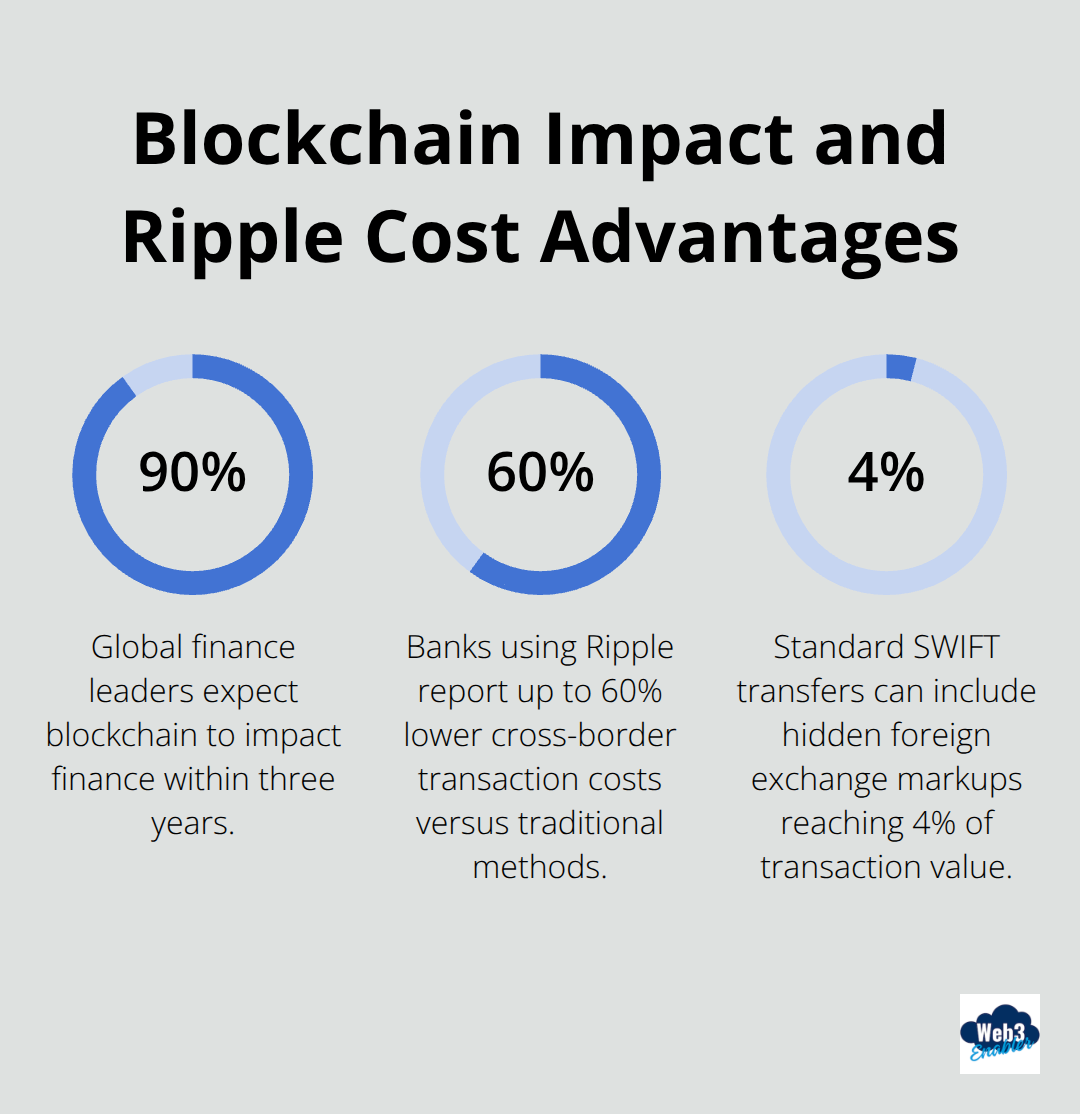
SBI Remit became the first provider to use ODL for Japan-Philippines transfers in 2017, which proved the technology works at scale. Banks that use Ripple’s system avoid the 3-5 day settlement delays of traditional SWIFT transfers while they cut transaction costs by up to 60 percent.
Wall Street Takes Notice
Ripple’s $500 million funding round at a $40 billion valuation demonstrates serious institutional confidence. The RLUSD stablecoin reached $1.26 billion market cap, which makes it the third-largest US-regulated stablecoin. Every RLUSD transaction burns XRP fees, reduces supply, and potentially increases value.
Fortress Investment Group and Citadel Securities provide backing that shows Wall Street takes Ripple seriously. UnionBank Philippines and Qatar National Bank already facilitate instant money transfers for overseas workers (proving enterprise-grade reliability that corporate treasurers demand).
These developments set the stage for how Ripple transforms day-to-day business operations across industries.
How Fast Can Your Business Actually Move Money
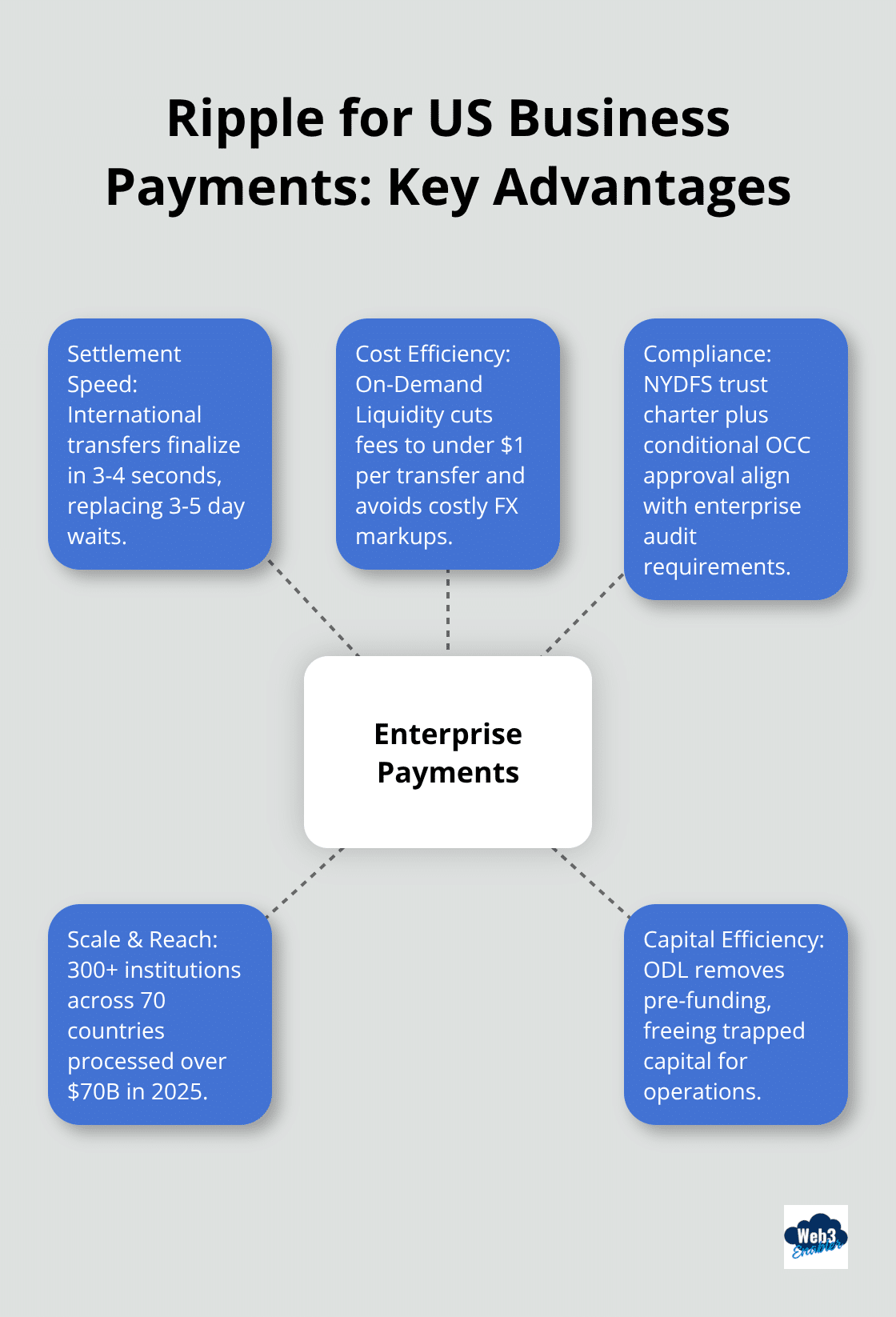
Traditional wire transfers trap your money for 3-5 business days while banks shuffle paperwork between correspondent accounts. Ripple eliminates this delay entirely through direct ledger settlement that completes international transactions in 3-4 seconds. Your business no longer waits until Tuesday to access funds sent on Friday afternoon.
The Real Cost of Slow Money
Standard SWIFT transfers cost businesses $25-50 per transaction plus hidden foreign exchange markups that reach 4% of transaction value. Ripple’s On-Demand Liquidity cuts these fees to under $1 per transfer while transparent exchange rates save companies thousands monthly.
Banks adopting Ripple technology report significant cost reductions on international payments. UnionBank Philippines processes instant remittances for overseas workers at a fraction of traditional costs (proving that speed and savings go hand in hand).
Enterprise Security That Actually Works
Ripple operates under dual regulatory oversight from New York Department of Financial Services trust charter and conditional federal banking approval from the Office of the Comptroller of the Currency. This regulatory framework provides enterprise-grade compliance that satisfies corporate audit requirements without cryptocurrency speculation risks.
Banks like CIBC process millions in cross-border payments through RippleNet while they maintain full regulatory compliance and transaction transparency that corporate treasurers demand.
Technology That Plays Nice With Your Systems
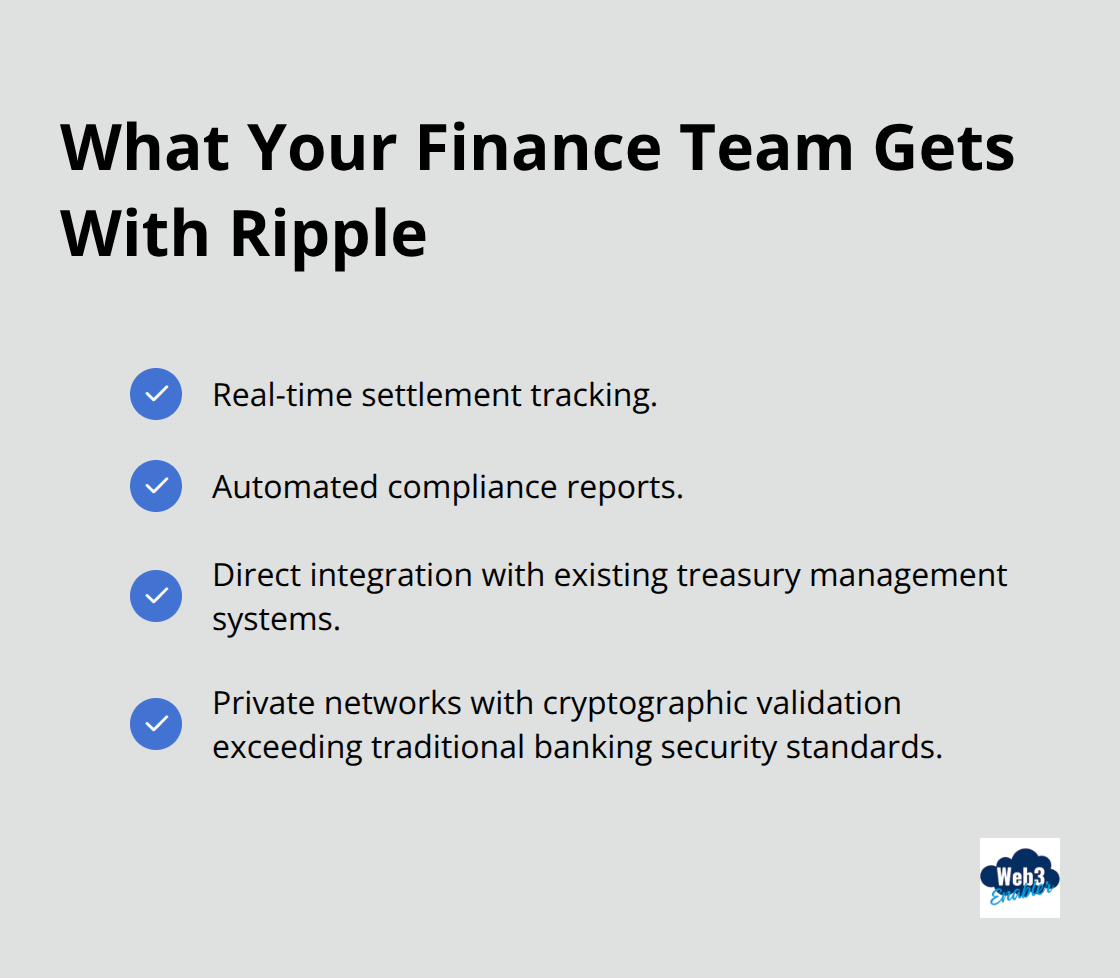
The technology runs on private networks with cryptographic validation that exceeds traditional banking security standards. Your finance team gets real-time settlement tracking, automated compliance reports, and integration capabilities that connect directly with existing treasury management systems.
These connections happen without disruption to established workflows (because nobody wants to rebuild their entire finance stack). The system adapts to your current processes rather than force you to learn new ones.
This speed and integration capability opens up entirely new possibilities for how businesses can operate across borders and serve their customers.
Who Actually Uses This Technology
Financial institutions move fast on Ripple adoption, though specific transformation timelines vary by region and institution type. Regional banks in Asia, Latin America, and the Middle East show the highest ODL adoption rates, while North American institutions like CIBC demonstrate that enterprise-grade implementation works at scale. Axis Bank India processes international transactions through Ripple technology, and Banco Rendimento Brazil enhances remittance flows across Latin America with ODL services that eliminate pre-funding requirements.
Small Business Payment Revolution
Small businesses benefit most from Ripple’s cost structure because traditional banks hit them hardest with percentage-based fees and minimum charges. A company that sends $10,000 monthly in international payments saves approximately $2,400 annually when it switches from SWIFT to Ripple-enabled partners. These savings compound for businesses with regular cross-border operations, and the 3-4 second settlement times eliminate cash flow gaps that force expensive short-term financing. Companies no longer need to maintain foreign currency accounts or navigate correspondent relationships that typically require six-figure minimum balances.
Corporate Integration Without Chaos
The technology integrates through existing APIs rather than requiring new payment infrastructure, which means your accounting software, ERP systems, and treasury management platforms continue to work without modification. Banks run Ripple systems alongside SWIFT networks instead of replacing them entirely (which gives corporate finance teams flexibility to choose the best payment method for each transaction). Licensed exchanges and liquidity providers handle XRP transactions behind the scenes, so companies never hold cryptocurrency directly while they access the speed and cost benefits of blockchain settlement.
Real-World Enterprise Adoption
Major corporations already leverage Ripple’s infrastructure for daily operations. UnionBank Philippines facilitates instant money transfers for overseas workers, while ChinaBank Philippines and Qatar National Bank streamline cross-border transactions in different currency corridors. These implementations prove that enterprise-grade reliability meets corporate treasurer demands without compromising security or compliance standards. SBI Holdings uses Ripple’s technology for remittances across Asia, while MoneyGram integrated On-Demand Liquidity for select corridors in 2021.
Final Thoughts
Ripple’s US expansion crypto payments strategy marks a pivotal moment where blockchain technology transitions from experimental to essential business infrastructure. The company’s regulatory victories and institutional partnerships demonstrate that mainstream crypto adoption happens through practical utility rather than speculative hype. Business payment innovation accelerates as more companies recognize the competitive advantage of instant settlement and reduced transaction costs.
The 90% of global finance leaders who expect blockchain to impact finance within three years aren’t wrong – they witness the transformation firsthand through Ripple’s enterprise implementations. Early adopters gain significant advantages in this new landscape. Companies that integrate blockchain payment solutions now position themselves ahead of competitors still trapped in traditional delays and excessive fees (while the technology exists and regulatory clarity provides confidence).
We at Web3 Enabler help businesses navigate this transition through Salesforce Native blockchain solutions that connect existing corporate infrastructure with modern payment capabilities. Our tools enable companies to access these advanced payment systems without major workflow disruptions. The payment revolution isn’t coming – it’s here, and smart businesses already move faster than their competition.