


Ripple’s highly anticipated stablecoin has generated significant buzz in the crypto payments space, with businesses eagerly awaiting the Ripple stablecoin launch date.
We at Web3 Enabler have been tracking this development closely, as it could reshape how companies handle cross-border payments and treasury management. The stablecoin promises faster settlement times and lower costs compared to traditional banking rails.
What Are RLUSD’s Official Launch Milestones
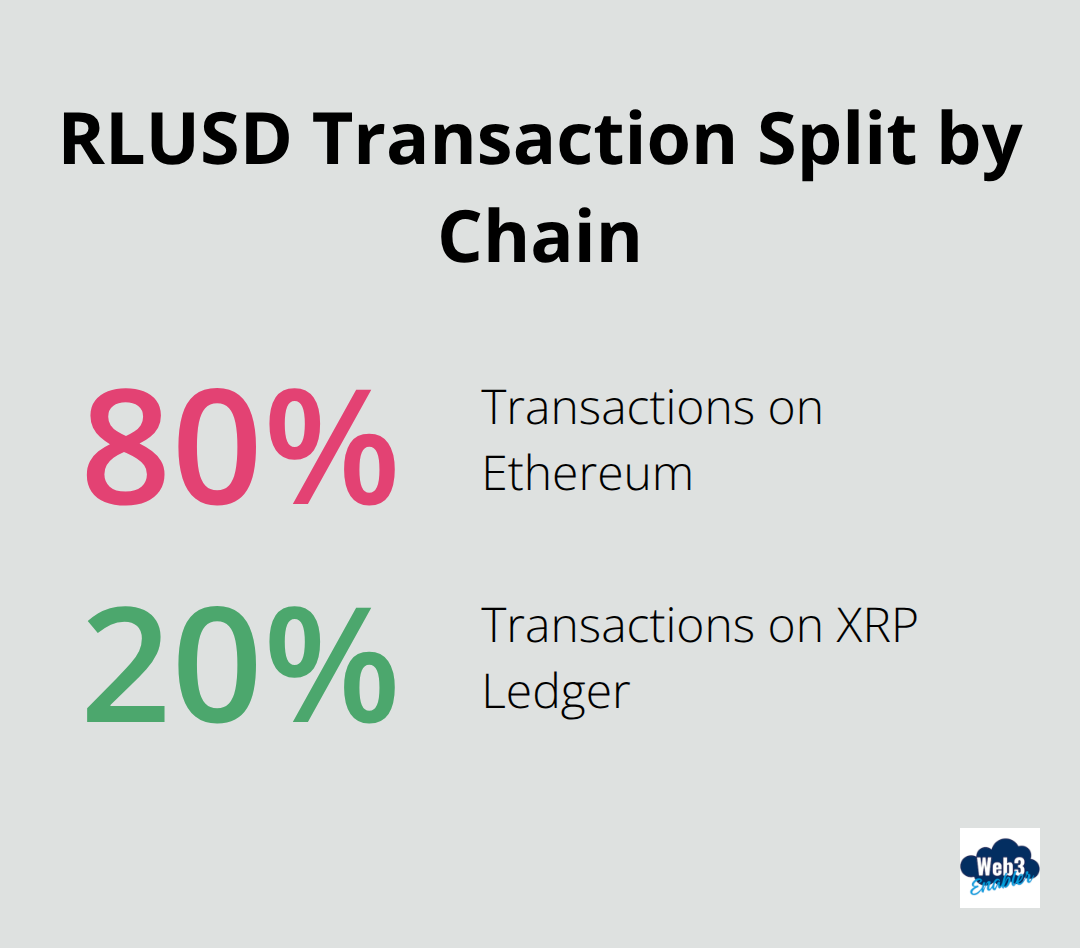
Ripple launched its RLUSD stablecoin in December 2024 and achieved remarkable traction with over $1 billion in market capitalization by November 2025. The stablecoin currently ranks as the 10th largest USD-pegged stablecoin. RLUSD operates on both Ethereum and XRP Ledger networks, with 80% of transactions occurring on Ethereum and 20% on XRP Ledger.
Standard Custody & Trust Company (Ripple’s subsidiary) issues RLUSD under New York Department of Financial Services regulations, backed by US Treasury bills and FDIC-insured bank deposits that maintain a 103% reserve ratio.
Current Market Performance and Adoption
The stablecoin processes approximately $5.05 billion in monthly transfer volume with 38,166 holders, while daily trading volume reaches $174 million and matches established competitors like PayPal USD and Dai. Major exchanges including Kraken, Bitstamp, and Bullish have listed RLUSD, which expanded accessibility for institutional and retail users. Ripple’s $1.25 billion acquisition of Hidden Road in October 2025 enhanced its prime brokerage capabilities and allowed institutional clients to access over-the-counter RLUSD trading. Humanitarian organizations like World Central Kitchen and Water.org adopted RLUSD for cross-border payments, which demonstrated practical utility beyond traditional finance applications.
Integration Strategy and Business Applications
Ripple integrated RLUSD into its cross-border payment solution Ripple Payments and enabled instant settlement with improved liquidity for remittance operations. The company launched pilot programs with Mastercard and Gemini that test RLUSD for credit card settlements on XRP Ledger, which leverages the network’s capacity of 1,500 transactions per second. These partnerships target businesses that seek faster treasury operations and reduced settlement costs compared to traditional banking systems. Monthly attestations by independent CPAs verify reserve backing and address compliance requirements that institutional clients demand for stablecoin adoption.
This rapid adoption and institutional backing sets the stage for understanding how RLUSD’s technical capabilities compare to other major stablecoins in the market.
How Does RLUSD Work for Business Payments
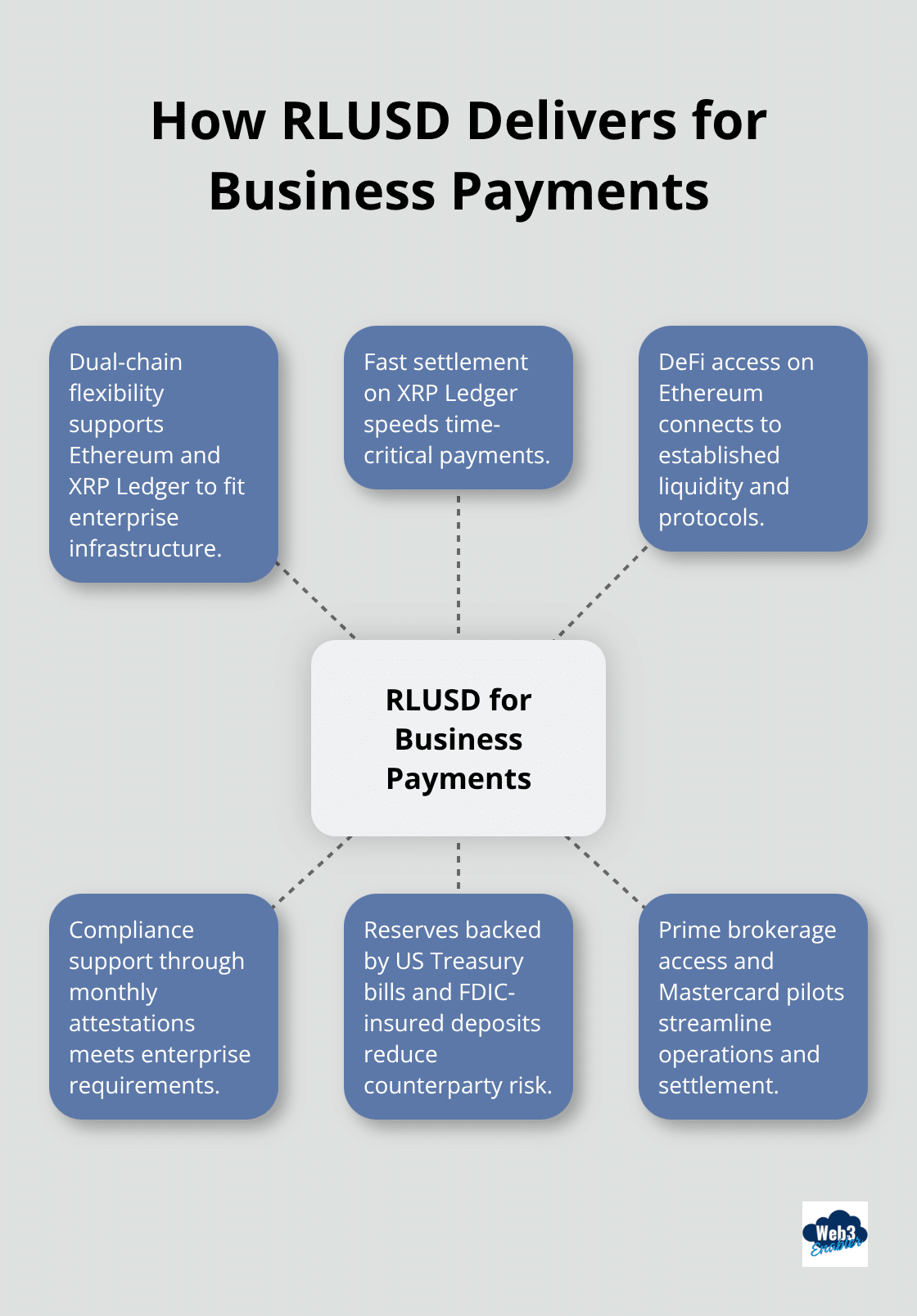
RLUSD operates with dual-chain architecture across Ethereum and XRP Ledger, which provides businesses flexibility in their blockchain infrastructure choice. The XRP Ledger processes transactions at high speed with fast settlement times, while Ethereum integration offers access to established DeFi protocols and broader institutional adoption. Standard Custody maintains reserve backing through US Treasury bills and FDIC-insured deposits, with independent monthly attestations that address compliance requirements for enterprise treasury operations. This reserve structure eliminates counterparty risk that businesses face with traditional correspondent banking relationships.
Enterprise Payment Infrastructure
Companies access RLUSD through Ripple’s over-the-counter prime brokerage services, which launched after the Hidden Road acquisition and supports institutional trading volumes without market impact. The Mastercard partnership enables businesses to settle credit card transactions directly on XRP Ledger, which reduces processing costs from traditional merchant fees to lower blockchain transaction costs. Treasury departments hold RLUSD reserves across multiple wallets and execute cross-border payments within minutes instead of days through traditional networks. The institutional adoption demonstrates confidence in RLUSD’s liquidity and operational reliability.
Target Business Applications
Manufacturing companies with global supplier networks benefit most from RLUSD’s instant settlement capabilities, particularly when they manage just-in-time inventory payments across different time zones. E-commerce businesses that process international transactions reduce foreign exchange costs and eliminate chargeback risks through blockchain settlement finality. Financial services firms use RLUSD for treasury management and client fund transfers, while humanitarian organizations like World Central Kitchen leverage the stablecoin for transparent aid distribution.
Technical Implementation Options
Businesses can integrate RLUSD payments through multiple pathways (API connections, wallet integrations, or enterprise platforms). Companies that already use Salesforce can implement native blockchain solutions through specialized AppExchange applications. The dual-chain architecture allows businesses to choose Ethereum for DeFi compatibility or XRP Ledger for speed and cost efficiency based on their specific operational needs.
These technical capabilities position RLUSD as a serious competitor to established stablecoins, but how does it stack up against market leaders like USDC and USDT in terms of adoption and market share?
How Does RLUSD Stack Against Market Leaders
RLUSD’s $1.02 billion market cap trails Tether’s USDT at $183 billion and Circle’s USDC at $75 billion, but its 1,278% year-to-date growth in 2025 shows aggressive market penetration that established players cannot match. The stablecoin’s daily volume of $174 million already matches PayPal USD and Dai, which took years to reach similar liquidity levels.
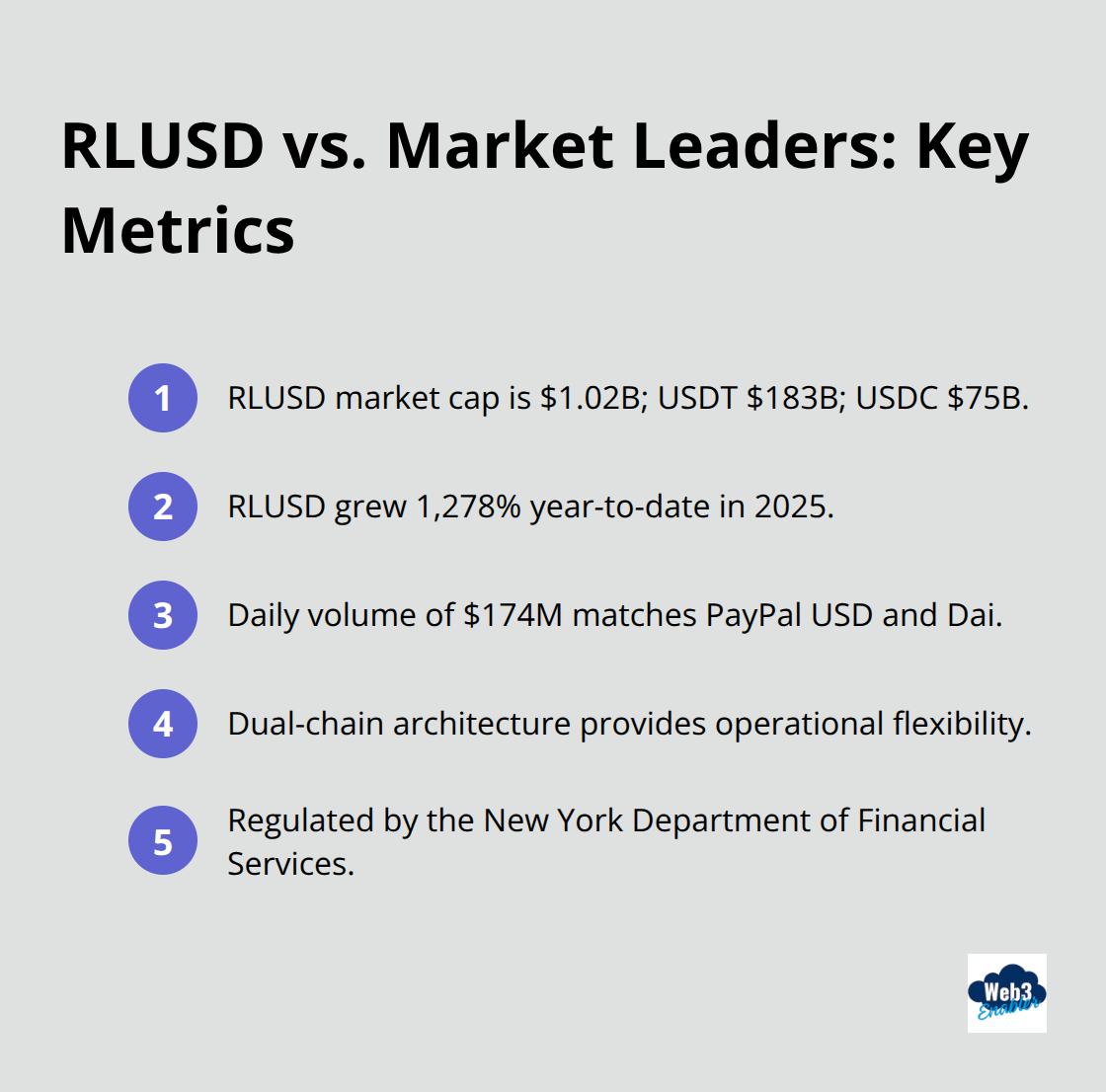
RLUSD’s dual-chain architecture provides businesses operational flexibility that single-chain competitors like USDC on Ethereum cannot offer, while its New York Department of Financial Services regulation delivers compliance advantages over USDT’s limited transparency in reserve reports.
Financial Institution Adoption Accelerates
Major financial institutions test RLUSD integration faster than they adopted USDC or USDT, with Mastercard’s credit card settlement pilot represents the first regulated stablecoin application for fiat transactions on public blockchains. Bank of America and Citigroup explore stablecoin options as regulatory clarity improves under current administration policies, while JPMorgan plans to launch deposit tokens on Coinbase’s Base network in June. RLUSD’s 103% reserve ratio and monthly independent attestations address institutional risk management requirements that Tether historically failed to meet.
Reserve Structure Sets New Standards
Standard Custody backs RLUSD with US Treasury bills and FDIC-insured deposits (maintaining full transparency through monthly attestations), while Tether’s reserve composition remains partially opaque to institutional investors. Circle’s USDC offers similar transparency but operates solely on Ethereum, which limits transaction speed and increases costs for high-volume business operations. RLUSD’s reserve structure eliminates counterparty risk that businesses face with traditional correspondent banks, while independent CPA verification provides audit trails that enterprise treasury departments require for compliance reporting.
XRP Ecosystem Creates Competitive Advantages
XRP’s price rebounded to $2.32 after RLUSD adoption and Ripple’s $500 million funding round from Citadel and Fortress, which valued the company at $40 billion and demonstrated institutional confidence in the ecosystem. The XRP Ledger’s 1,500 transactions per second capacity supports RLUSD settlement speeds that Ethereum-based competitors cannot achieve without expensive Layer 2 solutions. Ripple’s $4 billion acquisition strategy (including Hidden Road and GTreasury) creates comprehensive financial infrastructure that USDC and USDT lack for enterprise clients who need integrated blockchain payment solutions.
Market Position Strengthens Through Utility
Companies choose RLUSD to access Ripple’s global payment network and prime brokerage services, competitive advantages that standalone stablecoins cannot provide. Humanitarian organizations like World Central Kitchen and Water.org adopted RLUSD for cross-border payments, which demonstrates practical utility beyond speculative trading that dominates USDT and USDC usage patterns. The stablecoin’s integration with Ripple Payments enables instant settlement for treasury operations, while established competitors require separate infrastructure investments for similar business applications. For Salesforce-based organizations, trusted assets like USDC and RLUSD can be used in applications built directly on CRM and ERP platforms.
Final Thoughts
RLUSD’s December 2024 launch marked a pivotal moment for enterprise blockchain payments, with the stablecoin achieving $1 billion market cap in under a year. The Ripple stablecoin launch date delivered on promises of regulatory compliance and institutional-grade infrastructure that businesses demand for treasury operations. Market readiness appears strong based on adoption metrics that show $5.05 billion monthly volume with 38,166 holders.
Partnerships with Mastercard and major exchanges demonstrate institutional confidence in RLUSD’s technical capabilities. The 103% reserve ratio and monthly attestations address compliance requirements that prevented many companies from adopting earlier stablecoins. These developments position RLUSD as a serious competitor to established players like USDC and USDT.
Businesses that evaluate stablecoin payments should consider RLUSD’s dual-chain architecture and integration with Ripple’s payment network. Companies already use Salesforce can leverage Web3 Enabler for native blockchain solutions that streamline treasury management and cross-border payments. The combination of regulatory clarity, institutional backing, and proven infrastructure positions RLUSD as a viable alternative to traditional banking rails for enterprise payment operations.