


XRP has captured significant attention from investors seeking the next major cryptocurrency breakthrough. Recent market movements and institutional partnerships have sparked intense debate about its future trajectory.
We at Web3 Enabler examine the key factors shaping this Ripple currency prediction landscape. From regulatory developments to adoption trends, multiple forces will determine whether XRP can sustain meaningful price growth in the years ahead.
What’s Behind XRP’s Current Market Momentum
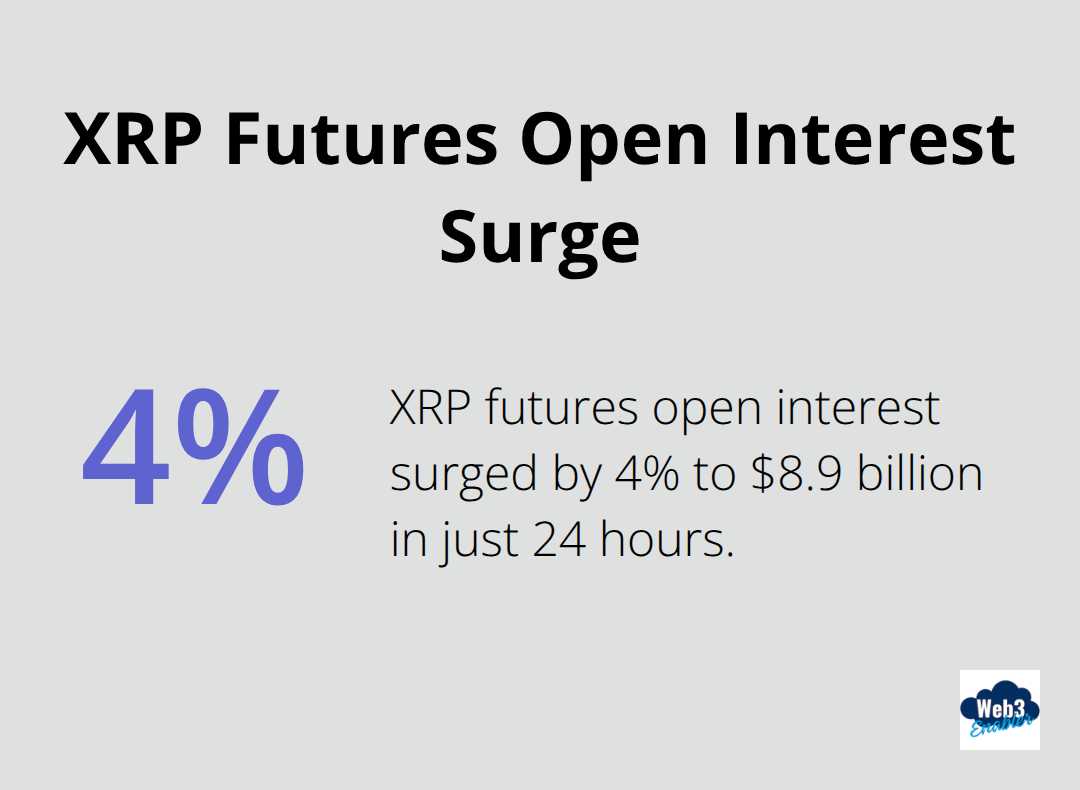
XRP currently holds a market capitalization of approximately $178 billion, which positions it as one of the dominant players in the cryptocurrency space. The token trades around $2.97 as of October 2025, with futures open interest that surged 4% to $8.9 billion in just 24 hours. This indicates trader confidence despite weekend spot volume declines. This market position reflects sustained institutional interest rather than retail speculation.
Ripple’s Banking License Application Changes Everything
Ripple’s application for a U.S. Office of the Comptroller of the Currency banking license represents the most significant development for XRP’s institutional adoption. This move would place Ripple alongside federally recognized crypto entities like Kraken and Circle, which provides direct access to U.S. financial infrastructure. The 5-6 month review timeline creates a clear catalyst window, with social media speculation that points to potential approval by Christmas 2025.
Hundreds of companies currently use Ripple’s payment solutions, though few utilize XRP directly due to volatility concerns. The banking license could change this dynamic by legitimizing XRP for enterprise treasury operations, particularly for cross-border payments where speed matters most. The B2B cross-border payments market is expanding rapidly, with blockchain-driven transactions expected to exceed $4.4 trillion.
Regulatory Momentum Builds Institutional Confidence
The SEC’s anticipated approval of spot XRP ETFs between October 18-25, 2025, mirrors Bitcoin’s 165% price surge that followed ETF approval in January 2024. Staff Accounting Bulletin 121’s removal under President Trump’s administration eliminates previous institutional barriers, with the administration that positions the U.S. as the crypto capital of the world.
These regulatory shifts directly address the compliance concerns that previously limited XRP adoption among risk-averse financial institutions. This creates a pathway for broader institutional integration and sets the stage for examining what specific factors could drive sustained price growth beyond these regulatory catalysts.
What Makes XRP’s Growth Potential So Compelling
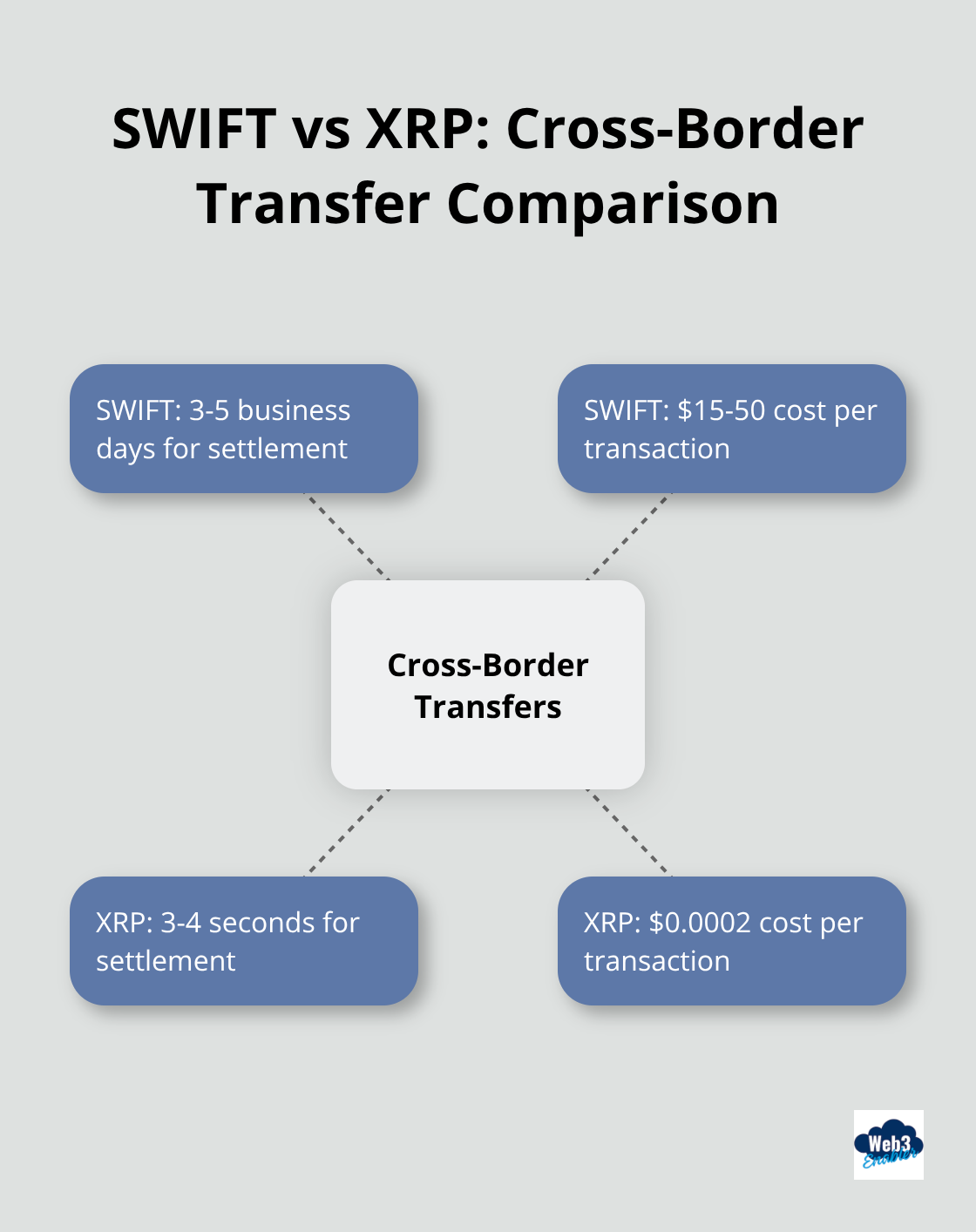
The cross-border payments market represents XRP’s strongest growth catalyst, with global remittances flowing through international channels creating substantial opportunities for digital payment solutions. Traditional SWIFT transfers take 3-5 business days and cost $15-50 per transaction, while XRP settlements complete in 3-4 seconds at $0.0002 per transaction. This 99% cost reduction creates compelling economics for financial institutions that process high-volume international transfers.
Standard Chartered’s Geoffrey Kendrick projects XRP could reach $12.50 by 2028, which represents a 325% increase from current levels. Payment adoption drives this projection primarily. African markets exemplify this opportunity, where remittance fees average 8.2% of transfer value and create significant annual losses that blockchain payments could redirect into economic growth.
Central Bank Digital Currencies Accelerate XRP Adoption
Central banks across 130 countries explore digital currencies, with 68% that consider XRP Ledger’s infrastructure for cross-border CBDC settlements. The Bank for International Settlements reports that CBDCs require interoperability solutions for international transactions, which positions XRP as a bridge currency between different national digital currencies.
Ripple’s partnerships with monetary authorities in Bhutan, Palau, and Montenegro demonstrate real-world CBDC integration progress. These implementations create network effects where each new CBDC connection increases XRP’s utility value exponentially. The European Central Bank’s digital euro pilot (expected in 2026) could trigger widespread CBDC adoption that benefits XRP’s bridge capabilities.
Enterprise Payment Automation Drives Volume Growth
Corporate treasuries manage $2.1 trillion in daily cross-border payments, with 78% of CFOs who report payment delays as their primary operational challenge. Ripple’s On-Demand Liquidity product eliminates pre-funding requirements that tie up $27 trillion globally in nostro-vostro accounts.
Major banks like Santander and SBI Holdings already process millions in XRP-powered transactions monthly, which proves enterprise viability. The tokenization market, projected to reach $16.1 trillion by 2030 according to Boston Consulting Group, creates additional XRP demand as institutions need bridge assets for asset settlements. Each new enterprise client typically processes $50-200 million annually through Ripple’s network and creates sustained transaction volume that directly supports XRP price appreciation.
However, these growth drivers face significant headwinds that could limit XRP’s price potential and create substantial risks for investors who expect consistent returns.
What Could Derail XRP’s Price Growth
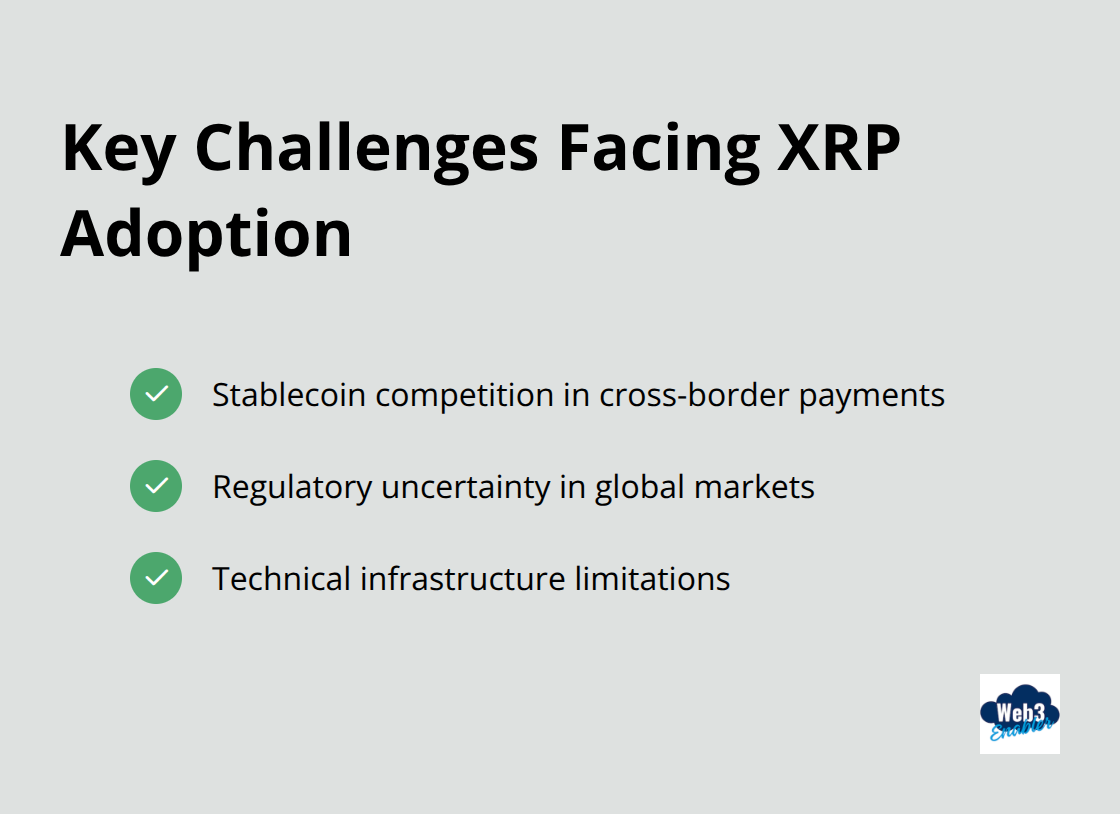
XRP faces three major obstacles that could prevent sustained price appreciation despite positive regulatory developments. Cryptocurrency market volatility remains XRP’s biggest challenge, with the overall crypto market showing significant fluctuations as market capitalization recently reached $4.36 trillion. XRP’s monthly transaction volume decreased throughout 2025, which raises serious questions about real-world adoption versus speculative trade. This disconnect between price movements and actual utility creates dangerous conditions for investors who expect consistent returns based on fundamental value.
Stablecoin Competition Threatens XRP’s Payment Use Case
Stablecoins like USDC and USDT dominate cross-border payments with $190 billion in monthly transaction volume, while XRP processes significantly less despite its speed advantages. Financial institutions prefer stablecoins for international transfers because price stability eliminates foreign exchange risk during multi-day settlement windows. Circle’s USDC integration with traditional banks through partnerships with major financial institutions creates a competitive moat that XRP struggles to overcome.
Ripple’s own RLUSD stablecoin launch acknowledges this reality but could cannibalize XRP demand for payment applications. The fundamental challenge remains that businesses need predictable costs for international payments, which volatile cryptocurrencies cannot provide regardless of transaction speed or technical capabilities.
Regulatory Uncertainty Persists Beyond U.S. Markets
European Union’s Markets in Crypto-Assets regulation creates compliance burdens that could limit XRP adoption across 27 member countries. The European Banking Authority requires detailed reports for cryptocurrency payments that exceed €1,000, which adds operational complexity for institutions that consider XRP integration. Asian markets present additional challenges, with China that maintains its cryptocurrency ban and Japan that requires extensive licenses for digital asset operations.
These regulatory fragmentation issues mean XRP cannot achieve global payment network effects without navigation through dozens of different compliance frameworks. Bank for International Settlements data shows that 73% of central banks cite regulatory uncertainty as their primary concern about cryptocurrency adoption (which directly impacts XRP’s institutional growth potential in key financial markets worldwide).
Technical Infrastructure Limitations Create Adoption Barriers
XRP Ledger processes 1,500 transactions per second compared to Visa’s 65,000 transactions per second capacity. This throughput limitation becomes problematic when major financial institutions require enterprise-scale payment processing. Network congestion during high-volume periods can increase transaction costs and settlement times, which undermines XRP’s core value proposition of fast, cheap transfers.
The XRP Ledger also lacks smart contract functionality that competitors like Ethereum provide, which limits its utility for complex financial products and automated payment systems that modern businesses require.
Final Thoughts
XRP’s price trajectory depends on how well it balances significant growth opportunities against substantial market risks. The banking license application and anticipated ETF approvals create strong institutional adoption catalysts, while cross-border payment demand and CBDC integration offer long-term utility value. However, stablecoin competition, regulatory fragmentation, and technical limitations present real obstacles to sustained growth.
Current market indicators suggest cautious optimism for this Ripple currency prediction. The $8.9 billion futures open interest and institutional partnerships demonstrate genuine demand beyond retail speculation. Yet XRP’s transaction volume decline throughout 2025 reveals the gap between price movements and actual utility adoption (which raises questions about fundamental value versus speculative interest).
Investors should monitor banking license approval dates, ETF launch impacts, and monthly transaction volume trends to gauge XRP’s true potential. For businesses that want to explore blockchain payment solutions now, Web3 Enabler provides native Salesforce integration that enables faster global payments and stablecoin acceptance. This approach helps companies leverage blockchain technology regardless of individual cryptocurrency performance.