


 Picture this: your biggest client just sent a $50,000 payment, but your team won’t know if it actually cleared for three business days. Meanwhile, your revenue forecasts are hanging in limbo.
We at Web3 Enabler see this payment finality nightmare playing out in Salesforce teams everywhere. Traditional payment systems create a black hole where money disappears for days, leaving revenue teams guessing and customers frustrated.
What Payment Finality Actually Means for Business
Payment finality means your money is yours, period. No takebacks, no reversals, no waiting around to wonder if that client payment will actually stick. When a payment achieves finality, the transaction becomes irreversible and the funds officially belong to the recipient. Traditional banking systems make this simple concept unnecessarily complicated.
The Three-Day Payment Purgatory
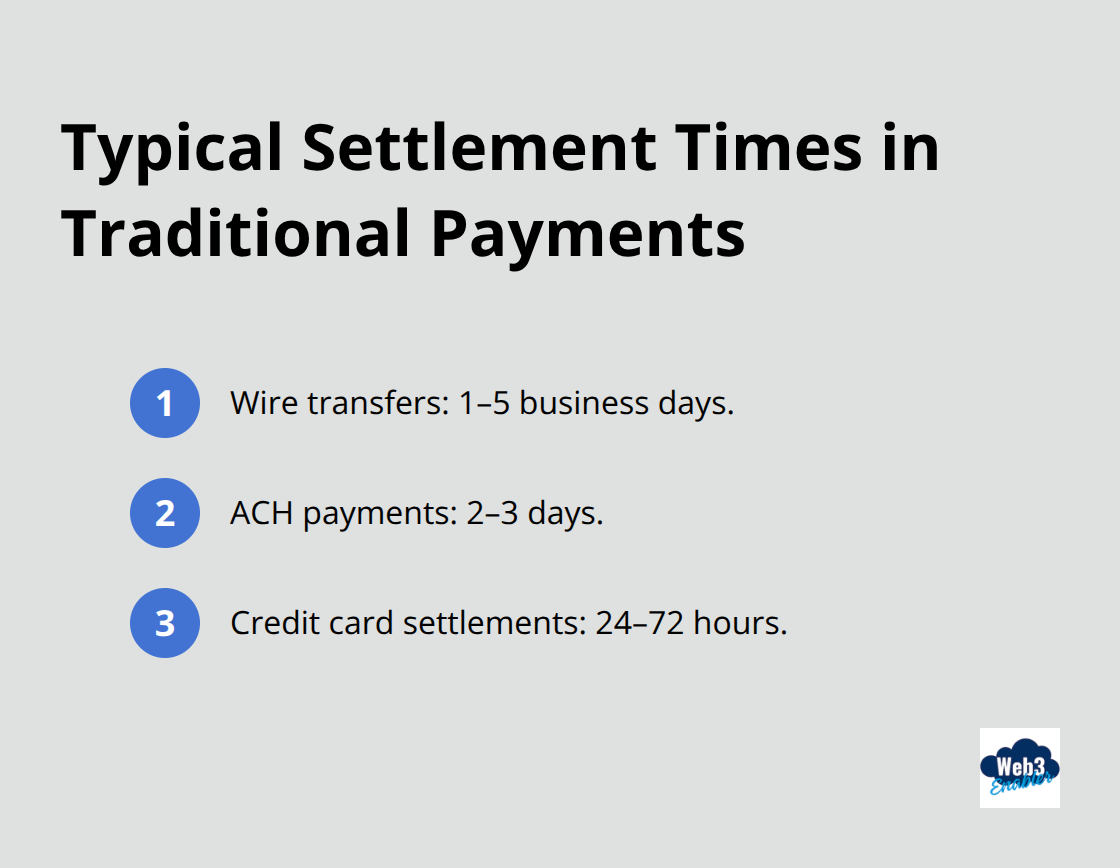
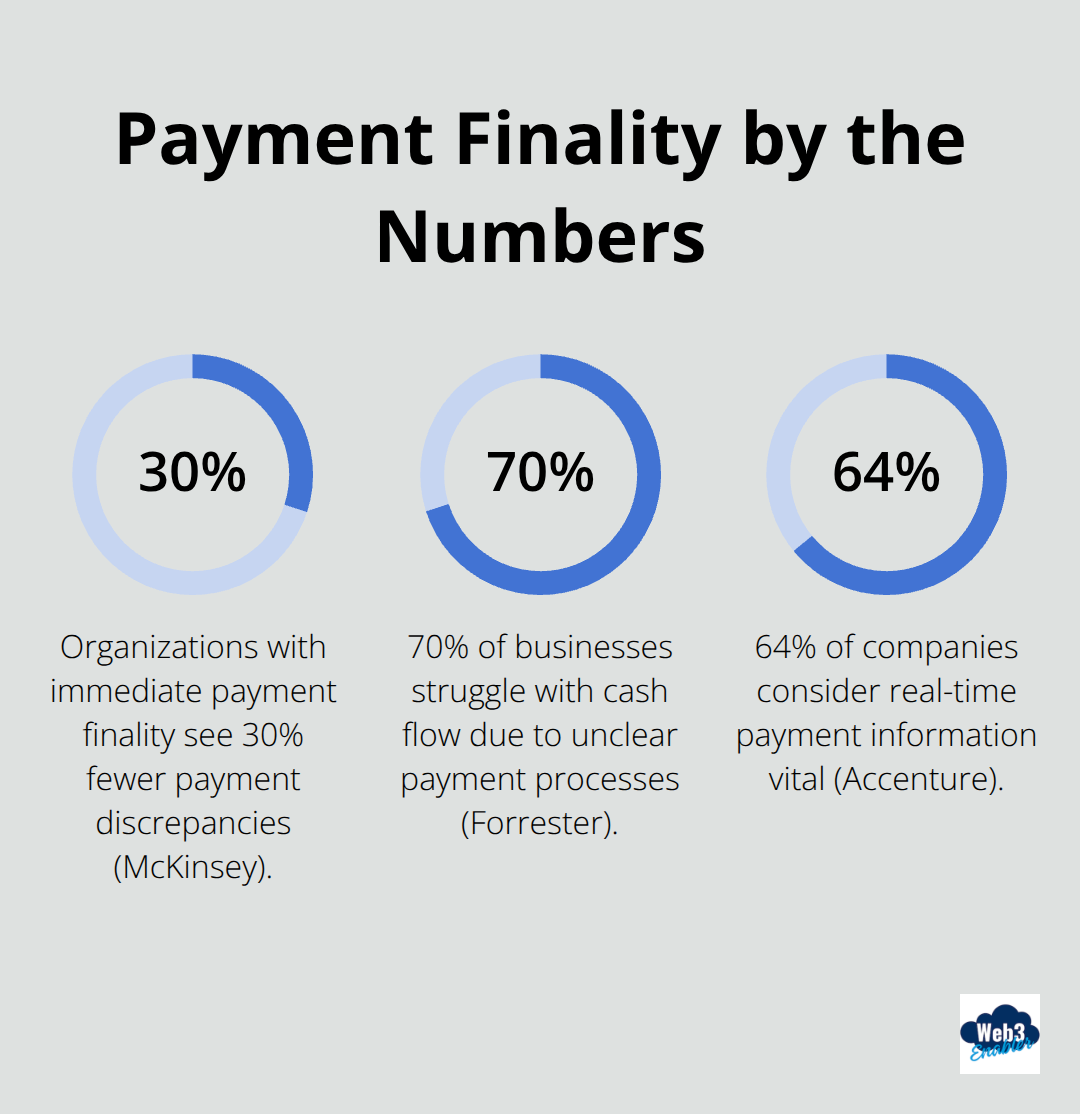
Most businesses deal with settlement times that would make a sloth look speedy. Wire transfers take one to five business days, ACH payments crawl along for two to three days, and credit card settlements leave you waiting for 24 to 72 hours. McKinsey research shows that organizations with immediate payment finality reduce payment discrepancies by 30%. Meanwhile, your revenue team sits in limbo, unable to confirm whether that quarter-end deal actually closed or if the payment will bounce back like a bad check.
The Federal Reserve reports that over 80% of transactions in 2023 were digital, yet most still crawl through outdated settlement infrastructure that treats every payment like it needs committee approval.
Revenue Recognition Demands Certainty
Revenue recognition compliance demands certainty, not guesswork. ASC 606 can recognize revenue over time or at a point in time, but traditional payments create a gray area where nobody knows if the money is really there. Your Salesforce revenue team needs to update deal stages, trigger commission calculations, and report accurate forecasts (not wishful thinking).
Gartner found that automated payment finality solutions boost finance department productivity by 20%. Every day spent waiting for payment confirmation creates another day of operational friction that compounds across your entire revenue operation.
The Hidden Cost of Payment Uncertainty
Payment delays don’t just slow down your cash flow-they create a ripple effect that touches every part of your revenue process. Sales reps can’t celebrate closed deals, finance teams can’t close their books with confidence, and executives can’t trust their revenue forecasts. This uncertainty forces teams to build buffer time into every process, which slows down your entire sales cycle and creates unnecessary administrative overhead that could be eliminated with instant payment finality.
How Payment Delays Destroy Revenue Operations
Payment delays turn your Salesforce revenue operations into a guessing game where nobody wins. When payments sit in settlement limbo, your revenue recognition becomes a house of cards built on maybes and hopefullys. Companies with unclear payment terms face operational challenges that impact their bottom line, but the real damage runs deeper than just numbers on a spreadsheet.
Revenue Recognition Becomes Revenue Speculation
Your finance team faces an impossible choice: recognize revenue before payment confirmation and risk compliance violations, or wait for settlement and miss quarterly reporting deadlines. Forrester research shows that 70% of businesses struggle with cash flow due to unclear payment processes, which forces revenue teams to maintain dual tracking systems. One system shows what should happen, another tracks what actually happened, and neither gives you the real-time accuracy that modern revenue operations demand. Commission calculations get delayed, sales forecasts become unreliable, and your entire revenue pipeline operates on outdated information that makes strategic planning nearly impossible.
Customer Confusion Creates Revenue Friction
Payment uncertainty doesn’t just hurt your internal operations-it creates customer experience problems that directly impact future sales. Clients receive invoices but can’t confirm payment status, which leads to duplicate payments, confused accounting departments, and frustrated procurement teams. Accenture found that 64% of companies consider real-time payment information vital for operations, yet most businesses still leave customers in the dark about payment status. This uncertainty forces your customer success teams to become payment detectives who spend valuable time tracking down transaction statuses instead of driving expansion revenue.
Administrative Overhead Kills Productivity
Payment tracking transforms your revenue team into a collection agency. Sales operations staff spend hours reconciling payments, finance teams manually update Salesforce records, and customer service handles payment status inquiries that should be automated. Experian research indicates that clear payment finality procedures minimize disputes and chargebacks (reducing operational costs significantly). Every delayed payment creates a cascade of manual tasks that pulls productive team members away from revenue-generating activities and turns your streamlined Salesforce processes into administrative nightmares.
The good news? Modern blockchain technology offers a way out of this payment purgatory, and the solutions integrate directly with your existing Salesforce infrastructure.
How Blockchain Solves Payment Finality
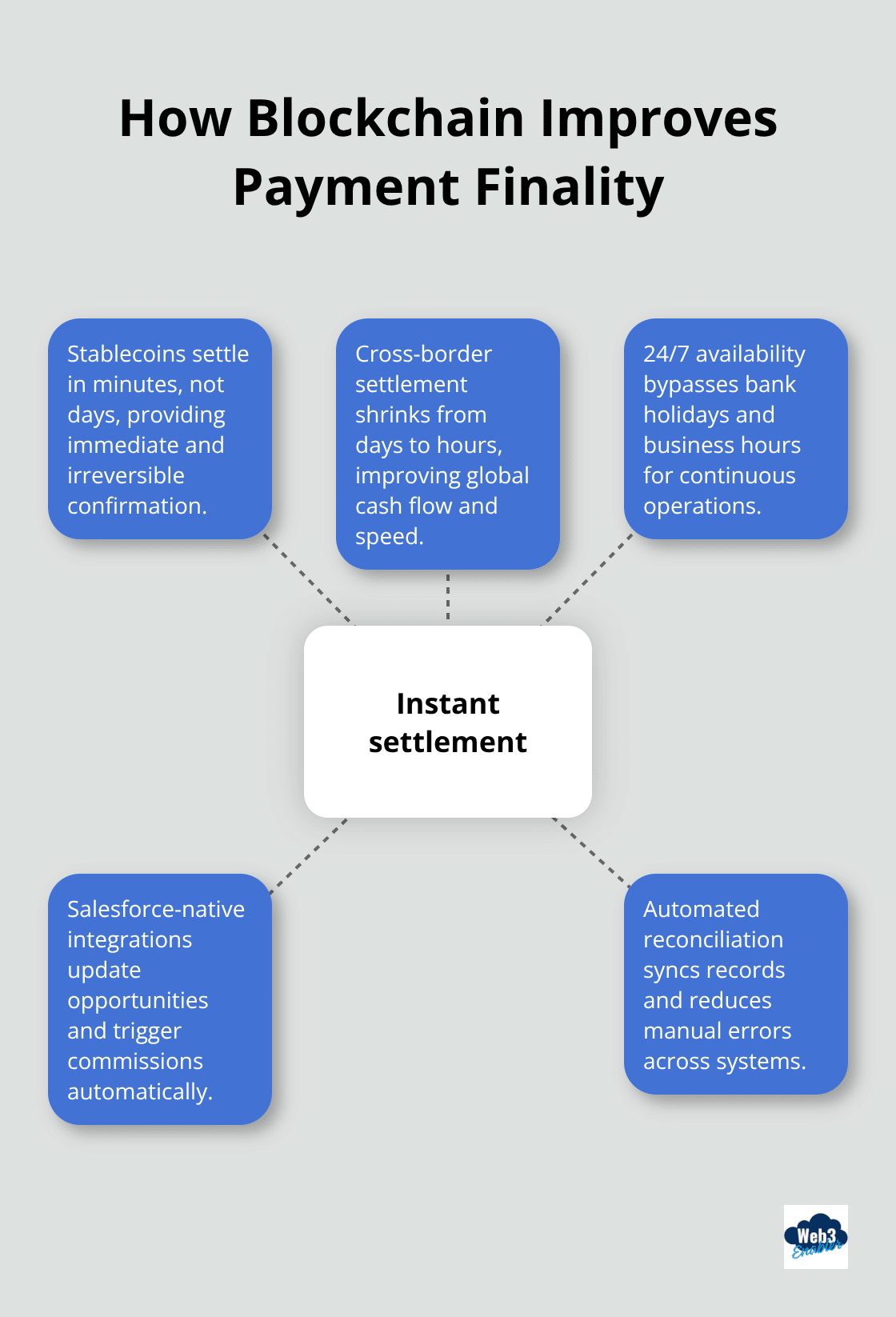
Blockchain technology transforms payment finality from a three-day wait into instant confirmation. Stablecoin payments settle in minutes rather than days, which eliminates the settlement limbo that plagues traditional systems. Blockchain drastically reduces cross-border settlement times from days to hours, while they maintain 24/7 availability that ignores bank holidays and business hours. Worldpay’s partnership with blockchain providers shows how global merchants achieve improved capital efficiency through instant settlement capabilities.
Stablecoins End the Wait
Stablecoins like USDC provide immediate settlement without the volatility concerns of traditional cryptocurrencies. These digital dollars move across blockchain networks in minutes, not days, which gives your Salesforce revenue team instant confirmation that payments are final and irreversible. Circle’s USDC processes over $4 billion in monthly transaction volume, which proves that enterprise-grade stablecoin infrastructure can handle serious business payments. Your revenue team gets real-time payment confirmation, automated reconciliation, and immediate access to funds without traditional bank delays.
Salesforce Native Integration
Modern blockchain solutions integrate directly with Salesforce through native applications available on the AppExchange. These tools automatically update opportunity records when payments achieve finality, trigger commission calculations, and maintain compliance audit trails without manual intervention. Revenue teams can track payment status in real-time within their existing Salesforce workflows (eliminating separate payment systems or manual reconciliation processes that create operational bottlenecks and increase error rates).
Automated Reconciliation Eliminates Manual Work
Blockchain-based payment systems provide programmable settlement with automated reconciliation that updates your Salesforce records instantly. Smart payment protocols verify transaction completion, update deal stages automatically, and trigger downstream revenue operations without human intervention. This automation reduces the administrative overhead that currently consumes productive team time and eliminates the manual errors that occur when finance teams update payment records across multiple systems (turning hours of manual work into seconds of automated processing).
Final Thoughts
Payment finality transforms revenue operations from reactive guesswork into proactive business intelligence. Companies that implement instant payment confirmation see 30% fewer payment discrepancies and 20% productivity gains in finance departments. Your Salesforce revenue team can eliminate three-day settlement delays, reduce administrative overhead, and provide customers with immediate payment confirmation that builds trust and reduces friction.
Implementation starts with evaluation of your current payment processes and identification of bottlenecks that blockchain solutions can eliminate. Revenue teams should assess stablecoin payment options, explore Salesforce native blockchain applications, and establish automated reconciliation workflows that update opportunity records in real-time. Staff training on payment finality implications helps address customer inquiries while teams build internal expertise for long-term success.
The future of enterprise sales belongs to organizations that embrace instant payment settlement. Real-time payment systems will become standard expectations rather than competitive advantages (not just nice-to-have features). Web3 Enabler provides Salesforce native blockchain solutions that connect traditional revenue operations with modern payment infrastructure.