



Digital finance is getting a major upgrade, and stablecoins are leading the charge. These digital currencies combine blockchain speed with traditional currency stability.
We at Web3 Enabler see businesses asking why are stablecoins important for their operations. The answer lies in faster payments, lower costs, and 24/7 settlement capabilities that traditional banking simply can’t match.
How Do Stablecoins Actually Work
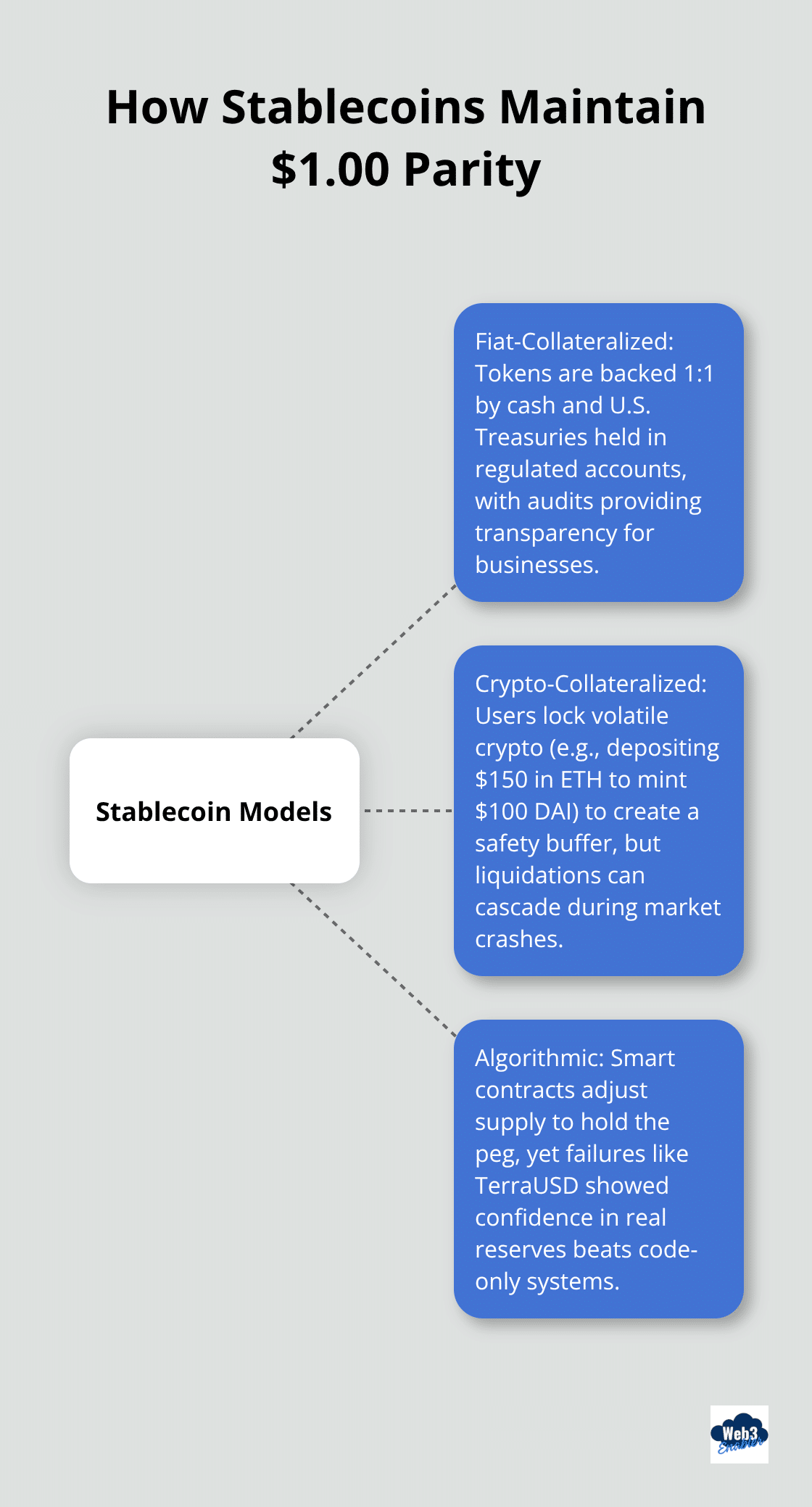
Stablecoins are digital currencies that maintain a consistent value against reference assets like the US dollar. Unlike Bitcoin or Ethereum that swing wildly in price, stablecoins stay rock-steady at around $1.00. This stability comes from three distinct methods that determine how reliable each stablecoin actually is.
Fiat-Collateralized Stablecoins Dominate the Market
Tether USDT and USD Coin USDC represent 84% of the total stablecoin market because they use the most straightforward approach. Every stablecoin has real US dollars or Treasury securities held in reserve accounts behind it. Tether holds over $135 billion in US Treasuries, surpassing South Korea to become the 17th largest holder of American debt globally. Circle’s USDC operates under US regulations with monthly audits by Deloitte, which provides transparency that businesses actually trust. This 1:1 approach means when you hold $1,000 in USDC, there’s $1,000 in real assets that sit in a regulated account.
Crypto-Collateralized Models Require Over-Protection
Crypto-backed stablecoins like DAI require over-collateralization with volatile assets to maintain their peg. If you want $100 in DAI, you might need to deposit $150 worth of Ethereum as collateral. This system works until market crashes hit and liquidations cascade through the system. The extra collateral acts as a buffer (think of it as insurance), but it also ties up more capital than necessary for basic transactions.
Algorithmic Stablecoins Face Reality Checks
Algorithmic stablecoins promised mathematical perfection but TerraUSD’s spectacular collapse in 2022 proved that code can’t replace actual reserves. These systems use smart contracts to expand or contract supply based on demand, similar to how central banks operate. The market learned that confidence in actual assets beats clever algorithms every time. Smart businesses stick with fiat-backed options where the math is simple and the reserves are real.
Now that you understand how stablecoins maintain their stability, let’s explore why businesses are rapidly adopting them for their daily operations.
Why Stablecoins Beat Traditional Payment Systems for Business
International payments through traditional banks take 3-5 business days and cost businesses an average of 6.49% for overseas transfers according to World Bank data. Stablecoins slash this to seconds with fees under 1%. MoneyGram already processes stablecoin transfers globally while Opera’s Minipay reaches 1.4 billion unbanked adults with mobile devices.
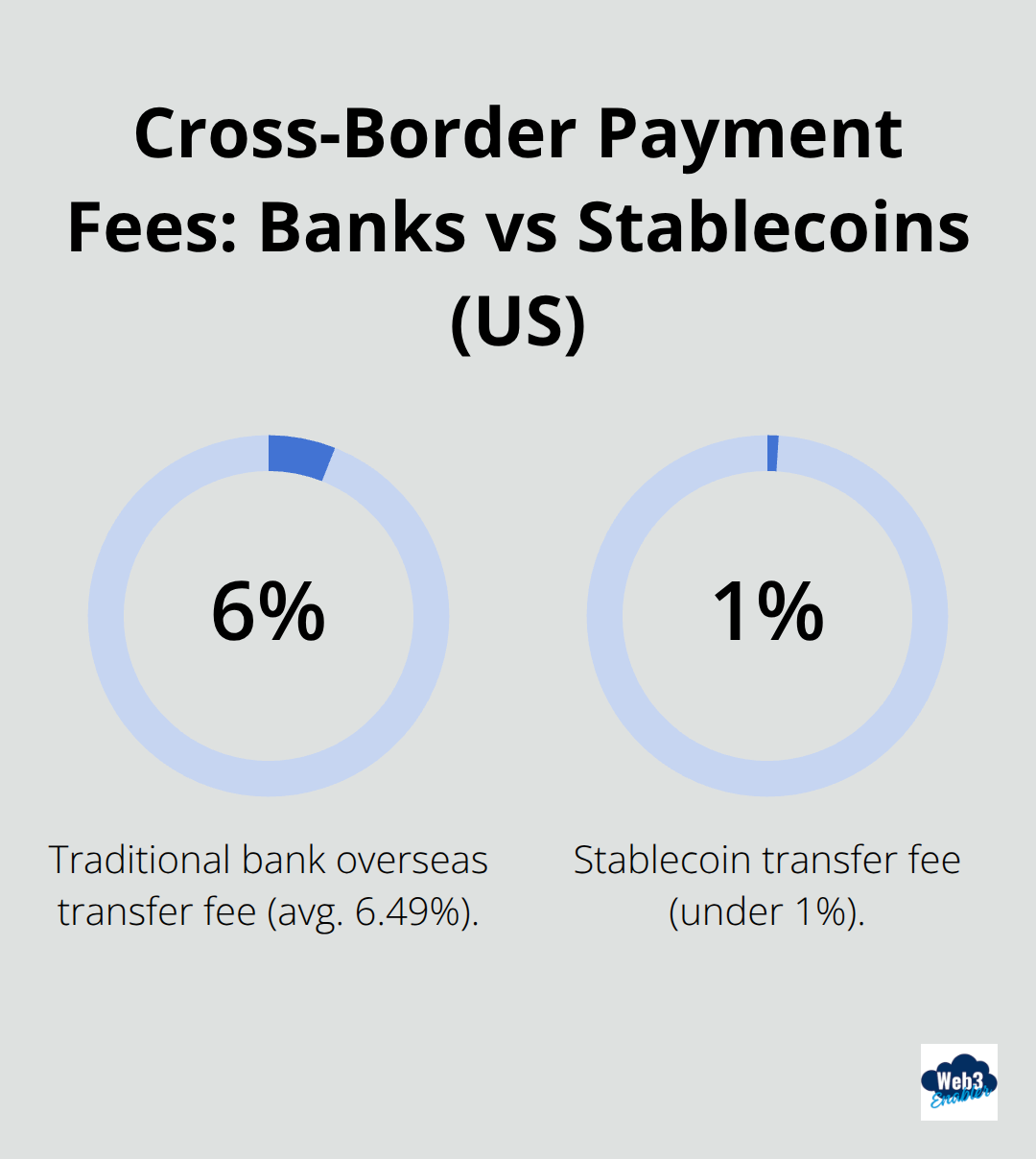
The math is simple: a $50,000 international payment costs $3,300 through banks but under $500 with USDC transfers. Companies like Shopify and Coinbase Commerce now accept stablecoin payments because settlement happens instantly instead of banks’ slow clearing cycles.
Weekend Business Never Stops with Stablecoins
Traditional banks shut down at 5 PM Friday and reopen Monday morning, but global business operates 24/7. Stablecoins process transactions every second of every day without weekend delays or bank holidays. Your supplier in Singapore can receive payment at 2 AM Sunday while your accounting team in New York sleeps.
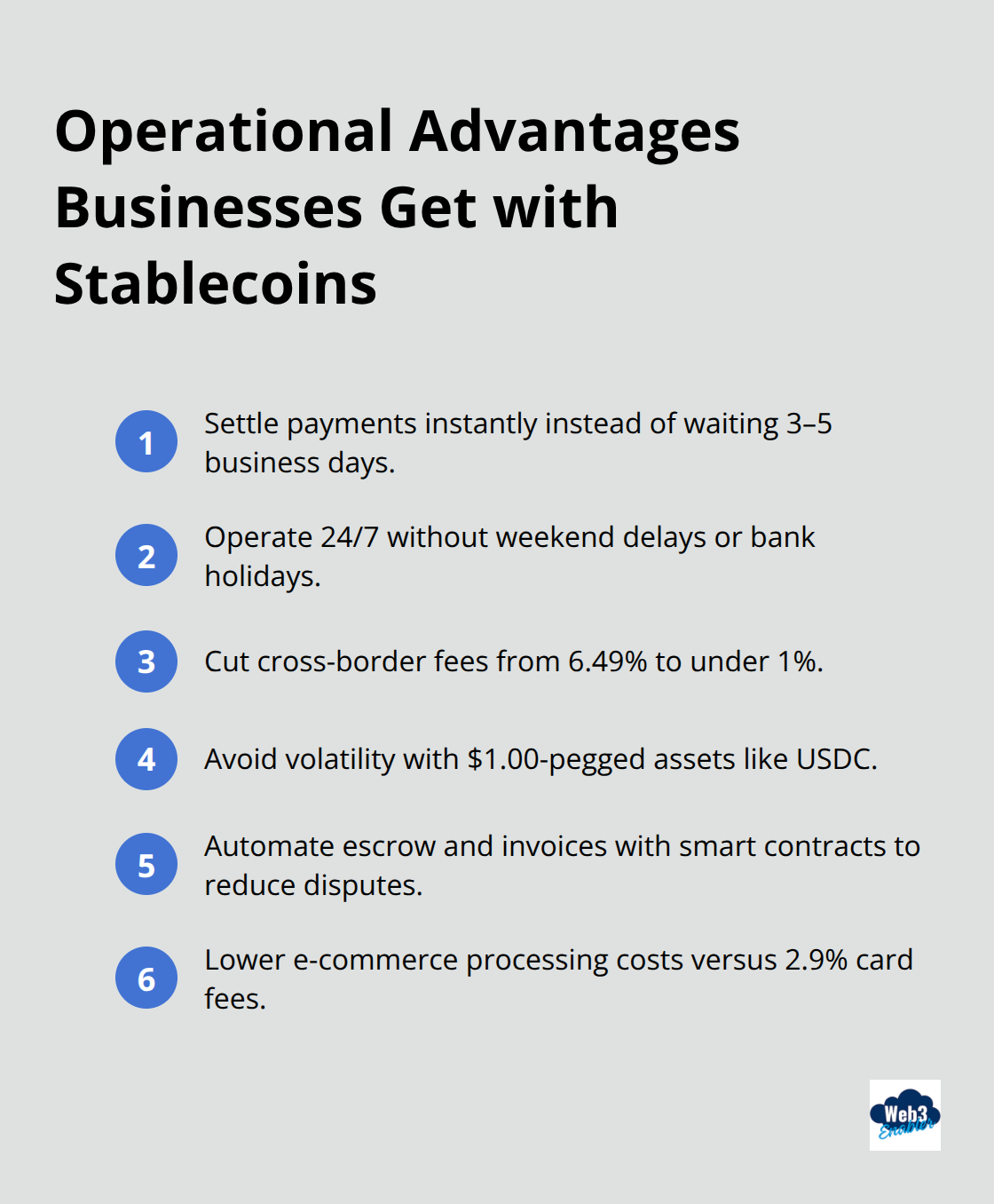
This constant availability improves cash flow management because payments don’t pile up while banks stay closed. USDT transaction volumes hit $5 trillion in August 2025 precisely because businesses need this always-on capability.
Volatility Protection Without Crypto Speculation
Bitcoin swings 20% daily but USDC stays locked at $1.00 because it holds real Treasury securities. Businesses get blockchain speed without the roller coaster ride that makes CFOs nervous. Your $100,000 payment sent as USDC arrives as exactly $100,000, not $80,000 after a market crash. The GENIUS Act now mandates 1:1 asset backing with monthly public disclosures (think of it as mandatory transparency), which means regulated stablecoins provide the stability that traditional businesses actually need for predictable financial plans.
Smart Contract Automation Eliminates Payment Disputes
Programmable payments through smart contracts automate invoice settlements based on delivery confirmations or milestone completions. Your contract automatically releases payment when shipment tracking shows “delivered” status, eliminating the back-and-forth emails that delay traditional payments. This automation reduces disputes because both parties agree to conditions upfront, and the blockchain executes payments without human intervention (goodbye, accounts payable headaches).
These operational advantages explain why forward-thinking companies integrate stablecoins into their daily business processes across multiple industries.
Where Businesses Actually Use Stablecoins Today
Corporate Treasury Operations Get Real-Time Liquidity
Global enterprises now use stablecoins for intercompany settlements and automated liquidity management across multiple subsidiaries. JPMorgan and Ripple test stablecoin transfers for interbank settlements because traditional SWIFT transfers take days while USDC moves instantly. Companies hold working capital in tokenized Treasury products and earn yields on idle cash while they maintain instant access for operations. The UNHCR delivered aid in USDC to Ukrainian refugees, which proves that humanitarian organizations trust stablecoins for transparent, traceable distributions where traditional banks fail. Businesses with international operations slash foreign exchange fees and eliminate weekend delays when they move funds as stablecoins instead of wait for correspondent networks.
E-commerce Platforms Embrace Instant Settlement
Shopify merchants accept USDC payments through Coinbase Commerce because settlement happens immediately instead of the usual 3-5 day wait for credit card processing. Digital marketplaces use smart contracts for escrow services that release payments automatically when delivery confirmation triggers the contract. International sellers avoid chargebacks and currency conversion fees while buyers pay directly from their digital wallets. E-commerce businesses reduce transaction costs from 2.9% credit card fees to under 0.5% for stablecoin processing while they eliminate disputes through programmable payment conditions.
Machine-to-Machine Payments Enable Autonomous Commerce
IoT devices now transact autonomously with stablecoins, and self-driving cars pay tolls or smart meters purchase electricity without human intervention. These automated systems execute payments based on predetermined conditions (think vending machines that reorder inventory automatically). Manufacturing equipment pays for raw materials when sensors detect low stock levels, which streamlines supply chain operations. The programmable nature of stablecoins allows devices to negotiate prices and complete transactions faster than traditional payment rails could ever handle.
Final Thoughts
Stablecoins represent the most practical bridge between traditional finance and blockchain technology that businesses have waited for. The numbers speak volumes: $5 trillion in monthly transaction volumes, 84% market dominance by regulated options like USDT and USDC, and instant settlement capabilities that slash international payment costs from 6.49% to under 1%. Weekend payments, automated treasury management, and programmable invoices create operational efficiencies that directly impact bottom lines.
Companies like MoneyGram and humanitarian organizations like UNHCR already prove that stablecoin adoption works at scale. The regulatory landscape through frameworks like the GENIUS Act provides the compliance structure that enterprises need for widespread adoption. As traditional financial institutions test interbank settlements and IoT devices execute autonomous payments, stablecoins become the universal money layer for digital commerce.
Why are stablecoins important becomes clear when you see their real-world impact on business operations. They solve problems that banks can’t address while traditional payment systems struggle with delays and high fees. We at Web3 Enabler help businesses integrate these capabilities through Salesforce Native blockchain solutions that connect stablecoin payments with existing corporate infrastructure (the future of corporate finance runs on programmable money, and that future exists today).