


 B2B payments face significant challenges with traditional banking systems, including high fees, slow settlement times, and limited transparency. Cross-border transactions can take days to complete while eating into profit margins.
Blockchain technology transforms how businesses handle payments by offering faster, cheaper, and more transparent alternatives. We at Web3 Enabler have seen companies reduce payment processing costs by up to 80% while achieving same-day settlements globally.
How Blockchain Technology Works for Business Payments
Blockchain operates as a distributed ledger where payment transactions receive verification from multiple network participants rather than a single bank. When your company initiates a payment, the transaction joins others in blocks that receive cryptographic security and addition to an immutable chain. This process eliminates the need for correspondent banks and reduces settlement times from 3-5 days to under 10 minutes.
Traditional Payment Rails Create Bottlenecks
Traditional B2B payments depend on a complex web of correspondent banks, with each institution adding fees and delays. SWIFT transactions cost around $25 per side according to Wells Fargo, while blockchain transactions typically cost just cents. Cross-border payments are accelerating under Africa’s PAPSS system, with a growing number of African businesses utilizing the Pan African Payment and Settlement system to avoid routing payments through expensive international corridors.
Enterprise Blockchain Networks Deliver Results
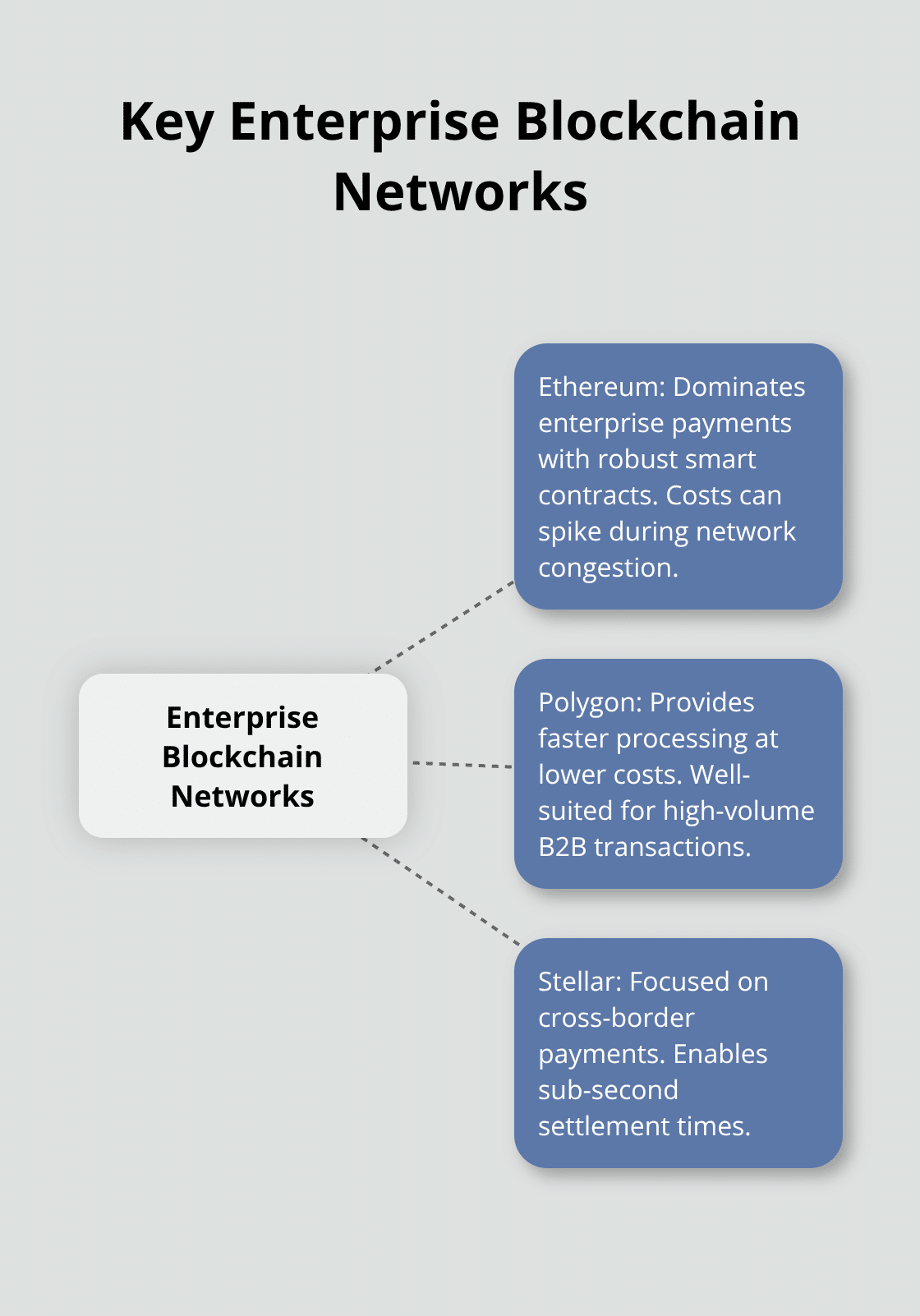
Ethereum dominates enterprise blockchain payments with its robust smart contract capabilities, though transaction costs can spike during network congestion. Polygon offers faster processing at lower costs, which makes it ideal for high-volume B2B transactions. Stellar specifically targets cross-border payments with sub-second settlement times.
Companies like Conduit have achieved 16-fold growth in transaction volumes, with processing that exceeds $10 billion annually through these networks. The corporate blockchain market reached $18 billion in 2023 and projects growth to $470 billion by 2030 (representing a 60% CAGR).
Smart Contracts Automate Payment Workflows
Smart contracts execute payments automatically when predefined conditions are met, which eliminates manual intervention and reduces fraud risk. These programmable agreements can trigger supplier payments upon delivery confirmation or release funds based on milestone completion. This automation capability transforms how businesses handle complex payment scenarios across multiple jurisdictions.
The technology behind these automated systems sets the foundation for understanding the substantial advantages blockchain payments offer over traditional methods.
Benefits of Blockchain for B2B Payments
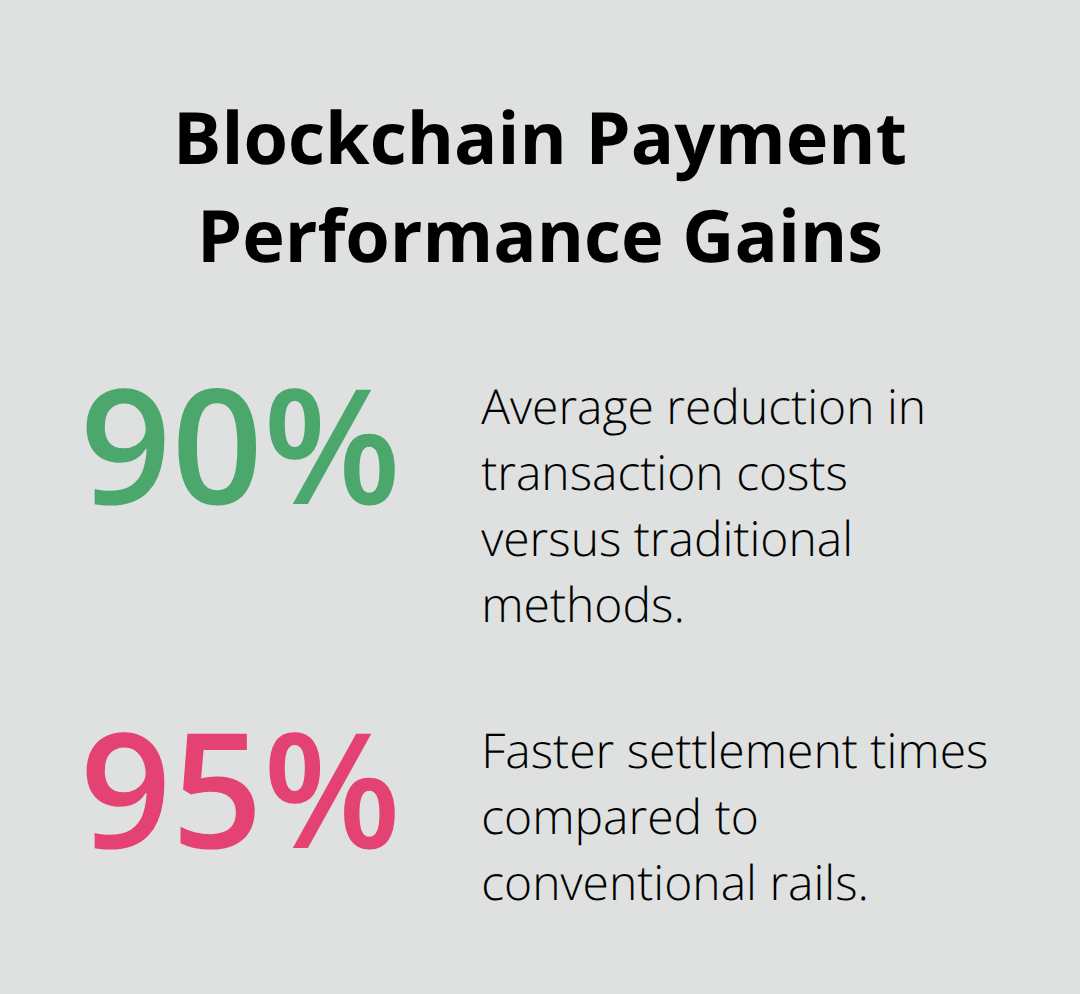
Blockchain payments deliver measurable financial improvements that traditional banking cannot match. Companies that switch to blockchain reduce transaction costs by 90% while they achieve settlement times 95% faster than conventional methods. Wells Fargo data shows SWIFT transactions cost $25 per side, while blockchain transfers cost mere cents. Cross-border payments that traditionally take 3-5 days now settle in under 10 minutes, which dramatically improves working capital efficiency.
Reduced Transaction Costs Drive Adoption
Transaction fees drop below 1% for blockchain payments compared to traditional cross-border fees that range from 4-8% of transaction value. Businesses that process $1 million monthly in international payments save between $30,000-$70,000 annually through blockchain adoption. Cross-border payment platforms like PAPSS remove the need to convert local currencies for exports or imports, which eliminates expensive correspondent banking routes that blockchain eliminates entirely. Stablecoin flows reached $54 billion in Sub-Saharan Africa from July 2023 to June 2024, which proves businesses actively seek these cost advantages.
Enhanced Security and Transparency Build Trust
Public blockchains create immutable transaction records that regulators and auditors can verify independently. Every payment receives cryptographic protection and multiple network confirmations before completion, which makes fraud nearly impossible. Smart contracts execute automatically based on predetermined conditions and remove human error from payment processing. This transparency reduces compliance costs while it builds stronger supplier relationships through verifiable payment histories.
Faster Settlement Times Improve Cash Flow
Traditional correspondent banks create delays that can extend settlement times to five business days (particularly for complex cross-border transactions). Blockchain networks process payments in minutes regardless of banking hours or geographic boundaries. Companies can access their funds immediately after transaction confirmation, which eliminates the working capital constraints that traditional payment rails impose. This speed advantage becomes critical for businesses that operate across multiple time zones or need rapid supplier payments.
The programmable nature of these payment systems opens new possibilities for how businesses structure their financial operations and integrate with existing enterprise software.
Implementation Strategies for B2B Blockchain Payments
Businesses must evaluate transaction volume, geographic reach, and regulatory requirements when they select blockchain payment platforms. Companies that process over $500,000 monthly should prioritize platforms with enterprise-grade security and compliance features. Salesforce users benefit from native blockchain integration that eliminates separate systems or complex API connections. We at Web3 Enabler provide 100% native Salesforce support that connects blockchain transactions directly to existing corporate infrastructure, which enables businesses to manage digital assets and international contractor payments within their current CRM environment.
Choose the Right Platform Architecture
Platform selection depends on specific business requirements and technical infrastructure. Enterprise-grade solutions must handle high transaction volumes while they maintain security standards that meet regulatory expectations. Companies should assess whether platforms support their preferred blockchain networks (such as Ethereum, Polygon, or Stellar) and offer the transaction speeds their operations require. Cost structures vary significantly between providers, with some platforms charging percentage-based fees while others use flat-rate models that benefit high-volume users.

Plan Strategic ERP Integration
ERP integration success requires platforms that support existing data flows without disruption to current operations. Modern blockchain payment solutions connect through established APIs that sync transaction data with accounting systems automatically. Businesses can leverage native blockchain capabilities that track investment returns and settlement times within familiar workflows. The AppExchange generates $140 billion annually, which demonstrates the revenue potential for companies that integrate blockchain solutions with existing B2B platforms. Integration typically takes 2-4 weeks for enterprise implementations when businesses work with experienced providers.
Navigate Regulatory Compliance Requirements
Financial institutions must address AML and KYC requirements that vary significantly across jurisdictions. Singapore and Hong Kong have established clear regulatory frameworks for stablecoins, which provides compliance stability for businesses that operate in these markets. The South African Reserve Bank and Financial Sector Conduct Authority actively monitor cryptocurrency regulations (making compliance tracking essential for local businesses). Companies should partner with licensed providers that offer built-in compliance reporting and maintain regulatory certifications. Regulatory clarity remains a primary consideration for CFO decision-making regarding stablecoin adoption, which makes compliance infrastructure essential for successful implementation.
Final Thoughts
Blockchain technology transforms B2B payments with cost reductions up to 90% and settlement times 95% faster than traditional methods. Companies that process $1 million monthly in international payments save $30,000-$70,000 annually through blockchain adoption. Smart contracts execute automatically and eliminate fraud risks while they improve compliance reports.
The blockchain payment market will grow from $18 billion in 2023 to $470 billion by 2030 (representing explosive expansion opportunities). Financial institutions expect 90% stablecoin adoption rates within the next year as regulatory frameworks mature. Cross-border B2B payments will leverage programmable money capabilities that automate complex workflows across multiple jurisdictions.
Companies that want to modernize their payment infrastructure should evaluate platforms that integrate with existing systems. Web3 Enabler provides native Salesforce support for blockchain transactions and enables businesses to manage digital assets within their current CRM environment. Start with an assessment of your monthly payment volumes and identify the highest-cost cross-border transactions that blockchain can optimize.