


 Transaction costs eat into your profit margins every single day. Traditional payment systems charge businesses between 2-4% per transaction, plus hidden fees for international transfers and currency conversions.
We at Web3 Enabler see companies losing thousands monthly to outdated financial infrastructure. Blockchain technology eliminates these unnecessary expenses by removing intermediaries and automating processes that banks charge premium rates to handle.
How Blockchain Reduces Transaction Costs
Traditional payment systems drain your resources through layers of unnecessary middlemen. Banks charge wire transfer fees from $15-50 per domestic transaction and $35-80 for international transfers. Credit card processors take 2.9% plus $0.30 per transaction, while PayPal charges up to 5% for international payments. These intermediaries add zero value to your actual transaction but pocket substantial fees for routing your money through outdated networks.
Smart Contracts Replace Expensive Manual Processes
Smart contracts eliminate human intervention in payment processes and cut administrative costs up to 70% (according to IBM research). Bergen County, New Jersey is migrating 370,000 property deeds to blockchain technology on the Avalanche Network, representing $240 billion in real estate assets. These automated systems handle contract execution, payment releases, and compliance checks without lawyers, notaries, or bank officers who add their fees to every transaction. Your payments execute automatically when conditions are met and remove delays while reducing costs to mere cents per transaction.

Real-Time Settlement Saves Interest and Opportunity Costs
Blockchain transactions settle within seconds, compared to 3-5 business days for traditional bank transfers. This speed eliminates float costs that banks profit from while your money sits in limbo. International payments through SWIFT networks can take up to a week and cost 3-7% in fees and exchange rate markups. Blockchain networks process the same transfers for under $1 and settle immediately without weekend delays or banking hour restrictions.
Proven Cost Savings Across Industries
Companies that use stablecoins report cost savings of at least 10% in cross-border B2B transactions, with 41% of current users documenting these benefits. The global stablecoin market processes over $24.6 billion in daily transfers on networks like Tron alone-seven times the volume of Ethereum. Organizations can now allocate 7-9% of their portfolios to tokenized assets, showcasing the growing acceptance of blockchain in traditional finance sectors.
These cost reductions become even more significant when you examine specific industry comparisons and real-world implementation scenarios.
What Does Each Payment Method Actually Cost Your Business
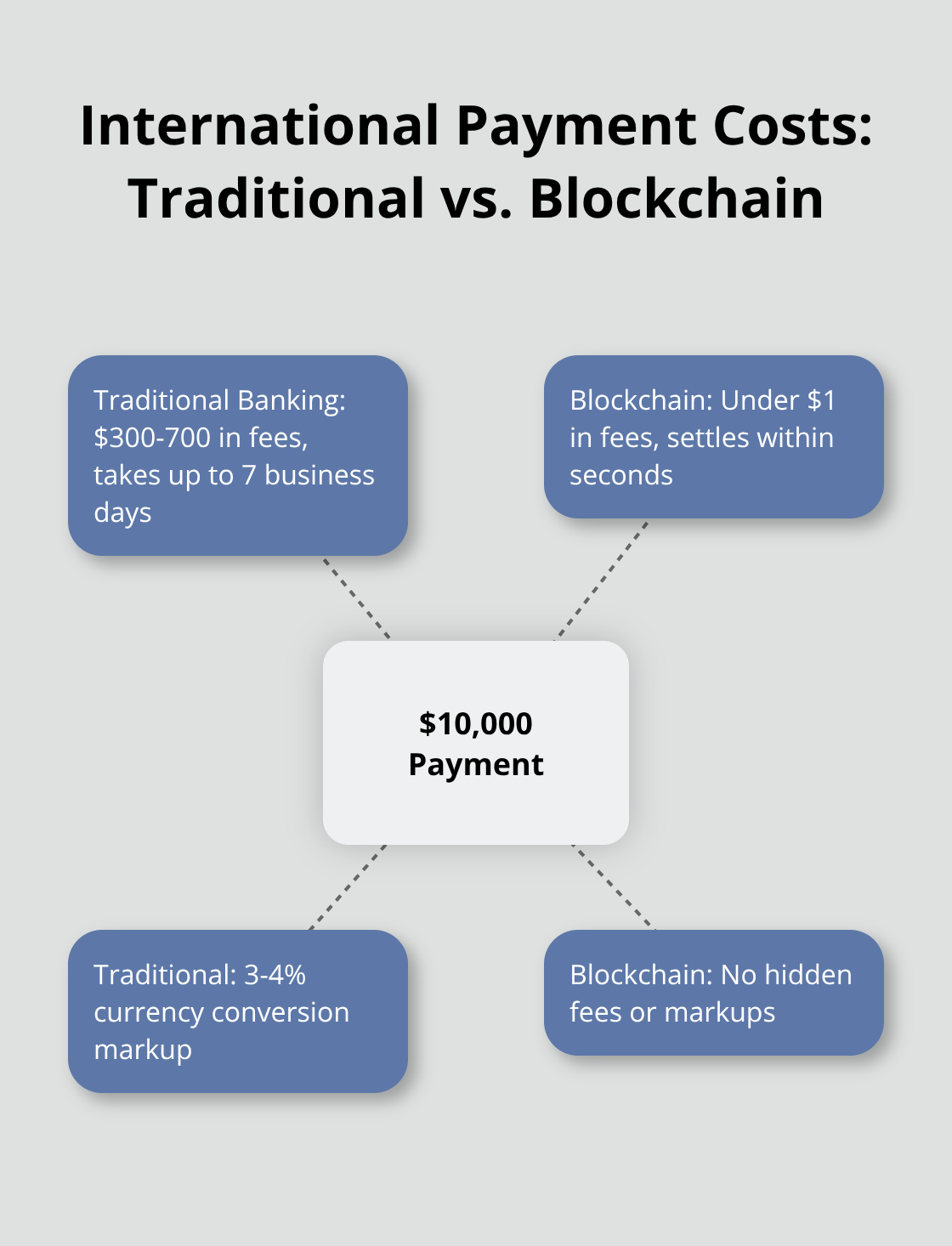
Traditional payment systems extract far more money from your business than you realize. Wire transfers through major banks cost $15-50 domestically and $35-80 internationally, plus 3-5 business day delays that freeze your working capital. Credit card processors charge 2.9% plus $0.30 per transaction, while PayPal takes up to 5% for international payments. These fees compound when you factor in currency conversion markups of 3-4% above market rates.
The True Cost of Traditional Banking
A $10,000 international payment through traditional banks costs between $300-700 in total fees and takes up to seven business days to complete. Banks profit from every delay while your money sits in their systems. SWIFT networks add multiple correspondent bank fees that stack on top of base transfer costs. Currency conversion happens at rates 3-4% worse than market prices, which banks pocket as additional profit.
Blockchain Networks Slash Costs by 90% or More
Blockchain transactions cost under $1 regardless of transfer size or destination. Tron processes over $24.6 billion in daily USDT transfers at fees that dropped from $1.64 to under $1 after recent network optimizations. Ethereum Layer-2 solutions like Polygon handle transactions for pennies while they maintain security. International payments that cost hundreds through SWIFT networks execute for cents on blockchain networks.
Speed Creates Hidden Opportunity Costs
Traditional bank delays create cash flow strain, impact trust and relationships, and bring operational slowdowns. Three-day settlement periods prevent you from reinvesting funds or paying suppliers promptly. Weekend and holiday restrictions further delay critical payments. Blockchain networks operate 24/7 with settlement times under 30 seconds. This speed advantage eliminates float costs where banks profit from holding your money.
Companies that use stablecoins report 10% cost savings specifically in cross-border B2B transactions (with 41% of current users documenting these benefits across their payment operations). EY-Parthenon estimates 5-10% of cross-border payments will move to stablecoins by 2030, representing $2.1-4.2 trillion in transaction volume. These dramatic cost differences make implementation strategy the next critical consideration for your business.
How Do You Actually Implement Blockchain Payments
Start with API Integration Rather Than System Replacement
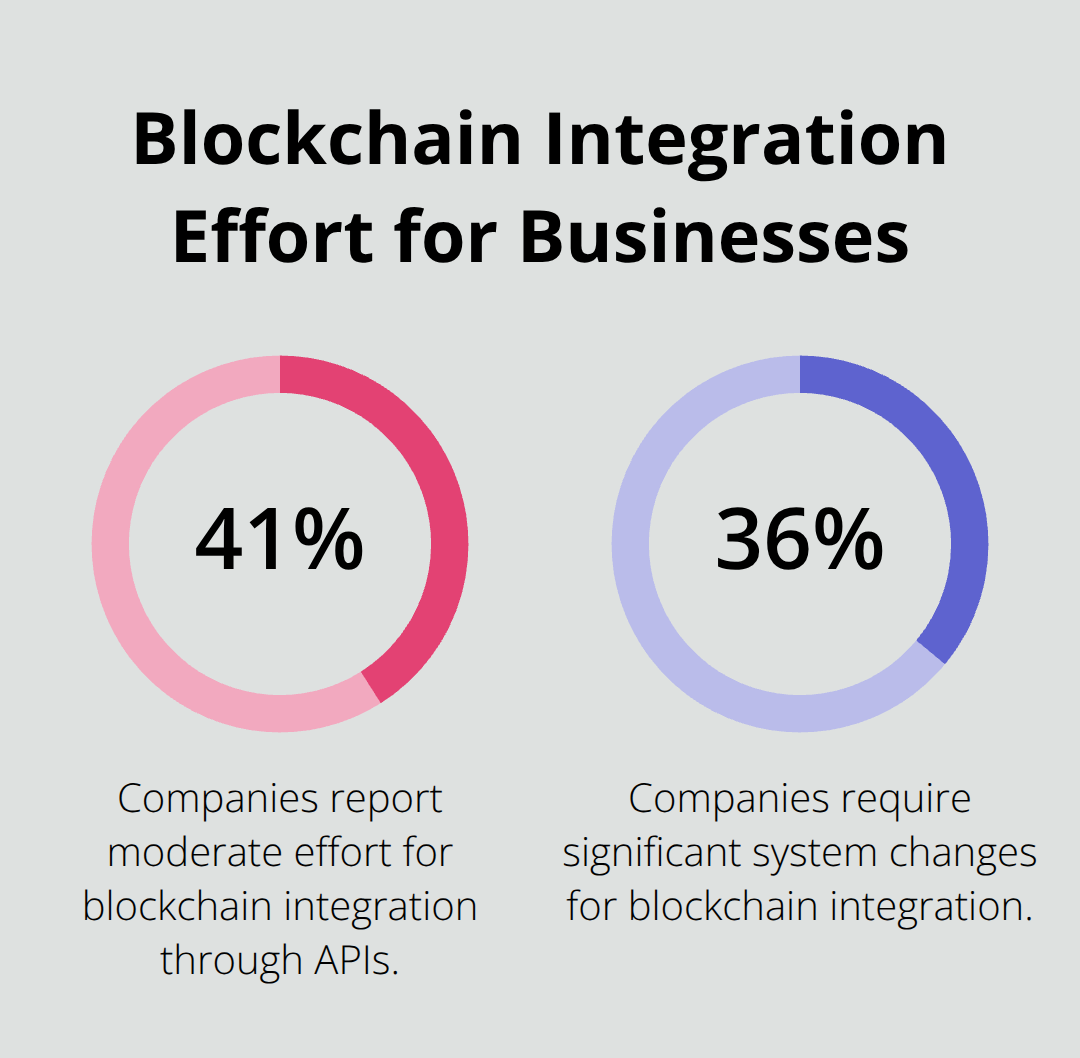
Most businesses fail at blockchain adoption because they attempt to replace their entire financial infrastructure at once. The smart approach connects blockchain payment rails to your existing ERP or CRM systems through APIs. This approach lets you test blockchain payments with small transactions while you maintain your current banking relationships. Companies that use embedded APIs within existing treasury systems report 41% moderate effort integration, while only 36% require significant system changes (according to recent surveys).
Train Finance Teams on Wallet Management and Transaction Monitoring
Your finance team needs hands-on training with digital wallets and blockchain explorers, not theoretical blockchain education. Set up training wallets with small amounts for practice transactions. Teach staff to verify transaction hashes, monitor network congestion, and handle failed transactions. Most importantly, establish clear procedures for wallet security and private key management.
Organizations that implement blockchain analytics report that teams with proper training reduce compliance false positives and improve transaction screening efficiency. Staff training becomes particularly important as financial institutions increasingly partner with third-party providers for stablecoin infrastructure development.
Navigate Compliance Through Established Regulatory Frameworks
The recent passage of the GENIUS Act creates clear regulatory guidelines that reduce compliance uncertainty for businesses that adopt stablecoins. Each supported stablecoin under compliant frameworks aligns with regulatory requirements, which mitigates legal risks for enterprise adoption. Organizations must implement KYC and AML procedures for blockchain transactions, but automated monitoring systems provide continuous insights and real-time risk alerts.
Companies should establish configurable risk rules tailored to their specific risk appetite and operational needs. Blockchain analytics platforms now offer 99% market coverage for transaction monitoring, which helps organizations maintain regulatory compliance while they process crypto payments.
Choose the Right Blockchain Network for Your Business Needs
Different blockchain networks offer varying cost structures and transaction speeds. Tron processes over $24.6 billion in daily USDT transfers with fees under $1 after recent network optimizations. Ethereum Layer-2 solutions like Polygon handle transactions for pennies while they maintain security. Your choice depends on transaction volume, speed requirements, and integration complexity with existing systems.
Final Thoughts
Transaction costs represent one of the most significant drains on business profitability, but blockchain technology offers a proven solution. Companies that use stablecoins report 10% cost savings in cross-border transactions, while blockchain networks process payments for under $1 compared to traditional bank fees of $35-80 per international transfer. These savings compound over time as businesses eliminate intermediary fees, currency conversion markups, and settlement delays.
The strategic advantages extend beyond immediate cost reduction. Real-time settlement improves cash flow management and enables faster supplier payments. Automated smart contracts reduce administrative overhead up to 70%, which frees your finance team for higher-value activities (as EY-Parthenon projects 5-10% of cross-border payments will move to stablecoins by 2030, early adopters gain competitive advantage in this evolving financial landscape).
Implementation starts when you connect blockchain payment rails to your existing systems through APIs. Web3 Enabler provides native Salesforce support for digital assets, which enables you to manage cryptocurrencies and handle international payments within your current CRM environment. This approach lets you test blockchain payments with small transactions while you maintain existing bank relationships and reduce implementation risk while you capture immediate cost benefits.