



Your Salesforce payments infrastructure wasn’t built for global transactions. Cross-border transfers take days, fees stack up, and reconciliation becomes a nightmare.
Stablecoins change that equation entirely. We at Web3 Enabler have integrated stablecoin payments directly into Salesforce, giving you instant settlement, lower costs, and complete visibility across your financial operations.
Why Your Current Payment System Is Costing You More Than You Think
The Hidden Cost of Traditional Cross-Border Transfers
SWIFT transfers take 1 to 5 business days and charge layered fees that can total 10–15% of the transaction amount. When you pay a supplier in Southeast Asia or settle invoices across Europe, those delays compound into working capital problems. Stablecoins settle in minutes on the blockchain, running 24/7/365, which means a payment from your European office to an Asian partner clears in under five minutes instead of waiting until the next business day.
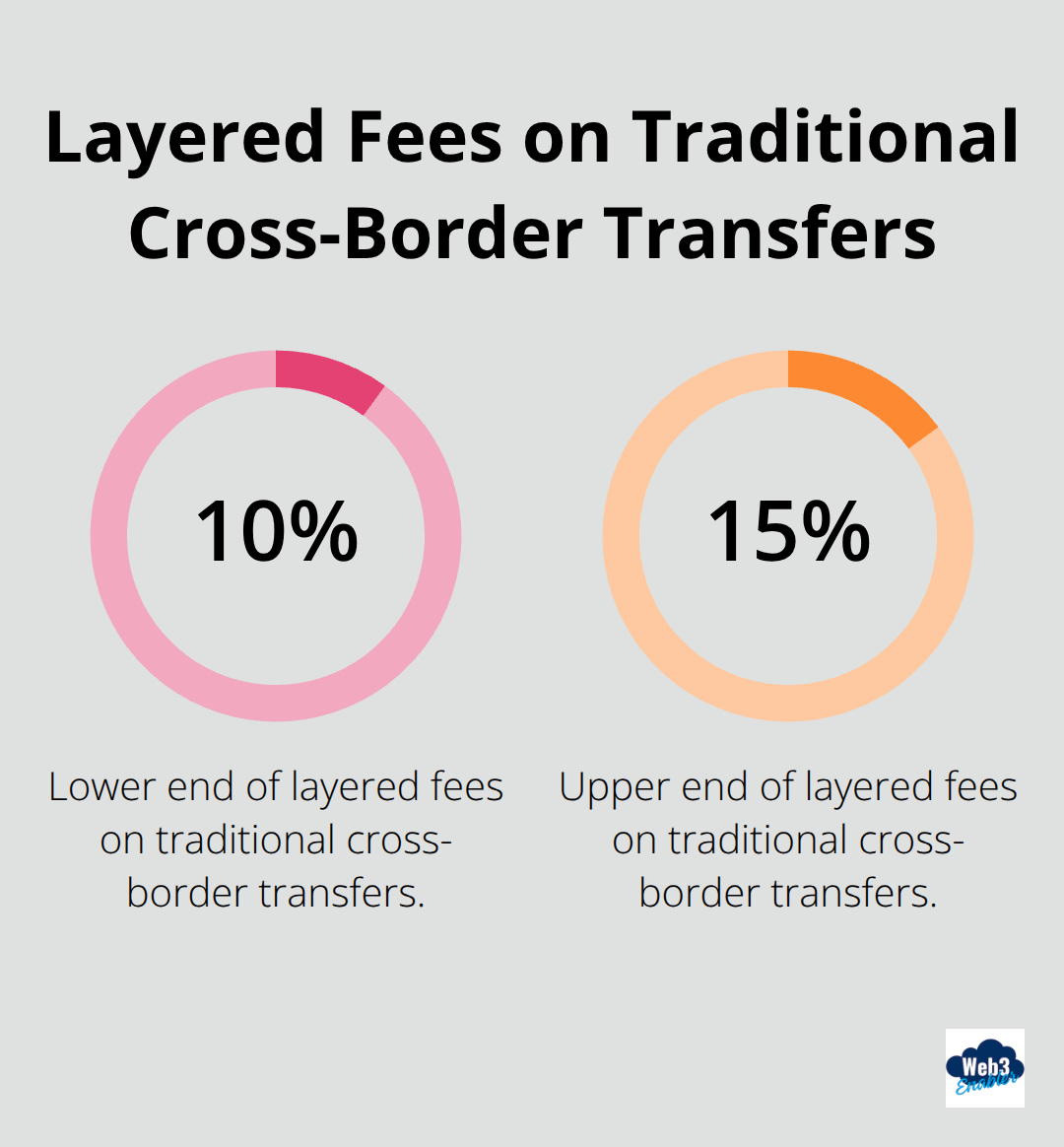
The cost difference is stark: stablecoin transfers via USDT or USDC cost roughly 10–50 times less than traditional rails, with transaction fees often under a dollar regardless of transfer size. A company processing $10 million in annual cross-border payments saves between $100,000 and $500,000 by switching to stablecoins, according to settlement cost analyses across the industry. No hidden intermediary fees, no currency conversion markups, no minimum transfer amounts force you to batch payments inefficiently.
Compliance Lives Inside Your CRM, Not Elsewhere
Traditional payment flows require you to export data, process transfers externally, then manually reconcile transactions back into your system. That’s where errors, delays, and audit nightmares live. Web3 Enabler embeds blockchain payments directly into your Salesforce workflows, meaning compliance checks, transaction records, and settlement confirmations stay within your CRM.
Every on-chain transaction creates an immutable record linked to your customer, invoice, or deal record. Your finance and compliance teams see real-time visibility without switching platforms. Revenue Cloud automates revenue recognition the moment stablecoin settlement occurs, eliminating the gap between payment and accounting. Commerce Cloud lets you accept stablecoins from global customers while maintaining full visibility into each transaction from order to settlement.
Real-Time Asset Visibility for Your Advisors
Financial Services Cloud gives your advisors real-time insight into client wallet balances and digital asset positions (enabling them to provide informed guidance without requesting external reports). This visibility transforms how your team manages client relationships and treasury operations. Your advisors access on-chain data directly within Salesforce, making stablecoin positions as transparent as traditional holdings.
This unified view across your CRM, payments, and financial data layers sets the stage for how Web3 Enabler transforms specific business operations across your organization.
How Web3 Enabler Connects Blockchain Payments to Your Salesforce Workflows
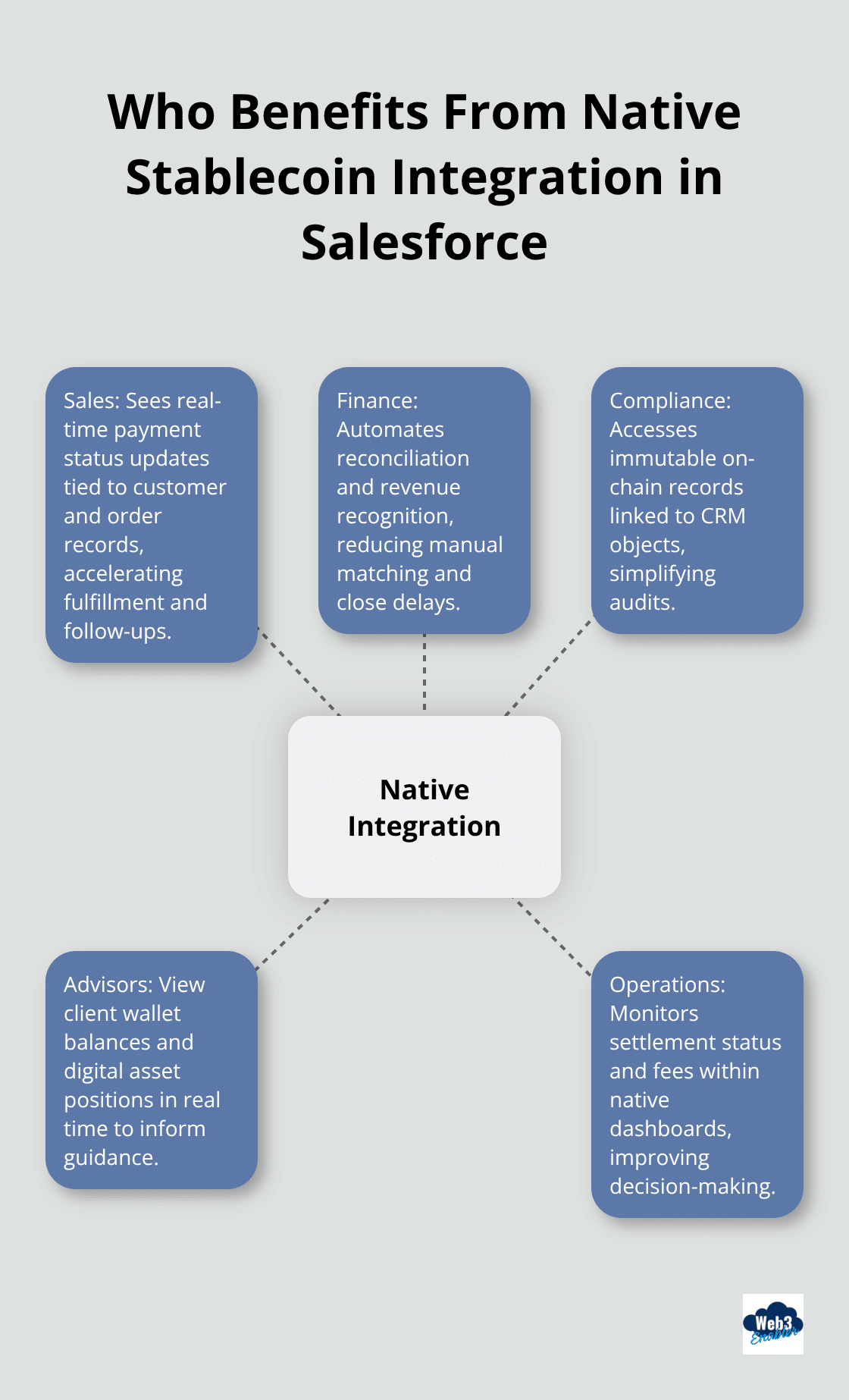
Web3 Enabler is the only native blockchain platform on the Salesforce AppExchange, meaning stablecoin payments integrate directly into your existing CRM without middleware, API juggling, or external dashboards. When you process a stablecoin payment in Commerce Cloud, that transaction flows into your customer record, order history, and financial reporting automatically. Your sales team sees payment status updates in real-time. Your finance team reconciles settlements without manual data entry. Your compliance team accesses immutable transaction records linked to customer and invoice objects.
This native integration across Financial Services Cloud, Commerce Cloud, and Revenue Cloud eliminates the friction that plagues traditional payment workflows, where finance teams export data to external platforms, process transfers, then spend hours matching records back to Salesforce. Industry data shows that companies using embedded payment solutions reduce reconciliation time by 60–70% compared to disconnected systems.
Transactions Flow Directly Into Your CRM
The difference is operational: when stablecoin settlement occurs on-chain, Web3 Enabler automatically triggers revenue recognition in Revenue Cloud, updates customer payment status in Sales Cloud, and logs the transaction in your audit trail-all within Salesforce. Your advisors in Financial Services Cloud see client wallet balances and digital asset positions refresh in real-time, enabling them to provide guidance on stablecoin holdings without requesting external reports. This unified visibility transforms how your teams collaborate and make decisions.
Reconciliation Happens Automatically
Reconciliation is where most payment operations bleed time and money. Your team receives notifications of stablecoin transfers on-chain, then manually matches those transactions to invoices, customer records, and general ledger accounts. Web3 Enabler automates this entirely. When a customer pays an invoice in stablecoins through Commerce Cloud, the system captures the transaction hash, wallet address, and settlement confirmation, then links it directly to the invoice record.
Revenue Cloud automatically recognizes revenue the moment stablecoin settlement confirms on-chain, eliminating the gap between payment and accounting. Your finance team no longer waits for bank confirmations or manually processes settlement batches. For global businesses, this speed matters: stablecoin payments accelerate settlement cycles compared to traditional cross-border transfers.
Real-Time Visibility Into Every Transaction
Web3 Enabler provides real-time visibility into on-chain transactions through native Salesforce dashboards and reports, meaning your operations team monitors settlement status, transaction fees, and currency conversions without switching platforms. Your compliance team accesses complete audit trails showing customer identity, payment amount, wallet addresses, and blockchain confirmation details-all in one place. This transparency satisfies regulatory requirements and reduces the cost of compliance audits.
These operational improvements set the foundation for how stablecoin payments transform specific business functions across your organization.
Where Stablecoins Create Real Business Impact
Commerce Cloud: Accelerate Global Order Settlement
Stablecoin payments work differently across your Salesforce ecosystem, and each cloud delivers distinct operational advantages. In Commerce Cloud, accepting USDT or USDC from global customers eliminates currency conversion friction and payment delays that plague traditional card networks. A customer in Singapore paying your European e-commerce operation settles in minutes instead of waiting for cross-border card processing, which typically takes 3–5 business days. Your team receives immediate confirmation of payment within Salesforce, triggering order fulfillment without the manual verification steps required for wire transfers.
This speed matters: companies processing international payments report that stablecoin settlement provides fast settlement and a smooth digital experience without the pricing risks associated with other forms of payment. Your operations team no longer waits for payment confirmation before shipping goods or activating services.
Revenue Cloud: Automate Recognition and Close Faster
Revenue Cloud automates the entire recognition process the moment on-chain settlement confirms. When a customer pays an invoice in stablecoins, Revenue Cloud automatically matches the transaction to the correct customer record, recognizes revenue according to your ASC 606 policies, and updates your general ledger without human intervention. This eliminates the accounting delays that plague global businesses relying on traditional transfers, where finance teams often wait a week or longer to confirm payment receipt before recording revenue.
Your month-end close accelerates because settlement and recognition happen simultaneously rather than days apart. Finance teams stop manually reconciling payments days after they arrive and instead process transactions in real-time as they settle on-chain.
Financial Services Cloud: Enable Advisors With Real-Time Asset Visibility
Financial Services Cloud transforms how your advisors engage with clients holding digital assets and stablecoin positions. Real-time wallet visibility within your CRM means advisors see client holdings updated automatically, enabling them to provide guidance on stablecoin allocations without requesting external reports or waiting for API calls to complete. If a client holds $500,000 in USDC across multiple wallets, your advisor sees that position reflected in the client profile instantly, allowing informed discussions about portfolio composition and risk management.
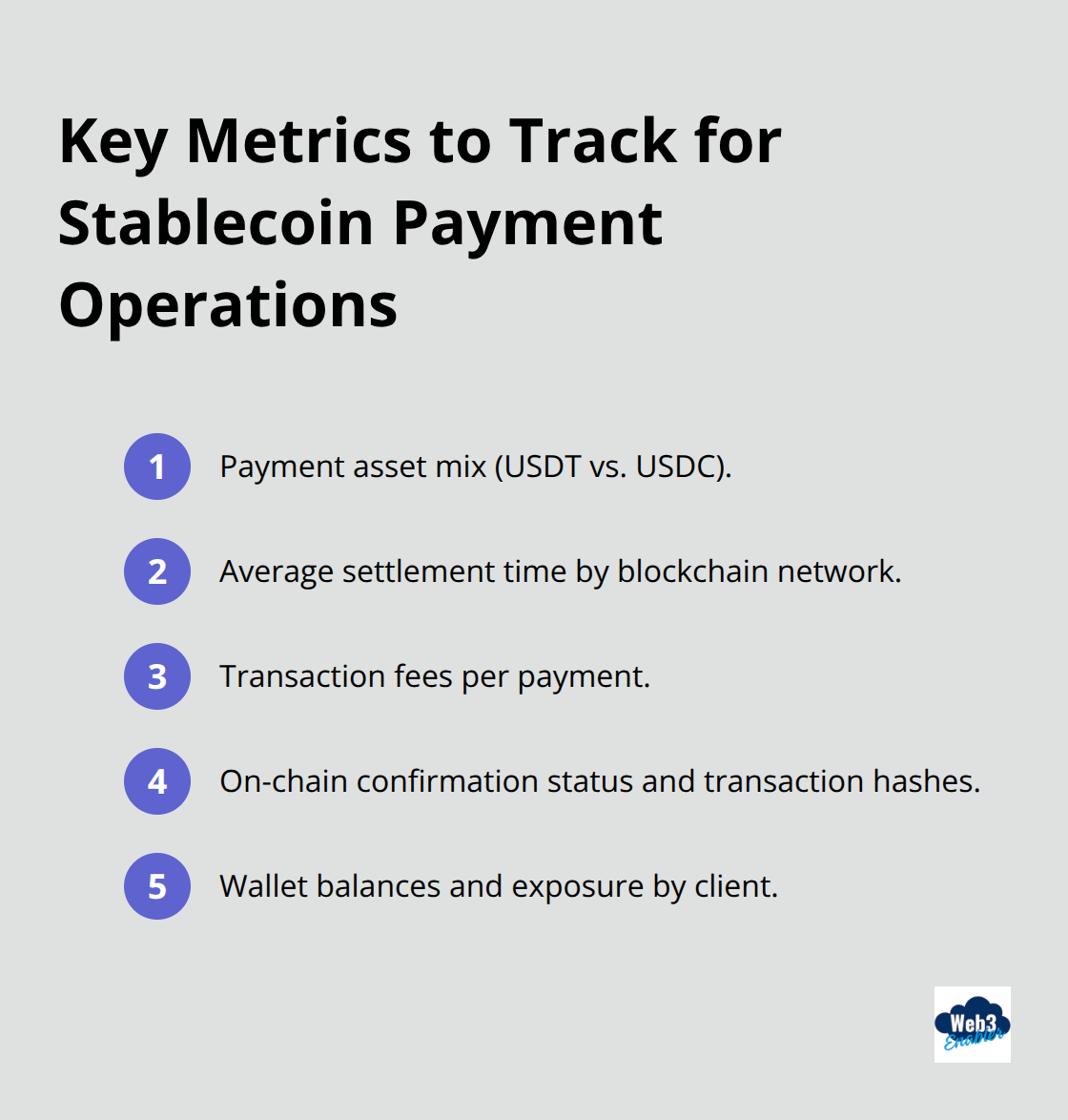
This on-chain visibility extends to tracking settlement efficiency: your operations team monitors which customer payments arrive in USDT versus USDC, measures average settlement times by blockchain network, and adjusts acceptance strategies based on real data. You can adjust your payment acceptance strategy accordingly based on actual performance metrics.
Data-Driven Payment Operations
This data-driven approach to payment operations separates enterprises that optimize for speed and cost from those that settle for whatever arrives first. Your teams make decisions based on real settlement metrics rather than assumptions about which stablecoins perform best for your specific transaction patterns. Web3 Enabler embeds this visibility directly into Salesforce dashboards and reports, meaning your finance, operations, and compliance teams access settlement data without switching platforms or waiting for external reporting tools to refresh.
Final Thoughts
Your payment operations no longer need to stay trapped in slow, expensive infrastructure built for a different era. Stablecoins fundamentally transform how enterprises handle cross-border settlements, and Salesforce payments with stablecoins eliminate the friction that costs your organization time and money every single day. When settlement happens in minutes instead of days, when reconciliation occurs automatically instead of manually, and when your finance team closes the month faster, the operational advantage compounds across every transaction.
Web3 Enabler removes the complexity that typically surrounds blockchain integration by offering the only native blockchain platform on the Salesforce AppExchange. Your sales team sees payment status updates in real-time, your finance team reconciles settlements automatically, your advisors in Financial Services Cloud access real-time wallet visibility, and your e-commerce operations in Commerce Cloud accept global payments without currency conversion delays. Companies processing international payments report that stablecoin settlement reduces reconciliation time by 60–70% compared to disconnected systems and cuts cross-border transfer costs by 10–50 times compared to traditional rails.
The infrastructure for modern payments already exists, and Web3 Enabler brings that infrastructure directly into your CRM. Your payment operations transform how your organization handles global settlements, treasury operations, and digital asset management.