



Your Salesforce payments API integration just became your secret weapon for moving crypto transactions at enterprise speed.
We at Web3 Enabler know that global payments have been stuck in the slow lane for too long. Stablecoins and blockchain are finally giving businesses a way out-faster settlement, lower fees, and real-time visibility into every transaction.
Why Crypto Payments Are Becoming Business Standard
The numbers tell the story. The blockchain-enabled B2B cross-border payments market will exceed $4.4 trillion, representing a significant portion of total B2B cross-border payments. That’s not some distant future scenario-that’s happening now. Companies already move stablecoin transactions on-chain because the economics are impossible to ignore. Crypto payments via Salesforce-native integration cost 90% less and settle 95% faster than traditional cross-border methods.
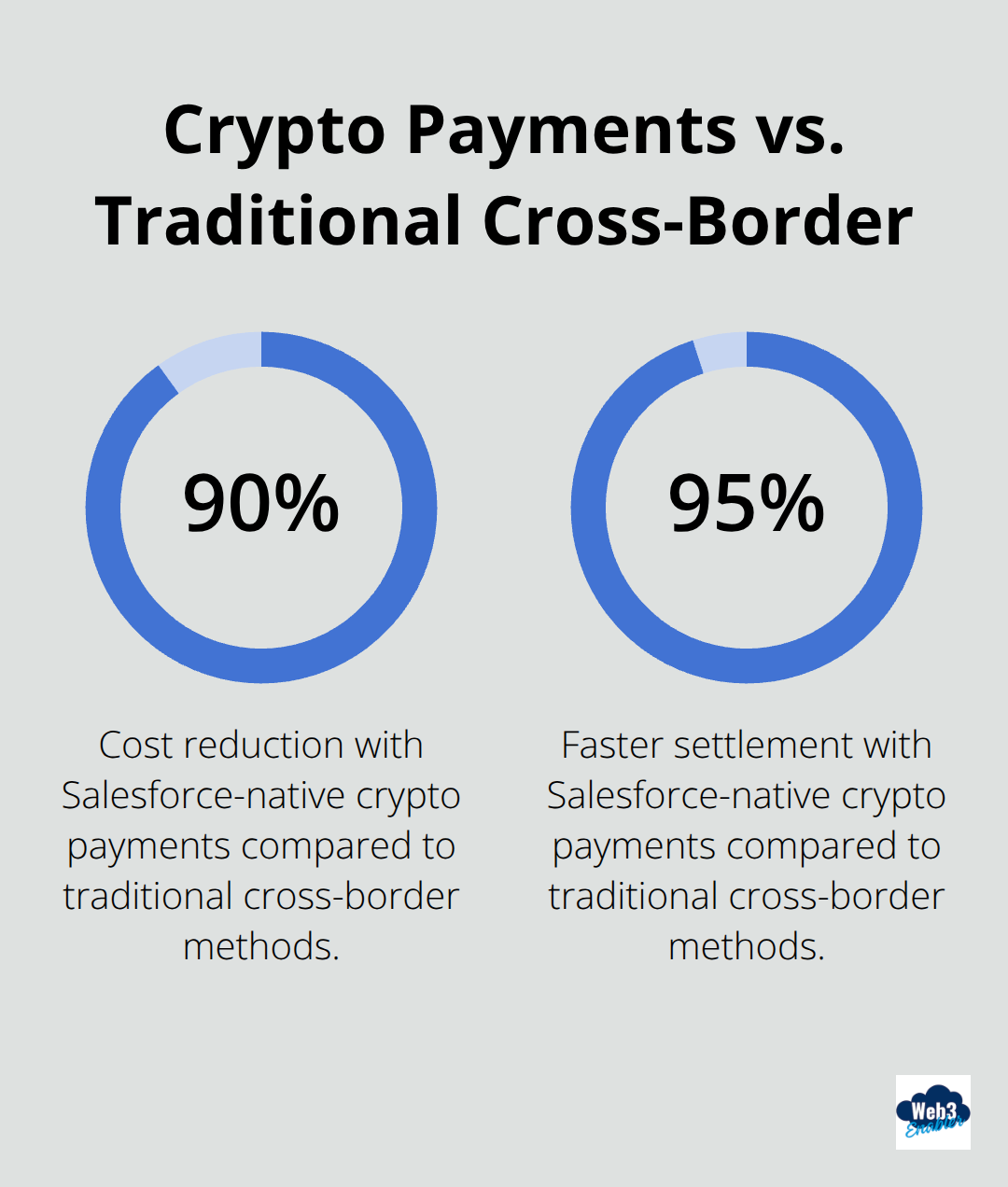
When you handle multiple international invoices daily, that difference compounds into serious savings and faster cash flow. Enterprise adoption of stablecoins like USDC accelerates because the old payment infrastructure simply cannot compete on speed or cost. A wire transfer takes three to five business days and bleeds fees at every step. A blockchain transaction settles in minutes. Fortune 500 companies and mid-market enterprises wake up to this reality, and they move forward with compliance-first implementations rather than waiting for perfection.
The Cost Problem That Blockchain Solves
Traditional payment rails weren’t designed for the speed of modern business. Cross-border payments involve multiple intermediaries, each taking a cut and adding delays. Your company pays for correspondent banking, currency conversion spreads, and time costs while cash sits in transit. Stablecoins eliminate most of these middlemen. A transaction on Ethereum, BASE, or XRP Ledger settles with transparency and finality that traditional systems simply cannot match. The compliance story has shifted too. Businesses need transaction visibility and audit trails that blockchain provides natively. Every transaction becomes immutable, timestamped, and traceable-exactly what compliance teams demand. This drives adoption across industries because it’s not about speculation or hype. It’s about operational efficiency and regulatory alignment meeting in the same solution.
Why Salesforce Native Matters for Adoption
Here’s where integration changes everything. When crypto payments live inside Salesforce rather than in a separate system, your finance team stops juggling spreadsheets and manual reconciliation. Workflows automate. Visibility becomes real-time. Financial advisors see client digital asset holdings directly in Salesforce without logging into five different platforms.
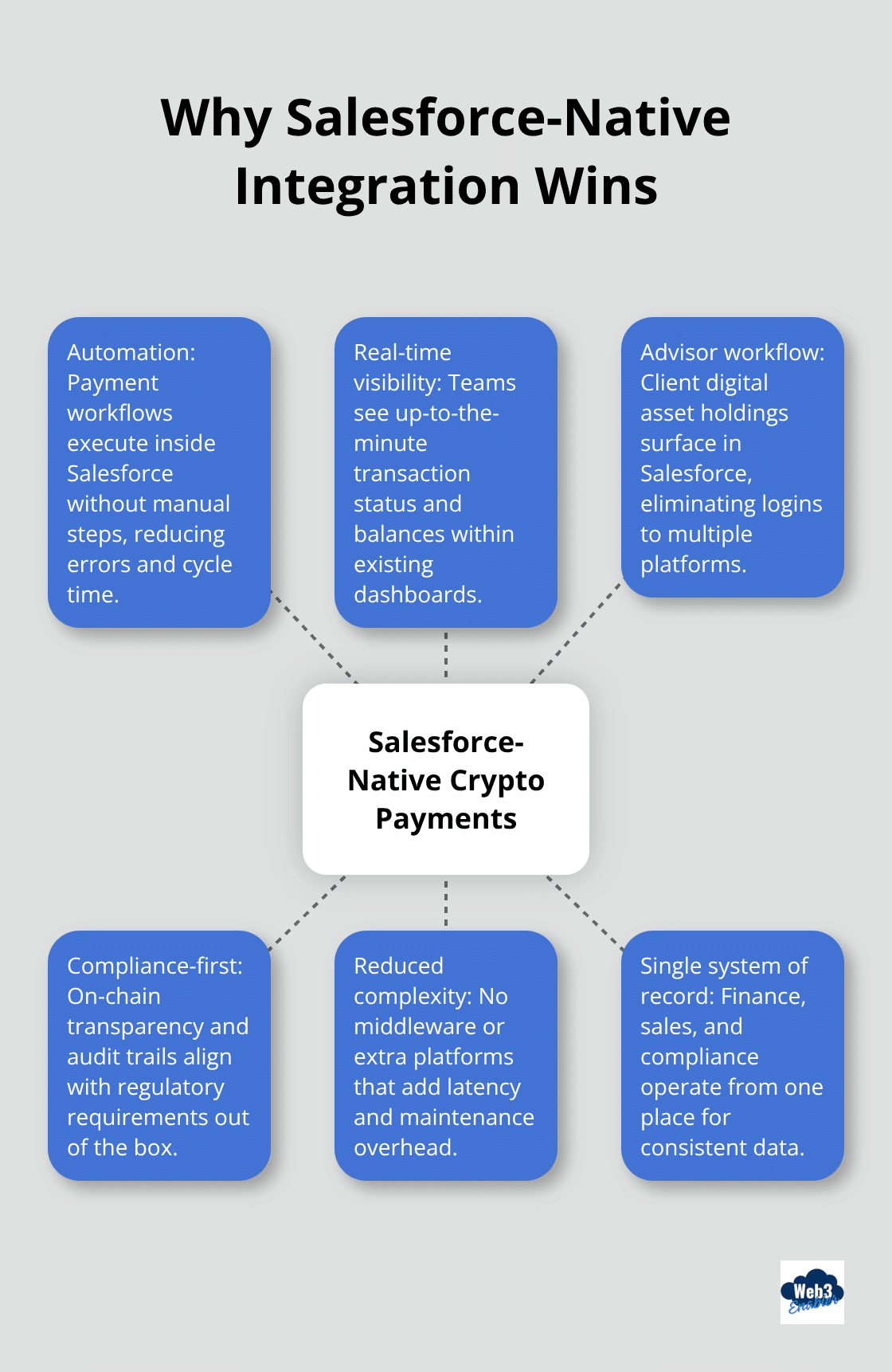
That integration advantage reshapes how enterprises handle payments-the friction disappears when everything lives in one place. Web3 Enabler provides 100% Salesforce Native blockchain solutions available on the Salesforce AppExchange, built specifically for businesses that need payments, compliance, and automation without the speculation. This native approach means your team works within the system they already know, rather than bolting on external tools that create more complexity than they solve.
The real power emerges when you connect this integration to your existing workflows and compliance requirements. That’s where the next phase of your payment transformation begins.
How Salesforce Payments API Integration Actually Works
The moment you activate Salesforce Payments API with blockchain rails, your payment infrastructure stops living in a separate system. Everything happens inside Salesforce. Your finance team no longer exports data to spreadsheets, logs into payment dashboards, or waits for manual reconciliation. When a transaction triggers in your Sales Cloud or Financial Services Cloud, the payment automation fires without human intervention. Workflows connect directly to Ethereum, BASE, or XRP Ledger through native integration, meaning no middleware, no API connectors bolted onto your existing setup, no third-party platforms adding latency. The flow works like this: a customer invoice generates in Salesforce, your system automatically routes USDC stablecoin payments through Circle’s on-ramp infrastructure, the transaction settles on-chain in minutes rather than days, and your accounting records update in real-time without manual entry. This eliminates the error-prone handoff between payment systems and your CRM. Real settlement happens fast enough that your cash flow improves measurably. Crypto payments via Salesforce-native integration settle faster than traditional cross-border methods, which means companies moving multiple international transactions daily see cash arrive within hours instead of waiting through banking windows and correspondent bank delays. The compliance layer works in parallel. Every transaction receives a timestamp and immutable recording on the blockchain, creating an audit trail that satisfies regulatory teams without additional work. BitRank Verified integration flags suspicious activity in real-time, so your compliance officer sees risk signals before settlement completes rather than discovering problems during quarterly reviews.
The Speed Advantage That Changes Cash Flow
The cost reduction compared to traditional methods compounds when you eliminate intermediaries entirely. A wire transfer touches correspondent banks, currency conversion desks, and settlement systems that each extract fees. Stablecoin settlement on-chain removes most of these steps. Your team stops paying for currency conversion spreads, correspondent banking fees, and the opportunity cost of cash in transit. Financial advisors at your firm gain instant visibility into client digital asset holdings directly within Salesforce, which changes how they manage relationships and compliance. Instead of asking clients for asset statements or logging into external platforms, advisors see updated values in real-time within their existing workflow. This speeds up financial planning conversations and removes friction from account reviews.
How Accounting Teams Reclaim Their Time
The integration means your accounting team stops performing manual reconciliation between payment systems and your GL. Salesforce Payments API pushes transaction data directly to your finance module, whether that’s AccountingSeed or another native Salesforce accounting solution. The result is same-day or next-day close capabilities instead of the three-to-five-day delays traditional banking creates. Your team now spends time on analysis and strategy rather than chasing transaction records across multiple platforms. This operational shift matters more than most finance leaders initially expect-when reconciliation happens automatically, your team redirects hours each week toward higher-value work. The real transformation accelerates when you connect these payment flows to your broader business processes and compliance requirements.
What Happens When Crypto Payments Hit Your Bottom Line
Financial Advisors Gain Real-Time Asset Visibility
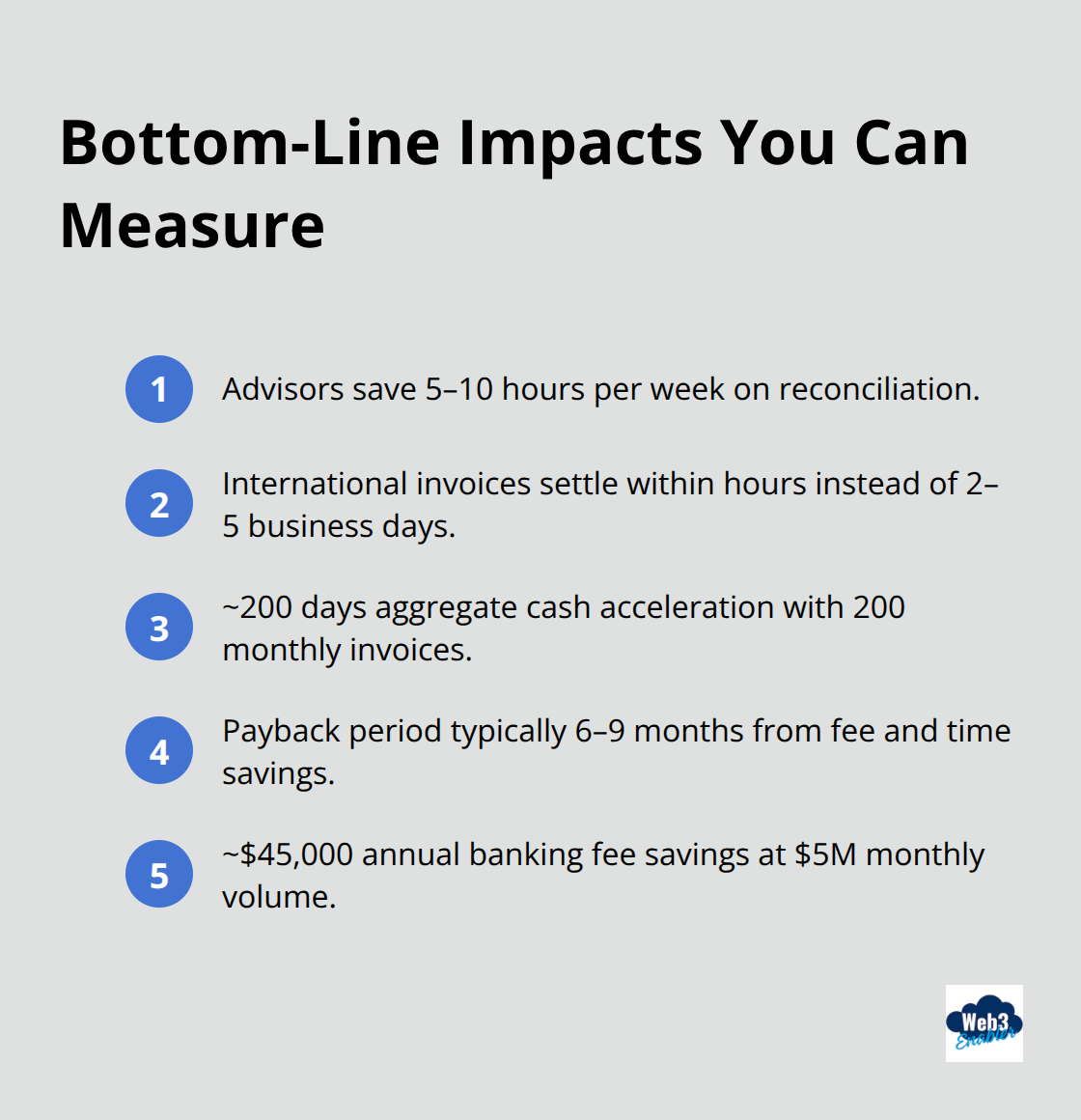
Financial advisors managing client portfolios now access digital asset holdings directly within Salesforce instead of juggling external wallets and exchange logins. When a client holds USDC or other stablecoins, advisors see real-time values alongside traditional assets without switching platforms. This changes portfolio reviews fundamentally. Advisors spend conversation time on strategy rather than asking clients for manual asset statements or reconciling holdings across multiple systems. A firm handling fifty client accounts with crypto positions saves roughly five to ten hours per week on administrative reconciliation alone. That time translates directly to more client conversations, better financial planning outcomes, and stronger relationship depth.
International Payments Accelerate Cash Flow
Companies moving international payments onto blockchain rails report settlement within hours instead of the traditional 2 to 5 business days, which accelerates cash flow measurably. When you invoice a European client on Monday, that payment arrives Tuesday with blockchain settlement rather than waiting until the following week through traditional banking. Over a year, a mid-market company processing two hundred monthly international invoices moves cash faster by roughly two hundred days in aggregate. That’s significant working capital improvement without changing payment terms or customer relationships.
Compliance Teams Shift From Reactive to Proactive
Compliance teams automating transaction monitoring through Salesforce native integration see risk flags in real-time rather than discovering issues during quarterly audits. BitRank Verified integration flags suspicious activity before settlement completes, allowing your team to investigate and respond immediately rather than retroactively. A financial services firm with fifty daily transactions across multiple jurisdictions catches compliance violations within hours instead of weeks, which protects licenses and reputation.
The Bottom Line: Measurable Cost Recovery
The practical shift matters most when you consider operational costs. Companies eliminating correspondent banking fees, currency conversion spreads, and manual reconciliation staff typically recover implementation costs within six to nine months. A firm processing five million dollars monthly in international payments saves roughly forty-five thousand dollars annually in banking fees alone through blockchain settlement. Add back the accounting time recovered from automated reconciliation and the savings climb substantially. Financial advisors spending less time on administrative tasks bill more hours to clients, which improves firm profitability directly. These aren’t theoretical improvements-they’re concrete operational changes that show up immediately in cost accounting and cash flow statements.
Final Thoughts
Your Salesforce Payments API integration transforms how your company handles international payments, compliance, and cash flow. We at Web3 Enabler have watched businesses move from wrestling with correspondent banks and manual reconciliation to settling transactions in minutes while their compliance teams monitor activity in real-time. That shift happens now across industries that refuse to accept the friction of traditional payment infrastructure.
The economics speak clearly-companies processing international payments on blockchain rails recover implementation costs within months through lower fees and faster cash flow. Financial advisors stop chasing asset statements and start having better conversations with clients, while compliance teams shift from reactive audits to real-time monitoring that prevents problems before they escalate. Native blockchain solutions built into Salesforce eliminate the complexity of bolting external payment systems onto your existing infrastructure, so your team works within familiar workflows rather than learning new dashboards.
Web3 Enabler provides 100% Salesforce Native blockchain solutions available on the Salesforce AppExchange, built specifically for businesses that need payments, compliance, and automation without the speculation. Your next competitive advantage lives in the speed and efficiency you gain from moving payments on-chain.