


Financial institutions are transforming how they handle digital payments and treasury operations. Salesforce digital asset management now offers native blockchain capabilities that streamline payment workflows.
We at Web3 Enabler see companies cutting processing times by 75% while reducing operational costs through automated reconciliation. This integration represents a fundamental shift in how businesses manage their digital treasury operations.
What Makes Salesforce Digital Asset Management Different
Salesforce integrates blockchain technology directly into its CRM environment, which eliminates the need for separate payment platforms. Financial institutions can process transactions, track settlements, and manage digital assets without switching between multiple systems. We at Web3 Enabler have built the only native blockchain platform on Salesforce AppExchange, which gives organizations complete visibility into their digital treasury operations through familiar Salesforce objects and workflows.
Real-Time Transaction Monitoring
Traditional payment systems create delays between transaction initiation and confirmation. Blockchain integration changes this completely. Finance teams can now monitor cross-border payments as they happen and watch settlements progress through the blockchain in real-time.
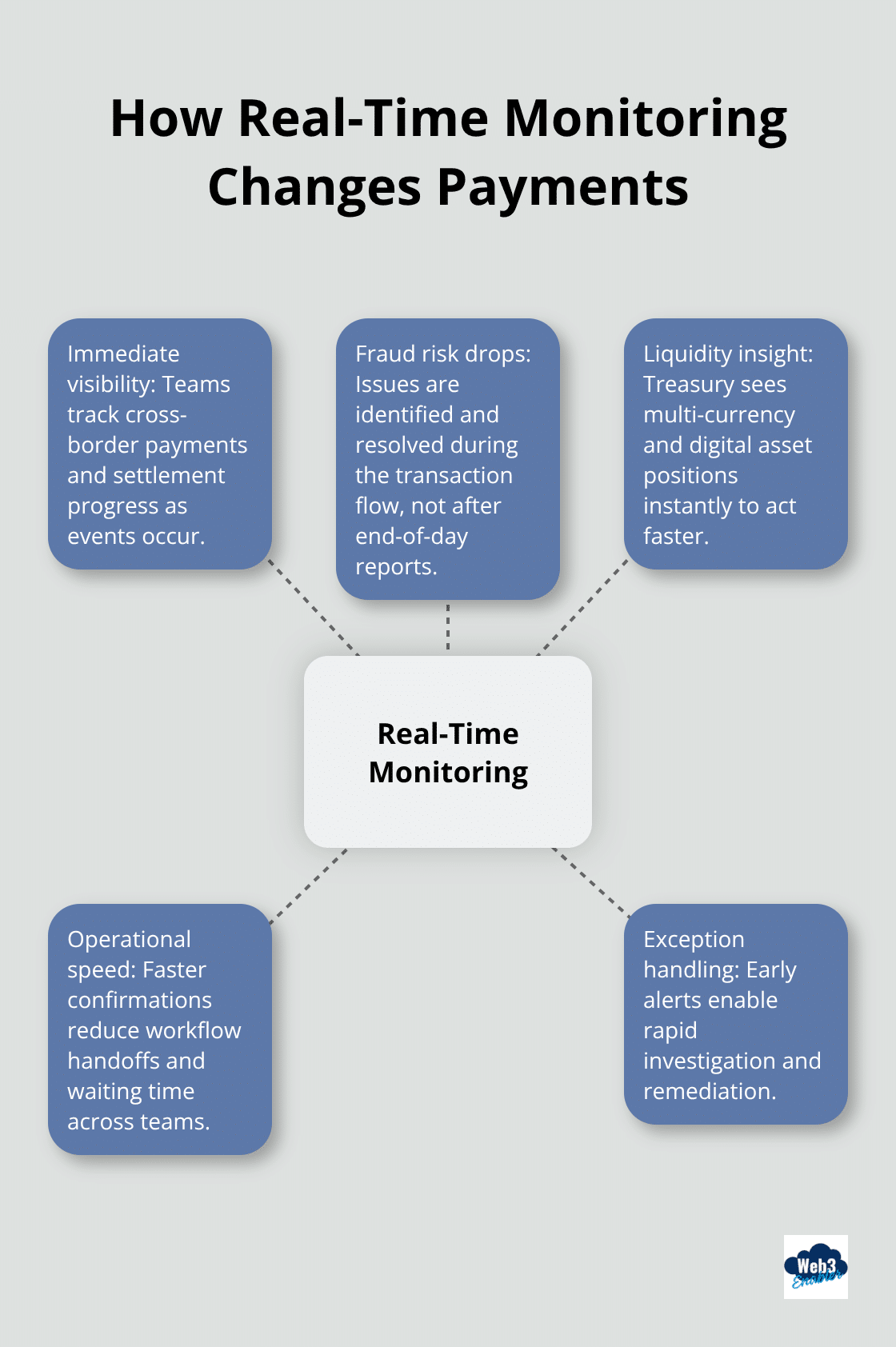
This visibility reduces fraud occurrence by over 60% because teams can identify and resolve issues immediately rather than wait for end-of-day reconciliation reports. Treasury managers gain instant access to liquidity positions across multiple currencies and digital assets (enabling faster decision-making for cash management and investment strategies).
Automated Settlement Processing
Manual reconciliation consumes hours of finance team productivity daily. Automated blockchain settlement processes eliminate this bottleneck entirely. When payments complete on-chain, Salesforce automatically updates customer records, invoice statuses, and accounting entries without human intervention. Companies report they reduce their accounts receivable processing time from days to minutes. The system handles complex multi-currency settlements and automatically converts digital assets to preferred reporting currencies while updating financial dashboards in real-time.
Native CRM Integration Benefits
Traditional blockchain solutions require separate platforms that disconnect payment data from customer relationships. Salesforce digital asset management solves this problem through native CRM integration. Sales teams can view payment status directly within opportunity records, while customer service representatives access transaction history without switching applications. This unified approach reduces training time by 40% (since teams work within familiar Salesforce interfaces) and eliminates data synchronization errors between payment systems and customer records.
The next phase involves understanding how these technical capabilities translate into measurable business benefits for your organization.
How Much Can Your Business Save With Digital Assets
Companies that adopt Salesforce digital asset management report operational cost reductions of 40-60% within six months of implementation. Traditional cross-border payments cost businesses around $25 per transaction through SWIFT networks, while blockchain payments reduce this to mere pennies. Finance teams at mid-to-large enterprises save 15-20 hours weekly on reconciliation tasks because automated settlement eliminates manual data entry and error correction. The global blockchain market continues expanding rapidly, driven by these measurable efficiency gains across treasury operations.
Treasury Operations Transform Completely
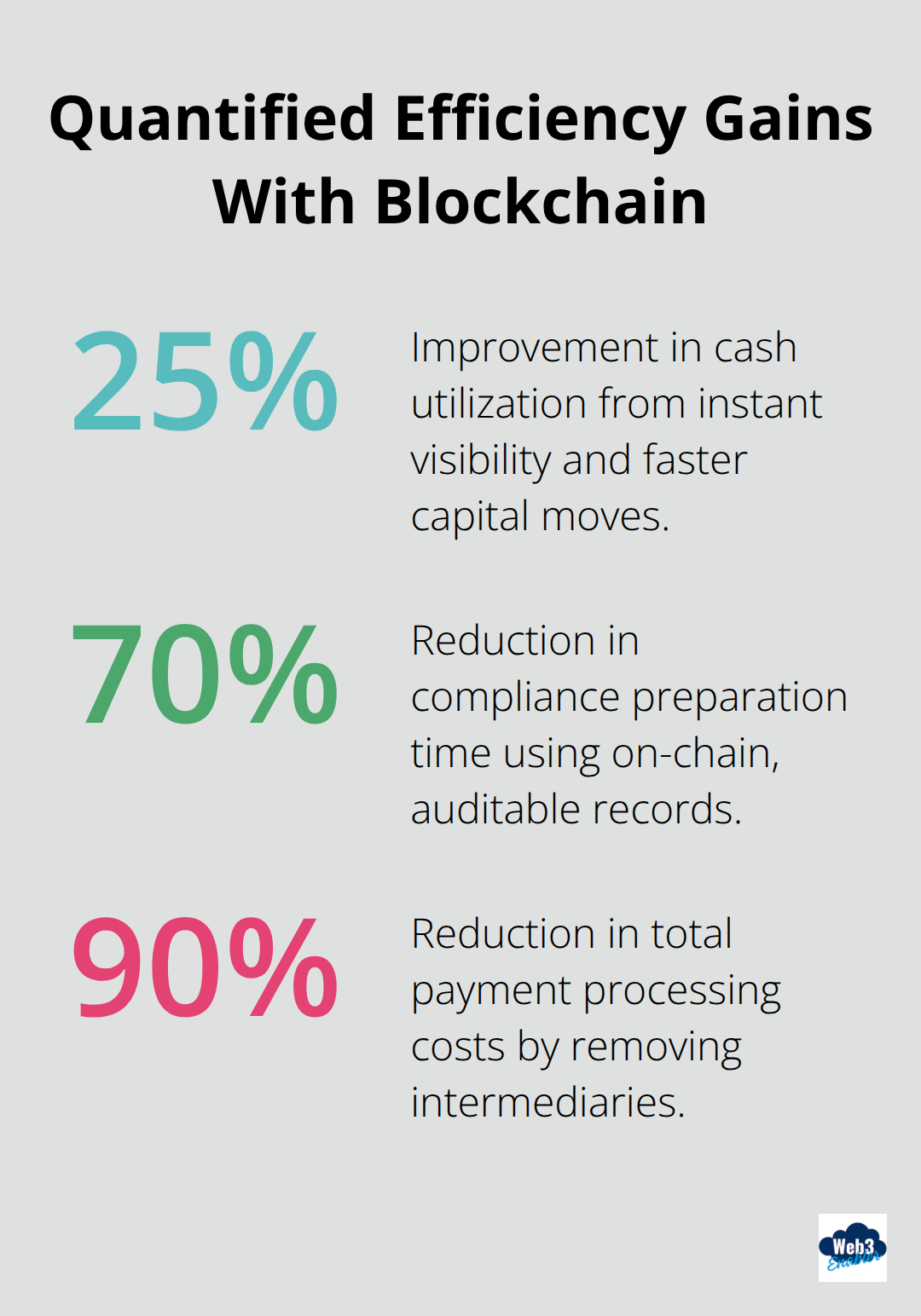
Real-time liquidity visibility changes how finance teams manage cash flow and working capital. Treasury managers can now view digital asset positions across 150 currencies instantly rather than wait for end-of-day bank reports. Companies report 25% improvements in cash utilization because they can identify available funds immediately and move capital between accounts without traditional delays (eliminating the 3-5 business day settlement window that constrains cash flow decisions).
Cross-border settlements that previously took multiple business days now complete within minutes. This speed improvement strengthens supplier relationships and enables faster inventory restocking cycles. Organizations that adopt stablecoin payments also eliminate foreign exchange fees on many transactions, which saves thousands monthly on international vendor payments.
Compliance Becomes Automatic
Audit trails on blockchain create immutable records that satisfy regulatory requirements without additional documentation. Every transaction includes timestamps, counterparty information, and settlement confirmations that auditors can verify independently. Companies reduce compliance preparation time by 70% because all transaction data exists on-chain with cryptographic proof of authenticity.
Financial institutions particularly benefit from automated KYC verification and anti-money laundering detection built into blockchain protocols. Risk management teams gain unprecedented transparency into payment flows (enabling proactive fraud detection and regulatory reporting that previously required manual investigation and documentation).
Cost Structure Advantages
Traditional payment infrastructure requires multiple intermediaries that each charge processing fees. Blockchain payments eliminate most of these middlemen and their associated costs. Companies report total payment processing cost reductions of 90% when they switch from traditional banking rails to blockchain settlement networks.
The implementation phase reveals additional savings opportunities as teams discover inefficiencies in their current payment workflows and treasury management processes.
How Do You Start Your Digital Asset Implementation
Most organizations fail at blockchain implementation because they skip the infrastructure assessment phase. Finance teams must map their current payment workflows completely before they add blockchain capabilities. Start by documenting every step in your cross-border payment process, from vendor invoice receipt to final settlement confirmation. Companies that conduct thorough workflow mapping reduce implementation time by 45% because they identify integration points early and avoid costly system conflicts later.
Current System Integration Points
Your existing ERP and banking systems must connect seamlessly with Salesforce blockchain capabilities. Map all data flows between your treasury management system, accounting software, and customer relationship platforms. Organizations typically discover 3-5 redundant manual processes during this assessment phase. Finance teams should audit their current reconciliation procedures and identify which tasks consume the most time daily. Most companies find that invoice matching and settlement confirmation represent 60% of their manual workload (making these prime candidates for blockchain automation).
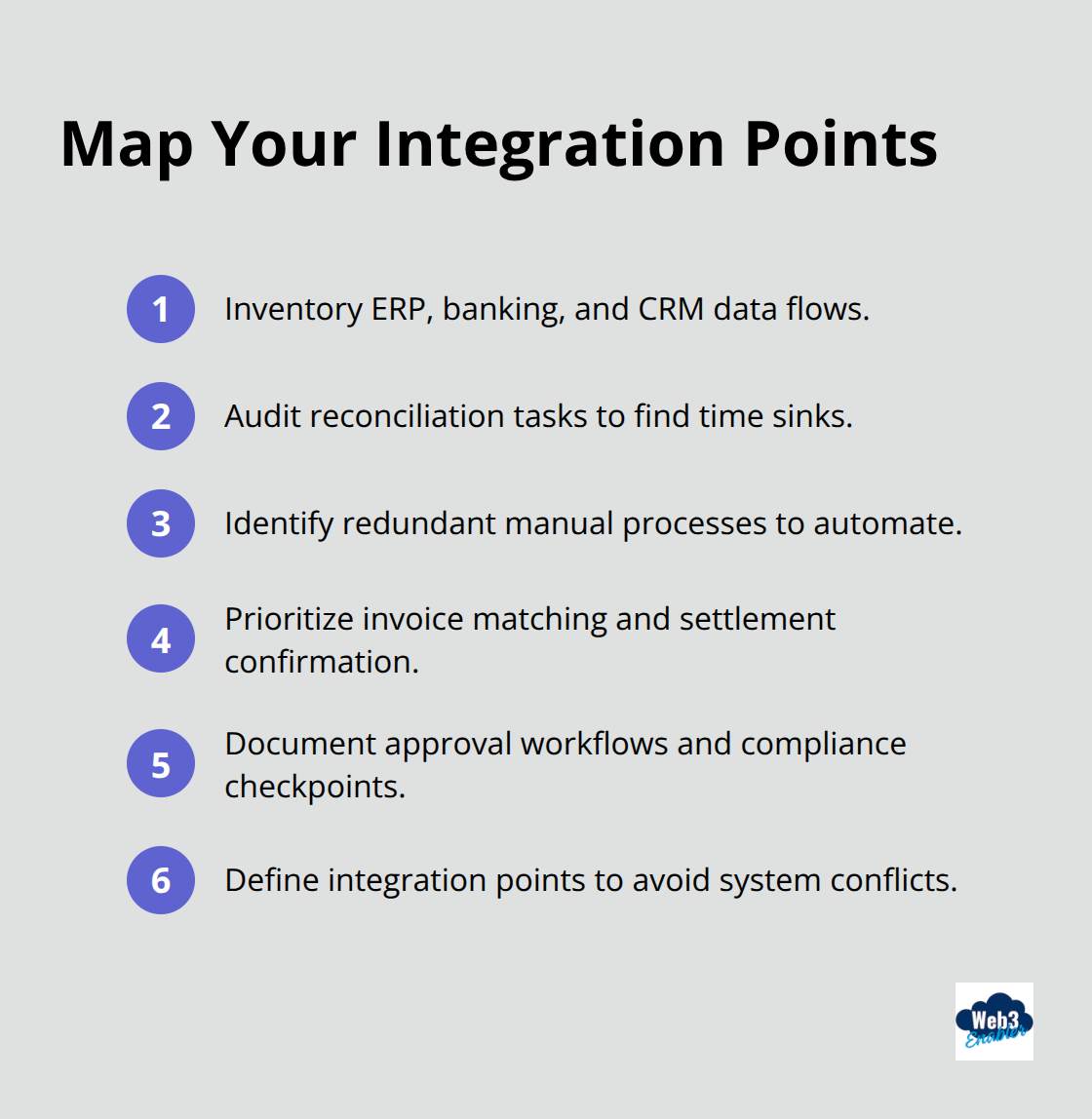
Document your current payment approval workflows and compliance checkpoints because these processes will transform completely once automated settlement begins.
Team Training and Adoption Strategy
Finance professionals need hands-on experience with blockchain concepts before implementation begins. Traditional accounting teams struggle with distributed ledger terminology and real-time settlement concepts. Schedule intensive training sessions that focus on practical blockchain applications rather than theoretical concepts. Teams should practice using Salesforce blockchain objects in sandbox environments for at least two weeks before live implementation. Organizations report 70% faster user adoption when finance teams complete Salesforce Trailhead modules specifically designed for digital asset management. Operations staff must understand how automated reconciliation affects their daily workflows and learn to interpret on-chain transaction data within familiar Salesforce dashboards.
Automated Reporting Configuration
Finance teams must configure automated reporting systems that capture blockchain transaction data in real-time. Set up Salesforce dashboards that display settlement status, liquidity positions, and compliance metrics without manual data entry. Most organizations establish automated alerts for large transactions, failed settlements, and regulatory threshold breaches. Treasury managers should configure daily reports that show digital asset balances across multiple currencies and blockchain networks. The system should automatically generate audit trails that satisfy regulatory requirements while reducing compliance preparation time by 70% (eliminating manual documentation and verification processes that consume hours weekly).
Final Thoughts
Salesforce digital asset management transforms how financial institutions handle treasury operations and cross-border payments. Organizations that implement blockchain integration achieve 40-60% cost reductions and 75% faster processing times within six months. The combination of real-time transaction visibility, automated reconciliation, and native CRM integration eliminates traditional payment bottlenecks that have constrained finance teams for decades.
The blockchain market will reach $470 billion by 2030, which signals widespread enterprise adoption ahead. Financial institutions that modernize their payment infrastructure now gain competitive advantages through reduced operational costs, enhanced compliance capabilities, and improved customer experiences. Treasury managers benefit from instant liquidity visibility across 150 currencies while they eliminate the delays that previously constrained cash flow decisions (making faster strategic decisions possible).
Implementation success requires thorough workflow assessment, comprehensive team preparation, and automated report configuration. Organizations that complete these foundational steps reduce deployment time by 45% and achieve faster user adoption rates. Web3 Enabler provides native blockchain capabilities on Salesforce AppExchange, which enables financial institutions to modernize their payment operations without leaving their familiar CRM environment.