



Blockchain business development has moved beyond hype into practical reality. Companies now save thousands of dollars monthly by switching to blockchain payments instead of traditional banking systems.
We at Web3 Enabler see businesses cut payment processing time from days to minutes while reducing transaction fees by up to 80%. The technology transforms how companies handle vendor payments and customer transactions across global markets.
Where Blockchain Delivers Measurable Business Value
Blockchain transforms business operations through three fundamental applications that deliver measurable results. Payment processing leads the charge, with companies like JPMorgan reducing securities settlement times from days to minutes through their Quorum blockchain solution. Traditional cross-border payments cost businesses 4-6% in fees, while blockchain transactions typically incur only 0.1-2% in costs. The technology processes payments 24/7 without regional cutoffs or batch processing delays that plague legacy banking systems.
Payment Operations That Actually Work
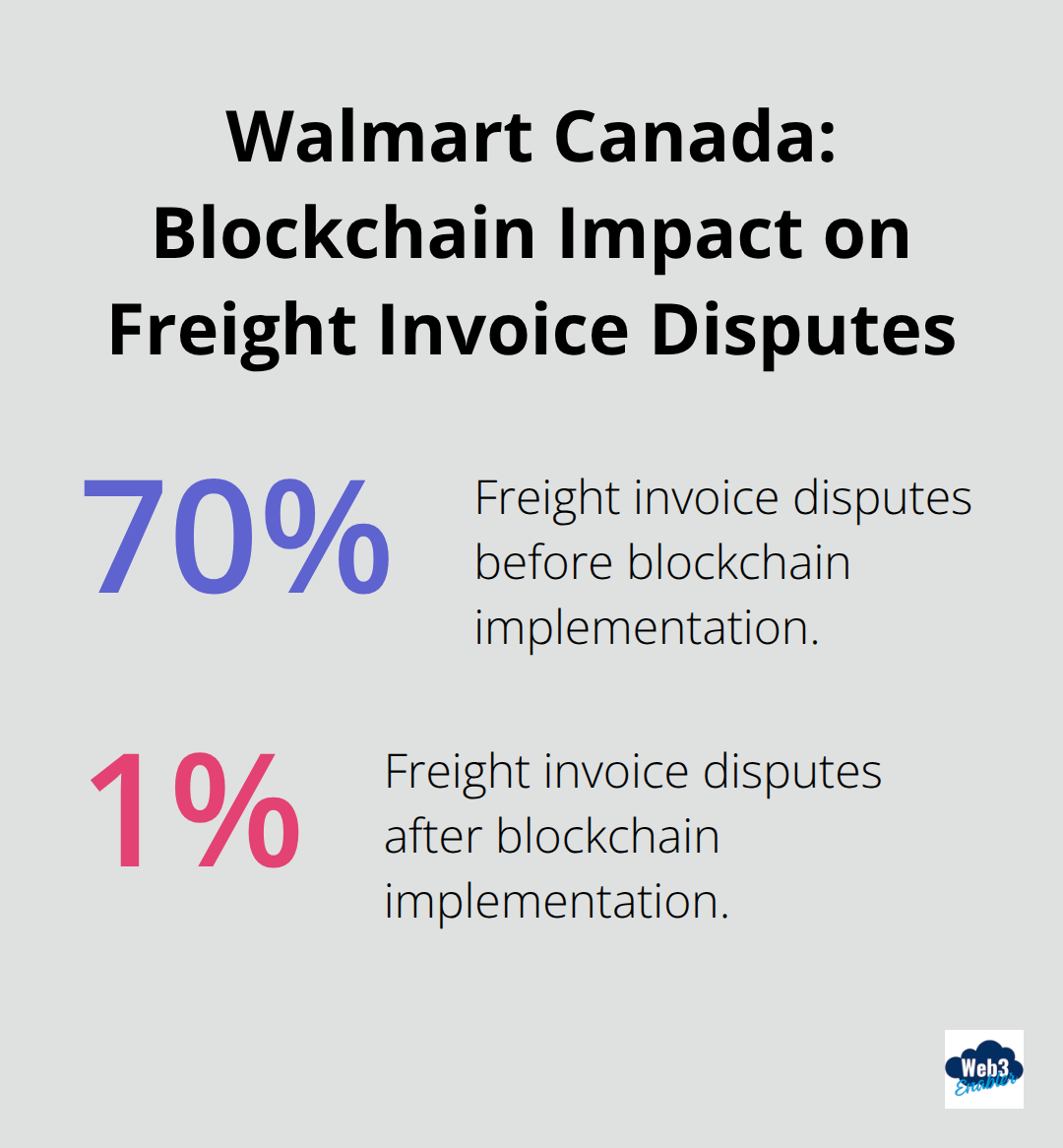
Modern businesses waste significant resources on payment inefficiencies. Growing interests and popularity of cryptocurrencies have contributed to the development of several central bank digital currencies (CBDCs) and pilots that explore blockchain implementation for cross-border payments. Companies that process high-volume B2B supplier payments see settlement times drop from days to minutes, with streamlined reconciliation processes that eliminate manual verification steps. Walmart Canada achieved remarkable results with blockchain-based payments, reducing freight invoice disputes from 70% to just 1% through automated verification systems.
Supply Chain Visibility That Matters
Supply chain management benefits dramatically from blockchain’s immutable record-keeping capabilities. Walmart tracks food products from farm to store with blockchain technology, reducing recall response times from days to seconds. This speed improvement prevents widespread contamination and saves millions in potential losses. Maersk’s TradeLens solution provides real-time shipment tracking that significantly reduces delays in supply chain operations (giving logistics managers unprecedented visibility into cargo movement).
Data Security That Actually Protects
Financial institutions face average costs that exceed $6 million per data breach according to IBM’s 2024 Cost of a Data Breach Report. Blockchain’s decentralized architecture eliminates the single points of failure that make traditional systems vulnerable to cyberattacks. Companies like Guardtime secure millions of patient records in Estonia’s healthcare system with blockchain technology, creating tamper-proof audit trails that satisfy regulatory requirements while protecting sensitive information from unauthorized access.
The next step involves understanding how businesses can implement these blockchain payment solutions effectively within their existing operations (without disrupting current workflows or requiring extensive technical expertise).
How Do You Start Accepting Blockchain Payments
Businesses ready to implement blockchain payments should start with stablecoin acceptance since these digital currencies offer price stability while delivering blockchain’s speed and cost advantages. Companies can accept over 300 different cryptocurrencies through various platforms, but stablecoins like USDC and USDT provide the most practical entry point for traditional businesses. The setup process typically takes 2-3 days compared to weeks that traditional merchant account approvals require, and businesses immediately gain access to 24/7 payment processing without weekend or holiday restrictions.
Setting Up Stablecoin Payment Processing
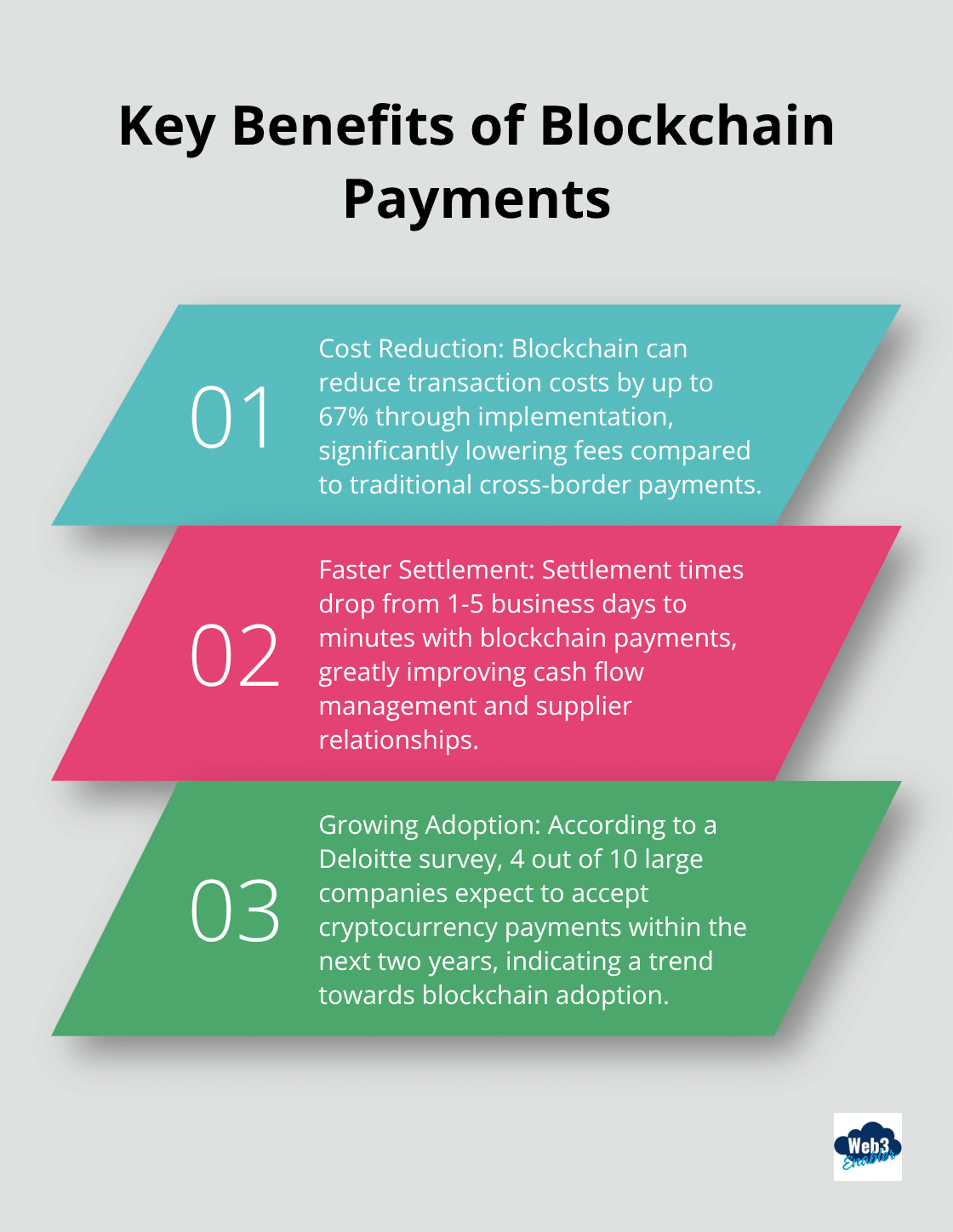
Most businesses benefit from starting with USDC or Tether since these stablecoins maintain dollar parity and offer immediate settlement. A Deloitte survey shows that 4 out of 10 large companies expect to accept cryptocurrency payments within the next two years, making early adoption a competitive advantage. Integration requires selecting a payment processor that handles compliance automatically, connects to existing point-of-sale systems, and provides instant conversion to traditional currency when needed. Companies should prioritize processors that offer real-time transaction monitoring and automated AML checks to maintain regulatory compliance without manual oversight.
Reducing Payment Costs Through Global Settlement
Traditional cross-border payments consume 4-6% of transaction value in fees, while blockchain alternatives typically cost only 0.1-2%. Blockchain can reduce transaction costs by up to 67% through implementation. Companies that process international supplier payments see the most dramatic improvements since blockchain eliminates correspondent banking fees and currency conversion markups. Settlement times drop from 1-5 business days to minutes, improving cash flow management and supplier relationships significantly.
Streamlining Vendor Payment Operations
High-volume B2B supplier payments transform completely when businesses move to blockchain networks. Settlement times drop from days to minutes while reconciliation processes become automated (eliminating manual verification steps that consume accounting resources). Walmart Canada achieved remarkable results with blockchain-based payments, reducing freight invoice disputes from 70% to just 1% through automated verification systems. Companies can now process vendor payments around the clock without waiting for banking hours or dealing with regional cutoffs that delay traditional wire transfers.
The next phase involves sending payments globally with the same speed and cost efficiency that blockchain provides for incoming transactions.
How Does Blockchain Connect to Your Current Systems
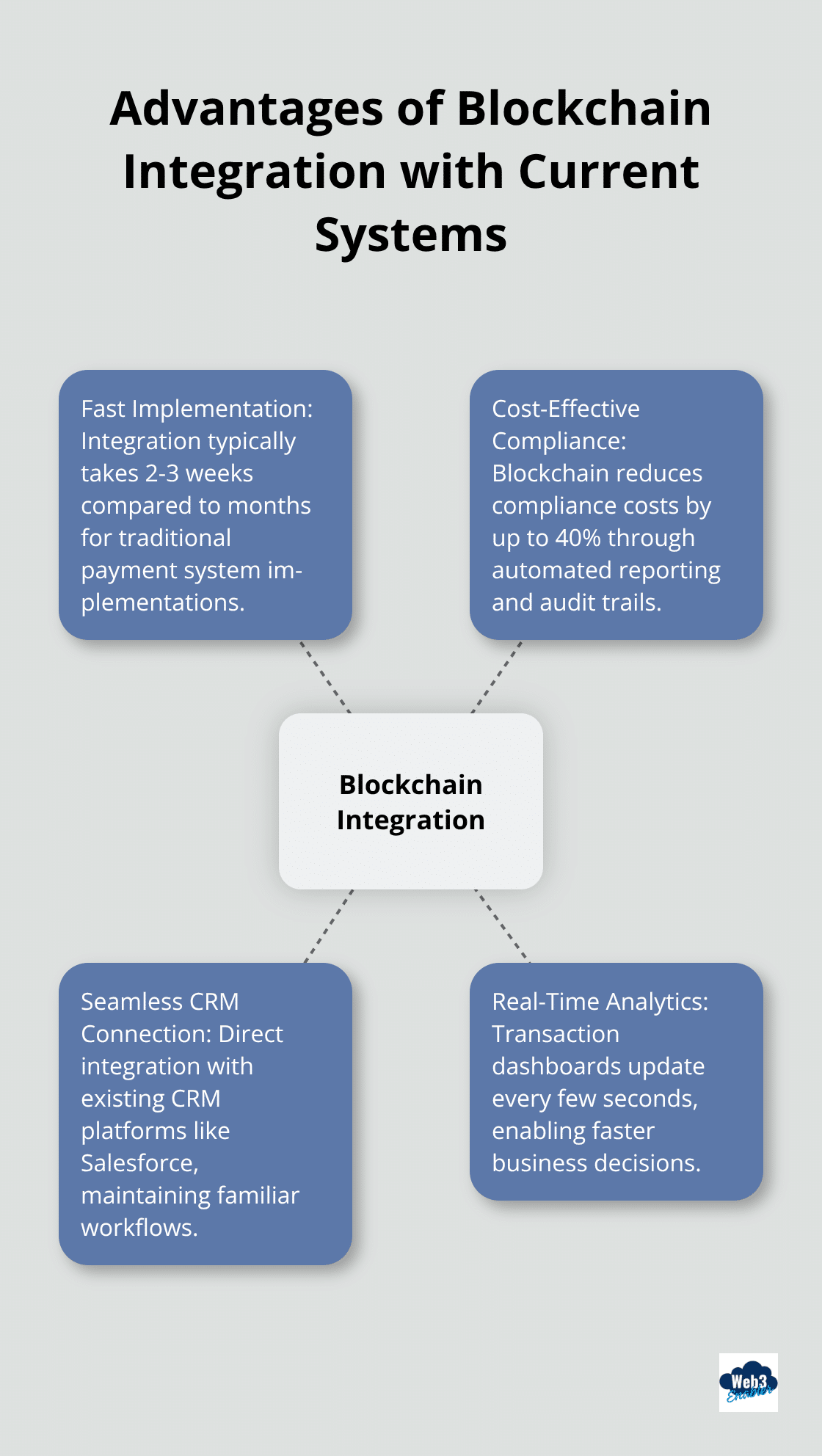
Most businesses worry that blockchain integration means they must replace their entire technology stack, but modern blockchain solutions connect directly to existing CRM platforms through native APIs and middleware. Companies that use Salesforce benefit from native blockchain applications available through the AppExchange, which eliminates the need for custom development or system overhauls. We at Web3 Enabler provide the only native blockchain solution on the Salesforce platform, trusted by industry leaders like Circle, Ripple, and Cardano. Integration typically takes 2-3 weeks compared to months that traditional payment system implementations require, and businesses maintain their existing workflows while they gain blockchain’s speed and cost advantages.
Direct CRM Integration That Works
Salesforce users can track blockchain payments directly within their customer records without they switch between multiple platforms. Native integration means payment data automatically syncs with customer profiles, opportunity records, and financial dashboards. Companies process vendor payments through familiar Salesforce interfaces while blockchain technology handles settlement in the background. This approach eliminates training requirements since teams use the same CRM tools they already know. Transaction records appear instantly in customer timelines, which provides complete payment histories that sales teams can reference during client conversations.
Automated Compliance Without Manual Work
Blockchain systems automatically generate compliance reports that satisfy regulatory requirements across multiple jurisdictions. Every transaction creates an immutable audit trail that regulators can verify independently (which reduces compliance costs by up to 40% according to recent industry studies). Companies benefit from automated AML checks that enable real-time monitoring and rapid detection of suspicious transactions. Tax reports become streamlined since blockchain records provide complete transaction histories with precise timestamps and amounts. Businesses that operate internationally appreciate automated compliance features that adapt to local regulations without they require separate systems for each market.
Real-Time Analytics That Drive Decisions
Modern blockchain platforms provide transaction dashboards that update every few seconds instead of daily batch reports from traditional systems. Finance teams track cash flow patterns, payment success rates, and geographic transaction distributions through unified analytics interfaces. Companies identify payment trends immediately rather than they wait for monthly bank statements (which enables faster business decisions). Transaction data integrates with existing business intelligence tools, which allows companies to combine blockchain payment metrics with sales performance and customer behavior analytics for comprehensive business insights.
Final Thoughts
Blockchain business development delivers measurable results that traditional payment systems cannot match. Companies reduce transaction fees by up to 80% while they cut settlement times from days to minutes. The technology eliminates intermediaries that slow down global payments and create unnecessary costs for businesses that operate across borders.
Implementation starts with stablecoin payment acceptance since these provide price stability with blockchain’s speed advantages. Businesses benefit from 24/7 payment processing without weekend restrictions or regional cutoffs that limit traditional banks. Integration with existing CRM platforms takes weeks instead of months (and teams continue to use familiar interfaces while they gain blockchain capabilities).
The blockchain market will grow from $31 billion in 2024 to over $390 billion by 2030, which creates significant opportunities for early adopters. Companies that implement blockchain payments now gain competitive advantages through faster cash cycles and reduced operational costs. Web3 Enabler helps businesses integrate blockchain technology seamlessly into existing workflows without they disrupt current operations.