



Crypto payments are booming, but regulators aren’t taking a nap. Every transaction needs identity verification, and doing it manually? That’s a compliance nightmare waiting to happen.
We at Web3 Enabler know that KYC tools integrated with Salesforce blockchain solutions can transform how businesses handle identity checks. Speed up onboarding, automate compliance, and actually sleep at night knowing your payment system is bulletproof.
Why KYC Actually Matters
Regulators Won’t Back Down
Regulators worldwide aren’t being cute about this. The Financial Action Task Force sets global anti-money laundering standards that require financial institutions to monitor transactions continuously to detect suspicious patterns. The U.S. Treasury’s Financial Crimes Enforcement Network requires VASPs (Virtual Asset Service Providers) to collect and verify customer information just like traditional banks do. Europe’s Markets in Crypto Regulation tightens the screws further, demanding enhanced due diligence for high-risk transactions. These aren’t suggestions-they’re legal requirements with real penalties.
Companies that ignore KYC face fines reaching millions of dollars, license revocation, and criminal liability for executives. The compliance burden is real, and it’s not going away.
Manual KYC Processes Cost You Money
Here’s the uncomfortable truth: manual KYC processes bleed your business dry. Studies from blockchain compliance firms show that legacy identity verification takes 5-7 business days on average, creating friction at exactly the moment you’re trying to onboard customers. That delay translates directly into lost transactions.
Meanwhile, false positives in sanctions screening force your compliance team to manually review transactions that pose zero actual risk, wasting hours on dead ends. Fraud losses in crypto payments reached $14.1 billion in 2023 according to Chainalysis, and weak identity controls are a primary culprit.
Criminals Exploit Identity Gaps
Criminals exploit gaps between exchanges and wallets, layering transactions across multiple institutions to obscure their identity. Strong KYC integration catches these patterns in real time rather than after damage occurs.
Regulators Demand Proof
Building trust with institutional customers and payment partners means proving your identity controls are airtight. Regulators conduct examinations specifically targeting KYC documentation, audit trails, and monitoring procedures. If you can’t demonstrate that every transaction was properly vetted, you’re exposed.
Automated KYC systems create immutable records showing exactly when verification occurred, what data was checked, and which risk indicators triggered additional review. This audit trail becomes your shield during regulatory inspections (and your competitive advantage). The businesses winning right now verify customers once and trust everywhere, avoiding redundant checks that slow down payment flows and frustrate customers. That’s where Salesforce-native KYC solutions come in-they connect identity verification directly to your payment infrastructure, making compliance automatic rather than painful.
How Salesforce Connects KYC to Your Blockchain Payment Flow
Salesforce doesn’t store customer data in silos anymore. When you integrate KYC directly into Salesforce blockchain solutions, identity verification becomes part of your payment infrastructure, not a separate headache. Your compliance team and payment processors work from the same verified customer record. No more passing data between disconnected systems. No more wondering if the person initiating a stablecoin payment matches the identity you verified three weeks ago. The moment a customer attempts a transaction, Salesforce already knows their verification status, risk profile, and compliance history.
Real-Time Risk Scoring Stops Delays Cold
Salesforce CRM Analytics and Einstein Relationship Insights monitor transactions as they happen, flagging high-risk activity without forcing your team to manually review every single payment. A customer sends $50,000 in USDC to a new wallet? The system flags it. A transaction hits a sanctions list? Caught instantly. This real-time scoring cuts your false-positive rate dramatically. Instead of your compliance team wasting hours on low-risk transactions, they focus only on genuine threats.
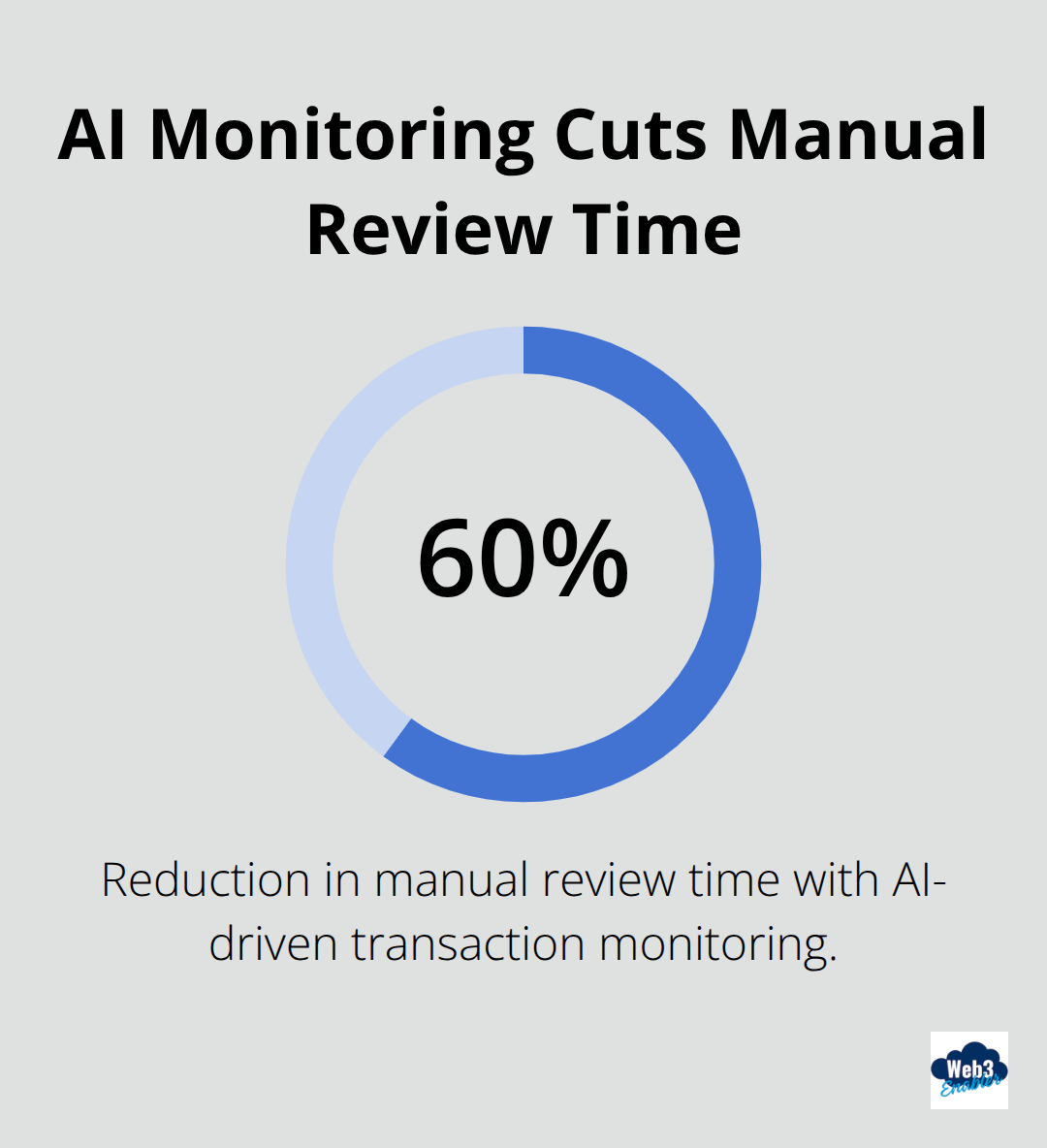
Financial institutions using AI-driven transaction monitoring report reducing manual review time by 60 percent, according to compliance technology benchmarks. That efficiency translates directly into faster customer onboarding and fewer legitimate transactions blocked by overzealous filters.
Audit Trails That Actually Prove Compliance
Regulators don’t care about your good intentions. They want proof. Salesforce creates immutable audit trails showing exactly when verification occurred, which documents reviewers examined, and what risk indicators triggered additional scrutiny. Every compliance decision receives a timestamp and log entry. When examiners ask questions during regulatory inspections, you pull up a complete record in seconds rather than scrambling through spreadsheets and email chains. This documentation also supports the Travel Rule requirements for VASP-to-VASP transfers and Enhanced Due Diligence protocols. Structured attestations for sources of funds replace ad hoc document requests, presenting cryptographic proof of fund provenance without exposing sensitive personal data to unnecessary parties.
Integration Reduces Redundant Checks
When your KYC system connects directly to payment processing, customers verify once instead of repeatedly. Someone onboarded for stablecoin payments doesn’t need to reverify when they send their first transaction. This matters because redundant KYC checks create friction, slow down payment flows, and frustrate customers who’ve already proven their identity. Businesses eliminating duplicate verification steps report faster settlement times and higher customer satisfaction. The integration also supports multi-asset payments in USDT, USDC, and XRP, reducing friction for customers with different wallet preferences while maintaining consistent identity standards across all payment types.
Connecting Identity Data Across Your Payment Stack
Salesforce-native blockchain solutions pull identity verification directly into your payment workflows, meaning compliance and transaction processing share the same source of truth. Your payment processors access verified customer data instantly rather than waiting for compliance teams to manually confirm details. This connection eliminates the back-and-forth that typically delays transactions and frustrates both your team and your customers. When identity data flows seamlessly through your payment infrastructure, you move faster without sacrificing security or regulatory confidence.
Making KYC Work Without Grinding Your Team to Dust
Speed Up Onboarding Without Sacrificing Compliance
Onboarding a new payment customer should take hours, not weeks. When KYC lives inside Salesforce alongside your payment infrastructure, verification happens in parallel with customer setup rather than as a separate gate. A customer completes their profile, submits identity documents through DocuSign integration, and your compliance team reviews everything in a single workflow. No handoffs between systems. No waiting for compliance to finish before payment processing begins. Companies implementing Salesforce-native KYC report cutting onboarding time from 5-7 business days down to 24-48 hours. That speed matters when competitors are also chasing the same customers.
Let AI Handle the Routine, Your Team Handles the Real Threats
Real-time risk scoring eliminates the manual review bottleneck. Instead of your compliance team reviewing every single transaction, Einstein Relationship Insights flags only the transactions that actually warrant human attention. A customer sends $10,000 in USDC to an established wallet they’ve used before? The system approves it automatically. The same customer suddenly tries to move $500,000 to a new jurisdiction with high-risk indicators? That gets escalated instantly. This selective review approach means your team focuses on genuine threats rather than drowning in false positives. AI fraud detection solutions reduce alert fatigue and improve investigation efficiency, freeing staff to handle complex cases that require judgment rather than wasting hours on routine transactions.
Build an Audit Trail That Regulators Actually Trust
Regulators inspect three things: did you verify the customer, what did you check, and can you prove it happened. Salesforce creates an immutable record of every verification step. When a customer onboards, timestamps capture identity document submission, verification completion, risk assessment results, and approval decisions. If a regulator questions a transaction two years later, you pull up the complete audit trail in seconds. This documentation also satisfies Travel Rule requirements for VASP-to-VASP transfers (embedding verifiable identity credentials into messaging standards reduces duplicate KYC checks across institutions). Structured attestations for sources of funds replace ad hoc document requests entirely, presenting cryptographic proof of fund provenance without exposing sensitive personal data to unnecessary parties.
Turn Compliance Into Competitive Advantage
The immutable record also protects your business during disputes. A customer claims they were improperly blocked from a transaction? You show the exact risk indicators that triggered the block and the compliance decision that followed. A sanctions list hit incorrectly flagged their transaction? The audit trail shows how quickly your team resolved it. This documentation transforms compliance from a liability into competitive advantage because institutional customers and payment partners trust businesses that can prove their controls actually work. When identity data flows seamlessly through your payment infrastructure (rather than sitting in disconnected spreadsheets), you move faster without sacrificing security or regulatory confidence.
Final Thoughts
KYC tools integrated with Salesforce blockchain solutions transform compliance from a painful bottleneck into your competitive edge. When identity verification lives inside your payment system rather than scattered across disconnected spreadsheets, everything moves faster-onboarding happens in hours instead of weeks, compliance teams stop drowning in false positives, and regulators see immutable audit trails that actually prove you know your customers. The businesses winning right now verify once and trust everywhere, moving transactions instantly while maintaining the documentation that satisfies every regulatory requirement across global markets.
Crypto adoption accelerates when identity checks happen automatically as part of your payment flow instead of creating friction that slows everything down. Institutional partners demand proof that you’ve verified everyone properly, and your payment customers want frictionless transactions-integrated identity management solves both problems simultaneously. Businesses implementing Salesforce-native KYC already report faster customer onboarding, reduced manual review bottlenecks, and audit trails that impress regulators during examinations.
We at Web3 Enabler build exactly this kind of infrastructure, connecting identity verification directly to your payment processing and eliminating the friction that slows crypto adoption. Whether you’re accepting stablecoin payments, sending global payments faster, or giving financial advisors visibility into client crypto holdings, our tools work inside Salesforce without requiring your team to learn new systems. Explore how Web3 Enabler can accelerate your crypto payment strategy.