


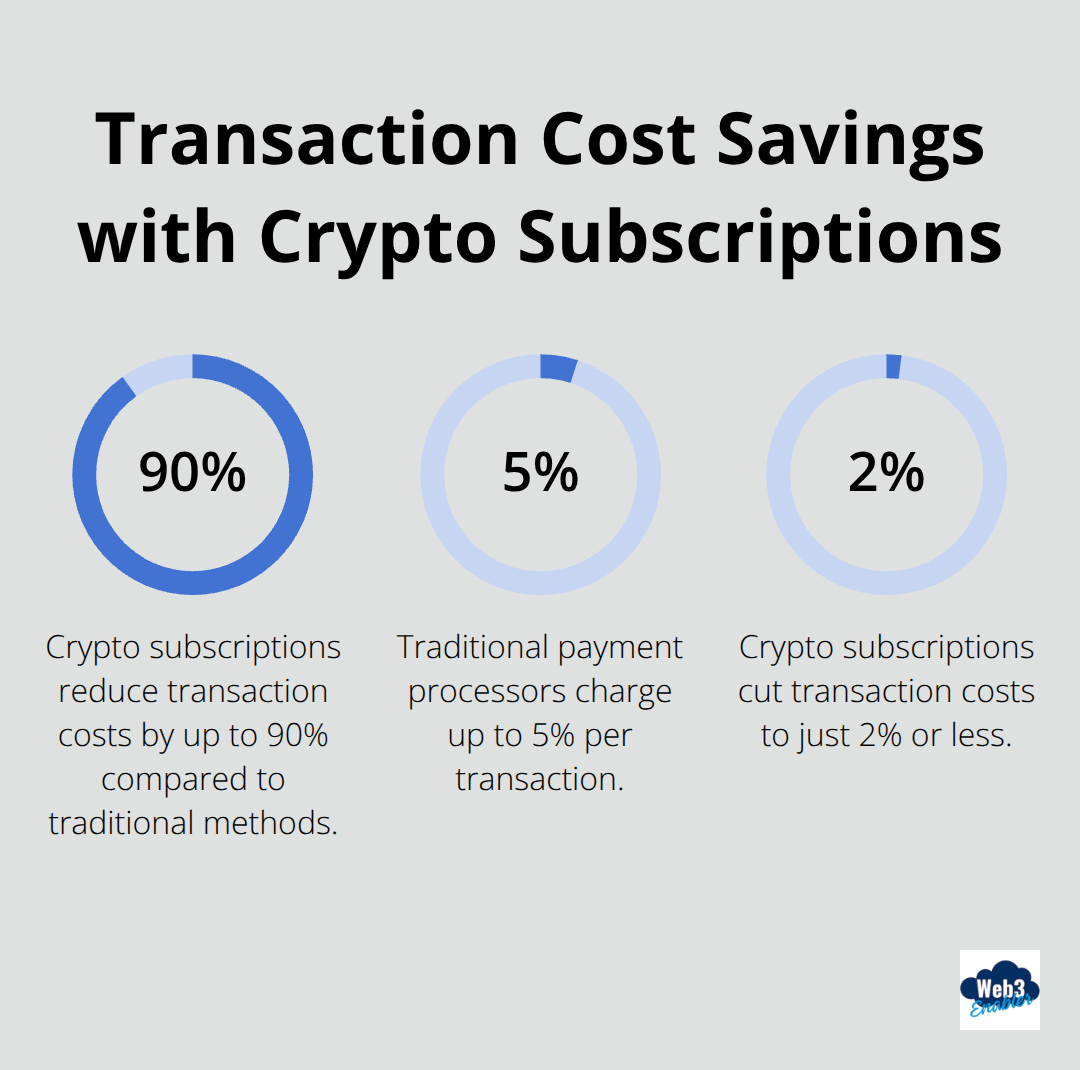
 Subscription businesses are ditching traditional payment rails faster than you can say “processing fees.” The numbers don’t lie: crypto subscription payments slash transaction costs by up to 90% while eliminating chargebacks entirely.
We at Web3 Enabler see companies making this switch daily, and honestly? It’s about time. Your customers want seamless, global payments without the banking drama.
Ready to join the revolution?
Why Crypto Subscriptions Beat Traditional Payments
Traditional payment processors drain your profits with fees that reach 3-5% per transaction, while crypto subscriptions cut this to just 1-2%. Stripe launched stablecoin subscriptions after witnessing 20% of AI company payment volume shift to crypto at companies like Shadeform. The math speaks volumes: stablecoin transactions cost half of traditional payment methods and settle instantly instead of the usual 2-10 business days.
Speed Transforms Your Cash Flow
Your revenue becomes available in minutes rather than days when payments settle through blockchain networks. Bitcoin transactions confirm in roughly 10 minutes, while Ethereum processes payments between 15 seconds to 5 minutes. This speed advantage allows immediate revenue reinvestment instead of waiting for bank clearing cycles. Traditional wire transfers cost $25-50 per transaction, but crypto payments eliminate these fees entirely while providing 24/7 processing that ignores banking hours and holidays.
Global Reach Without Banking Headaches
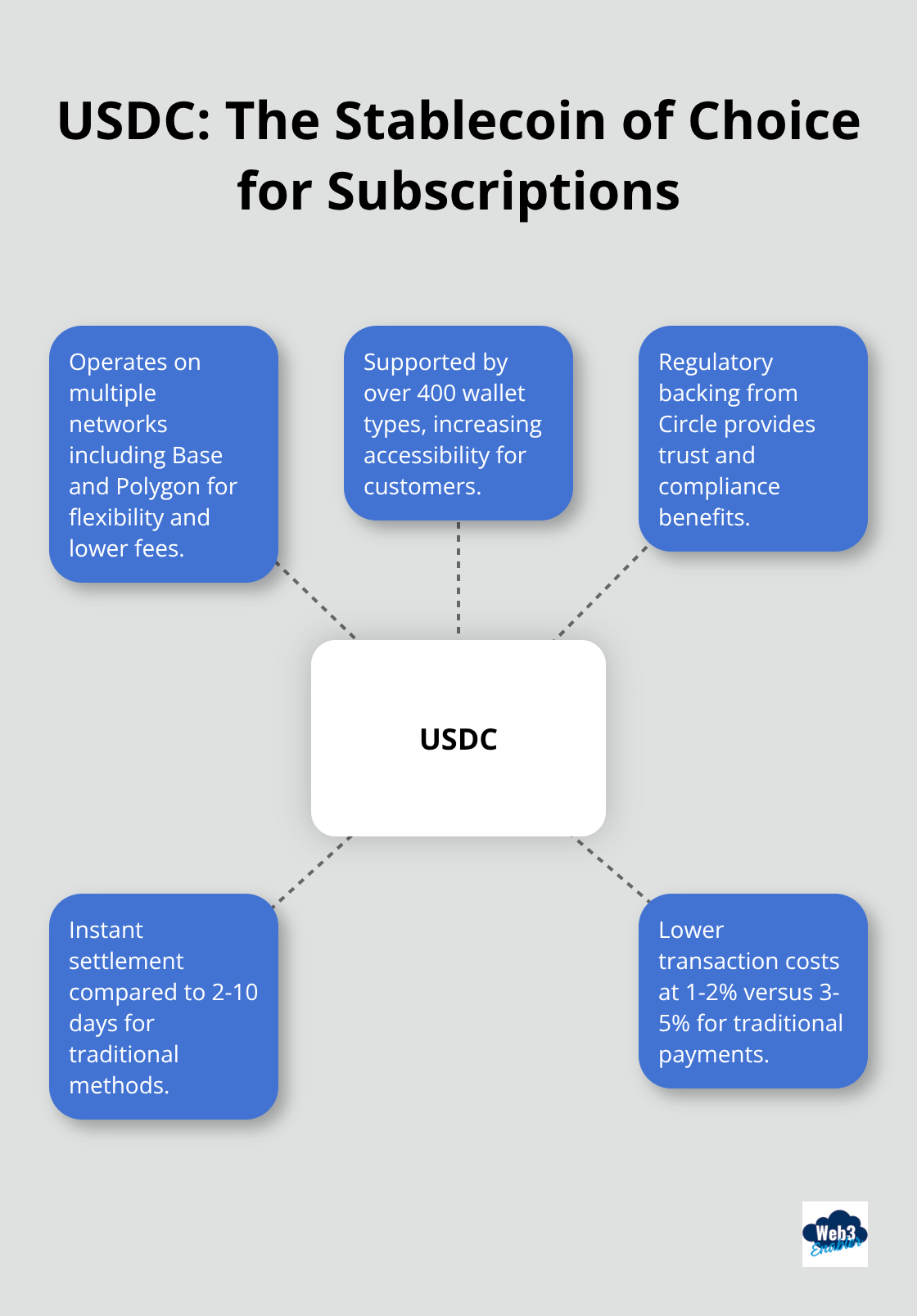
Currency conversion fees vanish when you accept stablecoins like USDC. Your European customers pay identical rates to domestic ones, and you skip the hassle of international banking restrictions that plague traditional subscription models. More than 400 wallets now support stablecoin payments through platforms like Stripe, which makes global customer subscriptions possible without local banking relationships. This worldwide reach opens markets that traditional payment rails often exclude due to banking limitations or high conversion costs through cross-border payments.
Fraud Protection That Actually Protects
Blockchain transactions become irreversible once confirmed, which makes chargebacks impossible. This eliminates the $40 billion in annual fraud losses that hit subscription businesses using traditional payment methods. Every transaction creates an immutable record on the blockchain, providing transparency that traditional payment systems cannot match. Your accounting team gains a clear audit trail that makes compliance reporting straightforward and dispute resolution unnecessary.
The technical foundation matters just as much as these benefits, so let’s explore how to choose the right infrastructure for your crypto subscription system.
Which Payment Gateway Fits Your Business
Your stablecoin payment solution choice determines everything from customer experience to compliance headaches. USDC stands out as the top pick for subscriptions, though stablecoins have lost their peg on multiple occasions, while it operates on multiple networks (Base and Polygon included). Stripe supports USDC subscriptions through their regulated platform and processes payments for over 400 wallet types while it handles compliance automatically. PassimPay offers multi-cryptocurrency support with seamless connections, though their regulatory framework varies by jurisdiction.
Pick Your Stablecoin Strategy
USDC dominates the subscription space because businesses trust its regulatory backing from Circle, despite historical peg losses. Ethereum-based USDC works well for established businesses, while Base and Polygon versions offer lower fees that benefit high-volume subscription models. USDT provides broader wallet support but carries regulatory uncertainty that makes compliance teams nervous. Smart businesses stick with USDC on Base for new implementations since it combines low fees with regulatory clarity that traditional payment processors can’t match.
Connect Without System Overhauls
Most modern payment gateways connect through APIs that plug into platforms like Shopify, WooCommerce, and Magento without custom development. Stripe’s Optimized Checkout Suite handles both fiat and stablecoin payments through identical interfaces, which means your development team avoids separate system builds. The connection process typically requires payment method configurations in your dashboard, then checkout code that supports wallet connections. Smart contracts handle the technical complexity of recurring authorizations, so customers save their crypto wallets as payment methods just like credit cards.
Automate Workflows That Actually Work
Successful crypto subscription automation depends on webhook configurations that trigger fulfillment based on blockchain confirmations rather than immediate payment notifications. Configure your system to wait for transaction confirmations before service activation, since crypto payments can experience network delays during high activity periods. Stripe’s Dashboard provides comprehensive payment tracking with automatic email notifications for successful transactions, while their webhook system enables order fulfillment automation. Test your entire workflow with sandbox environments and testnet assets before going live (debugging subscription failures with real money creates customer service nightmares).
For businesses looking to integrate Web3 and blockchain solutions into their existing corporate infrastructure, specialized platforms can provide the technical foundation needed for seamless crypto payment implementation.
Now that you’ve chosen your gateway and configured the technical foundation, the real challenge begins: managing the day-to-day operations that keep your crypto subscriptions running smoothly.
How Do You Handle Crypto Subscription Operations
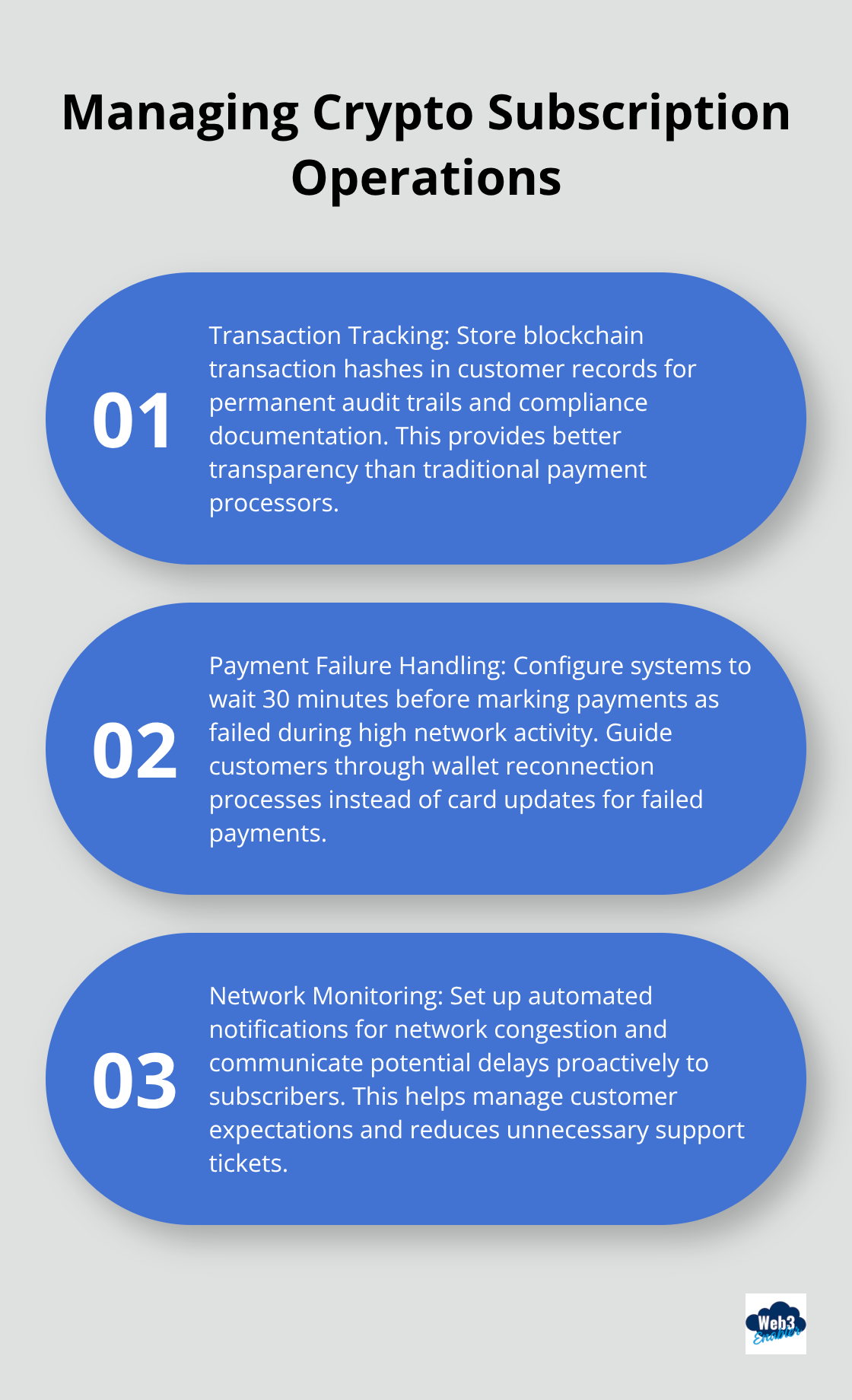
Payment failures happen, but crypto subscriptions fail differently than credit cards. Network congestion causes transaction delays, not insufficient funds, which means your automated systems need patience built in. Configure your webhook handlers to wait 30 minutes before they mark payments as failed during high network activity periods. Failed crypto payments require wallet re-authorization rather than card updates, so your customer support team needs scripts that guide users through wallet reconnection processes. Stripe’s Dashboard shows exactly which step failed in the payment chain, whether it’s wallet authorization, network confirmation, or smart contract execution, which eliminates guesswork for support agents.
Track Every Transaction Like Your Business Depends on It
The IRS requires businesses to track the fair market value of cryptocurrency at receipt time for tax compliance, which means your accounting system must capture USD values alongside crypto amounts for every subscription payment. Blockchain transaction hashes provide permanent audit trails that traditional payment processors can’t match, so store these hashes in your customer records for compliance documentation. QuickBooks integrates with most crypto payment gateways for automatic transaction entry, though manual verification prevents costly accounting errors. Multi-signature wallets protect significant cryptocurrency holdings better than single-key storage (especially for businesses that process high subscription volumes where security breaches cost more than the wallet setup complexity).
Convert Customer Experience into Retention Gold
Customer education helps reduce crypto payment support tickets, so create step-by-step wallet connection guides with screenshots for the most popular wallet apps. QR codes on invoices enable mobile payments that feel as smooth as Apple Pay, while clear network status notifications prevent customer confusion during blockchain congestion periods. Offer immediate fiat conversion options for customers who worry about price volatility, since many users prefer crypto convenience without crypto exposure. Lightning Network integration for Bitcoin subscriptions provides instant confirmations that match traditional payment speed expectations (though implementation complexity requires technical expertise that smaller businesses often lack).
Monitor Network Conditions Like a Pro
Blockchain networks experience congestion during peak usage periods, which affects transaction confirmation times and customer satisfaction. Monitor network status through blockchain explorers and communicate delays proactively to subscribers before they contact support. Set up automated notifications that inform customers about potential delays when network activity spikes above normal levels. Your payment gateway should provide real-time network status updates that help you adjust customer expectations and prevent unnecessary support tickets.
Final Thoughts
Crypto subscription payments deliver measurable advantages that traditional payment systems cannot match. Transaction fees drop from 3-5% to just 1-2%, while settlement times shrink from days to minutes. Your business gains global reach without currency conversion headaches and eliminates chargeback fraud entirely through blockchain’s immutable transaction records.
Implementation success requires you to choose regulated stablecoin solutions like USDC, integrate payment gateways that support existing systems, and configure automated workflows with proper webhook handling. Customer education and proactive network monitoring prevent support headaches while you maintain compliance through detailed transaction tracking. The digital payment landscape continues to evolve rapidly as Stripe’s stablecoin subscription launch signals mainstream adoption.
Businesses that adopt crypto subscription payments now position themselves ahead of competitors still wrestling with traditional payment limitations. Regulatory frameworks like the EU’s MiCA create clearer operating guidelines for companies ready to make the switch. For companies ready to integrate blockchain technology with existing corporate infrastructure, Web3 Enabler provides solutions that support payments and compliance without speculation (the future belongs to businesses that embrace efficient payment rails today).