

 Digital assets are everywhere in modern business-from financial documents to compliance records to transaction histories. Managing them poorly costs time, creates security risks, and slows down operations.
At Web3 Enabler, we’ve seen firsthand how companies struggle with scattered files, inconsistent naming, and version chaos. The right digital asset management tips and systems transform this mess into organized, accessible, and secure workflows.
What Digital Assets Really Include and Why They Matter
Digital assets span far beyond what most companies initially recognize. Financial records, transaction histories, compliance documents, blockchain transaction logs, payment confirmations, and audit trails all qualify as assets requiring organized management. In cross-border operations, stablecoin transaction receipts, treasury reports, and settlement confirmations become critical assets that demand structured storage and rapid retrieval. The scope matters because mismanaged digital assets create operational friction-finance teams waste hours locating payment proofs, compliance teams struggle to demonstrate regulatory adherence, and treasury operations lack visibility into asset positions across regions. Organizations managing international payments through stablecoins face additional complexity: USDC transactions, RLUSD settlements, and blockchain confirmations generate records that must integrate with existing financial systems rather than exist in isolated storage folders.
The Real Cost of Scattered Digital Assets
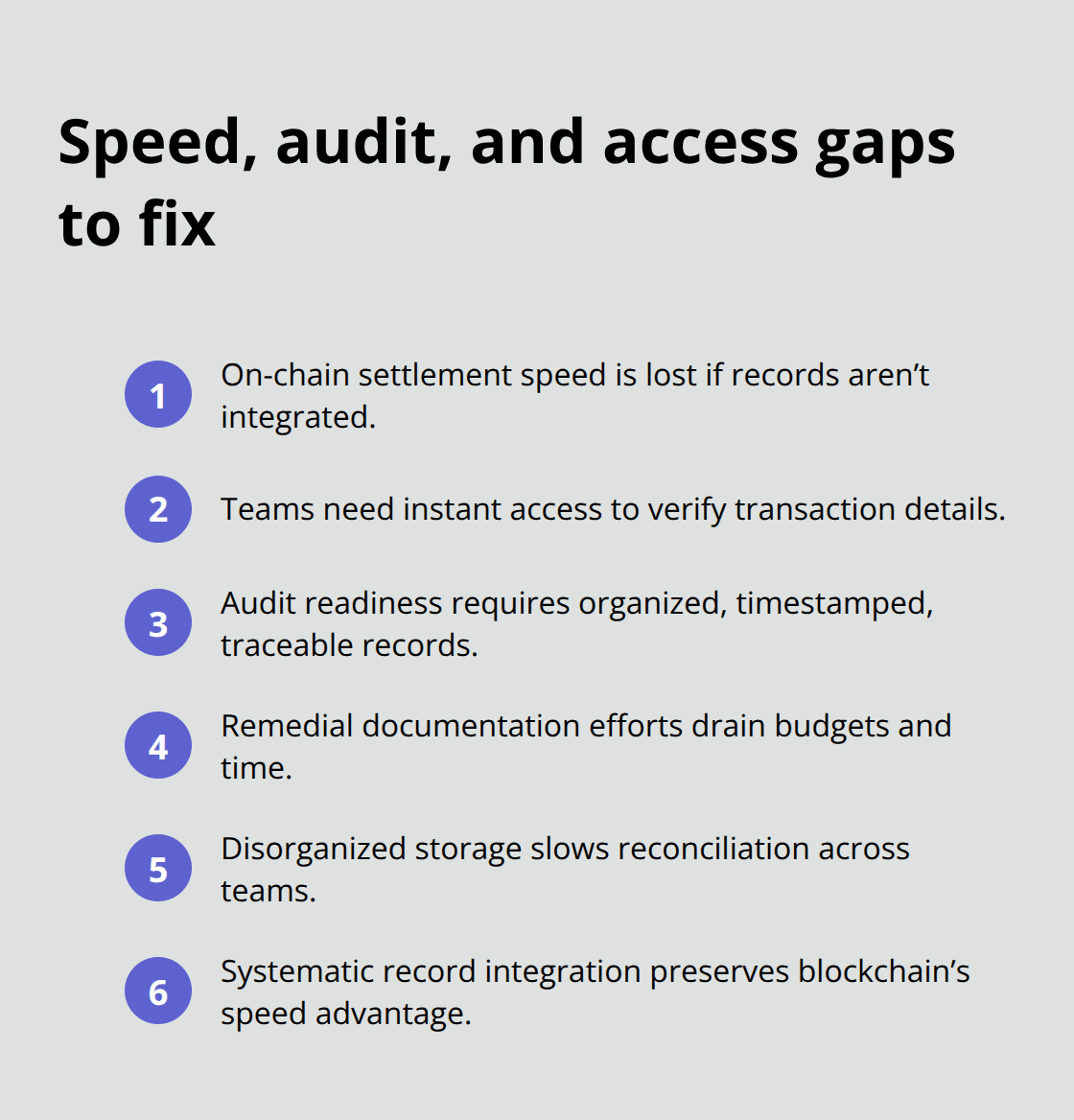
Companies without structured digital asset management experience tangible losses. When payment documentation sits across email, cloud drives, and spreadsheets, reconciliation takes days instead of hours. A finance team handling cross-border payments through traditional banking might spend 20-30 hours monthly on settlement tracking and verification. Stablecoin-based payments compress this to minutes because transactions settle on-chain with immutable records, but only if those records integrate with your operational systems. Without proper digital asset management, teams cannot leverage this speed advantage because they cannot quickly access or verify transaction details. Regulatory audits compound the problem-auditors expect organized, timestamped, and traceable records. Companies without structured systems either spend thousands on remedial documentation efforts or face audit delays that slow business growth.
How Digital Asset Management Differs from Traditional File Storage
Traditional file storage treats documents as static objects organized in folders. Digital asset management treats assets as queryable, traceable, and operationally connected records. A standard cloud drive stores a payment receipt as a PDF in a folder structure; a proper DAM system stores that same receipt with metadata linking it to the transaction, the vendor, the payment date, the settlement method, and compliance status. This distinction becomes critical when managing stablecoin treasury operations. Web3 Enabler integrates blockchain transactions directly into Salesforce, creating a native connection between your digital assets and your business processes. Transactions settle on-chain while records flow into your existing CRM and financial systems automatically. This eliminates the manual work of storing, retrieving, and reconciling separate blockchain records-your assets remain organized, auditable, and operationally useful from the moment they settle.
Moving Forward with Integrated Asset Systems
The foundation for effective digital asset management rests on understanding what qualifies as an asset and recognizing how scattered records drain resources. Organizations that treat digital assets as operationally connected records rather than isolated files gain immediate advantages in speed, compliance, and visibility. The next step involves establishing the core components that transform this understanding into working systems.
Structuring Assets for Speed and Compliance
Organization systems fail when they treat naming conventions and folder structures as administrative busywork rather than operational infrastructure. Finance teams managing stablecoin payments across regions cannot afford loose naming standards-when a USDC settlement needs verification during an audit, searching through folders labeled Payments, Payments_v2, Payments_Final, and Payments_ACTUAL wastes hours that should go toward business operations.
Naming Conventions That Embed Transaction Metadata
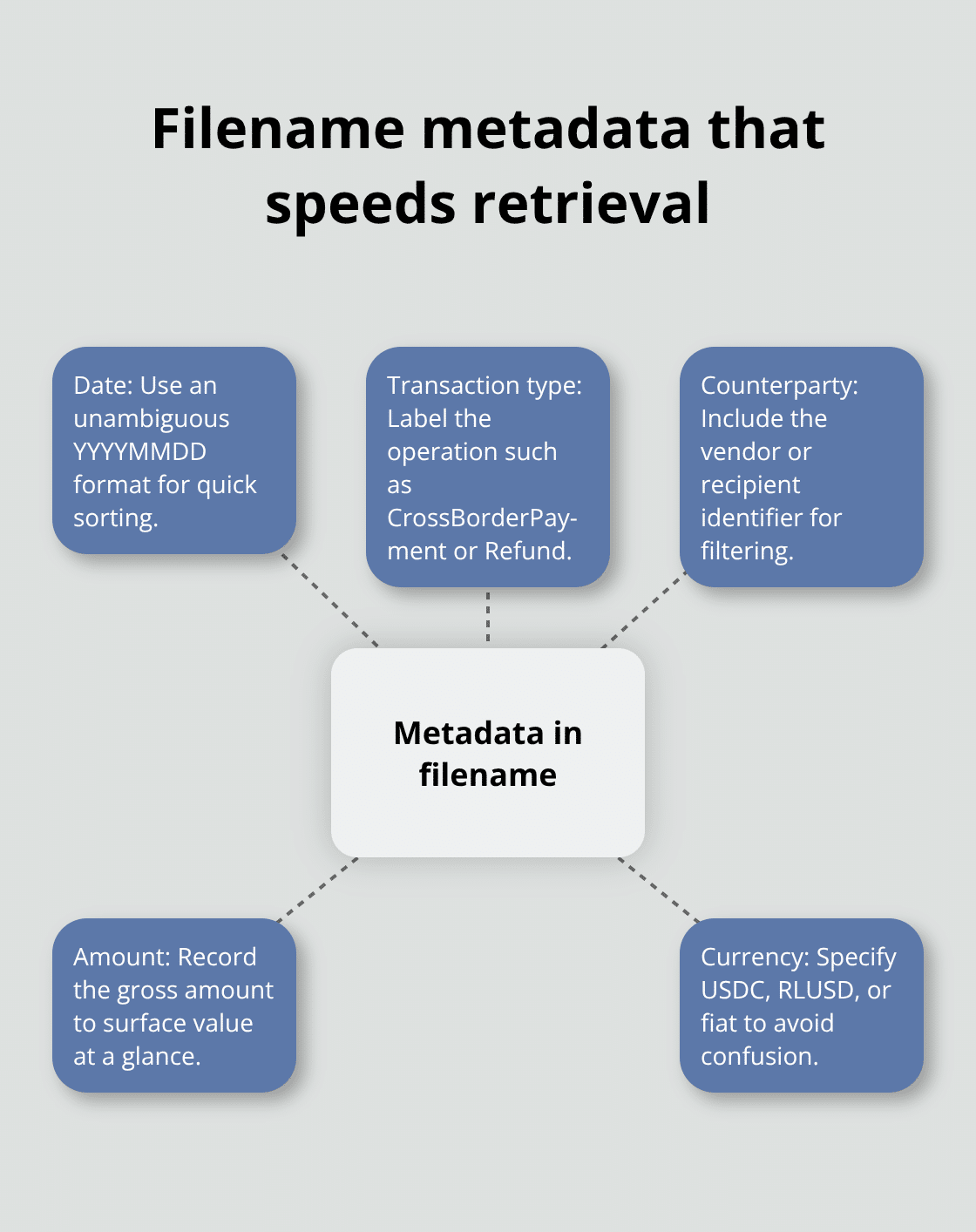
Establish a naming system that embeds transaction metadata directly into filenames: Date_TransactionType_Counterparty_Amount_Currency. A real file becomes 20250115_CrossBorderPayment_SupplierXYZ_50000_USDC rather than Invoice_Final_v3.pdf. This approach works because the filename itself tells operators what they need to know without opening the document. Operators locate transactions in seconds instead of minutes because the metadata sits in plain view.
Folder structures should mirror your business operations, not arbitrary categories. Organize by region, then by transaction type, then by counterparty rather than by month or department. A cross-border payments team needs to locate all transactions with a specific vendor across all time periods in seconds-hierarchical structures that separate by date force unnecessary navigation. This operational alignment transforms folder structures from filing systems into searchable business infrastructure.
Metadata Systems That Drive Operations Forward
Metadata systems fail when they require excessive manual tagging that slows down daily work. Treasury operations handling RLUSD or USDC transactions need metadata that captures what matters operationally: settlement status, counterparty risk classification, regulatory jurisdiction, and reconciliation status. Create mandatory metadata fields that take 30 seconds to complete rather than optional fields that nobody fills.
A payment confirmation should include settlement_confirmed (yes/no), compliance_screened (yes/no), and accounting_posted (yes/no)-three data points that tell operators whether the transaction is complete. Tagging systems work only when they directly improve search speed. Instead of generic tags like important or urgent, use operational tags that connect to business processes: ready_for_audit, pending_reconciliation, or requires_vendor_followup. These tags transform metadata from documentation into operational guidance.
Version Control as Operational Necessity
Version control prevents the chaos of multiple file iterations without clear ownership. Establish a single source of truth in your system-one master record that updates rather than spawning copies. When a settlement confirmation requires amendment, update the original record and timestamp the change rather than creating Settlement_Confirmation_Final_REVISED_v4.pdf. Organizations processing high volumes of cross-border transactions through stablecoins generate settlement records faster than traditional banking, which makes version control essential.
A single incorrect version circulating through accounting teams creates reconciliation nightmares that negate the speed advantages of blockchain settlements. Immutable transaction records on-chain mean nothing if your internal systems contain conflicting versions of the same settlement. Implement systems that prevent duplicate records and enforce single-source-of-truth principles across all teams handling payments and treasury operations. This discipline transforms your digital assets from potential sources of error into reliable operational records that support both speed and accuracy.
The infrastructure you establish here-consistent naming, operational metadata, and version control-creates the foundation for the next critical step: selecting and implementing the platforms that automate these structures rather than requiring manual enforcement.
Platforms Built for Treasury Operations and Cross-Border Payments
Most digital asset management platforms treat crypto and blockchain transactions as afterthoughts bolted onto traditional file storage systems. This approach fails for treasury teams managing stablecoin payments because blockchain settlements happen in seconds while traditional DAM systems operate on file-storage timescales measured in minutes or hours. The market offers two fundamentally different categories: legacy DAM platforms that add crypto connectors as plugins, and native blockchain-integrated systems designed from the ground up for digital asset operations. Organizations handling cross-border stablecoin transactions need the second category because speed and accuracy depend on real-time transaction visibility integrated directly into existing business systems.
Web3 Enabler operates as a native Salesforce integration that connects blockchain transactions directly to your CRM infrastructure, eliminating the gap between settlement and record-keeping. When a USDC payment settles on-chain, the transaction data flows immediately into your existing Salesforce environment rather than requiring manual entry into separate systems. Treasury teams processing high-volume cross-border payments through stablecoins cannot afford the friction that traditional DAM platforms introduce because each manual step reintroduces the operational overhead that blockchain settlements eliminate.
Integration That Eliminates Duplicate Systems
The critical selection criterion for DAM platforms is integration depth with your existing business infrastructure. Organizations using Salesforce for CRM operations cannot effectively manage stablecoin payments through separate blockchain platforms because data exists in two places simultaneously, forcing reconciliation work that negates cost and speed advantages. Web3 Enabler solves this by operating as a native Salesforce application, meaning blockchain transactions integrate directly into your existing workflows without requiring data migration between systems.
A payment to an international supplier settles on-chain while the transaction simultaneously updates your Salesforce financial records, vendor management, and compliance status. This architectural approach prevents the common failure pattern where treasury teams maintain separate spreadsheets or tools for blockchain operations while Salesforce contains outdated transaction information. Organizations expanding cross-border operations into African markets need platforms that treat blockchain integration as core infrastructure rather than optional features.
Why Native Integration Matters for Speed
Traditional DAM platforms like Box or Sharepoint excel at document storage but require manual linking between blockchain transactions and your financial records, creating the very reconciliation delays that stablecoins were designed to eliminate. The selection decision becomes straightforward: choose platforms that integrate directly into your primary business system rather than platforms that require you to maintain separate tools for blockchain and traditional operations.
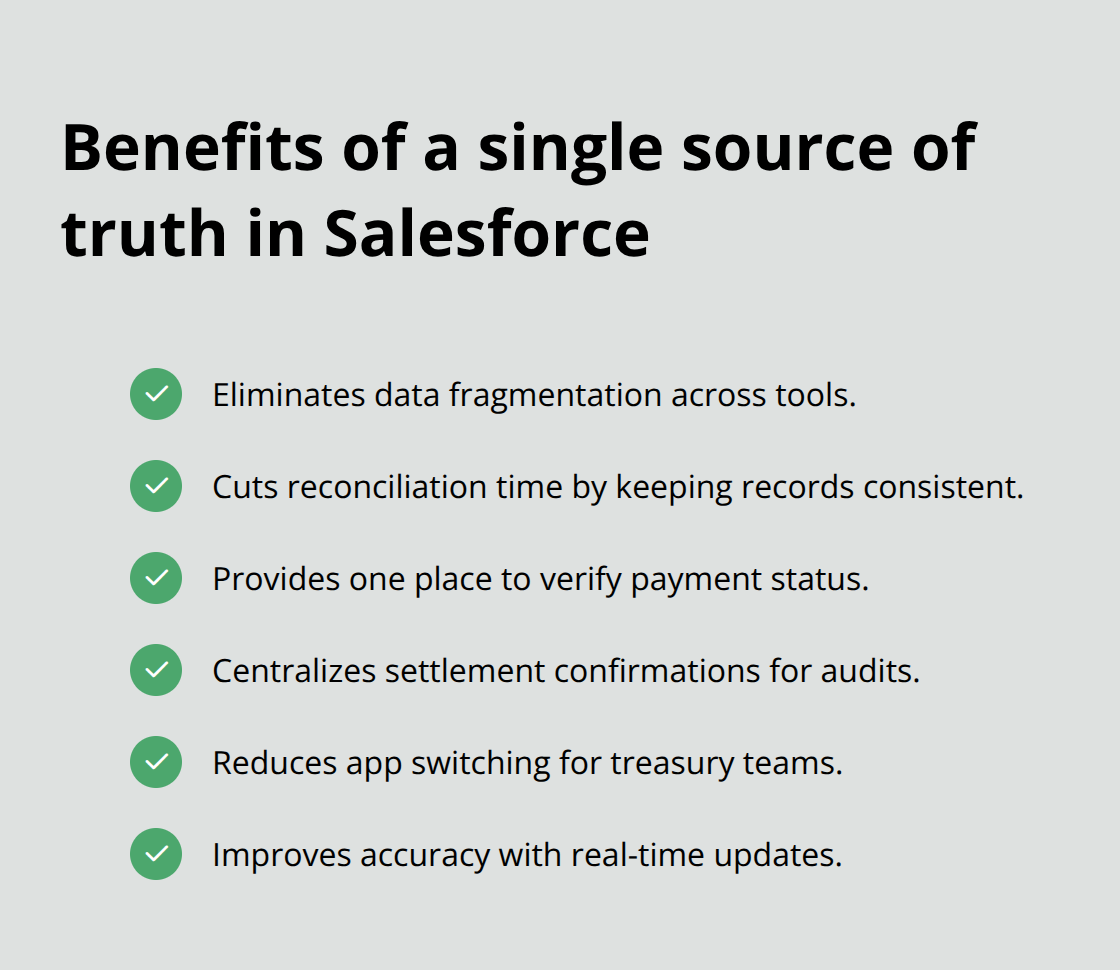
Native integration prevents data fragmentation across multiple systems. When your blockchain transactions live in one platform and your financial records live in another, operators spend hours reconciling conflicting information. A single source of truth (your Salesforce environment) eliminates this waste. Treasury teams can verify payment status, track settlement confirmations, and audit transaction histories without switching between applications.
Adoption Speed and Operational Reality
Implementation speed and adoption determine whether DAM platforms deliver promised benefits or sit unused. Platforms requiring extensive customization or workflow changes face adoption resistance from teams already managing high transaction volumes. Web3 Enabler requires minimal workflow changes because it operates within Salesforce where your teams already work daily, eliminating the training burden and adoption friction that derail most digital asset management initiatives.
Organizations deploying separate blockchain tools typically experience 6-12 month implementation cycles before teams actually use the system. Native integrations compress this to weeks because teams adopt tools that work within existing processes rather than requiring new processes. For treasury operations handling multiple currencies and settlement methods, this difference means the difference between managing stablecoins effectively during implementation year one or waiting until year two for real adoption.
The Human Factor in Platform Selection
The practical reality is that platforms requiring teams to switch between systems fail regardless of feature richness because humans default to familiar tools when under time pressure. Treasury teams processing urgent cross-border payments will use whatever system provides fastest access to transaction information, which means native integrations win adoption battles that feature-rich but disconnected platforms consistently lose. Your platform choice determines whether stablecoin speed advantages translate into operational reality or remain theoretical benefits that never materialize in daily workflows.
Final Thoughts
Effective digital asset management transforms how treasury teams operate across borders. Organizations that treat blockchain transactions as isolated records rather than integrated business data waste the speed and cost advantages that stablecoins deliver. The digital asset management tips that matter most are straightforward: embed metadata into your naming systems, establish single-source-of-truth records, and select platforms that integrate directly into your existing infrastructure rather than forcing separate workflows.
Common failures follow predictable patterns. Teams implement DAM systems that sit disconnected from their primary business tools, creating duplicate record-keeping that negates efficiency gains. Finance departments maintain separate spreadsheets for blockchain transactions while their CRM contains outdated payment information. Compliance teams struggle to produce audit-ready documentation because transaction records scatter across multiple platforms.
The practical path forward requires three concrete actions: audit your current digital asset landscape and identify where blockchain transactions currently live separate from your financial records, evaluate whether your existing systems can integrate blockchain data natively or whether you need purpose-built infrastructure, and prioritize implementation speed over feature completeness because adoption determines real-world impact. Web3 Enabler operates as a native Salesforce integration that eliminates the gap between blockchain settlements and your business records, allowing transactions to settle in seconds while data flows directly into your existing CRM environment. Treasury teams managing cross-border stablecoin payments gain immediate visibility into settlement status, compliance screening, and reconciliation without switching between applications.