



Your customers are asking for it, and your competitors are already doing it. Crypto payments aren’t just trendy anymore – they’re becoming table stakes for forward-thinking businesses.
We at Web3 Enabler see companies cutting payment fees by up to 90% while reaching entirely new markets. Learning how to accept crypto payments as a business might just be the smartest move you make this year.
Why Smart Businesses Switch to Crypto Payments
Traditional payment processors drain businesses with fees that reach 3.5% per transaction, while crypto payments cut those costs to as low as 0.5% according to NOWPayments data. The math speaks volumes: a business that processes $100,000 monthly saves over $3,000 in fees alone when it switches to crypto. Credit card companies have charged these premium rates for decades, but blockchain technology finally gives merchants the power to cut out the middleman.
Transaction Speed That Changes Everything
Cross-border payments through traditional banks take several business days and cost up to $50 in wire fees, while cross-border spending continues growing from $194.6 trillion in 2024 to a projected $320 trillion by 2032. Crypto transactions settle within minutes, whether your customer lives in Tokyo or Toronto. Coinbase reports that 81% of crypto-aware small and medium businesses want stablecoins specifically because they eliminate the week-long wait for international payments. Your cash flow improves instantly when payments arrive the same day instead of sitting trapped in correspondent bank delays.

New Customer Demographics Others Can’t Reach
The crypto user base represents 420 million people worldwide who actively prefer digital payments over traditional bank transfers. These customers often abandon purchases when only credit card options appear at checkout (especially in regions where bank infrastructure fails regularly). Businesses that accept crypto payments report access to entirely new demographics: tech professionals, international clients, and privacy-conscious consumers who specifically seek out crypto-friendly merchants.
The Technical Setup Question
Most business owners worry that crypto payment integration requires months of development work and technical expertise they don’t possess. With Blockchain Payments, you can accept stablecoins directly in your CRM and have the money go directly to your bank account. No need to pay gateway fees, just off-ramp to your bank.
Setup Takes Minutes Not Months
Modern e-commerce platforms accept crypto payments through simple plugin installations that require zero code experience. WooCommerce, Shopify, and Magento all offer one-click connections with major payment gateways, while custom websites use API connections that developers implement in under four hours. The technical complexity myth persists because businesses remember early Bitcoin days when merchants ran their own nodes and managed private keys manually. Today’s payment processors handle all blockchain interactions automatically and leave you with a checkout experience that looks identical to traditional payment methods.
Stablecoin Setup Eliminates Price Volatility
Smart businesses configure their systems to accept USDT and USDC exclusively because these stablecoins maintain dollar parity while they deliver all the speed and cost benefits of crypto payments. Payment processors like TransFi offer instant conversion to local currencies, which means customers pay in USDC but your business receives euros, dollars, or any supported fiat currency within minutes. This setup eliminates the price volatility that scared businesses away from crypto payments in previous years (transaction fees remain below 1% compared to the 2-5% that credit card processors charge merchants).
Volume Requirements Shape Your Choice
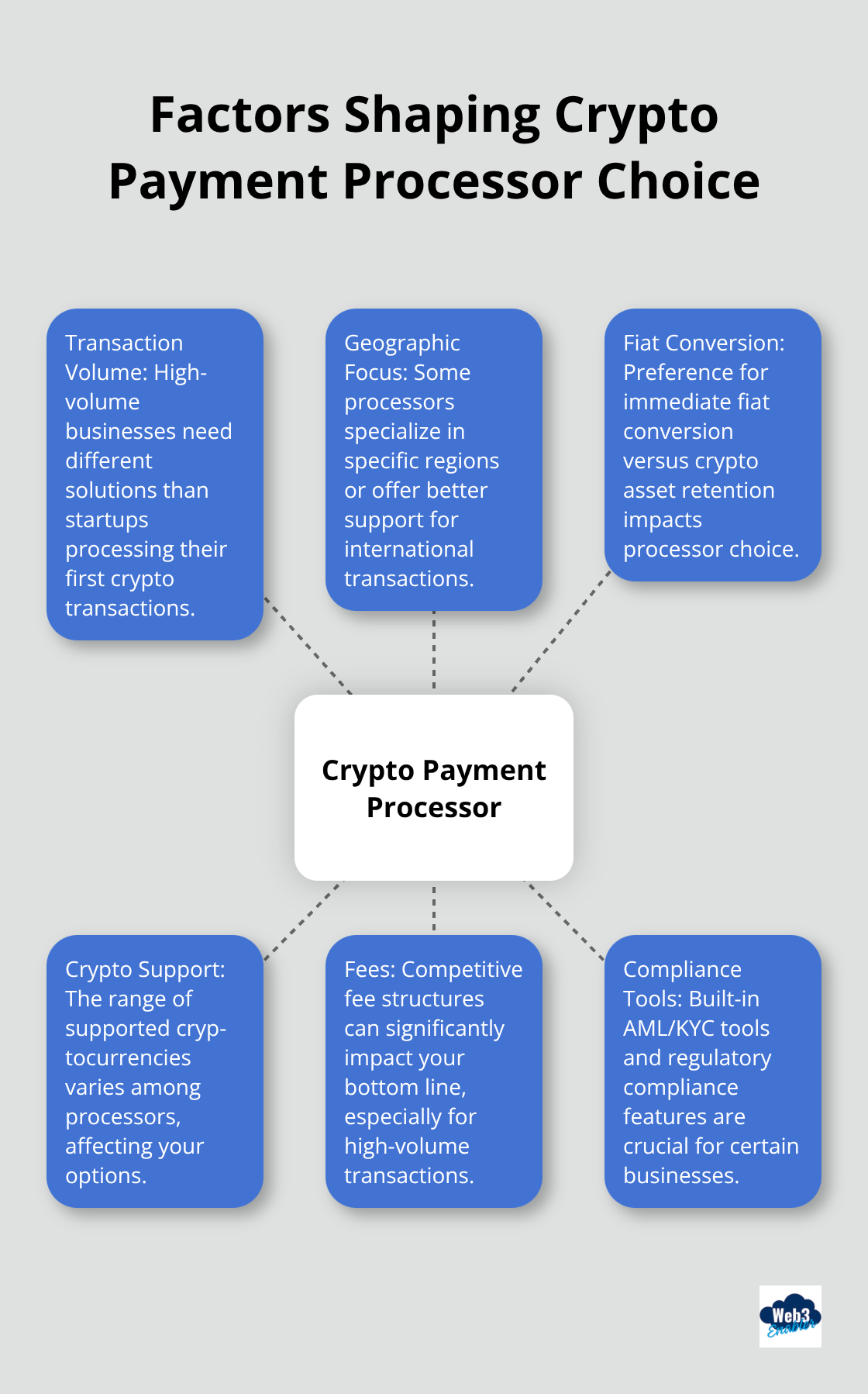
High-volume businesses need different solutions than startups processing their first crypto transactions. BitPay excels with mass payout features for enterprises that handle thousands of transactions monthly, while smaller businesses find NOWPayments’ low minimum thresholds more practical. Request Finance targets businesses and DAOs with specialized invoices, payroll, and accounting features across 70+ cryptocurrencies and 40 fiat currencies. Your monthly transaction volume determines which tier of service makes financial sense.
Security measures and customer service quality become critical factors once you’ve narrowed down the technical requirements.
How Do You Protect Your Crypto Payment Operations
Security protocols for crypto payments demand two-factor authentication on all administrative accounts, hardware wallet storage for large balances, and regular security audits every six months. Payment gateways like NOWPayments and BitPay handle most security automatically, but businesses must secure their own administrative access points and establish wallet management procedures.

Wallet Management Prevents Costly Mistakes
Store operational funds in hot wallets with maximum daily limits of $10,000, while you keep larger reserves in cold storage hardware wallets that require multiple signatures for access. Hot wallets connect to the internet and process daily transactions, but they expose funds to potential hacks if security fails. Cold storage devices (like Ledger or Trezor hardware wallets) remain offline and protect your business reserves from online threats.
Most businesses lose crypto through poor key management rather than sophisticated attacks. Write down recovery phrases on paper and store them in separate physical locations – never save them digitally or in cloud storage where hackers can access them.
Regulatory Compliance Changes Monthly
The European Union’s MiCA regulation takes effect in 2025 and requires crypto payment providers to implement enhanced AML and KYC procedures for transactions above €1,000. United States businesses must comply with FinCEN guidance that treats crypto payments as money transmission in most states (this requires money transmitter licenses in 47 states).
Payment processors like CoinGate provide built-in compliance tools, but businesses remain responsible for customer verification and transaction reports. Monitor regulatory updates monthly through official channels since crypto payment rules change frequently and non-compliance penalties reach $500,000 for repeated violations according to recent FinCEN enforcement actions.
Customer Support Protocols Save Revenue
Crypto payment disputes require immediate response protocols since customers cannot initiate chargebacks like traditional payment methods. Establish 24-hour response times for payment issues and maintain detailed transaction logs with blockchain confirmations for every customer interaction.
Train support staff on blockchain basics and common payment delays – Bitcoin transactions can take 60 minutes during network congestion while Ethereum processes in 15 seconds during normal conditions. Create standard procedures for partial payments, overpayments, and wrong-address transactions since these situations occur in 3% of crypto payments according to industry data from major processors.
Customer service policies need specific refund procedures since blockchain transactions are irreversible. Establish clear timeframes for dispute resolution and maintain detailed transaction records for regulatory compliance.
Final Thoughts
Crypto payments deliver measurable business advantages: transaction fees drop from 3.5% to 0.5%, international settlements complete in minutes instead of days, and you access 420 million crypto users worldwide. The technical barriers that once existed have disappeared with modern payment gateways that offer plugin installations taking hours, not months. Smart businesses that learn how to accept crypto payments as a business position themselves ahead of competitors still relying on expensive traditional processors.
Start with stablecoin acceptance through established gateways like NOWPayments or Coinbase Commerce to eliminate volatility concerns while you capture cost savings immediately. The regulatory landscape continues to evolve with MiCA taking effect in 2025, which makes early adoption advantageous before compliance requirements become more complex. Businesses that implement crypto payments now gain operational experience and customer trust before mainstream adoption accelerates.
We at Web3 Enabler provide Salesforce Native blockchain solutions that integrate crypto payment capabilities directly into your existing CRM infrastructure (supporting stablecoin payments, global transfers, and compliance tracking within Salesforce). Our tools work with established blockchain networks to help businesses transition smoothly to crypto payment acceptance. The question isn’t whether crypto payments will become standard – it’s whether you’ll lead the transition or follow it.