



Digital currency ETFs have become the hottest ticket in town for investors wanting crypto exposure without the wallet headaches. These investment vehicles let you trade Bitcoin and Ethereum through your regular brokerage account – no private keys required.
We at Web3 Enabler see more traditional investors jumping into this space every month. But before you FOMO into the first crypto ETF you spot, there are some serious considerations that could make or break your investment strategy.
How Do Digital Currency ETFs Actually Work
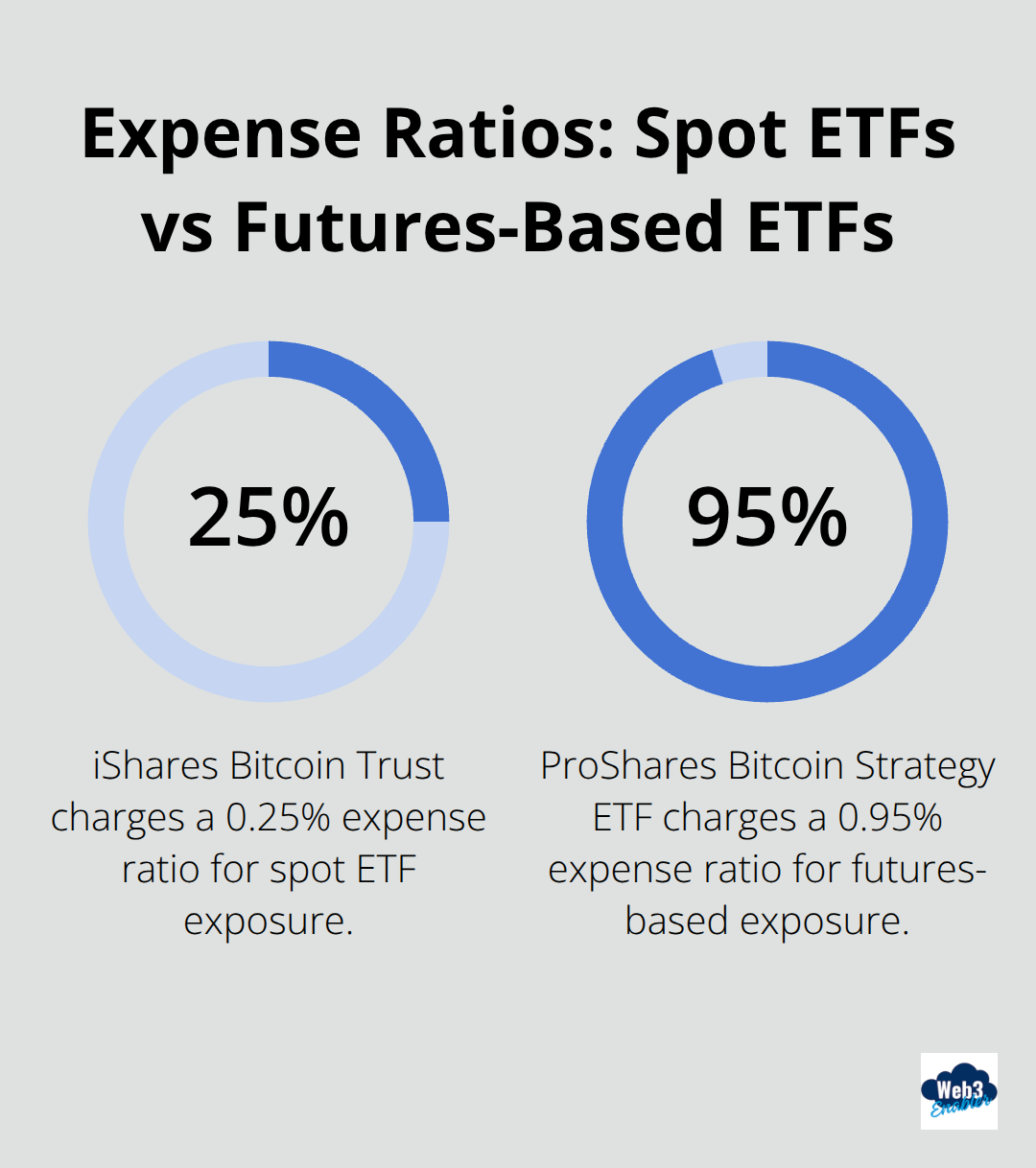
Digital currency ETFs package cryptocurrency exposure into traditional investment wrappers that trade on regular stock exchanges. Think of them as professionally managed baskets that either hold actual cryptocurrencies or derivatives tied to crypto prices. The iShares Bitcoin Trust holds $87.1 billion in assets with a 0.25% expense ratio, while the Grayscale Bitcoin Mini Trust offers the lowest fees at just 0.15%. These funds handle all the technical complexity of crypto storage and security, so you can buy and sell shares through any standard brokerage account.
Spot ETFs vs Futures-Based ETFs
Spot ETFs own the actual cryptocurrencies they track and provide direct price exposure to Bitcoin or Ethereum. The eleven Bitcoin spot ETFs launched in early 2024 attracted billions in inflows because they eliminate the errors common with futures-based products. Futures-based ETFs like the ProShares Bitcoin Strategy ETF carry higher expense ratios around 0.95% and can experience significant drift due to contango effects in futures markets. Spot ETFs consistently outperform their futures counterparts in volatile market conditions.
Market Leaders Worth Your Attention
Grayscale dominates with over $37 billion in digital assets under management and offers everything from single-asset exposure to diversified crypto baskets. Fidelity’s FBTC stands out because it self-custodies assets rather than relies on third-party services like Coinbase. The Bitwise Bitcoin ETF publishes their on-chain assets for complete transparency, while newer entrants focus on covered call strategies to generate income. Bloomberg’s Eric Balchunas states there’s now a 100% chance the SEC will approve multiple spot crypto ETFs as generic standards streamline approvals.
Fee Structures That Matter
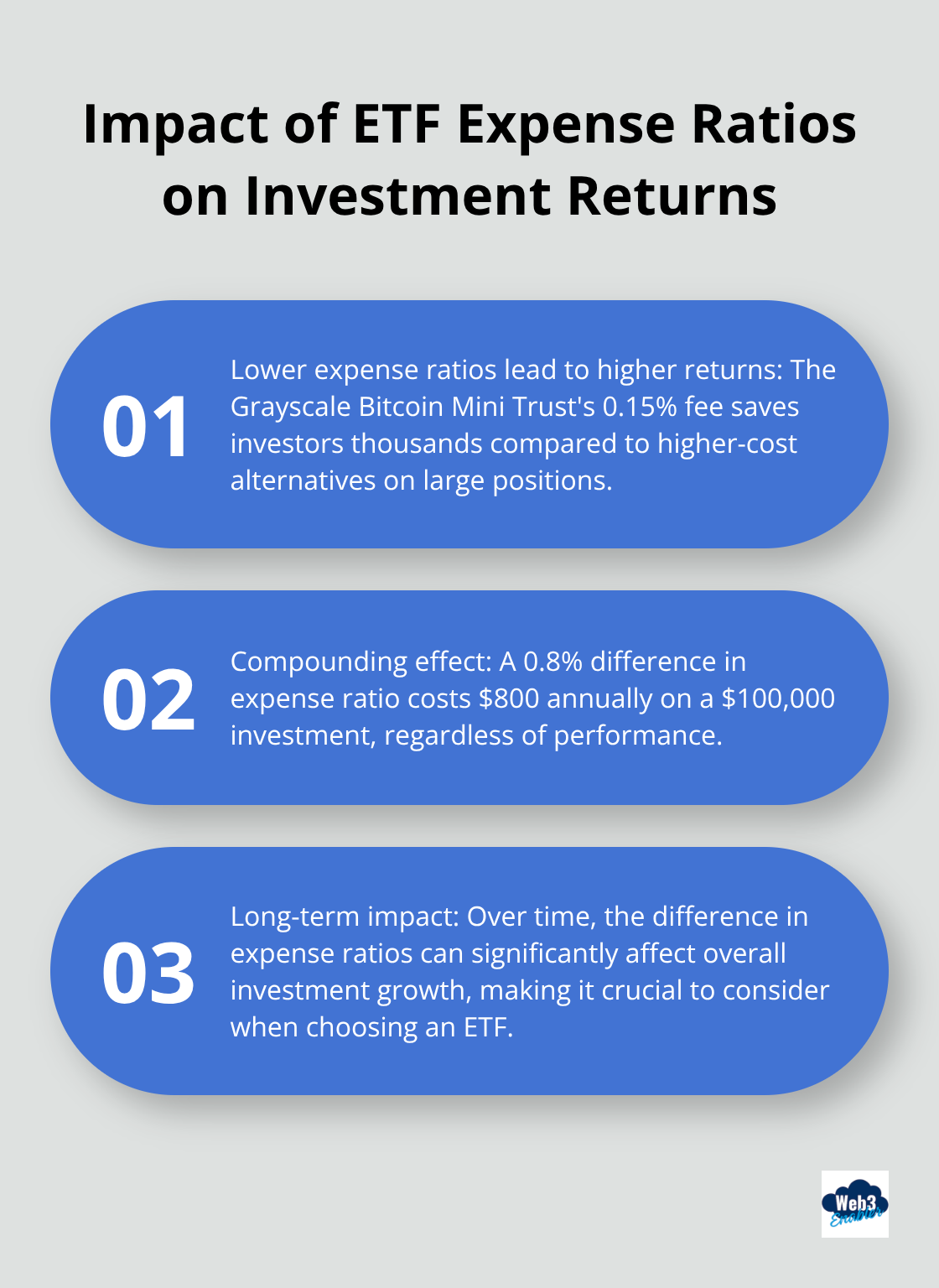
Expense ratios vary dramatically across crypto ETFs (from 0.15% to 0.95%), and these differences compound over time. The Grayscale Bitcoin Mini Trust’s 0.15% fee saves investors thousands compared to higher-cost alternatives on large positions. Covered call ETFs like the Roundhill Bitcoin Covered Call Strategy ETF target 44% distribution rates but sacrifice upside potential. These fee differences become even more important when you consider the benefits and risks that come with each approach.
Why Digital Currency ETFs Beat Direct Crypto Investment
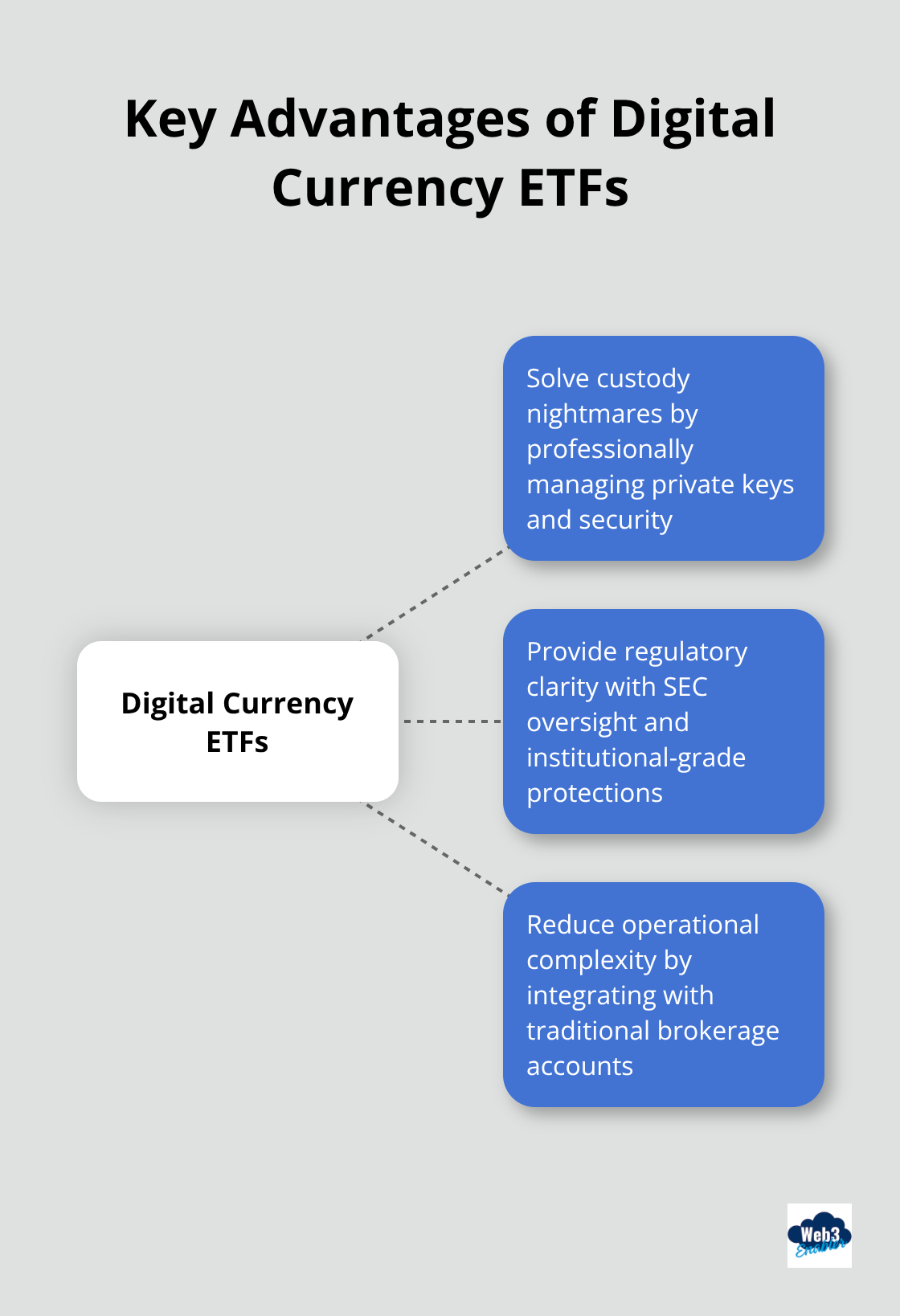
Digital currency ETFs solve the three biggest problems that keep institutional investors away from crypto: custody nightmares, regulatory uncertainty, and operational complexity. Traditional brokerage integration means your crypto exposure sits alongside your stock portfolio with the same tax reporting, margin requirements, and settlement procedures you already understand. The regulatory oversight from the SEC provides institutional-grade protections that don’t exist when you hold cryptocurrencies directly on exchanges that could collapse overnight (like FTX did in 2022).
Professional Management Removes Technical Barriers
ETF managers handle all the technical complexity of private key management, cold storage security, and blockchain network interactions that trip up individual investors. Fidelity Digital Asset Services manages custody for FBTC internally rather than outsources to third parties, which reduces counterparty risk significantly. Professional management also means automatic rebalancing, dividend handling, and corporate actions without any effort on your part. The transparency requirements force ETF providers to publish holdings daily, which gives you visibility that crypto exchanges rarely provide.
Volatility Risks Remain Just as Brutal
The biggest misconception about crypto ETFs is that professional management somehow reduces cryptocurrency volatility. Bitcoin still experiences 60-80% drawdowns during bear markets, and ETF wrappers don’t change this fundamental characteristic. Tracking errors can actually amplify losses during extreme market conditions when futures-based ETFs experience contango effects. The ProShares Bitcoin ETF showed significant underperformance versus spot Bitcoin prices during the 2022 bear market due to futures roll costs.
Income Strategies Come with Hidden Costs
Covered call strategies that promise high yields often cap your upside exactly when crypto rallies deliver their biggest gains. The Roundhill Bitcoin Covered Call Strategy ETF targets 44% distribution rates but sacrifices unlimited upside potential for income generation. These products work well in sideways markets but leave money on the table during explosive bull runs (which crypto markets are famous for). Smart investors need to understand these trade-offs before they commit capital to income-focused crypto ETFs.
Now that you understand the benefits and risks, the next step involves evaluating which specific ETFs deserve your attention and investment dollars.
Which ETF Deserves Your Investment Dollars
Expense ratios separate the winners from the losers in digital currency ETFs, and the differences are staggering. The Grayscale Bitcoin Mini Trust charges just 0.15% annually while futures-based products like BITO hit you with 0.95% fees that compound over time. On a $100,000 investment, this 0.8% difference costs you $800 every year regardless of performance.
Assets under management tell the real story about investor confidence. The iShares Bitcoin Trust commands $87.1 billion in assets because institutional money flows to products with tight spreads and reliable liquidity.
Volume Numbers Don’t Lie
ETFs with daily volume below $10 million struggle with liquidity issues that hurt performance during volatile periods. The most liquid Bitcoin ETFs trade over $1 billion daily, which keeps spreads tight and provides easy entry and exit points even during market stress.
Wide bid-ask spreads eat into your returns on every transaction. Smart investors check volume data before they commit capital because thin volume creates expensive execution costs that compound over time.
Transparency Separates Winners from Pretenders
Bitwise Bitcoin ETF publishes their on-chain assets for complete verification (something most competitors avoid). This transparency lets you verify that the ETF actually owns the Bitcoin it claims to hold rather than trust marketing materials.
Premium and discount data shows whether an ETF trades above or below its net asset value. Consistent premiums indicate supply-demand imbalances that smart investors avoid because they signal structural problems with the fund.
Performance Metrics That Actually Matter
Expense ratios beyond the headline number include creation and redemption costs that affect large investors differently than retail traders. These hidden fees can add another 0.1-0.3% to your total costs depending on fund structure.
Fee structures vary dramatically between providers, and the cheapest option isn’t always the best choice. The Grayscale Bitcoin Mini Trust offers rock-bottom fees but trades at premiums during high-demand periods that can wipe out the cost advantage.
Final Thoughts
Digital currency ETFs have transformed crypto investment from a technical nightmare into a mainstream option that attracts billions in institutional capital. The approval of spot Bitcoin and Ethereum ETFs in 2024 created legitimate alternatives to direct cryptocurrency ownership with regulatory protections that individual wallets lack. With over 100 new crypto ETFs expected in the next year, investors face an expanding menu of options with vastly different risk profiles and fee structures.
The expense ratio differences between products like Grayscale’s 0.15% Bitcoin Mini Trust and futures-based ETFs that charge 0.95% create massive long-term cost disparities. Smart investors prioritize liquid funds with tight spreads and transparent holdings over marketing hype and complex strategies that cap upside potential. These products work best for investors who want crypto exposure without custody risks or technical complexity (though they don’t eliminate cryptocurrency volatility).
Digital currency ETFs integrate seamlessly with traditional portfolios and provide institutional-grade oversight that direct crypto ownership lacks. However, they remain investment vehicles that chase crypto price movements rather than solve real business problems. We at Web3 Enabler help businesses integrate blockchain technology with existing corporate infrastructure through Salesforce Native solutions that support payments, compliance, and automation for practical applications.