

 Your business just lost $500 on a $10,000 international transfer. Again.
Traditional banks are bleeding your profits dry with their outdated cross-border payment systems. We at Web3 Enabler see companies switching to cross border payments crypto solutions and cutting costs by up to 90%.
The future of global business payments is here, and it’s time to stop letting banks hold your money hostage.
Why Traditional Cross-Border Payments Are Broken
High Fees Eating Into Your Profits
International wire transfers cost your business significant fees, with remittance providers charging an average of 5.89% according to World Bank data from 2024. Send $100,000 to your supplier in Germany and banks pocket thousands in fees. Traditional correspondent networks stack multiple charges on every cross-border payment.
Your bank charges a sending fee, the recipient’s bank adds a receiving fee, and every intermediary bank along the way takes their cut. These fees continue to burden businesses while service quality remains stagnant.

Slow Settlement Times That Kill Business Momentum
ACH transfers take 1-3 business days for settlement while your suppliers demand immediate payment. SWIFT network transactions can take up to five business days when correspondent banks get involved. Your cash sits frozen in limbo while business opportunities slip away.
Friday afternoon transfers disappear into the weekend void (if you’re lucky, they return Monday morning). These delays compound when you deal with markets where infrastructure operates on different schedules and regulatory frameworks.
Complex Correspondent Banking Networks Creating Delays
Your payment travels through up to seven different banks before it reaches its destination. Each bank adds time, compliance checks, and additional fees. When one correspondent bank faces technical issues or regulatory problems, your entire payment chain breaks down.
Visa processes 65,000 transactions per second, yet international bank transfers crawl at medieval speeds because of these antiquated network dependencies. Banks maintain these complex relationships to comply with anti-money laundering regulations, but the cost burden falls squarely on your business operations.
The good news? Modern technology offers a way out of this expensive, slow-motion nightmare.
How Crypto Fixes Cross-Border Payment Problems
Cryptocurrency turns cross-border payments from a multi-day banking nightmare into a streamlined digital process. The Lightning Network processes transactions at impressive speeds compared to Visa’s 65,000 transactions per second, while Bitcoin transactions complete within minutes versus the 1-3 business days that traditional ACH transfers require. Stablecoins like USDT maintain their €167 billion market value specifically because they eliminate currency volatility while they preserve crypto’s speed advantages.
Transaction Costs Drop to Nearly Zero
Cryptocurrency fees average around 1% compared to traditional banking’s 3% charges, with international Bitcoin transactions that cost as low as 1% even for large transfers. PayPal and Visa now integrate cryptocurrencies into their platforms because the math is undeniable. Send €200 internationally through traditional banks and pay 3% in fees, while the same crypto transfer costs a fraction of that amount. The stablecoin market’s €213 billion valuation exists because businesses discovered they can slash remittance costs while they maintain operational efficiency.

Direct Transfers Eliminate Banking Middlemen
Crypto payments travel directly from your wallet to your recipient without correspondent networks. No seven-bank payment chains, no weekend delays, no intermediary fees that stack up along the route. Blockchain technology operates 24/7 across all time zones, so your Friday afternoon payment actually arrives Friday afternoon instead of vanishing into the void (unlike traditional banks that close for weekends). The Office of the Comptroller of the Currency now allows national banks to use stablecoins for payment activities because even regulators recognize the efficiency gains from removing unnecessary intermediaries.
Speed That Actually Matters
Traditional wire transfers crawl through multiple verification layers while crypto transactions zip across borders in minutes. Your supplier in Tokyo receives payment before their lunch break ends, not three business days later when the deal might be dead. This speed advantage becomes even more pronounced when you factor in time zone differences and banking holidays that plague traditional systems.
These technical advantages translate into real business benefits that go far beyond just saving money on fees.
Real-World Benefits of Crypto for Business Payments
Predictable Cash Flow Replaces Banking Chaos
Crypto payments settle within minutes and transform your cash flow from unpredictable to manageable. Traditional banks hold your money hostage for days while suppliers demand immediate payment, which creates dangerous cash flow gaps that crypto eliminates entirely. Brazil’s Pix processed 64 billion transactions in 2024 because businesses recognized that real-time payments facilitate faster liquidity and reconciliation (essential for high-volume operations).
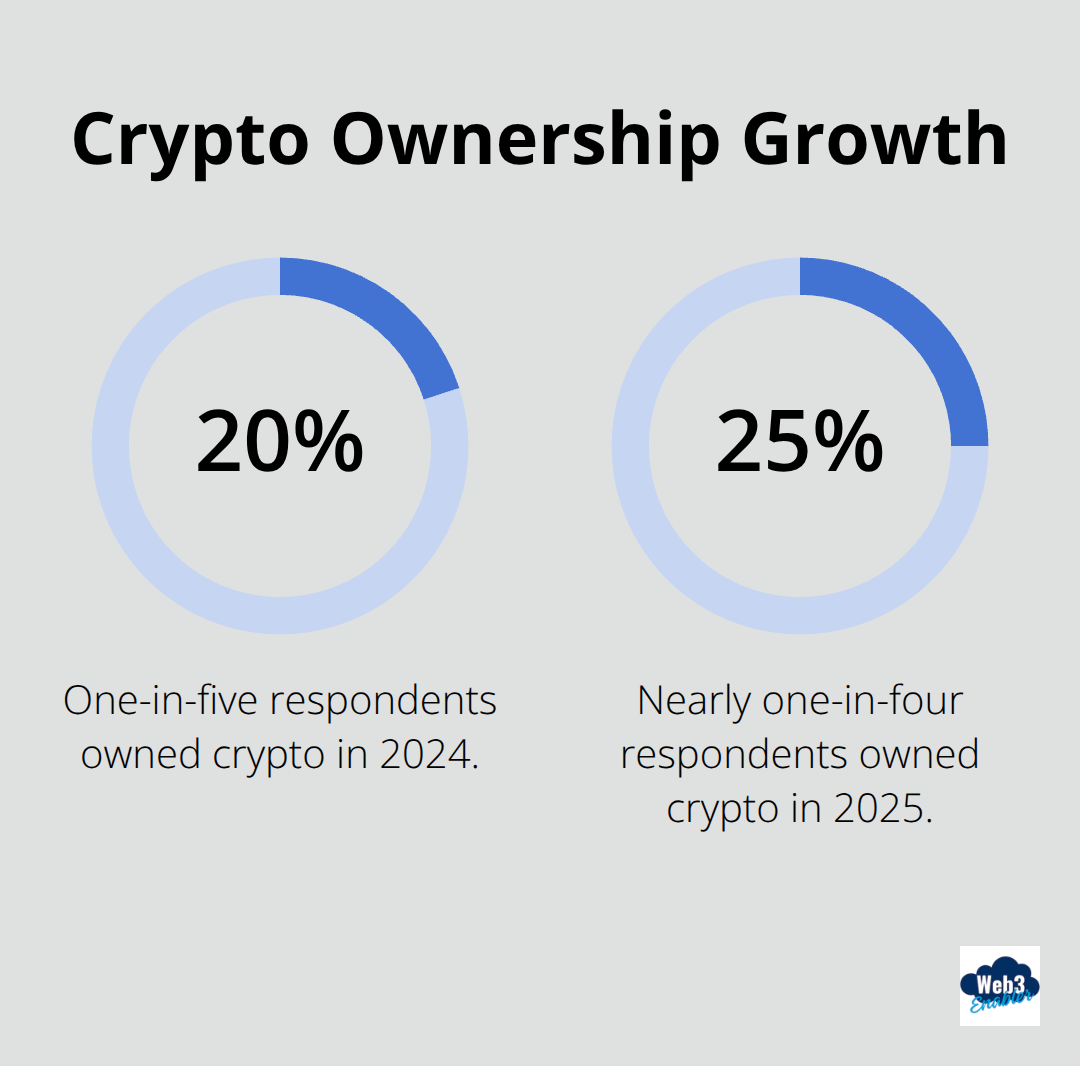
Your accounting team can reconcile payments the same day instead of waiting for mysterious bank delays that throw off monthly projections. Gemini research shows nearly one-in-four respondents owned crypto in 2025, up from one-in-five in 2024, because businesses discovered they could predict exactly when funds would arrive and plan accordingly.
Breaking Free From Banking Geography
Over 200 million adults in Latin America remain unbanked, yet crypto payments reach these markets instantly without traditional banking infrastructure. Your business can sell to customers in Nigeria or Venezuela without worrying about local banking restrictions or currency devaluation that plague traditional payment systems. The European Central Bank found that 10% of EU households owned crypto assets by November 2024, with another 10% planning purchases in 2025.
Companies like Tesla integrate crypto into treasury management strategies because they can transact globally without relying on correspondent banking networks that often refuse certain jurisdictions. Digital wallets contributed 46% of eCommerce turnover in Latin America (up from 21% in 2023) because businesses found they could access previously unreachable markets through crypto payment rails.
Complete Transaction Visibility Beats Banking Black Boxes
Blockchain provides transparent transaction tracking that traditional banks never match, with every payment recorded permanently on public ledgers that compliance teams can audit instantly. Your finance department can track payments in real-time instead of calling banks for updates that may never come. Chainalysis reported record cryptocurrency transactions of $244 billion in December 2024, driven partly by businesses demanding transparency that traditional banking systems cannot provide.
Smart contracts automate compliance checks and reduce manual oversight while they maintain complete audit trails for regulatory requirements. Blockchain transactions create immutable records that prevent payment disputes after settlement, eliminating chargeback risks that plague traditional payment processors.
Final Thoughts
Cross-border payments crypto solutions represent the inevitable evolution of global business finance. Traditional banks will continue to bleed your profits while crypto delivers instant settlements at a fraction of the cost. The €3.2 trillion cryptocurrency market cap exists because businesses discovered they could eliminate correspondent bank delays and slash transaction fees by up to 90%.
Stablecoins like USDT provide currency stability without sacrificing crypto’s speed advantages. Start with small test payments to verify the process, then scale up as your team gains confidence. The learning curve is minimal compared to the operational benefits you’ll gain (especially when you consider the immediate cost savings).
Your competitors already make this transition while companies that delay adoption will find themselves paying premium fees for inferior service. We at Web3 Enabler specialize in connecting blockchain technology with existing corporate infrastructure through 100% Salesforce Native solutions. Stop letting banks hold your money hostage and start implementing crypto payment solutions that actually work for modern business operations.