



Salesforce treasury management faces significant challenges with traditional payment systems that create bottlenecks and increase operational costs. Manual processes slow down vendor payments and make real-time cash flow tracking nearly impossible.
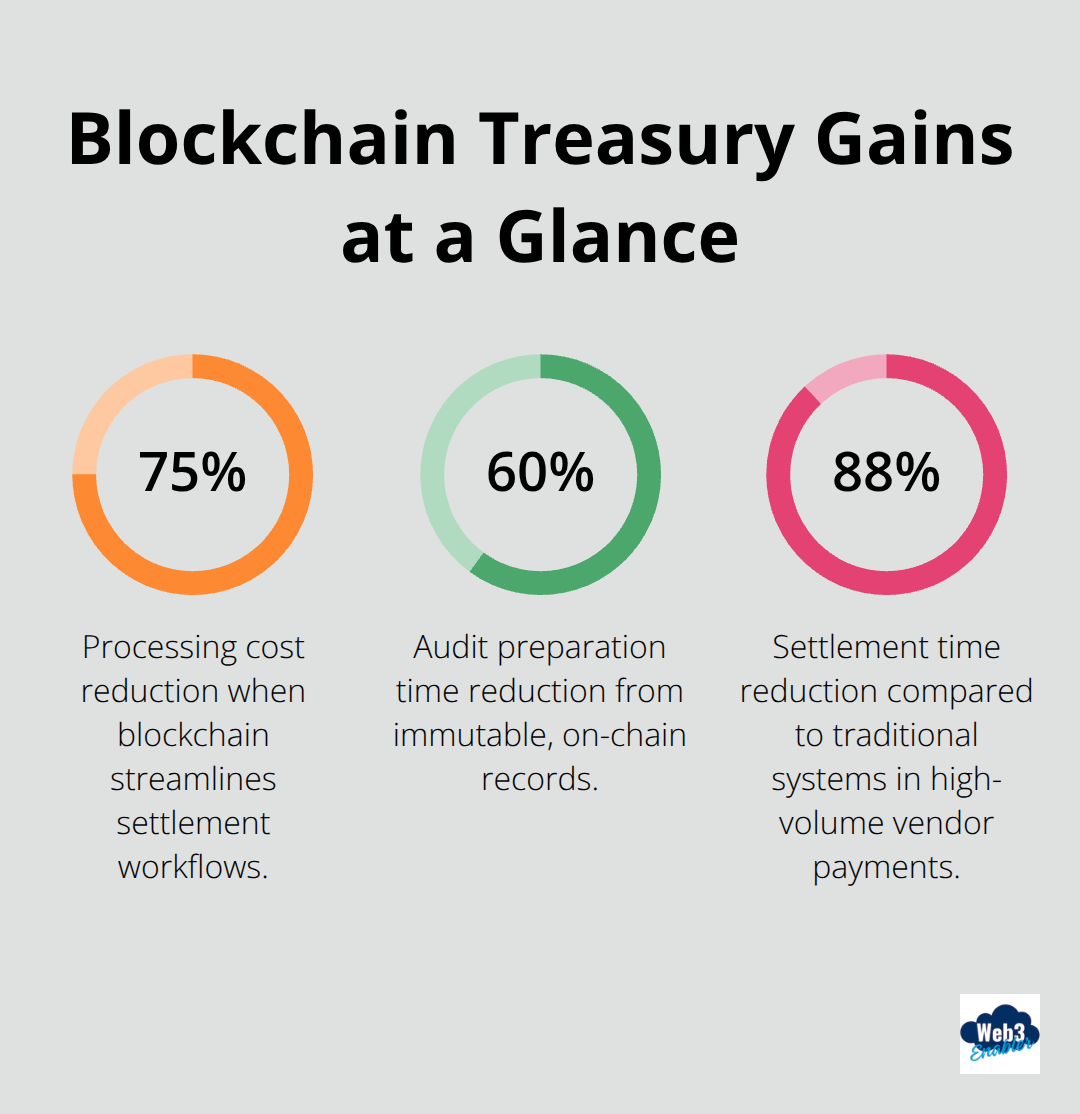
We at Web3 Enabler see blockchain technology transforming how finance teams handle treasury operations within Salesforce. Smart integration reduces settlement times from days to minutes while cutting processing costs by up to 75%.
How Does Blockchain Transform Treasury Visibility
Instant Payment Tracking Changes Everything
Finance teams waste countless hours as they chase payment statuses through multiple banking systems and vendor portals. Blockchain integration eliminates this friction and provides real-time transaction visibility directly within Salesforce. Every payment appears on the blockchain within seconds and creates an immutable audit trail that updates automatically in your CRM.
Traditional wire transfers leave finance teams in the dark for 24-48 hours while banks process payments through correspondent networks. Blockchain payments complete in under 10 minutes with full transparency. Treasury managers can track vendor payments, client settlements, and intercompany transfers without phone calls or separate banking platform logins.
Settlement Speed Drives Real Cost Savings
International wire transfers cost businesses significant fees per transaction, plus hidden foreign exchange markups that can reach 4% of transaction value. Blockchain payments reduce these costs to under $1 per transaction regardless of destination country. Settlement times drop from 3-5 business days to minutes.
Manufacturing companies that pay overseas suppliers save significant working capital when they eliminate the float period. Instead of sending payments days early to account for banking delays, finance teams can time payments precisely. This improvement in cash flow management typically saves mid-sized companies $50,000-200,000 annually in opportunity costs.
Security Advantages Beat Traditional Banking
Blockchain transactions use cryptographic security that makes fraud nearly impossible compared to traditional payment rails. Each transaction requires multiple digital signatures and gets verified by thousands of network nodes before completion. Wire fraud (which costs businesses $1.8 billion annually according to FBI data) becomes virtually eliminated with properly implemented blockchain payments.
The immutable nature of blockchain creates perfect audit trails that satisfy compliance teams and external auditors. Every transaction includes timestamps, wallet addresses, and transaction hashes that cannot be altered or deleted. This transparency reduces audit preparation time by 60% while it strengthens internal controls.
These visibility improvements set the foundation for seamless integration with your existing Salesforce infrastructure, where native blockchain solutions can automate complex treasury workflows.
How Does Native Salesforce Integration Work
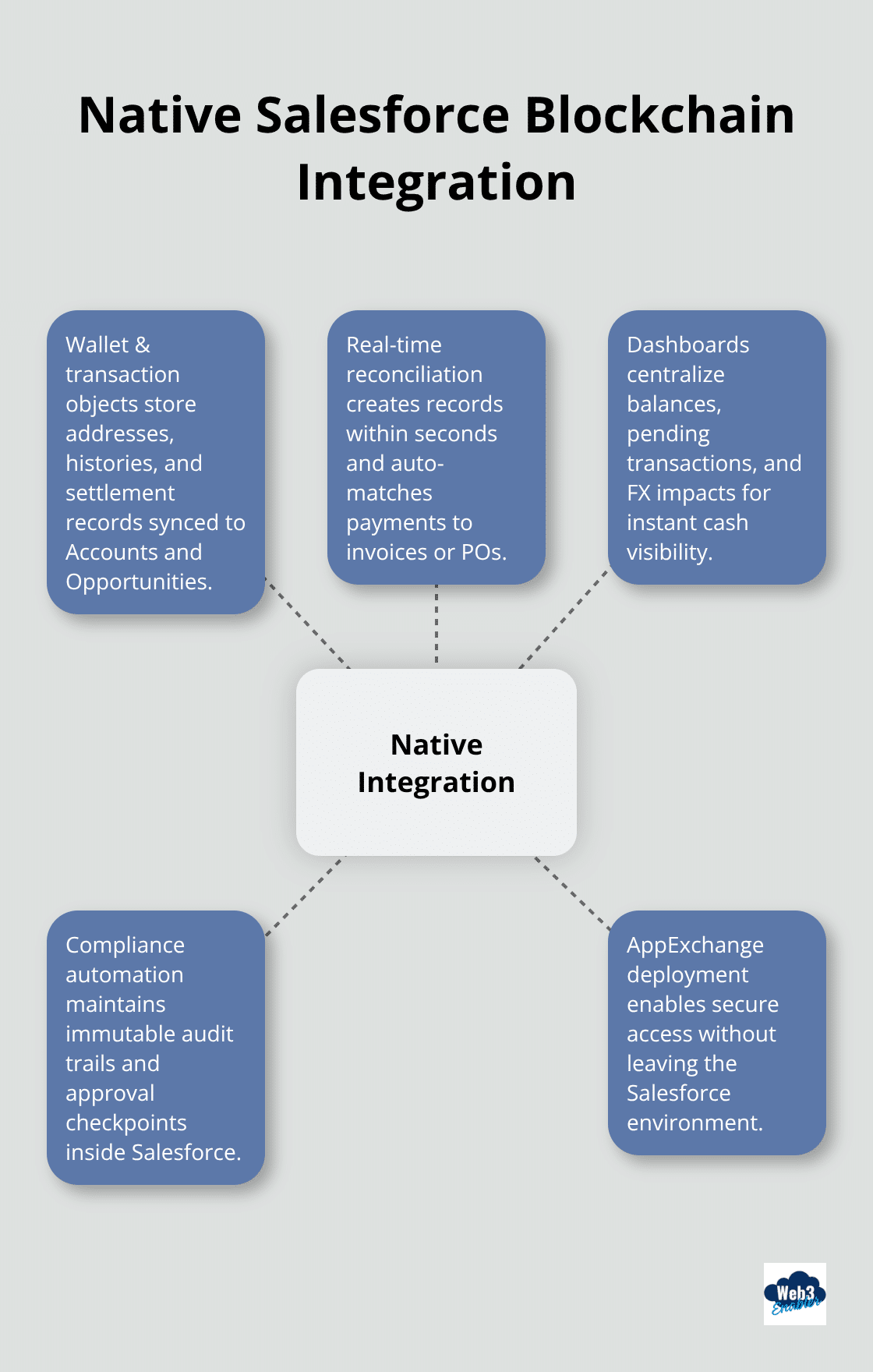
Web3 Enabler transforms Financial Services Cloud into a comprehensive blockchain treasury platform through direct AppExchange integration. Finance teams access blockchain payment capabilities without leaving their familiar Salesforce environment. The platform creates custom Salesforce objects for wallet addresses, transaction histories, and settlement records that sync automatically with existing Account and Opportunity data. Treasury managers initiate stablecoin payments directly from Contact records while they maintain complete visibility into cash positions through standard Salesforce dashboards.
Real-Time Reconciliation Eliminates Manual Work
Traditional reconciliation processes require finance teams to download bank statements, match transactions manually, and update multiple systems separately. Web3 Enabler automates this workflow when it creates Salesforce records for every blockchain transaction within 30 seconds of completion. Payment amounts, timestamps, and wallet addresses populate custom fields automatically while the system matches transactions to outstanding invoices or purchase orders.
This automation reduces month-end reconciliation time from 8-12 hours to under 30 minutes for most mid-sized companies. The platform generates exception reports for unmatched transactions and flags potential discrepancies before they impact financial reporting. Finance teams can focus on strategic analysis instead of data entry tasks.
Unified Dashboard Provides Complete Treasury Control
Finance executives gain real-time visibility into global cash positions through customizable Salesforce dashboards that display wallet balances, pending transactions, and settlement schedules in a single view. The platform tracks stablecoin holdings across multiple networks while it calculates foreign exchange impacts automatically (eliminating spreadsheet errors that plague traditional treasury management).
Treasury teams monitor vendor payment schedules, client settlement dates, and liquidity requirements without switching between banking platforms or spreadsheets. Custom alerts notify managers when wallet balances drop below predetermined thresholds or when large transactions require additional approval workflows. This centralized approach typically improves treasury decision-making speed by 40% while it reduces the risk of cash flow surprises.
Automated Compliance and Audit Trail Management
Blockchain transactions create immutable records that satisfy regulatory requirements automatically. Each payment generates permanent audit trails with timestamps, wallet addresses, and transaction hashes that auditors can verify independently. The system maintains complete transaction histories within Salesforce custom objects (making compliance reviews faster and more accurate).
Finance teams can generate regulatory reports directly from Salesforce without manual data compilation. The platform tracks all payment approvals, authorization levels, and compliance checkpoints through standard Salesforce workflow rules. This automation reduces audit preparation time significantly while it strengthens internal controls across treasury operations.
These native integration capabilities require proper implementation strategies to maximize their impact on your finance team’s daily operations.
How Should You Deploy Blockchain Payments
Start with Vendor Payment Workflows First
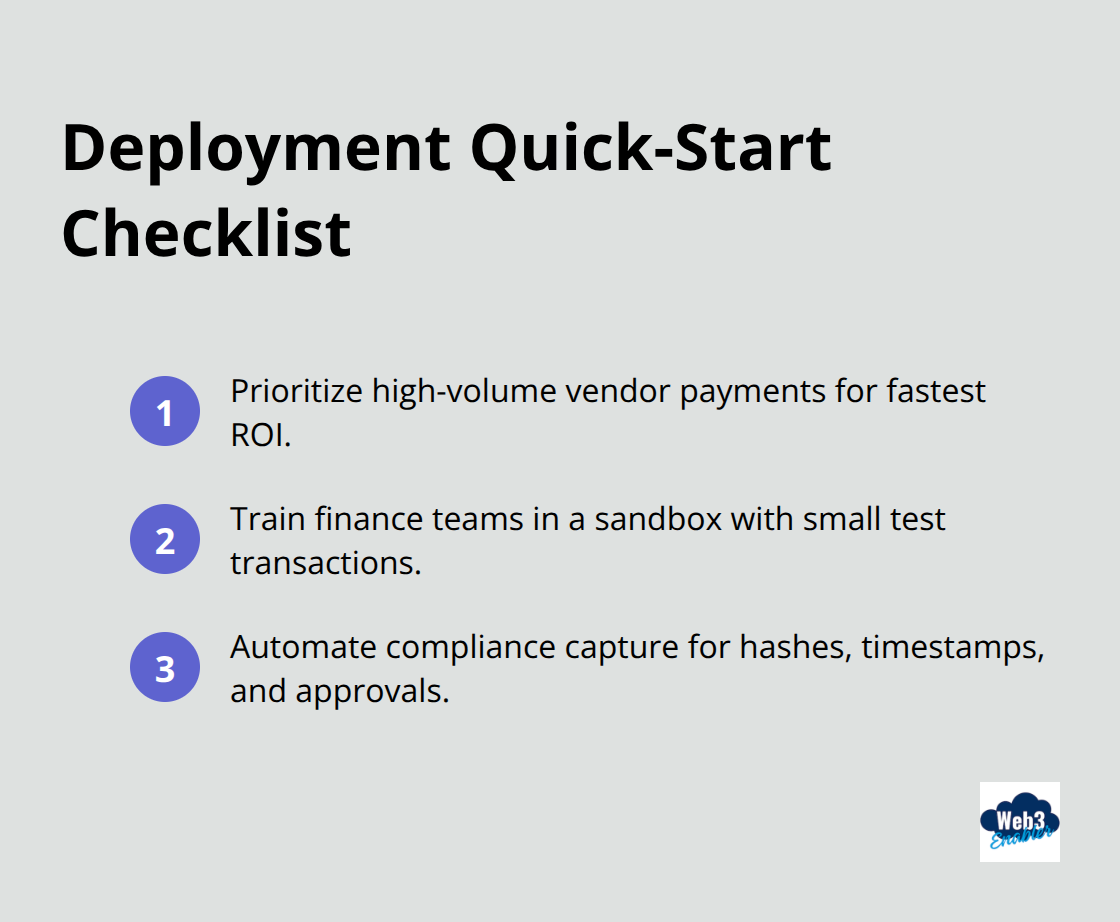
Finance teams achieve the fastest return on investment when they begin blockchain implementation with high-volume vendor payments. Companies that process 50+ monthly vendor payments typically benefit from settlement times reduced by as much as 88% compared to traditional systems through automated settlement workflows. Configure your Salesforce Payment objects to trigger blockchain transactions automatically when Purchase Orders reach approved status. This approach eliminates manual payment initiation and creates immediate time savings for accounts payable teams.
Set wallet address fields on Vendor records during the initial setup phase. Most suppliers can provide USDC wallet addresses within 48 hours when finance teams explain the faster settlement benefits. Treasury managers should establish minimum payment thresholds ($5,000+ works best) to optimize transaction costs and maintain traditional banking for smaller payments. This hybrid approach reduces blockchain transaction fees and captures maximum efficiency gains.
Finance Team Training Requires Hands-On Practice
Traditional finance professionals need practical wallet management experience before they feel comfortable with blockchain payments. Create a sandbox environment where team members can execute test transactions with small amounts ($10-50) to build confidence. Most finance professionals become proficient with blockchain workflows after they complete 5-10 practice transactions in a controlled environment.
Focus training sessions on wallet security protocols and transaction verification processes rather than technical blockchain concepts. Finance teams must understand how to verify wallet addresses, confirm transaction completion, and troubleshoot failed settlements. Schedule weekly training sessions during the first month of implementation to address questions and reinforce best practices. Companies that implement enterprise blockchain services report 90% faster user adoption rates.
Compliance Documentation Happens Automatically
Blockchain transactions create permanent audit trails that satisfy regulatory requirements without additional documentation work. Configure your Salesforce workflow rules to capture transaction hashes, timestamps, and approval chains automatically in custom objects. This automation generates compliance reports that auditors can verify independently through blockchain explorers (like Etherscan for Ethereum transactions).
Establish approval hierarchies within Salesforce that mirror your payment authorization matrix. Transactions above $50,000 should require CFO approval through standard Salesforce approval processes that integrate with blockchain payment triggers. Document these workflows in your internal control procedures to demonstrate segregation of duties during compliance reviews and strengthen your overall control environment.
Final Thoughts
Blockchain technology delivers measurable improvements to Salesforce treasury management through faster settlements, reduced costs, and enhanced visibility. Finance teams eliminate 75% of processing costs while they cut settlement times from days to minutes. Real-time transaction tracking replaces manual reconciliation work that previously consumed 8-12 hours monthly.
Native Salesforce integration creates unified treasury operations where blockchain payments flow seamlessly through existing workflows. Finance professionals gain complete visibility into global cash positions without the need to switch between multiple banking platforms. Automated compliance documentation satisfies regulatory requirements while it strengthens internal controls.
Implementation success depends on how companies start with high-volume vendor payments and provide hands-on training for finance teams. Organizations that follow structured deployment approaches achieve 90% faster user adoption rates and immediate operational benefits. Web3 Enabler transforms Salesforce into a comprehensive blockchain treasury platform through direct AppExchange integration (our certified Salesforce ISV partnership delivers native blockchain solutions that enable organizations to modernize cross-border payments and digital asset management without leaving their CRM environment).