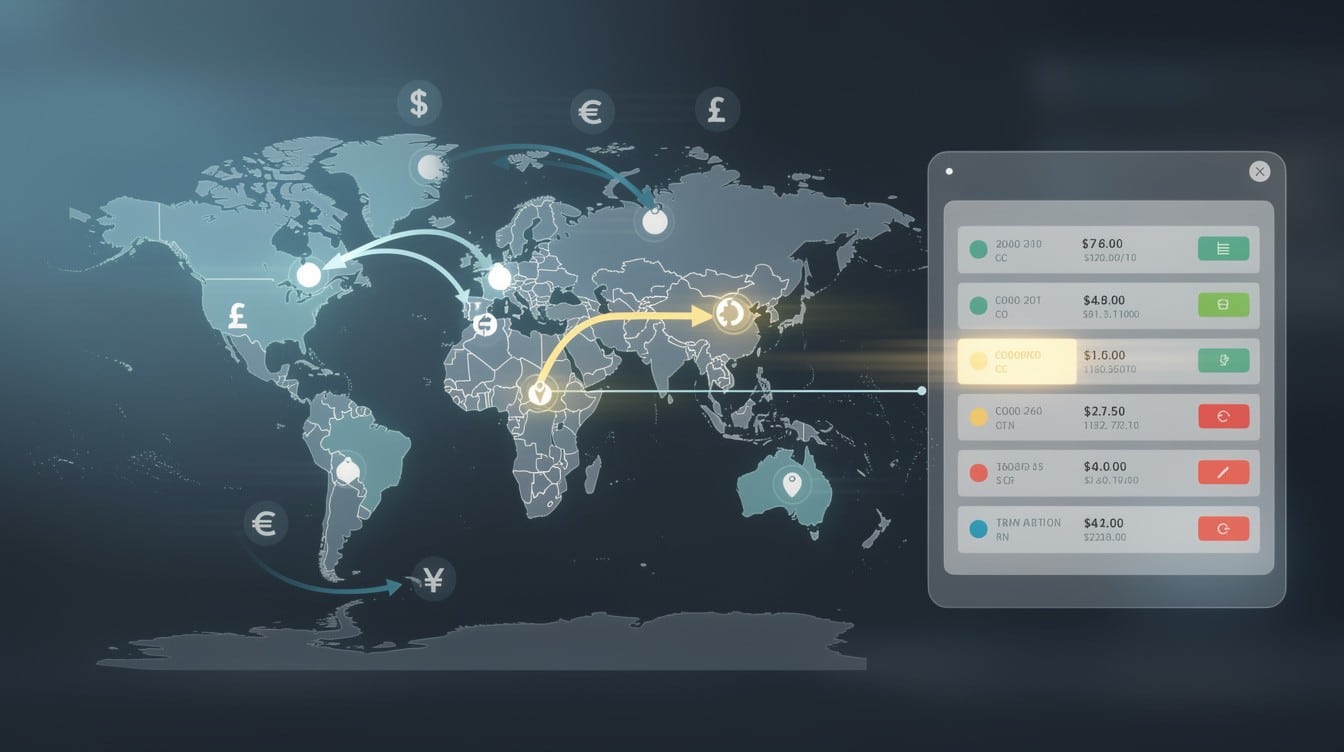



Your payment system is choking. Customers want crypto and fiat options, but your Salesforce setup treats them like separate universes.
API-driven payments Salesforce integration changes that. Real-time settlement, zero manual reconciliation, and both payment types flowing through one unified pipeline. We at Web3 Enabler have seen businesses cut payment processing time by half just by wiring this up properly.
What Sets API-Driven Payments Apart
The difference between API-driven payment processing and traditional setups isn’t subtle-it’s the difference between moving money in seconds and waiting days. When you wire Salesforce directly into your payment infrastructure, settlement happens in real-time instead of batching transactions overnight. Modern Treasury’s platform has processed over $400 billion for companies like Anchorage Digital and Gusto by treating fiat rails (ACH, wire, RTP, push-to-card) and stablecoins (USDC, USDT, USDP) as equal players in a single unified ledger. No more separate systems for crypto versus traditional payments. No more manual reconciliation spreadsheets that make your finance team want to quit.
Speed Kills Manual Work
API-driven payments eliminate the 6–12 month bank onboarding nightmare entirely. Homegrown ditched their legacy BaaS setup for Modern Treasury’s PSP and gained faster execution with flexible workflows like SPV funding and borrower repayments-workflows that would’ve taken months to build otherwise. The ledger captures everything in one data warehouse, so your Salesforce instance sees real-time reporting across all rails simultaneously. Sling Money experienced faster U.S. withdrawals after integrating stablecoin settlement infrastructure. That’s not theoretical-that’s what happens when you stop stitching together five different vendors and start using one API that handles both payment types at once.
Compliance Lives Inside Your Workflow
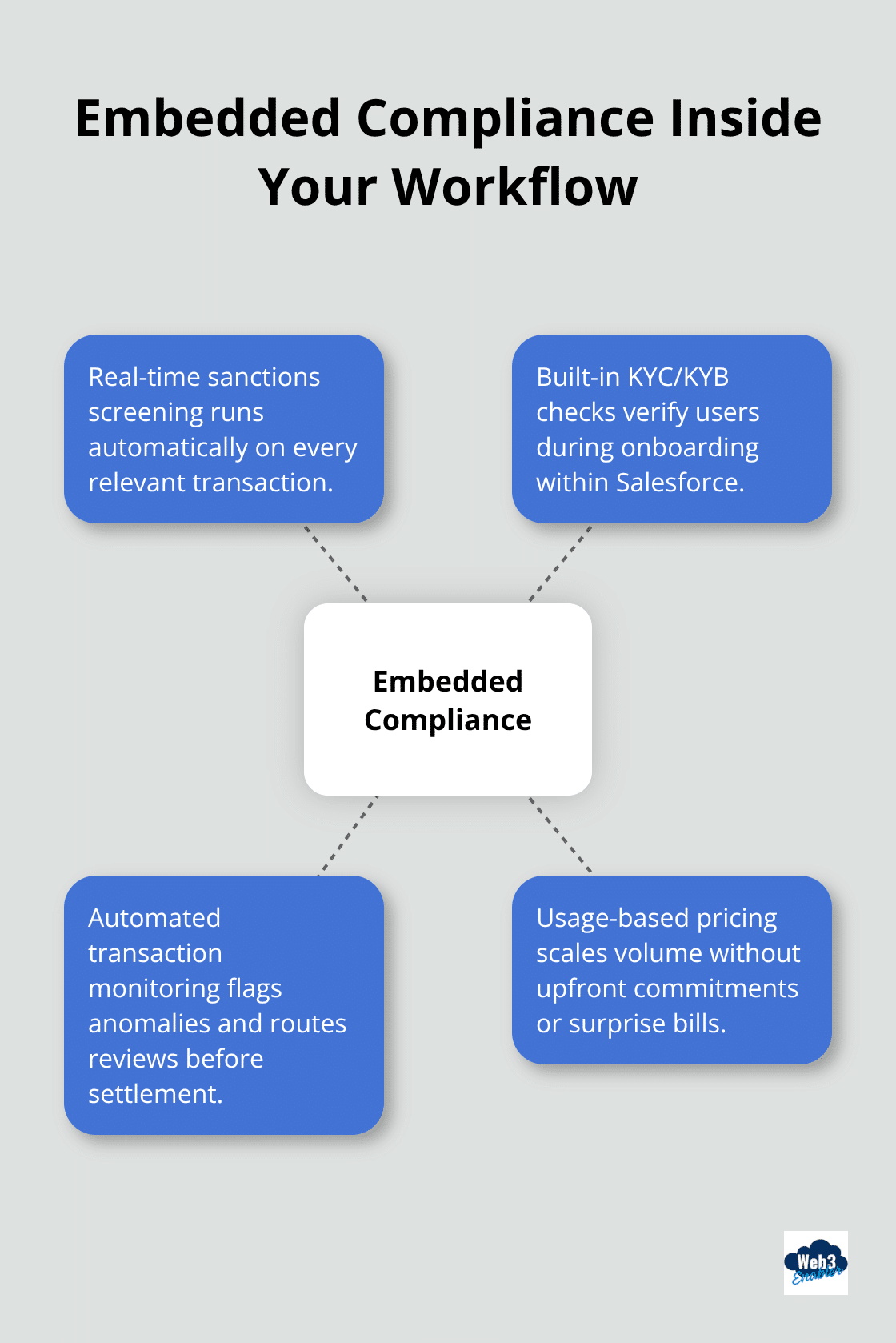
API-driven Salesforce integration builds compliance into the foundation rather than bolting it on afterward. Real-time sanctions screening, built-in KYC/KYB checks during user onboarding, and automated transaction monitoring operate inside your workflow from day one. Usage-based pricing lets you scale payment volume without massive upfront commitments or surprise bills. The architecture supports everything from marketplace embedded payments to fintech apps accepting crypto and fiat side-by-side (no separate integrations required).
Your payment needs won’t stay static, and neither should your infrastructure.
This speed and compliance foundation matters because businesses face mounting pressure to offer global payment options without sacrificing security or operational efficiency.
Why Scalability Isn’t Optional Anymore
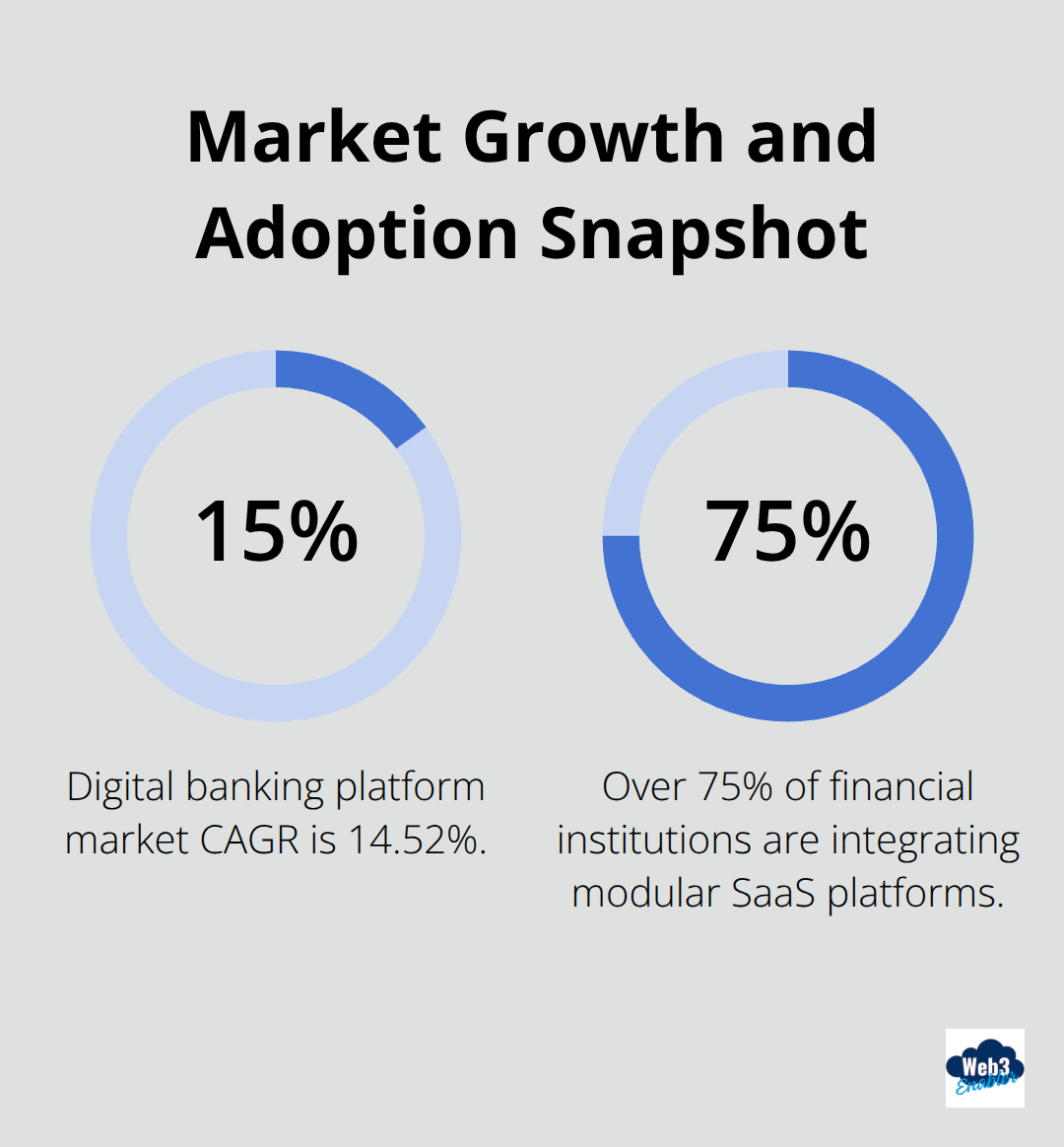
The digital banking platform market is growing at a CAGR of 14.52%, with the sector valued at USD 15.79 billion in 2026 and projected to reach USD 31.08 billion by 2031. That explosive growth reflects a hard reality: businesses that can’t process payments across multiple currencies and payment types simultaneously are losing customers to those that can. Over 75% of financial institutions are already integrating modular SaaS platforms specifically to handle real-time fraud checks, automated compliance, and multi-currency operations in a single layer.
Your competitors aren’t waiting. If your Salesforce setup still treats crypto payments and traditional fiat as separate processes, you’re already behind. Customers expect to pay however they want-USDC, USDT, ACH, wire, push-to-card-without friction.
Payment Fragmentation Costs Real Money
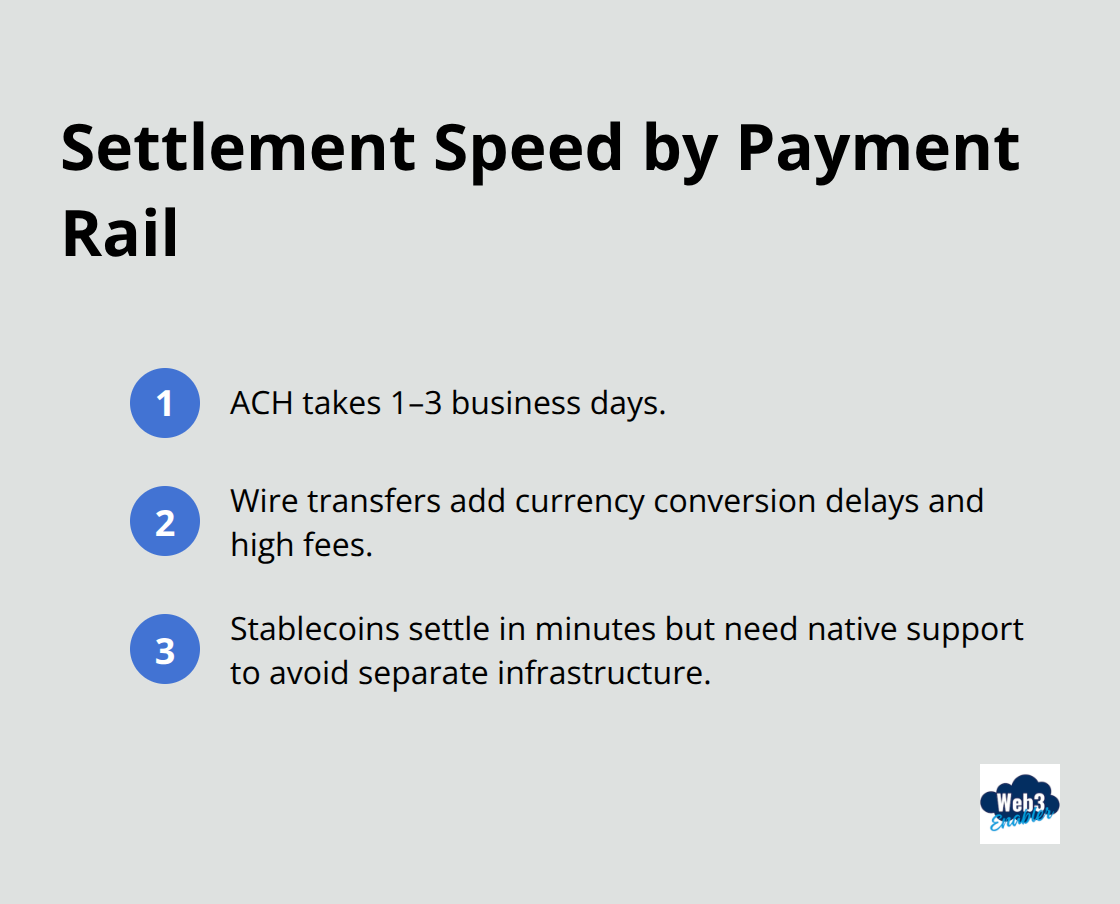
Modern Treasury’s ledger has processed over $400 billion precisely because enterprises realized that stitching together multiple vendors for different payment rails destroys speed and creates compliance blind spots. The cost of that fragmentation shows up everywhere: manual reconciliation errors, delayed settlements across time zones, and compliance teams scrambling to monitor transactions across disconnected systems. Traditional payment systems weren’t designed for global, multi-rail operations. ACH takes 1-3 business days. Wire transfers introduce currency conversion delays and high fees. Stablecoins settle in minutes but require separate infrastructure if your core system doesn’t natively support them.
Architecture Determines Competitive Position
Anchorage Digital selected Modern Treasury specifically to power automated multi-provider settlements through a single platform because juggling separate integrations for each payment type meant slower execution and higher operational risk. The real bottleneck isn’t technology-it’s architecture. If your payment infrastructure requires manual steps between Salesforce and your settlement layer, you’re losing hours on every transaction. SDK.finance reports that businesses using source-code licensing with native crypto-to-fiat capabilities and 570+ REST APIs achieve measurable reductions in time-to-market compared to monolithic platforms.
Pricing Models That Scale With You
Usage-based pricing models mean you only pay for volume you actually process, eliminating the traditional approach where you commit to minimum transaction thresholds and hope you hit them. That flexibility matters when you’re scaling globally and payment patterns vary wildly by region. The question isn’t whether you need scalable payments-it’s whether your current infrastructure can handle the velocity your business demands. When customers can choose between a frictionless checkout experience and a clunky multi-step process, they’ll choose friction-free every time.
How to Wire Payments Into Salesforce Without Breaking Everything
The wiring matters more than the components. You can have the best payment API in the world, but if it doesn’t talk cleanly to your Salesforce instance, you’re still stuck with manual work and compliance gaps. Start with your Salesforce native tools first. Web3 Enabler provides 100% Salesforce native blockchain solutions on the Salesforce AppExchange that handle stablecoin payments and global transactions directly inside your CRM without forcing you to manage separate systems. Modern Treasury’s approach works similarly-their platform supports fiat rails and stablecoins through a single API that connects to Salesforce workflows, meaning transaction data flows automatically into your Salesforce ledger without manual entry. The integration should capture every transaction detail (timestamp, amount, currency, counterparty, compliance flags) in real-time so your Salesforce instance becomes your single source of truth for all payment activity. This matters because fragmented data creates reconciliation nightmares. SDK.finance offers 570+ REST APIs specifically designed for this purpose, enabling you to map payment events directly to Salesforce objects like Accounts, Opportunities, and custom payment records. Your technical team should prioritize API-first integrations that support webhooks and real-time event streaming rather than batch processes. Sling Money saw measurable speed improvements in U.S. withdrawals after implementing stablecoin settlement infrastructure that fed directly into their settlement workflows, proving that tight Salesforce integration accelerates execution.
Automate What Humans Shouldn’t Touch
Reconciliation should never require a spreadsheet again. When your payment API feeds transaction data directly into Salesforce, set up automated workflows that match incoming settlement records against invoices, purchase orders, and customer accounts without human intervention. Modern Treasury’s ledger-based reconciliation system processes transactions that settle and sync to the ledger, with your Salesforce instance reflecting the updated balance instantly. Your workflows should handle multi-currency scenarios automatically. If a customer pays in USDC but your accounting records track USD, the workflow converts and records the transaction in your base currency without manual steps. Set up real-time monitoring rules that flag transactions outside normal patterns. If a customer suddenly sends 10x their typical payment amount, that’s not necessarily fraud, but it should trigger a compliance review workflow that routes to your finance team for approval before settlement completes. Anchorage Digital selected Modern Treasury for automated multi-provider settlements precisely because manual oversight of settlement instructions across different payment rails destroys speed. Your compliance team should define threshold rules within Salesforce-transaction size limits, velocity thresholds, and geographic restrictions-that automatically approve routine payments while escalating edge cases. This architecture means your team reviews exceptions, not routine transactions. The combination of automated reconciliation plus exception-based monitoring reduces operational overhead while strengthening compliance.
Visibility Into Every Rail Simultaneously
Your Salesforce dashboard should show live transaction status across all payment methods at once. Real-time reporting means you see ACH transfers, wire activity, and stablecoin settlements in a unified view rather than checking five different vendor portals. Modern Treasury captures all rails activity in a single data warehouse, which means your Salesforce reporting layer shows the complete picture without data silos. Build dashboards that surface key metrics: settlement success rates by payment method, average settlement time by currency, and transaction velocity by customer segment. If wire transfers consistently take longer than ACH, that data should inform your customer communication (manage expectations upfront rather than apologizing after delays). Compliance monitoring should happen in real-time, not in batch reviews. SDK.finance supports integrated back-office capabilities that let your compliance team monitor sanctions screening results, KYC status, and transaction flags within Salesforce workflows. Set up automated alerts when transactions touch jurisdictions with elevated risk profiles or when settlement times exceed your SLA. Sling Money’s faster withdrawal experience came from visibility into settlement status-they could track stablecoin movement through confirmation stages rather than waiting for batch reports. Your finance team should have access to settlement forecasting based on pending transactions and historical patterns. This level of visibility prevents surprise cash crunches and enables proactive liquidity management.
Final Thoughts
API-driven payments Salesforce integration has moved from optional to essential for any business operating across borders. Over 75% of financial institutions now use modular platforms that handle real-time transactions across multiple rails simultaneously, and your competitors have already made the switch. Companies that still rely on fragmented systems, manual reconciliation, and separate crypto versus fiat workflows waste money on overhead while losing customers to faster, smarter competitors.
The real advantage emerges when you wire payments directly into Salesforce without ripping out existing infrastructure. Modern Treasury proved this works-Anchorage Digital and Sling Money went live in days rather than months using a single API that handles both fiat and stablecoins. Your Salesforce instance becomes the control center for all payment activity, eliminating data silos and compliance blind spots while real-time settlement and automated reconciliation happen inside the system your team already uses.
You can start this journey without massive upfront investment or long-term commitments since usage-based pricing means you pay only for what you process. Web3 Enabler provides 100% Salesforce Native blockchain solutions on the Salesforce AppExchange, built specifically for businesses that need to accept stablecoin payments, send global payments faster, and maintain full visibility into payment activity without leaving Salesforce. Reach out to Web3 Enabler to build the infrastructure that scales with your business.