


![Accepting Crypto Payments in Salesforce [Guide]](https://web3enabler.com/wp-content/uploads/emplibot/salesforce-crypto-payments-hero-1763468205.jpeg)
Salesforce crypto payments are transforming how businesses handle transactions, offering faster settlements and lower fees than traditional payment methods.
We at Web3 Enabler see companies reducing payment processing costs by up to 40% while gaining real-time visibility into their treasury operations. This integration streamlines vendor payments and eliminates the delays of traditional banking systems.
Why Accept Crypto Payments in Salesforce
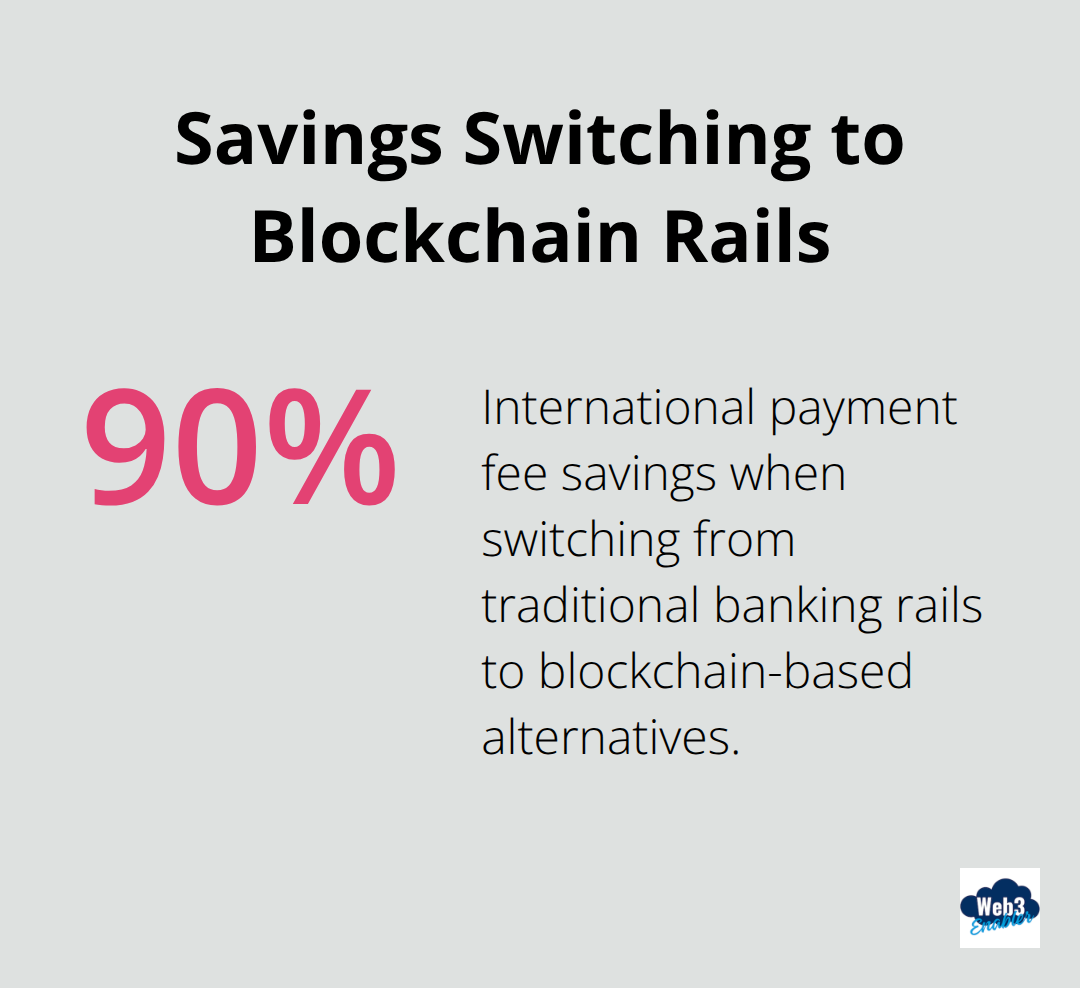
Traditional payment systems drain enterprise budgets through excessive fees and lengthy settlement delays. SWIFT transactions involve significant costs according to banking industry data, while stablecoin payments through blockchain networks cost pennies. Companies that process international payments save 90% on transaction fees when they switch from traditional banking rails to blockchain-based alternatives. These savings compound quickly for businesses that handle multiple vendor payments or customer transactions daily.
Reduced Transaction Fees Transform Cost Structure
Corporate payment processing fees eat into profit margins across every transaction. Traditional credit card networks charge 2-3% per transaction, while international wire transfers add fixed fees that range from $15-50 per payment. Blockchain payments eliminate these intermediary costs by connecting parties directly through decentralized networks. Stablecoin transactions typically cost under $1 regardless of payment size, creating immediate savings for companies that process high-volume payments or large-value transactions.
Speed Transforms Treasury Management
Global payments through traditional banking take 3-5 business days to settle, which creates cash flow gaps that force companies to maintain larger working capital reserves. Stablecoin transactions settle within minutes on blockchain networks, which enables real-time treasury optimization. PayPal reports that businesses that use blockchain payments reduce settlement times from days to minutes, freeing up capital for operational needs. This speed advantage becomes critical for companies that manage vendor relationships across multiple time zones (where payment delays can strain partnerships and create operational bottlenecks).
Security Eliminates Payment Fraud Risks
Cryptocurrency transactions are irreversible once confirmed, which eliminates the $31 billion in annual chargeback fraud costs that merchants face according to the Nilson Report. Unlike credit card payments where customers share sensitive card details, blockchain payments protect business data through cryptographic security. Each transaction creates an immutable audit trail on the blockchain, which provides compliance teams with transparent records that traditional payment systems cannot match. Companies that accept crypto payments report significantly lower fraud rates compared to traditional payment methods (as the blockchain’s built-in security protocols prevent unauthorized transaction modifications).
These advantages make crypto payment integration within Salesforce a strategic priority for forward-thinking enterprises. The next step involves understanding the technical requirements for implementation.
Setting Up Crypto Payment Integration
Enterprises must select blockchain infrastructure that connects seamlessly to Salesforce workflows. Most companies choose stablecoin-based systems because they eliminate volatility concerns while maintaining the speed and cost advantages of blockchain technology. Circle’s USDC provides institutional collaboration and strict compliance standards that satisfy enterprise security requirements, while Tether’s USDT provides the highest liquidity with over 70% of stablecoin trade volume according to market data. The technical setup requires API connections between your chosen stablecoin provider and Salesforce objects, which creates automated data flows for transaction tracking and reconciliation.
Native Blockchain Platform Requirements
Native blockchain integration within Salesforce requires specific technical components that handle transaction processing, compliance monitoring, and financial reporting simultaneously. Web3 Enabler provides the only certified native blockchain platform on the Salesforce AppExchange, which eliminates the complex custom development that other solutions require. The platform connects directly to Salesforce Financial Services Cloud, Commerce Cloud, and Revenue Cloud through standard APIs. This creates unified workflows where finance teams can process payments without switching between multiple systems (reducing implementation time from months to weeks while maintaining full audit trails and compliance documentation within existing Salesforce objects).
Stablecoin Payment Processing Configuration
Payment processors must support multiple stablecoin types to accommodate different vendor preferences and regional requirements. USDC and USDT dominate the market with combined transaction volumes exceeding $14 trillion in 2024, making them essential options for enterprise payment systems. Configuration involves setting up wallet addresses, establishing conversion rates, and defining approval workflows that align with existing financial controls. Companies typically start with pilot programs that process smaller vendor payments before scaling to larger treasury operations (allowing teams to test system performance and refine processes without significant risk exposure).
Real-Time Transaction Visibility and Tracking
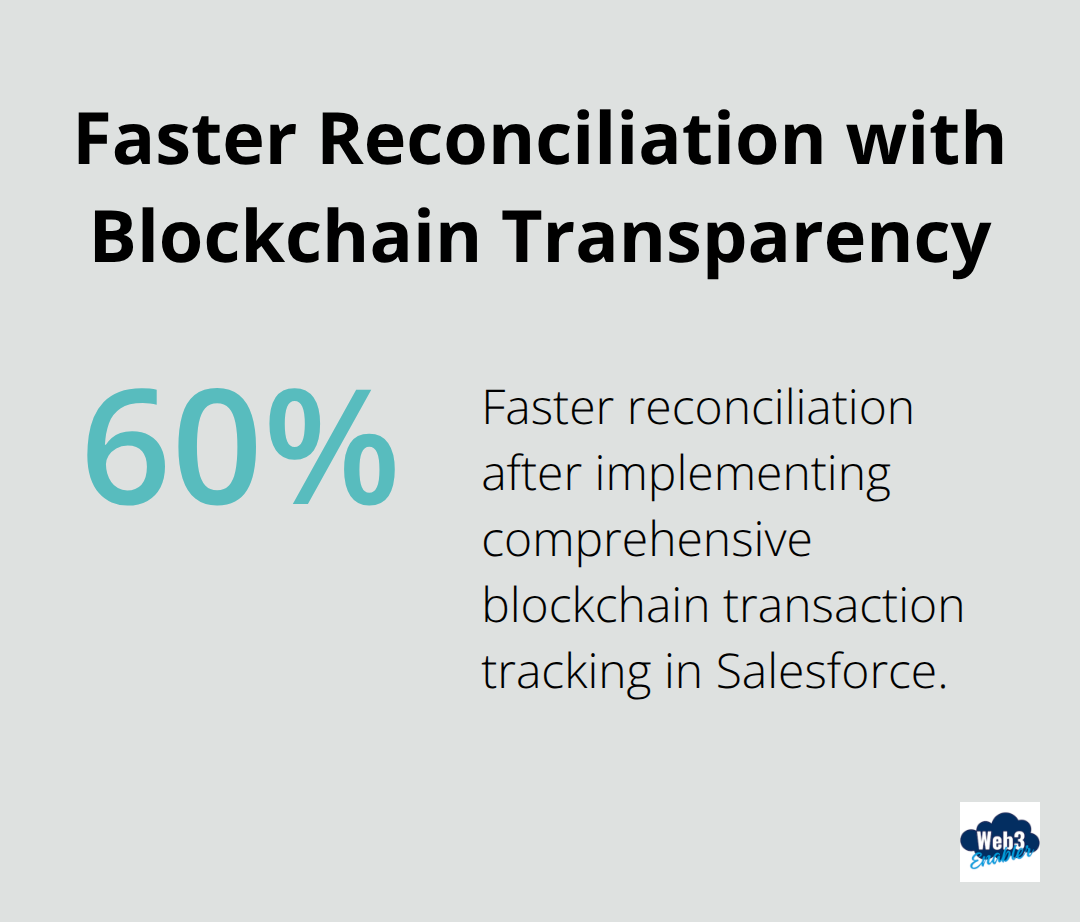
Transaction visibility becomes essential once crypto payments flow through your systems. Blockchain networks provide immutable transaction records with unique identifiers that enable precise tracking from initiation to settlement. Modern integration platforms capture this data automatically and populate Salesforce records in real-time, giving treasury teams immediate visibility into payment status, settlement times, and associated fees. Companies that implement comprehensive tracking report 60% faster reconciliation processes compared to traditional payment methods, as blockchain transparency eliminates the manual verification steps that bank transfers require.
Once your integration processes payments successfully, the focus shifts to managing these transactions within your existing Salesforce workflows and maintaining proper financial controls.
Managing Crypto Payments Within Salesforce
Crypto payment management within Salesforce requires automated systems that handle reconciliation, compliance tracking, and treasury operations without manual intervention. Traditional payment reconciliation takes finance teams hours of manual work to match transactions against bank statements, but blockchain transactions create immutable records with unique identifiers that enable instant matching. Companies that implement automated reconciliation systems benefit from streamlined month-end closing processes according to enterprise finance surveys.
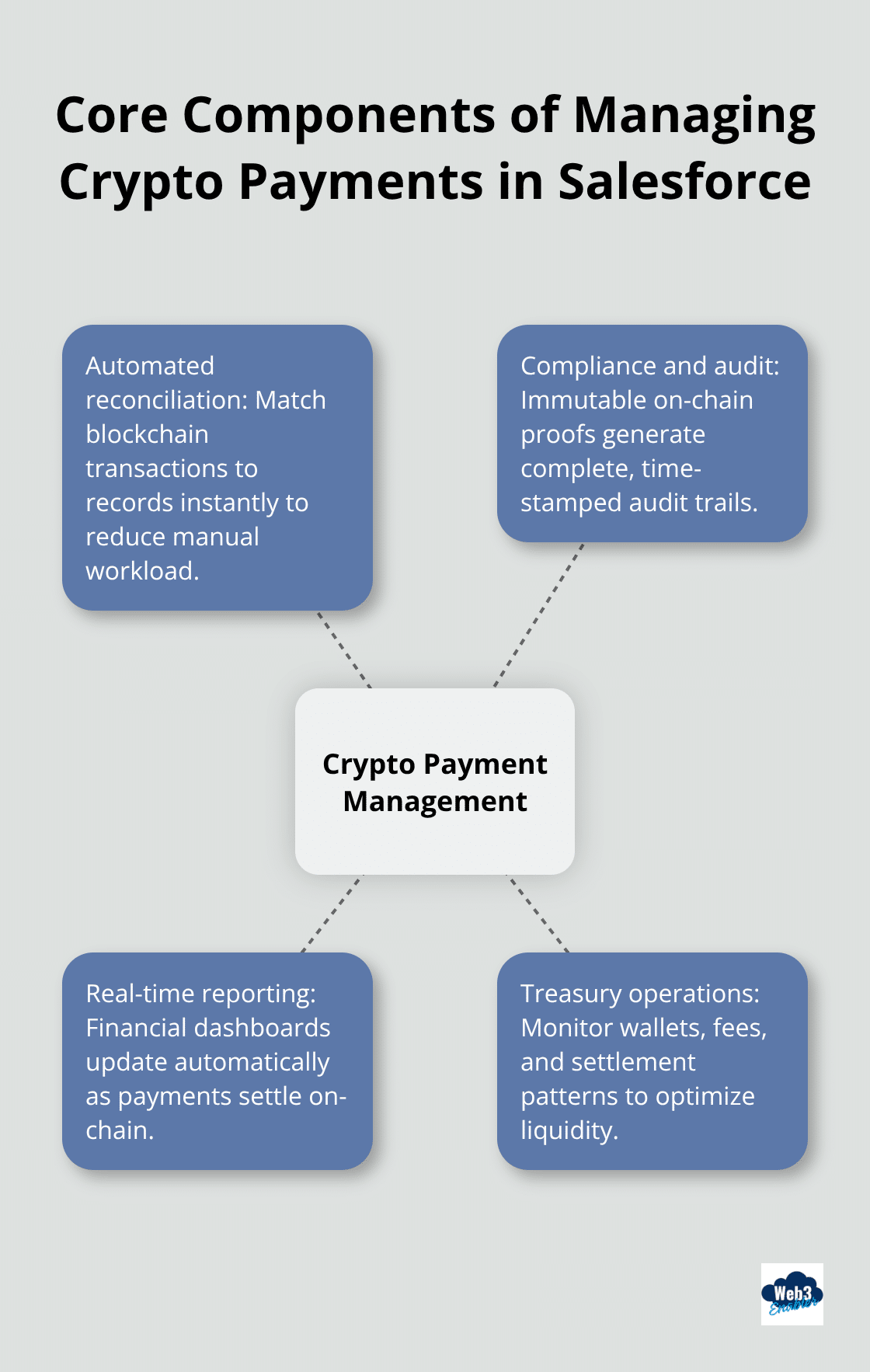
Native Salesforce integration captures transaction data directly into Financial Services Cloud objects, creating real-time financial reports that update automatically as payments settle on blockchain networks.
Automated Reconciliation and Financial Reporting
Blockchain transaction data flows directly into Salesforce reporting dashboards, providing finance teams with real-time visibility into payment volumes, settlement times, and associated fees. Each stablecoin transaction generates comprehensive audit trails that populate custom Salesforce objects automatically (eliminating the data entry errors that plague traditional payment systems). Companies processing high-volume payments save significant time monthly on reconciliation tasks when blockchain data integrates directly with their existing Salesforce workflows. Treasury teams can track payment status from initiation through settlement without switching between multiple platforms, while automated reporting generates compliance documentation that auditors require for blockchain transaction verification.
Compliance and Audit Trail Maintenance
Blockchain networks provide immutable transaction records that create permanent audit trails for regulatory compliance. Each payment generates cryptographic proof of execution with timestamps that cannot be altered, giving compliance teams transparent documentation that traditional payment systems cannot match. Stablecoin transactions include detailed metadata about sender addresses, recipient wallets, and transaction fees that populate Salesforce compliance objects automatically. Finance teams can generate audit reports instantly rather than waiting weeks for bank statement reconciliation, while regulatory authorities receive complete transaction histories that demonstrate full payment transparency.
Treasury Operations and Liquidity Management
Stablecoin treasury management within Salesforce enables instant liquidity optimization that traditional banking cannot match. Finance teams monitor wallet balances, transaction flows, and settlement patterns through native Salesforce dashboards that update in real-time as blockchain transactions confirm. Circle’s USDC provides monthly transparency reports that integrate directly into compliance workflows, while automated alerts notify treasury managers when wallet balances require rebalancing. Companies that manage multi-currency operations report improved cash flow efficiency when blockchain payments eliminate the 3-5 day settlement delays that traditional wire transfers create (allowing treasury teams to optimize working capital deployment across global operations).
Final Thoughts
Salesforce crypto payments deliver measurable business value through reduced transaction costs, faster settlement times, and enhanced security protocols. Companies that implement blockchain payment systems report 40% lower processing fees and settlement times that drop from days to minutes. These operational improvements translate directly into improved cash flow management and reduced working capital requirements.
Implementation success depends on selecting native blockchain platforms that integrate seamlessly with existing Salesforce workflows. Finance teams can start with pilot programs that use regulated stablecoins like USDC to test system performance while they maintain compliance standards. Automated reconciliation capabilities eliminate manual data entry errors and accelerate month-end closing processes (while blockchain transaction data populates Financial Services Cloud, Commerce Cloud, and Revenue Cloud automatically).
Web3 Enabler provides a certified native blockchain platform on the Salesforce AppExchange that enables organizations to accept stablecoin payments and streamline global settlements directly within their existing CRM environment. This integration empowers finance teams to leverage blockchain technology while they maintain full auditability through native Salesforce automation and reporting capabilities. Organizations can transform their payment operations without complex custom development or lengthy implementation timelines.