

Not every customer wants to pay with crypto, and they shouldn’t have to. Many businesses still rely on bank transfers for large invoices, recurring payments, and international customers. But traditional bank payments don’t always align with how modern businesses want to manage treasury, liquidity, and global payouts.
With Virtual Accounts and On-Ramps, Blockchain Payments lets your business accept bank payments and automatically convert them into stablecoins, deposited straight into a company-managed wallet. Customers pay using familiar banking rails. Your company receives stablecoins, ready to use.
Traditional bank payments, modern settlement
Virtual Accounts bridge the gap between traditional finance and on-chain operations. Instead of asking customers to learn new payment methods, you provide bank details they already understand: routing numbers, account numbers, and local transfer instructions.
Behind the scenes, those bank payments are converted into stablecoins and delivered directly to your organization’s wallet. From the customer’s perspective, it’s just a normal bank transfer. From your business’s perspective, it’s a clean, automated on-ramp to stablecoins.
How virtual accounts work
When your organization creates a Virtual Account, you’re issued dedicated bank details that map directly to a specific wallet and stablecoin.
At a high level, the flow looks like this:
Your company creates a Virtual Account and selects the destination wallet and stablecoin.
The Virtual Account provides bank payment details using supported rails such as ACH or wire in the United States, SEPA in Europe, SPEI in Mexico, and PIX in Brazil.
A customer sends a bank payment using their local banking system.
The fiat payment is received and automatically converted into the chosen stablecoin.
The stablecoins are deposited directly into your company’s wallet.
What starts as a traditional bank transfer ends as an on-chain balance, without your customer ever touching crypto.
One wallet, many payment rails
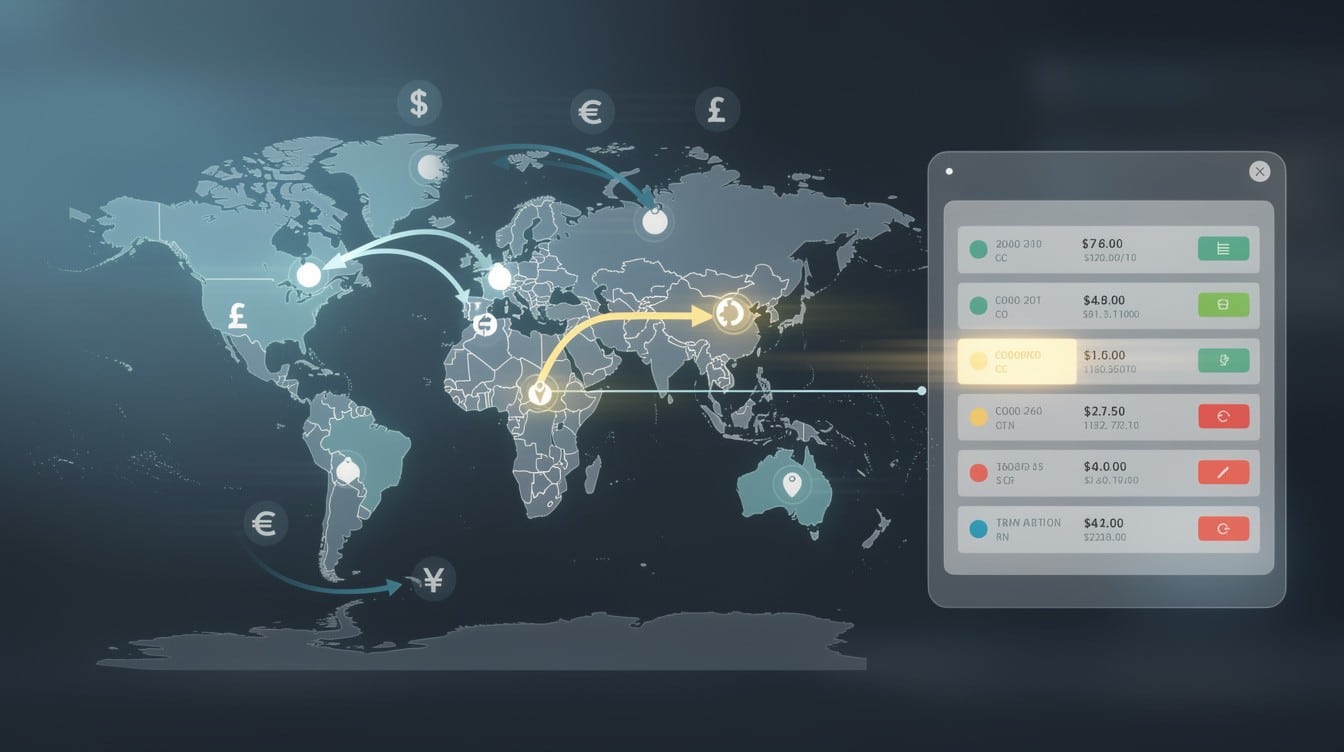
Virtual Accounts allow your business to accept payments globally while keeping settlement unified. Whether a customer pays via ACH in the US, SEPA in Europe, SPEI in Mexico, or PIX in Brazil, the outcome is the same: stablecoins delivered to your wallet.
You don’t need to open regional bank accounts. You don’t need to manage separate settlement flows. Global payments arrive through local rails and settle into a single on-chain treasury.
Choose how you want to receive funds
When setting up a Virtual Account, your organization stays in control. You choose the destination wallet, the stablecoin you want to receive, and how Virtual Accounts are used across customers or payment flows.
This flexibility makes it easy to align incoming funds with your treasury strategy, whether you’re holding stablecoins, paying vendors, or routing funds into downstream payment workflows.
Built for finance teams
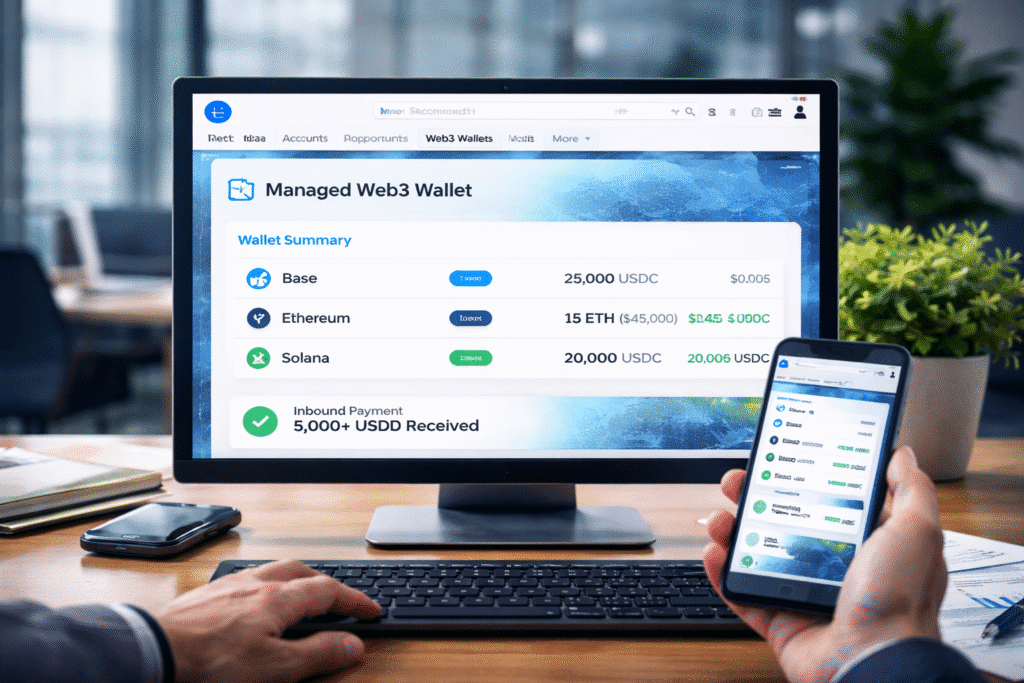
Every on-ramp transaction is recorded and visible, giving finance teams full insight into cash flow. Each bank payment and corresponding stablecoin deposit is captured as a standard transaction record, making reconciliation and reporting straightforward.
Finance teams can clearly see incoming fiat amounts, payment rails used, converted stablecoin amounts, settlement status, and the destination wallet — all in one place.
No manual matching.
No hidden conversions.
Just clear, auditable records.
Screenshot placeholder:
On-ramp transaction record showing bank payment received and stablecoins deposited to the company wallet
A new way to accept global payments
Virtual Accounts and On-Ramps let your business accept payments the way customers prefer, while settling funds the way your business needs. Customers use local bank rails they already trust. Your company receives programmable, on-chain assets that integrate seamlessly with the rest of your payment flows.
You don’t have to choose between traditional banking and blockchain.
You can use both — together.