



Your payment system is probably slower than your customers’ expectations. Wire transfers take days, international transactions bleed fees, and your revenue cloud data sits disconnected from how money actually moves.
We at Web3 Enabler know that stablecoin payments on blockchain are changing this. They’re fast, cheap, and they integrate directly into Salesforce-no separate systems, no manual reconciliation headaches.
Why Your Payment System Can’t Keep Up
Your customers move faster than your payment infrastructure. A Harris Poll survey conducted with the National Cryptocurrency Association in October 2025 found that 4 in 10 U.S. merchants accept cryptocurrency at checkout, and 84% expect crypto payments to become common within five years. That’s not fringe behavior anymore-that’s the market shifting. Wire transfers still take two to three business days. Credit card networks settle in batches.
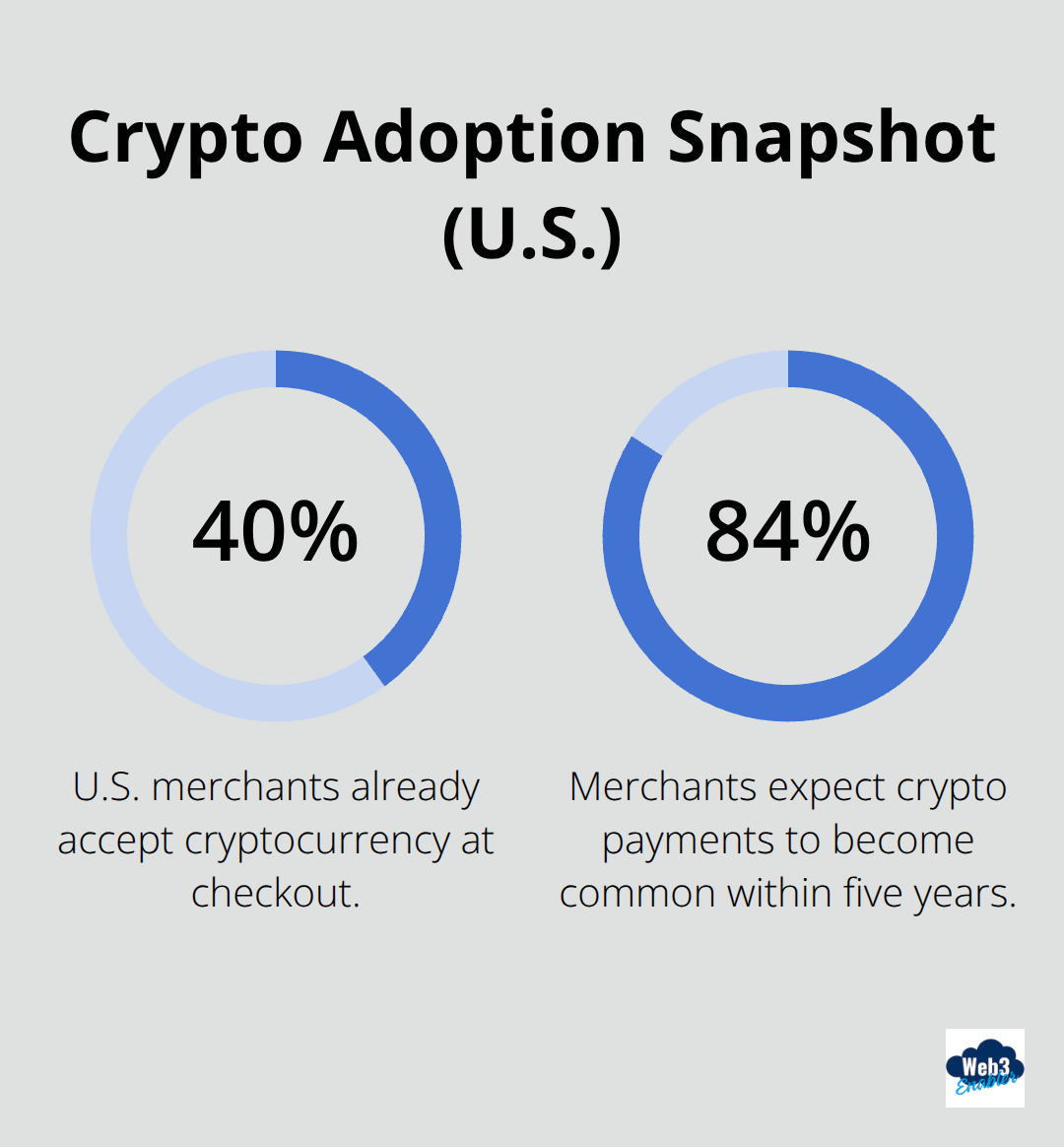
Meanwhile, stablecoin transactions on blockchain happen in minutes, around the clock, without waiting for banking hours or intermediaries to clear the payment. If your revenue cloud doesn’t support this speed, you’re leaving money on the table and frustrating customers who expect instant settlement.
The Cost Problem Nobody Talks About
Traditional wire transfers typically cost $15 to $50 per transaction, plus foreign exchange fees that eat another 1% to 3% of the amount. Credit card processing runs 1.5% to 3.5% in fees, with PayPal around 4%. Stablecoin payments on blockchain cost pennies per transaction, sometimes under a cent on Layer 2 networks. For an international company processing $100,000 in monthly wire transfers, that’s $18,000 to $36,000 in annual fees you’re paying to move your own money. Stablecoin payments eliminate the intermediaries-no correspondent banks, no currency conversion markup, no settlement delays. The math is brutal for traditional systems once you add it up across a year.
Cross-Border Revenue Gets Trapped in Friction
Global businesses lose velocity when they operate across borders. A financial advisor managing client portfolios across multiple countries faces fragmented data-crypto holdings live in one system, traditional investments in another, and payment records scattered across bank statements and spreadsheets. An e-commerce business selling internationally watches days disappear between when a customer pays and when funds actually settle. A SaaS company with international customers spends engineering time building custom payment reconciliation instead of building features. Stablecoin payments settle instantly and create on-chain records that integrate directly into your revenue cloud, eliminating manual data entry and reconciliation work.
What Integration Actually Looks Like
Salesforce-native solutions accept stablecoin payments and send global payments without forcing you to abandon your existing infrastructure or learn blockchain mechanics. Your revenue data and payment data finally live in the same place, updated in real time, with compliance and security built into the platform from day one. This integration matters because it transforms how your team works-financial advisors gain crypto visibility for client portfolios without switching systems, e-commerce teams reduce payment processing times from days to hours, and international companies cut wire transfer delays from days to minutes.
How Stablecoin Payments Integrate Into Your Salesforce Workflow
Stablecoin payments don’t belong in a separate system. You don’t need another dashboard, another login, or another reconciliation process. Stablecoin payments on Salesforce Revenue Cloud sit inside your existing infrastructure-the same place where your revenue data, customer records, and payment history already live. When a customer pays with USDC or USDT, the transaction settles on-chain in minutes, but the record appears directly in your revenue cloud without manual entry or third-party middleware. Your sales team sees the payment status in real time. Your finance team pulls accurate reports without hunting through bank statements and blockchain explorers. Your compliance team maintains an auditable trail of every transaction, with metadata attached to each payment.
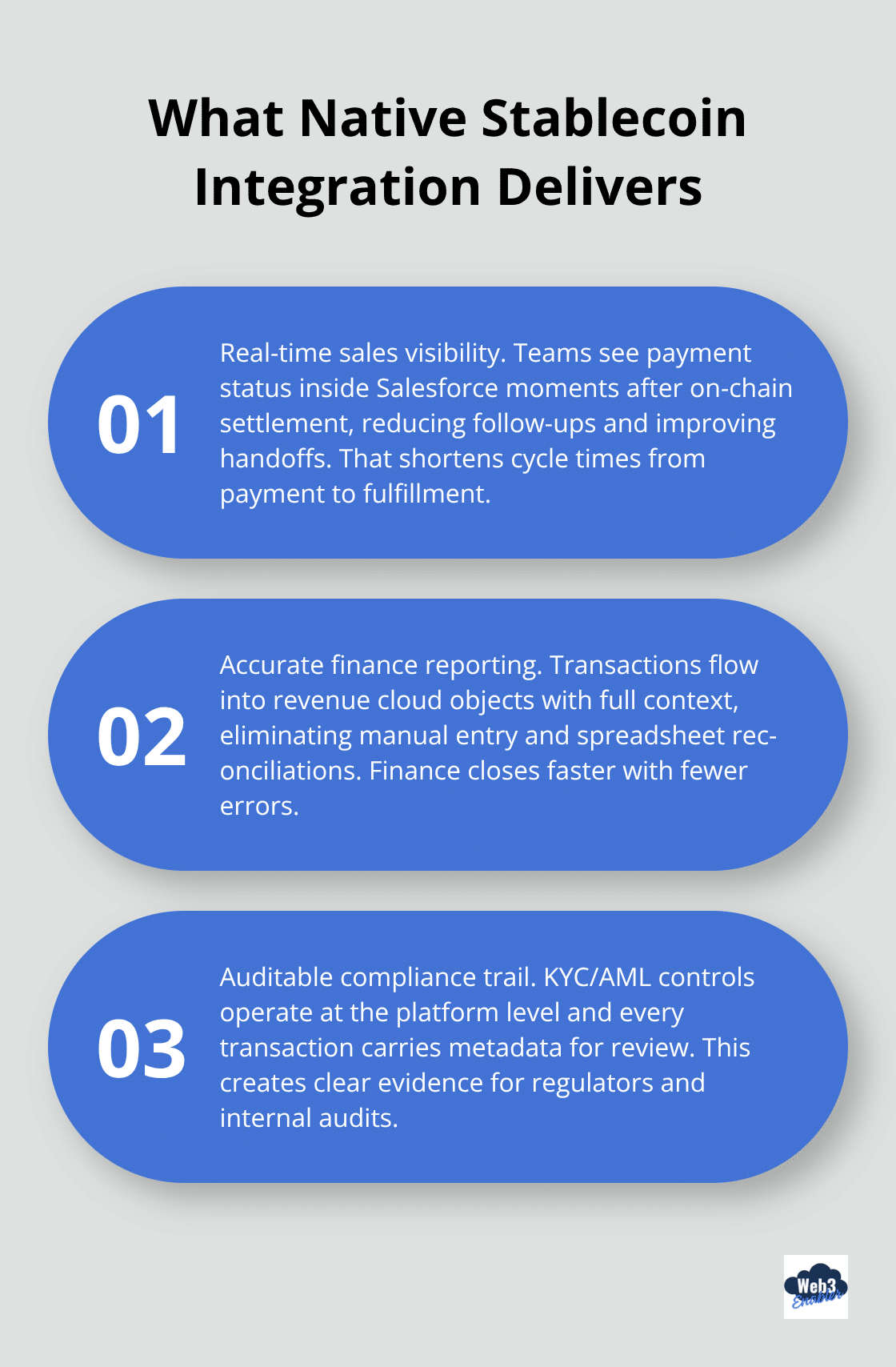
This integration cuts reconciliation work significantly. A financial advisory firm using Salesforce-native stablecoin integration now shows clients their crypto holdings in the same portfolio view as their stocks and bonds-no separate logins, no fragmented data. An international e-commerce business accepts stablecoin payments and receives settlement confirmation before the customer leaves checkout, then immediately fulfills the order instead of waiting days for traditional wire transfers to clear.
Native Solutions Eliminate Data Silos
Third-party payment processors that sit outside Salesforce create data silos and manual workflows. A customer pays via an external crypto gateway, a webhook fires, someone manually logs the transaction into Salesforce, and reconciliation errors pile up when amounts don’t match due to currency conversion or fee deductions. Native Salesforce solutions eliminate this friction entirely. The payment flows directly into your revenue cloud objects-accounts, opportunities, invoices-with all metadata intact. Your API integrations work without custom code. Your compliance and audit teams receive clean, immutable records without rebuilding your data architecture. Companies that deploy native solutions report significant reductions in payment reconciliation time compared to bolt-on gateways.
Compliance Controls Protect You From Regulatory Risk
Stablecoin payments on Salesforce require the same KYC, AML, and transaction monitoring controls that traditional payments demand. Native Salesforce solutions enforce these controls at the platform level-not as an afterthought. Transaction limits, geographic restrictions, and customer verification happen automatically before a payment ever hits the blockchain. On-chain records remain immutable, so regulators see exactly what happened and when. If a transaction needs reversal, the system creates an auditable trace instead of a black box. Regulatory frameworks are tightening around stablecoin payments, which means compliance built into your platform from day one protects you from future enforcement action. Companies that bolt on crypto payments without proper compliance controls face growing legal risk as regulators scrutinize stablecoin adoption more closely.
Security Sits at the Foundation
Blockchain transactions are immutable, but your integration architecture determines whether that immutability protects you or exposes you. Native Salesforce solutions handle key management, transaction signing, and wallet security without forcing your team to become blockchain engineers. Your data stays encrypted at rest and in transit. Your compliance team maintains control over which transactions execute and which ones require approval. Web3 Enabler, as a Salesforce ISV partner, builds 100% Salesforce Native solutions that embed security controls directly into your revenue cloud, so stablecoin payments work with the same governance standards your organization already enforces for traditional payments.
The next chapter explores how stablecoin payments actually move money across borders and what that speed means for your bottom line.
Where Stablecoin Payments Actually Move Money
Financial advisors managing multi-asset portfolios hit a wall when clients hold cryptocurrency. The advisor logs into one system to see stocks and bonds, then switches to a crypto exchange or wallet app to track digital assets, creating fragmented visibility that makes portfolio rebalancing inefficient and client reporting messy. Salesforce-native stablecoin integration solves this problem. Advisors see crypto holdings alongside traditional investments in a single portfolio view. A client’s USDC balance appears next to their stock positions. Transaction history flows into the same reporting engine. This matters because advisors spend less time hunting data across platforms and more time advising clients on allocation decisions. Firms that deployed crypto visibility within Salesforce report faster client onboarding and reduced time spent answering questions about where crypto assets live in the overall portfolio structure.
Speed Compounds Revenue for E-Commerce Operations
E-commerce businesses accepting stablecoin payments see immediate operational benefits. A customer completes checkout with USDC, the transaction settles on-chain in minutes, and the merchant receives confirmation before the customer closes their browser. Traditional credit cards settle in batches over two to three business days, forcing e-commerce teams to hold inventory without knowing whether payment will actually clear. Stablecoin payments eliminate this friction entirely. Merchants fulfill orders immediately after settlement confirmation, reducing inventory carrying costs and improving customer satisfaction through faster shipping. Companies processing $500,000 monthly in stablecoin payments avoid the cash flow delays that plague card-based businesses, freeing capital for inventory purchases or operational expenses. The cost advantage compounds too. A mid-size e-commerce operation paying 2.5% in credit card fees on $500,000 monthly revenue spends $15,000 annually on processing alone. Stablecoin transactions cost pennies, reducing that annual expense to under $500. Over five years, that’s $72,500 in recovered margin that flows directly to the bottom line.
International Wire Transfers Become Obsolete
Companies with global operations spend significant resources managing international payments. A SaaS business paying contractors across ten countries processes wire transfers that take three to five business days, cost $25 to $50 per transaction, and create foreign exchange losses when conversion rates shift between payment initiation and settlement. Stablecoin payments bring blockchain and Web3 to the corporate world with low-cost crypto payments and services. A contractor in Argentina receives USDC payment that settles in minutes, avoids currency conversion delays, and can immediately convert to local currency if needed. The company sending payment avoids correspondent banking fees and knows exactly when funds arrive. An international team managing vendor payments across Europe, Asia, and the Americas reduces payment processing overhead significantly when all transactions settle on-chain with immutable records in their revenue cloud.
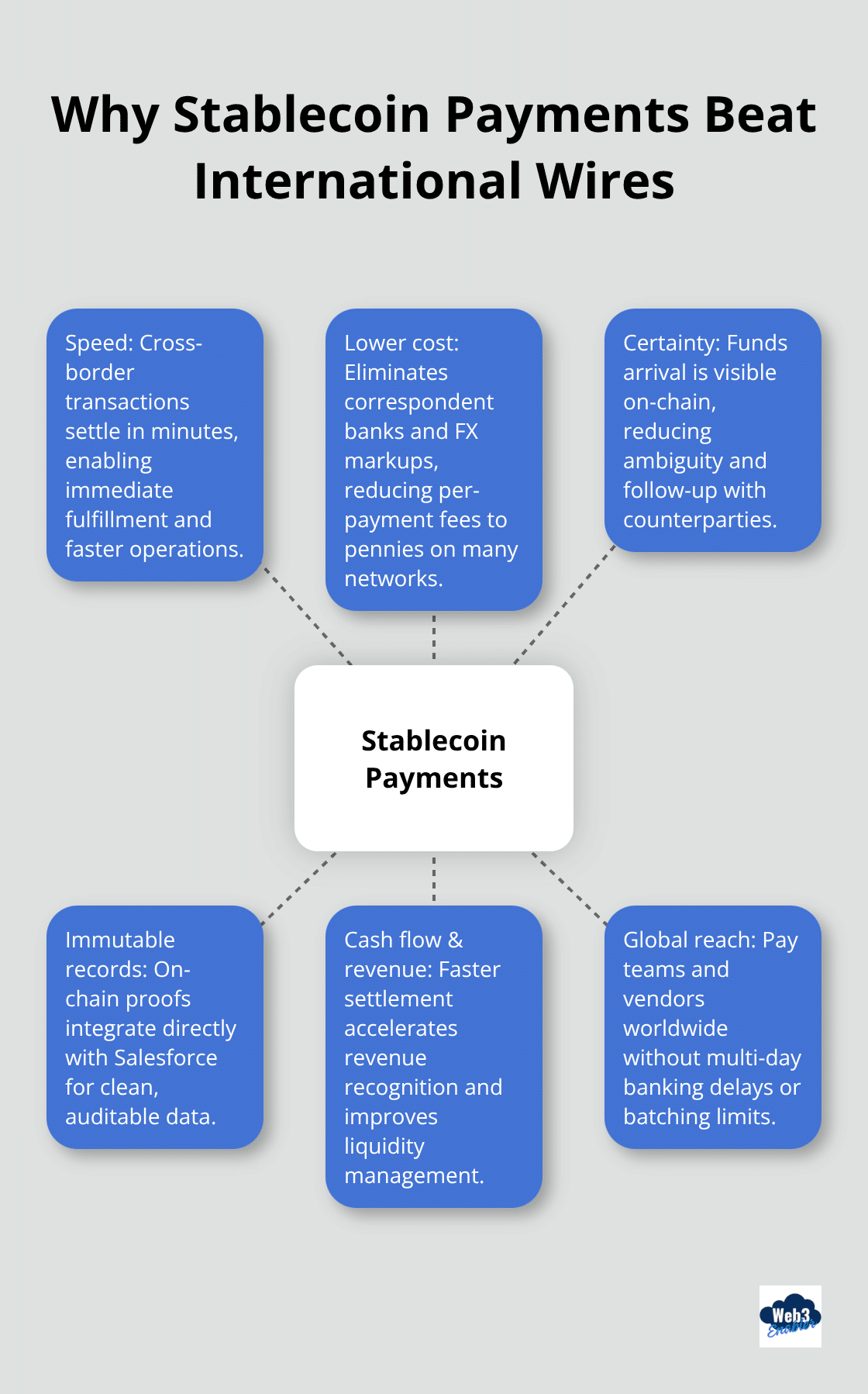
This speed advantage extends to revenue recognition too. A company with international customers no longer waits for wire transfers to clear before recording revenue in their financial statements. Stablecoin settlement creates on-chain proof of payment that integrates directly into Salesforce, letting finance teams close the books faster and report accurate revenue figures without reconciliation delays.
Final Thoughts
Stablecoin payments reshape how businesses move money right now, and your competitors are already accepting crypto at checkout, cutting wire transfer delays from days to minutes, and gaining visibility into client crypto holdings without abandoning their existing systems. The question isn’t whether stablecoin payments matter for your business-it’s whether you’ll integrate them before your customers demand it. Revenue Cloud crypto blockchain integration keeps you competitive because it solves real problems that traditional payment infrastructure can’t touch: faster settlement improves cash flow, lower transaction costs increase margins, and instant global payments free your team to focus on growth instead of payment friction.
Eighty-four percent of merchants expect crypto payments to become common within five years, which means your customers are moving toward stablecoin adoption whether your payment infrastructure supports it or not. Financial advisors gain complete portfolio visibility, e-commerce teams fulfill orders faster, and international companies stop bleeding money to wire transfer fees-these benefits happen now across industries, not in some distant future. Waiting means falling behind while your competitors capture revenue opportunities that traditional payment systems simply can’t deliver.
We at Web3 Enabler build Salesforce Native solutions that bring stablecoin payments directly into your revenue cloud without forcing you to rebuild your infrastructure or learn blockchain mechanics. Explore how stablecoin payments integrate into Salesforce and start capturing the revenue opportunities your competitors are already pursuing.