

 Enterprise asset tracking faces a fundamental challenge: fragmented data across multiple systems creates blind spots that cost businesses millions in lost inventory and compliance failures.
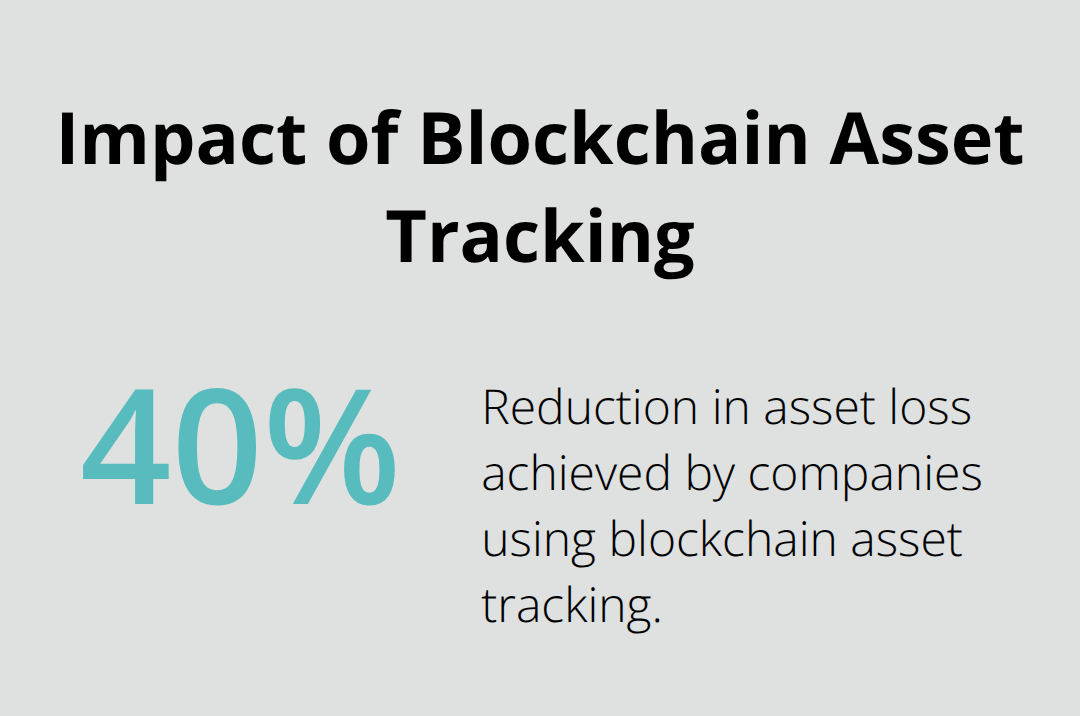
Blockchain technology transforms this landscape by creating an immutable, real-time ledger that connects directly with Salesforce CRM systems. We at Web3 Enabler have seen companies reduce asset loss by 40% while cutting audit preparation time from weeks to hours.
This integration delivers unprecedented visibility into global supply chains and automated compliance reporting that traditional tracking methods simply cannot match.
Why Blockchain Asset Tracking Outperforms Traditional Methods
Immutable Data Integrity Eliminates Human Error
Traditional asset tracking systems depend on manual data entry across multiple platforms, which creates opportunities for errors that compound over time. A single misplaced inventory update can trigger cascading inaccuracies throughout supply chains. Blockchain technology eliminates this vulnerability when it creates tamper-proof records that cannot be altered once validated. Each asset movement generates a cryptographic hash that connects to previous transactions, which makes fraudulent modifications mathematically impossible. Companies that implement blockchain asset tracking report improved data accuracy compared to spreadsheet-based systems, with blockchain adoption studies showing significant benefits for mining operators and other industries.
Real-Time Transparency Across Global Networks
Blockchain networks process asset updates within seconds and provide immediate visibility across all locations simultaneously. Traditional tracking methods require batch processing and manual synchronization between systems, which often creates delays of hours or days. This latency becomes costly when companies manage high-value assets or perishable goods. Blockchain integration with Salesforce enables automatic status updates that flow directly into CRM workflows and trigger alerts based on asset conditions. Financial services firms that use blockchain for asset management achieve faster settlement times while they reduce operational overhead. The decentralized nature of blockchain ensures that asset data remains accessible even when individual systems experience downtime (maintaining business continuity during critical operations).
Native Salesforce Integration Streamlines Operations
Salesforce blockchain integration transforms asset management from a standalone process into a core component of customer relationship workflows. Asset status updates automatically populate relevant customer records, which enables sales teams to provide accurate delivery estimates and service representatives to resolve inquiries instantly. This integration eliminates the need for separate tracking systems and reduces software licensing costs while it improves data accuracy across all business functions. The seamless connection between blockchain data and Salesforce workflows creates new opportunities for automated compliance reporting and enhanced customer service capabilities.
How Blockchain Integration Transforms Salesforce Asset Management
Salesforce blockchain integration fundamentally changes how enterprises manage assets when it creates a unified data ecosystem that eliminates the costly inefficiencies of fragmented systems. Traditional asset management requires teams to manually reconcile data across multiple platforms, which creates discrepancies that cost Fortune 500 companies significant amounts in misplaced inventory and compliance penalties. Blockchain technology solves this problem through native Salesforce integration that automatically synchronizes asset data across all business functions without separate databases or middleware solutions.
Real-Time Asset Visibility Transforms Decision Speed
Blockchain integration delivers asset status updates within 3-5 seconds compared to traditional systems that require 24-48 hours for batch processing and manual verification. This speed advantage becomes critical for companies that manage perishable goods or high-value equipment where delays translate directly into losses. Manufacturing companies that implement blockchain asset tracking report 35% faster response times to supply chain disruptions and 50% reduction in inventory write-offs. The integration enables automatic alerts when assets move between locations, reach maintenance thresholds, or encounter temperature variations that could affect quality. Sales teams gain immediate access to accurate delivery estimates while customer service representatives resolve inquiries without waiting for system updates from warehouse operations.

Automated Compliance Reporting Reduces Audit Costs
Blockchain technology generates immutable audit trails that satisfy regulatory requirements without manual documentation processes that traditionally consume weeks of preparation time. Each asset transaction creates cryptographic proof of authenticity and chain of custody that auditors can verify instantly rather than review paper trails and spreadsheet reconciliations. Companies in regulated industries like pharmaceuticals and aerospace reduce audit preparation costs by 70% while they achieve perfect compliance scores during regulatory inspections (eliminating human error in compliance documentation). The automated reporting provides real-time visibility into asset movements across international borders where different regulations apply.
Data Silos Disappear Through Native Integration
Traditional asset management systems create isolated data pools that prevent departments from accessing complete asset information when they need it most. Blockchain integration with Salesforce eliminates these silos when it connects asset data directly to customer records, sales opportunities, and service cases. This unified approach allows marketing teams to track campaign asset performance while finance departments monitor depreciation schedules and procurement teams optimize replacement cycles. The native integration means asset updates flow automatically into relevant Salesforce workflows without custom development or third-party connectors (reducing both implementation costs and ongoing maintenance requirements).
These operational improvements set the foundation for strategic implementation approaches that maximize blockchain asset tracking benefits across enterprise environments.
How Do You Deploy Blockchain Asset Tracking in Salesforce
Successful blockchain asset tracking deployment requires a structured approach that prioritizes data integrity and user adoption from day one. Companies that rush implementation without proper planning face integration failures that cost an average of $2.4 million in lost productivity and system downtime according to enterprise blockchain studies. The most effective strategy begins with connections between blockchain networks and Salesforce through middleware solutions that handle protocol conversions and data routing between systems. Platform events provide the optimal mechanism for real-time asset notifications, while Change Data Capture enables near-instantaneous updates when external systems modify asset records. Organizations should configure OAuth 2.0 authentication and Named Credentials to maintain security standards during API integrations (with timeout settings adjusted to 120 seconds for complex asset verification processes).
Start with Pilot Assets Before Full Deployment
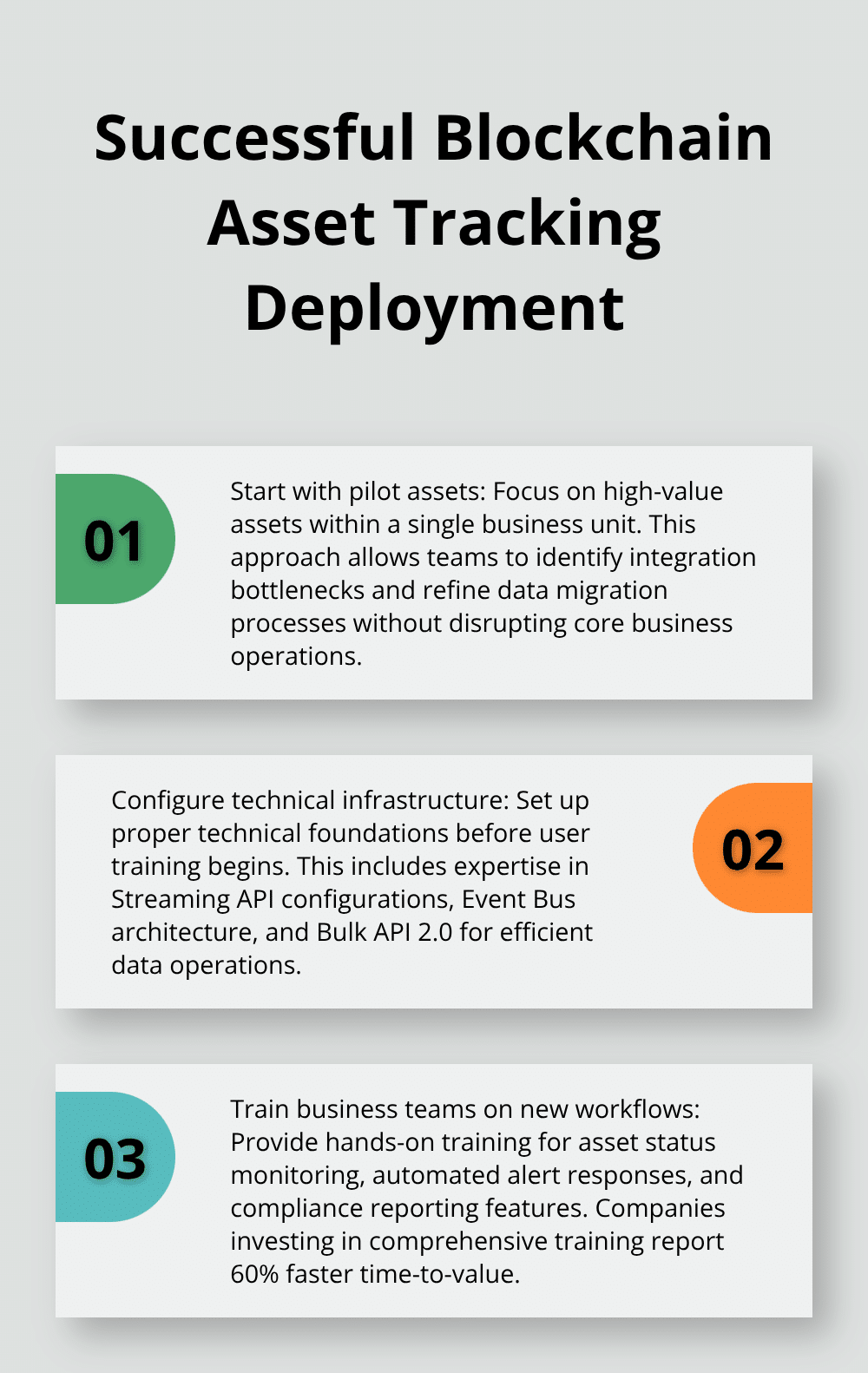
Smart implementation focuses on high-value assets within a single business unit rather than attempts at enterprise-wide rollouts that overwhelm technical resources and user training capacity. Manufacturing companies achieve 90% higher adoption rates when they begin with critical equipment tracking before expansion to consumable inventory management. The pilot approach allows teams to identify integration bottlenecks and refine data migration processes without disruption to core business operations. Asset data migration requires idempotent design considerations that prevent duplicate records during system synchronization, while composite APIs enable efficient queries across multiple Salesforce objects for comprehensive tracking workflows.
Configure Technical Infrastructure First
Implementation success depends on proper technical foundation setup before user training begins. Technical teams need expertise in Streaming API configurations for real-time UI updates and Event Bus architecture for decoupled message flows between external systems and Salesforce applications. The Bulk API 2.0 optimizes large-scale data operations and makes batch processing of asset data synchronization between Salesforce and other systems more efficient. Middleware solutions enhance integration capabilities when they manage protocol conversions, queuing, and routing between Salesforce and external asset tracking applications (which reduces complexity for internal development teams).
Train Business Teams on New Workflows
Business users require hands-on training with asset status monitoring, automated alert responses, and compliance reporting features that blockchain integration enables within their existing Salesforce interfaces. Companies that invest in comprehensive training programs report 60% faster time-to-value compared to organizations that rely solely on documentation and self-guided approaches. Sales teams need specific training on how asset updates automatically populate customer records and enable accurate delivery estimates. Service representatives must understand how blockchain data flows into case management workflows to resolve inquiries without delays from warehouse operations.
Final Thoughts
Blockchain asset tracking delivers measurable business advantages that traditional systems cannot match. Companies that implement this technology report 40% reduction in asset loss, 70% lower audit preparation costs, and response times that improve from days to seconds. The immutable data integrity eliminates human error while real-time transparency provides instant visibility across global operations.
Implementation success requires structured deployment that starts with pilot programs focused on high-value assets. Technical infrastructure setup must precede user training to achieve the 90% adoption rates that manufacturers experience. The native Salesforce integration eliminates data silos and connects asset information directly to customer workflows without separate databases or middleware complexity.
Asset tracking transforms from standalone process to core business function through blockchain integration. Automated compliance reports satisfy regulatory requirements instantly while companies gain faster settlement times and reduced operational overhead (which drives revenue growth through enhanced customer service capabilities). Web3 Enabler provides the seamless interface between Salesforce and blockchain networks that makes this transformation possible within existing corporate infrastructure.