
Communities built on blockchain technology are reshaping how brands reward loyalty and grant access. NFTs in Experience Cloud let you create ownership structures that go beyond traditional membership models.
We at Web3 Enabler have seen firsthand how token-based systems drive engagement when integrated properly with Salesforce. This guide covers the mechanics of minting, gated experiences, and sustainable reward frameworks.
Understanding NFTs as Ownership Tokens in Experience Cloud
An NFT is a unique digital record on a blockchain that proves ownership of a specific asset. Unlike traditional databases, this record exists independently of any single company’s servers. When someone holds an NFT in their wallet, the blockchain itself confirms they own that token-no intermediary required. This fundamental difference matters for Experience Cloud because it means community members truly own their membership tokens, not just rent access from you. The token persists even if your platform changes, creating a lasting connection between member and community.
How minting creates persistent member records
Minting creates an NFT on a blockchain. When you mint an NFT for a community member in Experience Cloud, you write their membership directly to the blockchain with embedded metadata describing access rights, tier level, or special perks. This metadata becomes part of the token itself. A member minted as a Gold Tier holder carries that information in the token’s properties, making it searchable and verifiable across any marketplace or application. The metadata persists forever-if your community evolves, the original token record remains unchanged. This immutability builds stronger member commitment than traditional digital memberships.
Layer 2 networks like Polygon reduce minting costs to under 5% of the purchase price compared to Ethereum’s variable gas fees that often exceed $50 during network congestion. For organizations launching NFT communities at scale, this cost difference directly impacts your ability to reward members without eroding community economics.
Salesforce integration enables seamless gating and tracking
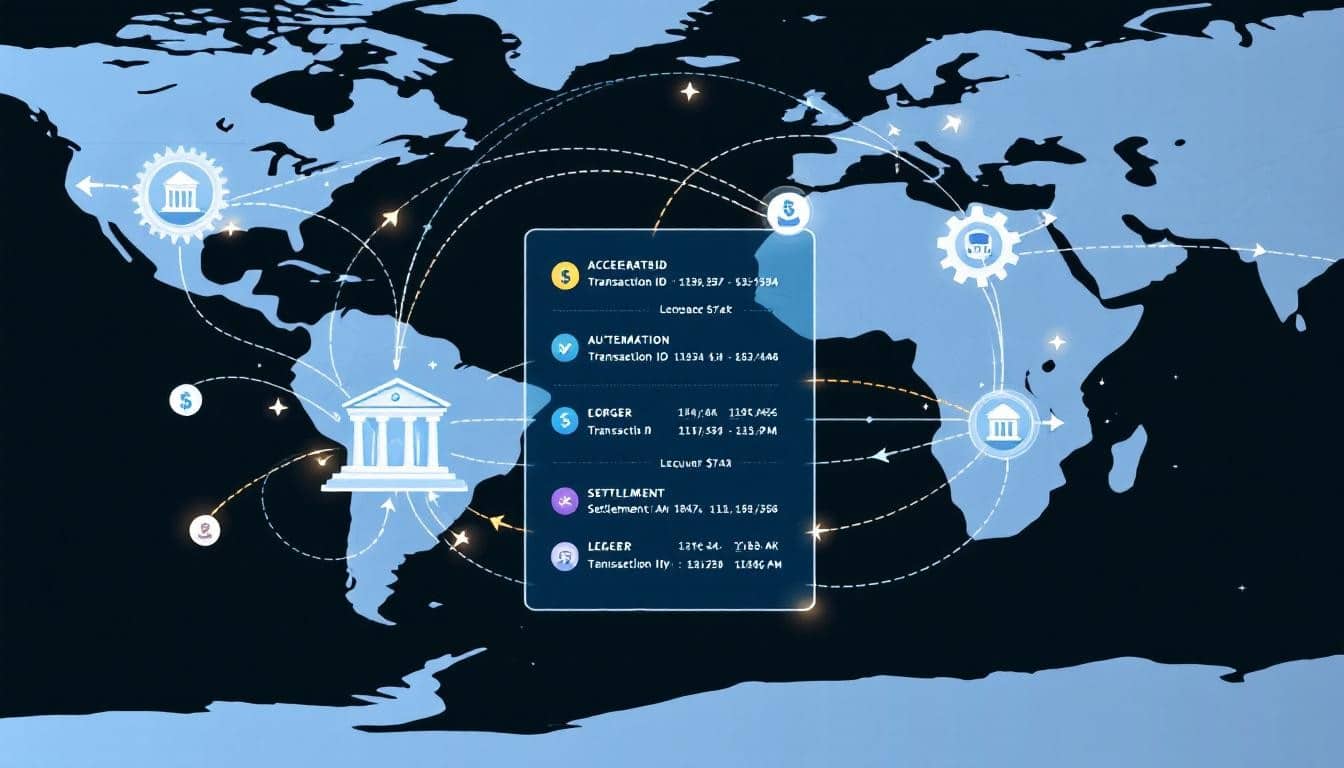
Experience Cloud connects directly to Salesforce’s data model, which means you can gate content based on NFT holdings without requiring separate third-party verification. When a member connects their wallet to Experience Cloud, you read their token holdings from the blockchain and map those holdings to Salesforce member records. This creates a single source of truth: if someone holds a specific NFT, their Experience Cloud profile automatically reflects their access tier, exclusive content becomes visible, and their engagement activity syncs back to the blockchain if you’ve configured royalty triggers.
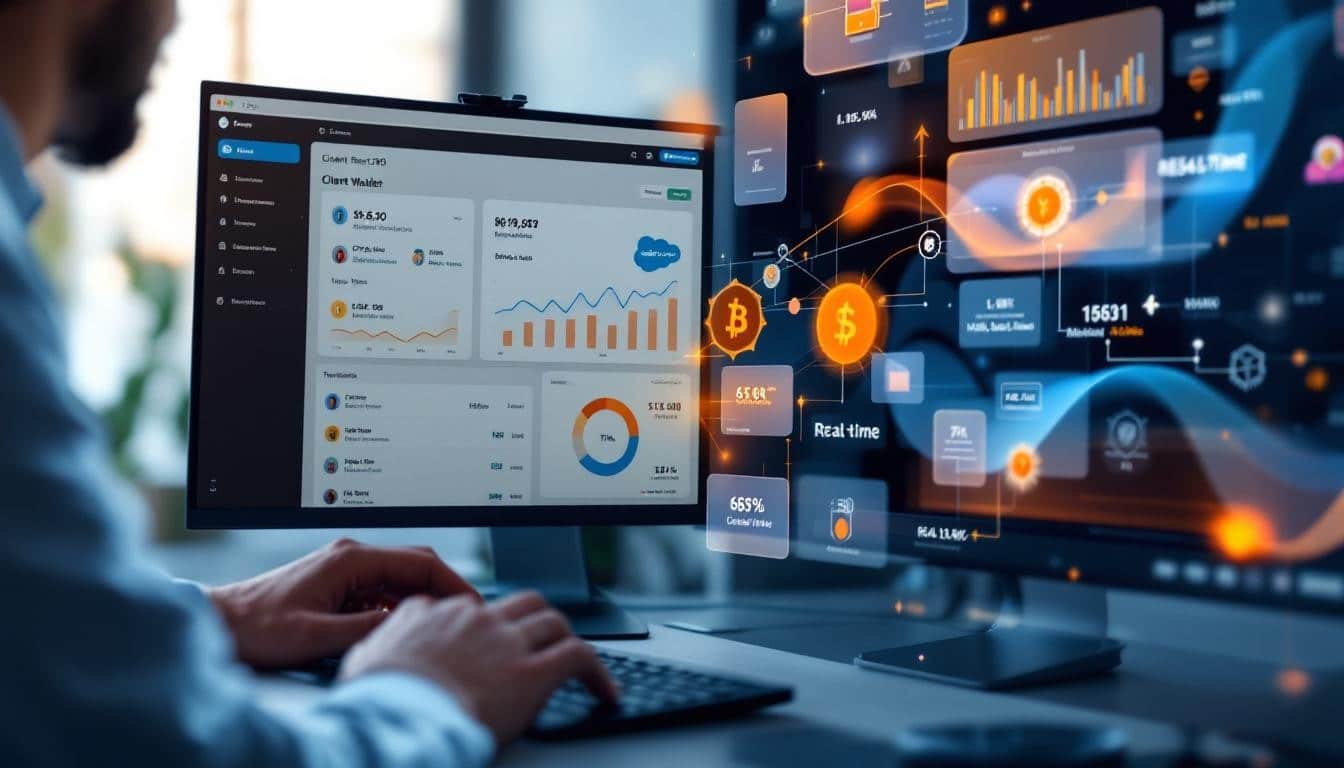
The practical benefit is that your support team sees member token holdings in the same screen where they view purchase history and case records-no context switching. Secondary market activity also surfaces in Salesforce automatically. If a member sells their NFT on OpenSea or another marketplace, you can configure Experience Cloud to detect that transaction and adjust their access accordingly. This real-time awareness prevents access fraud and keeps your community tier structure honest.
Setting sustainable royalty structures
For sustainable communities, you’ll want to set royalties at 5-10% on secondary sales, which automatically funds ongoing community rewards without requiring manual budget allocation. Rarible and OpenSea both support programmable royalties that flow directly to a Salesforce-controlled wallet. This approach transforms secondary market activity from a loss of control into a revenue stream that strengthens your community’s long-term health.
The mechanics of secondary sales matter because they reveal what your community truly values. When members trade NFTs on public marketplaces, their transactions create price signals that inform your reward design. A Gold Tier NFT that trades at a 40% premium to its mint price tells you that members perceive real value in that tier’s benefits.
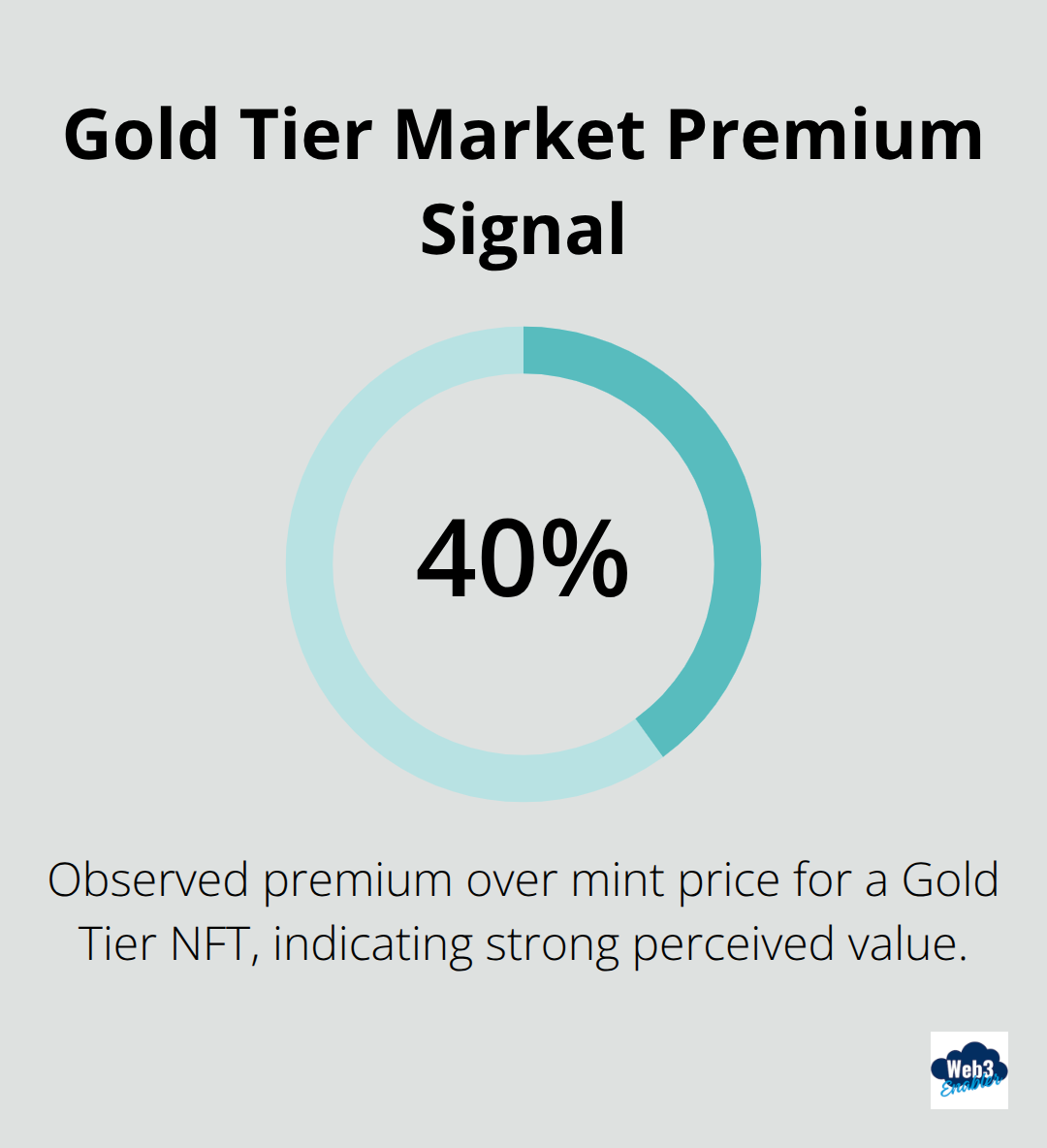
You can then reinvest secondary royalties into features that justify that premium, creating a virtuous cycle where member perception and actual utility align.
Connecting wallet activity to member engagement
Once you establish the wallet-to-Salesforce connection, you gain visibility into on-chain activity that traditional membership systems cannot provide. You see which members actively trade their tokens, which ones hold long-term, and which ones transfer tokens to others (potentially recruiting new community members). This on-chain behavior data lives alongside your CRM data, enabling you to design engagement mechanics that reward the behaviors you want to encourage. A member who holds their NFT for six months might receive an airdrop of additional tokens. A member who refers others and those referrals mint successfully might earn royalty shares. These mechanics require coordination between your blockchain configuration and Salesforce automation, but the result is a community where engagement directly translates to digital asset ownership and financial reward.
Building Tiered Access With NFT Holdings
Automating Access Control Through Token Attributes
Exclusive access tiers work best when tied directly to specific NFT attributes that Experience Cloud reads automatically. Instead of manually assigning member permissions, you configure Experience Cloud to scan wallet holdings and grant access based on token properties.
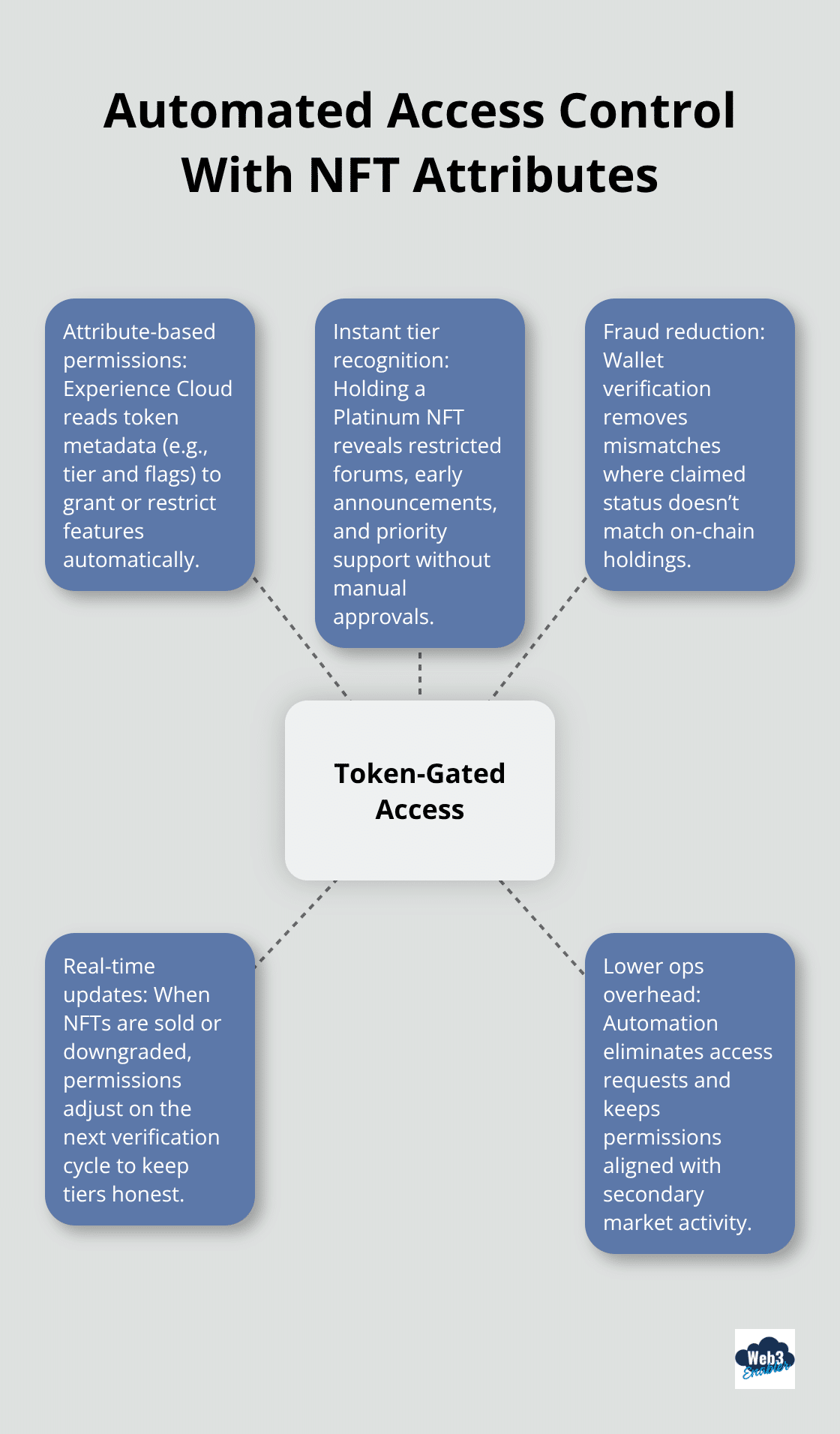
A member holding a Platinum tier NFT with metadata specifying admin_access=true immediately gains visibility of restricted forums, early product announcements, and priority support channels. This automation eliminates access request workflows and prevents tier mismatches where someone claims Gold status but their wallet holds only Silver tokens. The key operational advantage is that secondary market activity immediately affects access. When a member sells their Platinum NFT on OpenSea and purchases a Silver NFT instead, their Experience Cloud permissions automatically downgrade on the next wallet verification cycle. This real-time enforcement prevents access fraud and keeps your tier structure honest.
Choosing Between Lazy and Eager Minting
The minting flow determines whether your community scales efficiently or gets bottlenecked by gas costs and manual processes. Lazy minting through Rarible or OpenSea lets members claim their tier NFTs without upfront blockchain costs, with the actual minting happening only when someone purchases or transfers the token. This approach works well for onboarding large communities where you want to offer tier selection without forcing members to pay gas fees immediately. However, lazy minting creates a problem for secondary market royalties because the token doesn’t exist on-chain until purchase, meaning your royalty smart contract cannot trigger on subsequent sales until that point. For communities where secondary market revenue funds ongoing rewards, eager minting on Polygon costs under $5 per token and guarantees that every tier NFT generates royalties from day one. Polygon’s lower costs make this the better choice if your community exceeds 500 members and you project secondary market trading. The tradeoff is clear: lazy minting reduces your upfront costs and friction but sacrifices secondary market revenue.

Eager minting on Polygon requires modest initial investment but unlocks sustainable funding through royalty flows.
Setting Royalty Rates That Sustain Communities
Try royalty rates between 5-8% on secondary sales so that trading activity funds community rewards without discouraging member-to-member transfers. Higher royalty percentages above 10% suppress secondary market activity because members resist paying those fees when gifting tokens to friends or family, which ultimately shrinks the trading volume that generates your revenue. Rarible and OpenSea both enforce royalties through marketplace contracts, meaning members cannot bypass them through direct trading. This enforcement prevents royalty erosion and protects your revenue model. The secondary market itself signals whether your tier benefits match member perception. A Gold tier NFT that consistently trades 30-40% above mint price tells you members see genuine value in those benefits and you should reinvest secondary royalties into features that justify that premium. A tier that trades below mint price indicates misaligned expectations, and you need to either enhance benefits or adjust pricing. This price feedback loop is unavailable in traditional membership models and represents genuine market signal about what your community values. When members trade their tokens on public marketplaces, their transactions create price signals that inform your reward design and help you understand which tiers deliver the most perceived value.
How to Turn Member Activity Into Sustainable Rewards
Connect On-Chain Activity to Salesforce Automation
Reward mechanics that work at scale require connecting on-chain activity directly to Salesforce automation so that member behavior triggers incentives without manual intervention. The strongest communities reward specific actions that strengthen network effects: holding tokens long-term, referring new members, trading actively on secondary markets, or contributing content. You track these behaviors through wallet activity and member records, then configure Experience Cloud to distribute rewards automatically when conditions are met. A member who holds their tier NFT for six consecutive months without selling receives an airdrop of bonus tokens worth approximately 10-15% of their original mint price. A member who successfully refers three new community members and those referrals mint NFTs within 30 days earns a permanent 2-3% royalty share on secondary sales of those referred members’ tokens.
Route Secondary Market Fees Into Reward Pools
These mechanics require that you set royalty smart contracts to route a portion of secondary market royalties to referrers, which most marketplaces like OpenSea and Rarible support through their API. The key operational insight is that secondary market activity funds these rewards without requiring new budget allocation. When members trade their tier NFTs on public marketplaces, the 5-8% royalty you configured earlier flows into a community rewards wallet that Salesforce automation monitors. Each month, the automation calculates which members qualify for airdrops based on hold duration, referral performance, or content contributions tracked in your CRM, then executes batch minting of new reward tokens. This approach scales because the blockchain handles verification and execution while Salesforce handles the business logic and member communication.
Set Conservative Reward Thresholds to Prevent Inflation
The most common mistake is designing reward thresholds too generously in year one, which depletes secondary market royalties before your community reaches sustainable size. Try initial rewards at 2-5% of mint price for common actions like monthly participation, reserve 15-20% of your secondary royalty pool for exceptional contributions like community governance votes or bug bounties, and cap total monthly airdrops at 3-5% of your total circulating token supply. This constraint prevents inflation that erodes token value and keeps member perception of reward scarcity intact. Members value rewards more when they feel exclusive, and a token that airdrops constantly loses that perception.
Monitor Trading Volume and Adjust Payouts Accordingly
Track your secondary market trading volume monthly through OpenSea’s API or Rarible’s reporting tools, which both provide transaction-level data without charge. If your trading volume drops below your initial projections, reduce reward payouts proportionally rather than minting new tokens to cover the shortfall. A community that shrinks its rewards during downturns retains member trust because members see you prioritizing long-term sustainability over short-term appearance. Communities that mint unlimited tokens to maintain artificial reward levels lose credibility when members realize the tokens are worthless.
Publish Revenue Flows to Build Member Trust
Publish your reward schedule and secondary market revenue publicly in Experience Cloud so members understand exactly how their trading activity funds community incentives. Transparency about where money flows builds the long-term commitment that makes NFT communities outperform traditional membership models. Members who see clear connections between their participation and reward distribution develop stronger ownership mentality and remain engaged longer than members in opaque systems.
Final Thoughts
NFTs fundamentally change how communities form and sustain themselves within Experience Cloud. Traditional membership models treat access as a service you control and can revoke at any time. NFT-based communities transfer ownership to members, creating lasting connections that persist independent of your platform. When someone holds an NFT in their wallet, they own a piece of your community structure that no company can take away. This shift from renting access to granting ownership drives measurably higher engagement because members feel genuine stake in the community’s success.
The mechanics we’ve covered-minting flows, gated experiences, secondary market royalties, and Salesforce integration-work together to create self-sustaining communities. Your secondary market royalties fund rewards without requiring new budget allocation. Your on-chain activity data reveals which members drive network effects and which tiers deliver real value. Your automated access controls prevent fraud while scaling to thousands of members without manual overhead. These systems compound over time, with a community that starts at 200 minted members and generates $5,000 monthly in secondary market royalties able to reinvest those royalties into features that increase trading volume, which generates more royalties, which funds better rewards, which attracts new members.
Real implementation requires honest assessment of whether your NFT experience cloud community actually needs blockchain infrastructure or whether traditional membership serves your goals better. NFTs work best for communities where members want to trade access, where secondary market activity creates genuine value, or where you want to reward long-term participation with financial upside. If you’re building an NFT community, start with a clear reward thesis before minting anything, define which member behaviors you want to encourage, and publish your economics transparently so members understand the system. Web3 Enabler helps enterprises integrate blockchain-powered experiences directly into Salesforce, enabling you to connect wallet activity to your CRM without building custom infrastructure.
Frequently Asked Questions About NFTs in Experience Cloud
NFTs in Experience Cloud help brands build token-based communities, grant tiered access, and connect wallet activity to Salesforce data. Below are common questions about how NFT ownership, gated experiences, minting, royalties, and member rewards work inside Salesforce-powered community experiences.
What are NFTs in Experience Cloud?
NFTs in Experience Cloud are blockchain-based ownership tokens that can be used to unlock access, verify membership, and power community rewards inside a Salesforce experience. Instead of relying only on traditional login permissions, brands can use NFT ownership to determine who gets access to exclusive content, special perks, and member-only experiences.
How do NFTs work as ownership tokens in Experience Cloud?
An NFT is a unique digital token recorded on a blockchain that proves ownership of a specific asset or membership. In Experience Cloud, that token can represent a community tier, special access level, or loyalty status. Because the token is owned by the member’s wallet, it creates a stronger sense of ownership than a standard membership stored only in a private database.
How does minting an NFT create a member record?
Minting creates the NFT on the blockchain and assigns it to a specific wallet. When used in Experience Cloud, the minted token can include metadata such as tier level, access rights, or special benefits. That token data can then be connected to a Salesforce member record, giving your team a persistent and verifiable way to track community access and engagement.
Can Salesforce Experience Cloud gate access based on NFT holdings?
Yes. Experience Cloud can be configured to read a member’s wallet holdings and grant access based on the NFT they own. If a user holds a specific token, they can automatically see gated pages, forums, resources, or offers. If they sell or transfer the token, their access can be updated based on the next wallet verification cycle.
What is the difference between lazy minting and eager minting?
Lazy minting delays the creation of the NFT on-chain until someone purchases or transfers it, which reduces upfront cost and onboarding friction. Eager minting creates the NFT immediately, which can be better for communities that want tokens live on-chain from day one for access control, marketplace visibility, and royalty tracking. The right approach depends on your budget, launch strategy, and long-term community model.
Why do brands use Layer 2 networks for NFT communities?
Brands often use Layer 2 networks because they reduce minting and transaction costs compared to more expensive blockchains. Lower costs make it easier to issue NFTs at scale, reward community members more often, and support ongoing engagement without eroding the economics of the program. This is especially important for large communities with frequent wallet activity and multiple reward events.
How do royalties support NFT communities in Experience Cloud?
Royalties can create a recurring revenue stream when NFTs are sold on supported secondary marketplaces. Brands can use those royalty flows to fund future rewards, exclusive benefits, or additional community features. When connected to Salesforce workflows, secondary market activity can also provide insight into which tiers or benefits members value most.
Can wallet activity sync with Salesforce member records?
Yes. When a wallet is connected to Salesforce, on-chain activity such as holding, transferring, or selling an NFT can be tied to a member profile in Experience Cloud. This gives brands a clearer view of member behavior and allows support, marketing, and community teams to see token-based engagement alongside purchase history, cases, and CRM activity.
How do NFT rewards work in Experience Cloud communities?
NFT rewards work by connecting wallet behavior to Salesforce automation. A brand can reward members for actions such as holding a token long-term, referring new members, contributing content, or participating in community programs. When these rules are configured properly, rewards can be distributed automatically based on verified blockchain activity and member engagement data.
When do NFTs make more sense than a traditional membership model?
NFTs make more sense when your community benefits from transferable access, visible ownership, secondary market activity, or reward systems tied to long-term participation. If members want to own, trade, or build value from their participation, NFTs can offer advantages that standard memberships cannot. If your program only needs basic access control, a traditional membership model may be simpler.