

Treasury teams managing Financial Services Cloud operations face a persistent challenge: balancing speed with accuracy across multiple payment networks. Traditional settlement processes still take days, manual reconciliation consumes countless hours, and visibility into digital asset positions remains fragmented.
At Web3 Enabler, we’ve built solutions that transform how treasury departments operate. Blockchain integration cuts settlement times to minutes while automating the reconciliation work that currently drains resources.
How Treasury Teams Gain Real-Time Control Over Digital Assets
Single Source of Truth for Stablecoin Positions
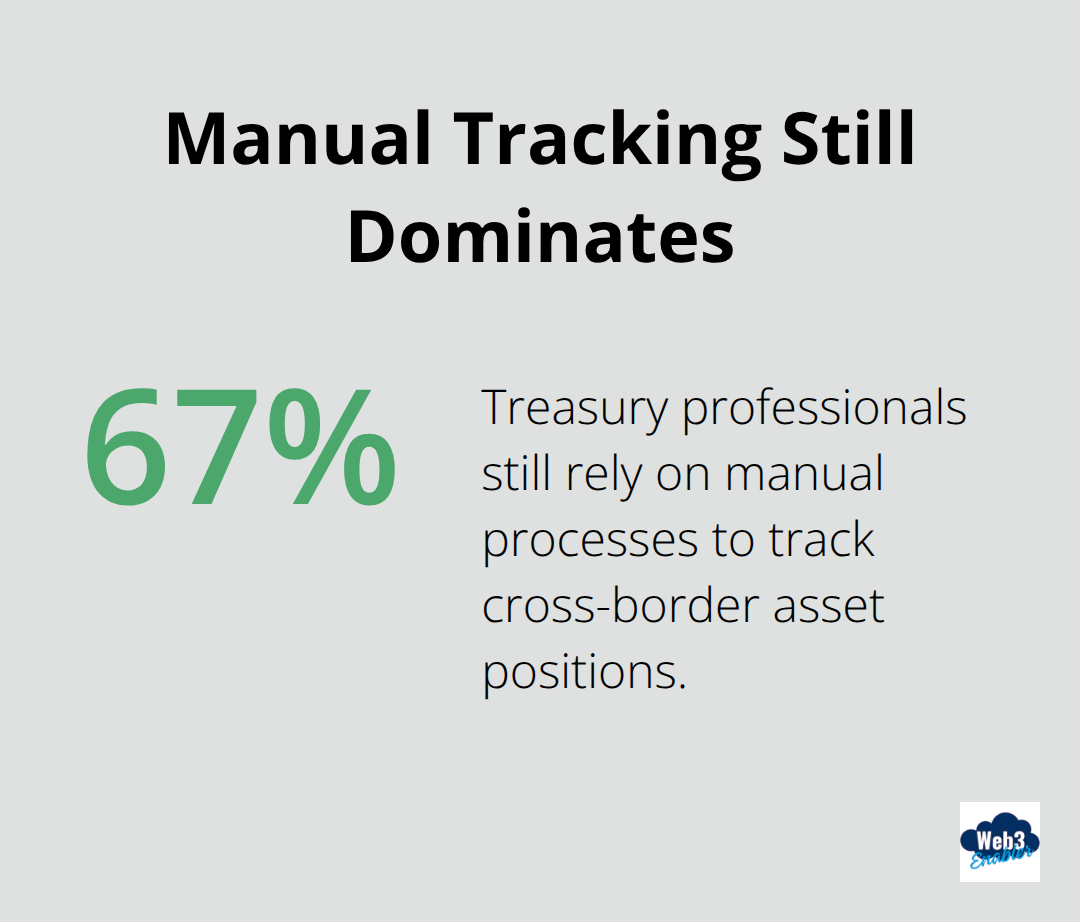
Treasury teams operating Financial Services Cloud need immediate visibility into stablecoin and digital asset positions-yet traditional systems force them to piece together information from multiple disconnected sources. The reality is stark: according to a 2024 Association for Financial Professionals survey, 67% of treasury professionals still rely on manual processes to track cross-border asset positions, creating delays and errors that compound across settlement cycles.
Web3 Enabler integrates blockchain-based asset tracking directly into Financial Services Cloud, giving treasury teams a single source of truth for all stablecoin and digital asset balances.
Automated Reconciliation Through On-Chain Transparency
When you monitor wallet positions in real-time within your Salesforce environment, reconciliation transforms from a weekly nightmare into an automated daily process. The on-chain transparency means you see every transaction as it settles-not days later when bank statements arrive. This eliminates the reconciliation bottleneck that currently consumes 15-20 hours per week in most treasury departments, according to data from the Treasury Management Association.
Streamlined Settlement and Liquidity Visibility
Automated settlement across blockchain networks removes the manual coordination work that slows traditional finance. Instead of waiting for correspondent banks to process transfers, stablecoin payments settle in minutes on transparent, auditable ledgers. Web3 Enabler’s integration with Financial Services Cloud means your settlement data flows directly into compliance records and audit trails without additional data entry.
Liquidity management becomes strategic rather than reactive when you have transparent visibility into on-chain transaction flows. Treasury teams can now make informed decisions about cash positioning based on actual settlement patterns rather than estimates. Direct blockchain settlement offers significant cost advantages compared to traditional wire transfers through banking channels.
Dashboard-Driven Monitoring Across Networks
Your team gains the ability to monitor liquidity across multiple blockchain networks from a single dashboard, automating the reporting work that previously required manual spreadsheet updates and external verification. This unified view (accessible directly within Salesforce) eliminates the fragmented data sources that slow decision-making. Treasury professionals can now respond to market conditions and liquidity needs in real-time rather than waiting for end-of-day reconciliation reports.
With real-time asset visibility and automated settlement in place, treasury teams are ready to tackle the operational transformation that blockchain enables-moving from reactive firefighting to proactive treasury strategy.
How Blockchain Cuts Treasury Costs and Complexity
Settlement Speed Transforms Transaction Timelines
Settlement speed is where blockchain delivers immediate, measurable value. Traditional wire transfers through correspondent banking networks take three to five business days, even for domestic transfers. Stablecoin settlements on blockchain networks complete in minutes, sometimes seconds. For treasury teams managing Financial Services Cloud, this speed advantage compounds across hundreds of monthly transactions. A treasury department processing 500 monthly payments saves roughly 2,000 business days of float annually when switching to blockchain settlement. That’s not theoretical-it’s the direct result of eliminating the multi-day clearing cycles that banking infrastructure requires. Your team sees transactions settle in real-time rather than waiting for banking notifications.
Direct Peer-to-Peer Transactions Eliminate Intermediary Fees
The cost reduction follows naturally from this speed. Direct peer-to-peer stablecoin transactions eliminate the correspondent bank fees that typically consume 1-3% of each transfer value. For a financial institution moving $10 million monthly across borders, that represents $1,200 to $3,600 in monthly savings from fees alone. These savings accumulate without requiring additional effort from your team-the blockchain network handles the transaction directly.
Reconciliation Automation Frees Your Team’s Time
Your reconciliation team currently spends 15-20 hours weekly matching bank statements to internal records. Automated on-chain reconciliation compresses this to a few hours monthly because every transaction becomes immediately visible and immutable on the blockchain. Your compliance team gains auditability without additional manual work-every transaction creates a permanent, transparent record. Manual reconciliation bottlenecks disappear when settlement and record-keeping happen simultaneously.
Operational Headcount Shifts from Administrative to Strategic Work
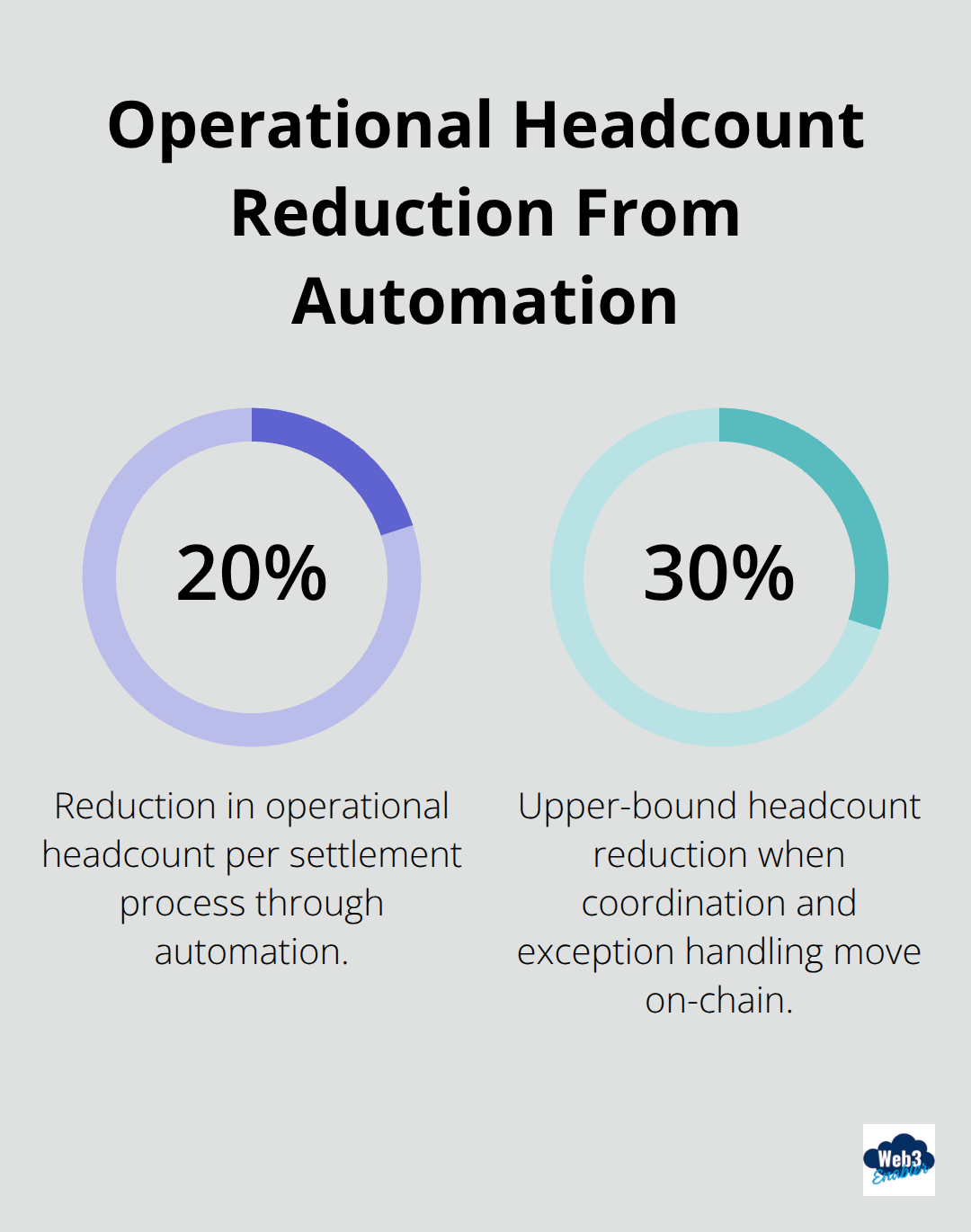
Treasury professionals at financial institutions report that blockchain-based settlement reduces operational headcount requirements by 20-30% per settlement process because automation replaces manual coordination, verification, and exception handling. Your team redirects these resources toward strategic treasury work rather than administrative tasks.
This shift transforms how treasury departments contribute to organizational strategy.
With settlement acceleration and cost reduction established, treasury teams now face a practical question: how do you actually integrate these capabilities into your existing Financial Services Cloud environment?
Making Stablecoin Payments Work in Your Current Setup
Connect Blockchain Settlement to Your Existing Infrastructure
Your Financial Services Cloud environment already handles payment flows, client data, and transaction records. The question isn’t whether blockchain fits into your existing infrastructure-it’s how to integrate it without disrupting operations. Blockchain payment capabilities connect directly to your existing Revenue Cloud configurations, so when a transaction settles on-chain, it automatically populates your revenue recognition rules and audit trails. Your compliance team gains immediate access to transaction records without additional reporting infrastructure.
Monitor Wallet Balances from Your Salesforce Dashboard
Real-time wallet balance monitoring sits directly in your Salesforce dashboards-the same interface your team uses daily for client accounts and transaction management. When a stablecoin payment arrives, your system records it identically to traditional payments, except the settlement completes in minutes instead of days. This eliminates the reconciliation gap that currently exists between when you record a payment and when it actually settles. Your treasury team tracks specific digital assets and positions without switching between platforms or managing separate systems.
Automate Compliance Reporting and Audit Trails
Compliance reporting automation means your audit trails build themselves. Every on-chain transaction creates an immutable record that flows directly into your compliance objects, giving your auditors transparency without requiring manual data extraction or external verification tools. Your team maintains complete control over which transactions use blockchain and which use traditional rails-you’re not replacing your existing payment infrastructure, you’re augmenting it with faster, cheaper options for specific transaction types.
Execute Three Immediate Implementation Steps
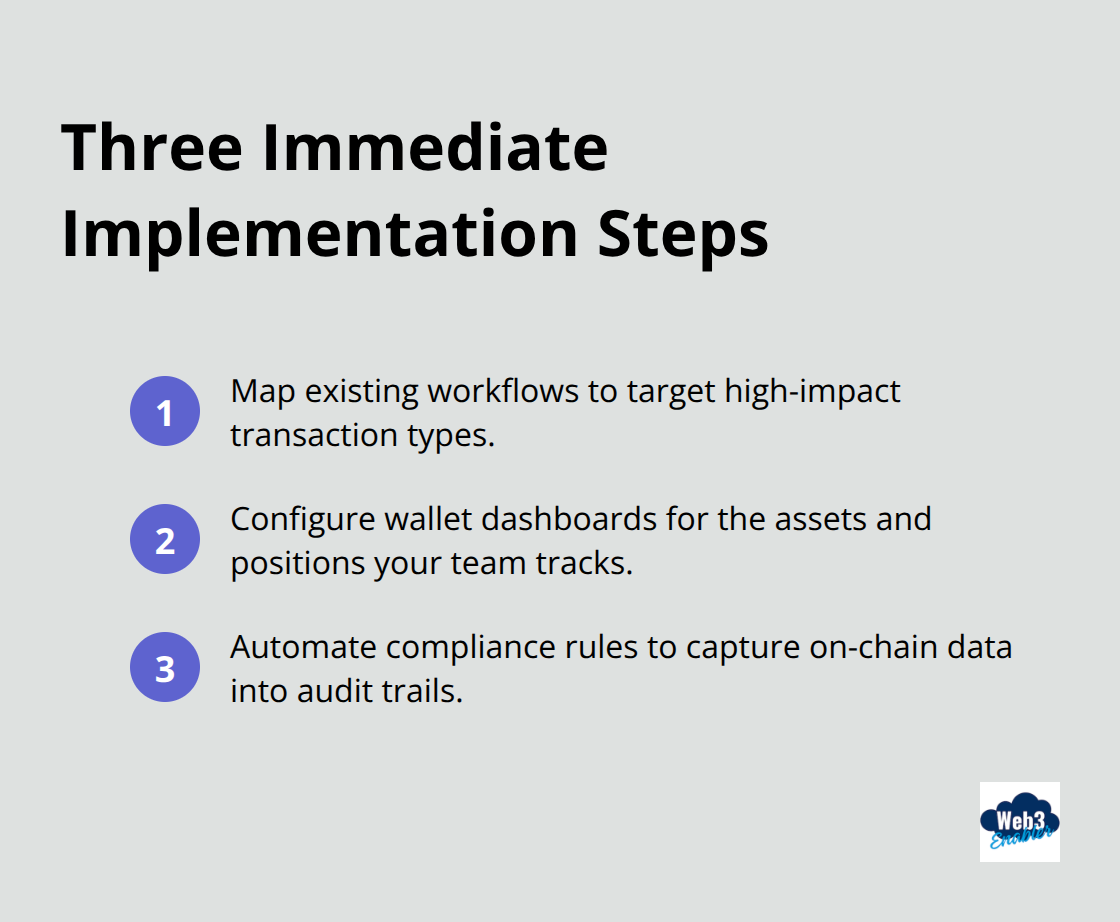
Start with mapping your existing stablecoin payment workflows to identify which transaction types benefit most from blockchain settlement. Next, configure your wallet monitoring dashboards to track the specific digital assets and positions your treasury team needs visibility into. Finally, set up automated compliance rules that capture on-chain transaction data and feed it into your existing audit processes.
Redirect Your Team’s Focus Toward Strategic Work
This selective approach means low risk and immediate ROI. Treasury professionals managing this transition typically redirect time from reconciliation and settlement coordination toward strategic cash positioning and liquidity optimization. Your team maintains visibility and control throughout the process, with the ability to adjust which payment types use blockchain settlement based on operational needs and market conditions.
Final Thoughts
Blockchain transforms Financial Services Cloud treasury operations by collapsing settlement timelines and eliminating manual work that consumes your team’s resources. Your treasury department shifts from reactive firefighting to strategic decision-making when settlement happens in minutes instead of days, when reconciliation automates itself, and when your team redirects hours spent on administrative tasks toward actual treasury strategy. The competitive advantage belongs to institutions that move now-treasury departments adopting blockchain settlement today gain operational cost reductions of 20-30% while their peers remain trapped in multi-day clearing cycles.
Starting your blockchain integration requires no rip-and-replace of existing systems. You map your current payment workflows, identify which transactions benefit most from blockchain settlement, and configure your dashboards to monitor digital asset positions. Your team maintains complete control over which payments use blockchain and which use traditional rails, meaning low implementation risk and immediate ROI.
Web3 Enabler provides the native Salesforce integration that makes this transition straightforward. As a certified Salesforce ISV Partner, we built the only native blockchain platform on the Salesforce AppExchange, bringing real-world blockchain utility directly into Financial Services Cloud. Discover how Web3 Enabler helps financial institutions modernize treasury operations and gain the competitive advantage that blockchain delivers.