


Your Salesforce CRM is great at managing customers. But it’s terrible at moving money across borders fast.
Circle, Ripple, and Cardano are changing that. At Web3 Enabler, we’ve seen enterprises ditch slow wire transfers for stablecoin payments that settle in minutes, not days. This isn’t sci-fi-it’s happening right now, and your business can tap into it without abandoning the tools you already use.
Why Your Business Is Bleeding Money on Cross-Border Payments
The True Cost of Moving Money Globally
Traditional wire transfers destroy your cash flow. A payment from New York to Singapore takes 3-5 days, costs 1-3% in fees according to the World Bank, and leaves both parties guessing about when money actually arrives. Your supplier in Manila waits for funds. Your cash flow stalls.
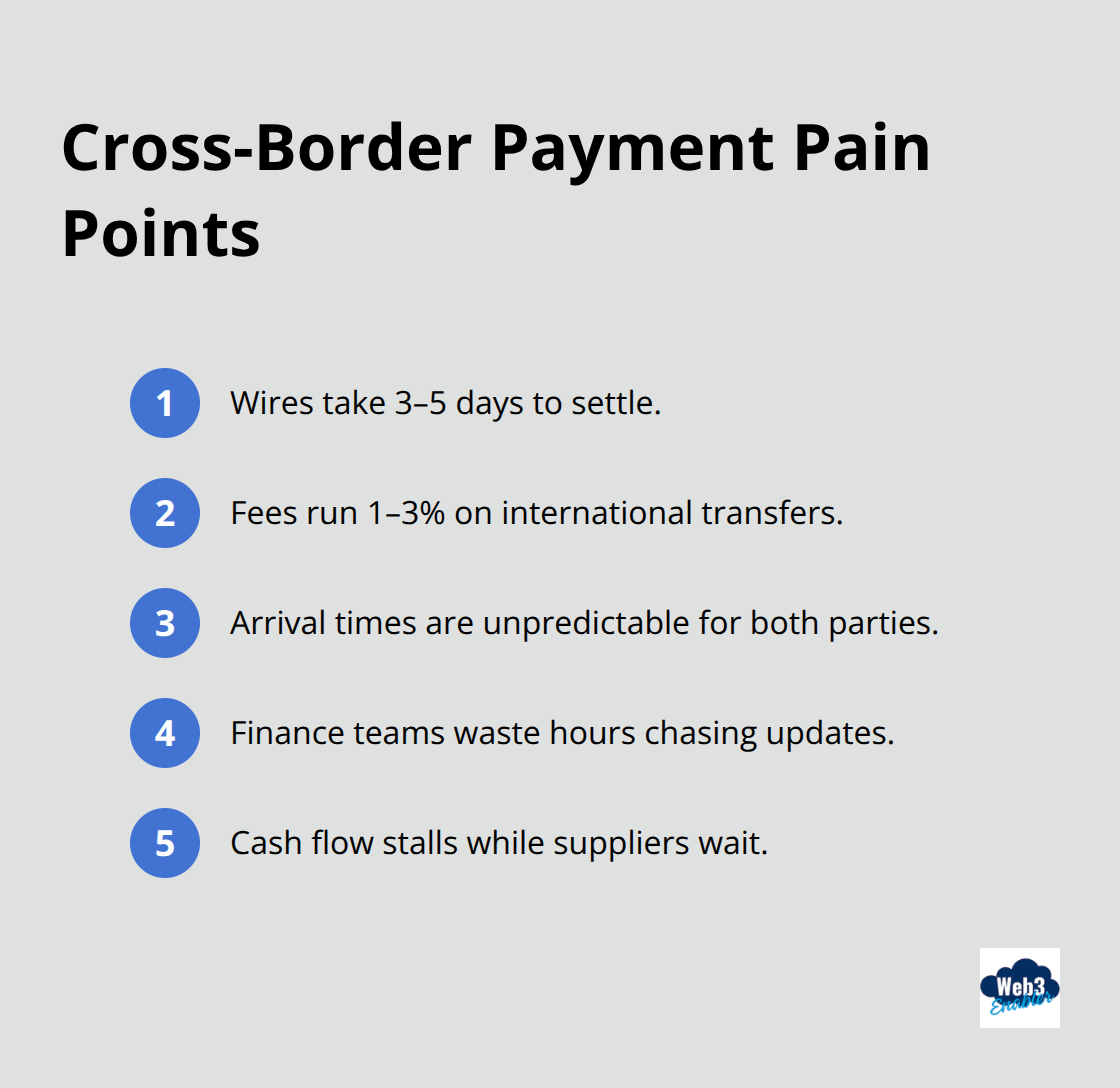
Your finance team spends hours chasing status updates instead of focusing on strategy.
Stablecoin payments settle in minutes on blockchain networks, cut transaction costs dramatically compared to card networks that charge 1.5-3.5%, and create an auditable trail that actually integrates with your ERP systems. No more banking hellscape. No more separate ledgers. Just money that moves.
Why Enterprises Are Ditching Traditional Rails
McKinsey research shows that a multi-rail treasury approach combining fiat and digital rails optimizes liquidity management and FX risk. Yet most enterprises still treat crypto payments like a weird side project instead of a legitimate way to move money. That gap represents real money left on the table.
Stablecoins like USDC work across multiple blockchains, giving you flexibility to choose settlement rails based on cost and compliance needs. Ripple’s cross-border liquidity reduces the pre-funded reserves you need sitting around doing nothing. Cardano’s Proof-of-Stake architecture supports enterprise-grade workflows without the energy waste that makes your ESG team cringe.
Real Companies Already Moved Their Money On Chain
Steak ‘n Shake accepted cryptocurrency payments and added to its treasury while reporting growth according to Blockonomi. Microsoft takes Bitcoin. AT&T processes crypto bill payments through BitPay. Chipotle, Burger King, and Starbucks offer crypto payment options. Luxury brands like Gucci, Balenciaga, and TAG Heuer accept digital assets in stores (no more experiments, just revenue channels).
Regulators Finally Caught Up
The EU’s MiCA framework provides legal clarity for stablecoin issuers. SWIFT and the ECB moved toward ISO 20022 standards that create interoperability between crypto and traditional rails. Compliance infrastructure like KYC/AML integration matured enough that your legal team won’t have a coronary.
The real question isn’t whether to adopt blockchain payments. It’s whether you can afford to ignore them while your competitors move faster and cheaper. Now that you understand the financial case, let’s talk about how to actually wire this into your existing systems.
How Salesforce Becomes Your Blockchain Command Center
Salesforce Meets Stablecoin Rails
Salesforce manages your customer data, invoices, and revenue tracking. But it cannot move money between accounts natively. Blockchain infrastructure fills that gap. Web3 Enabler, a Salesforce ISV partner, built 100% Salesforce Native solutions on the AppExchange that connect Circle’s USDC rails, Ripple’s cross-border liquidity, and Cardano’s settlement layer directly into your CRM. You no longer juggle separate platforms. When your sales team closes a deal with a Singapore-based client, they initiate a stablecoin payment right from the opportunity record. Your finance team watches the transaction settle in minutes and sees it appear in your ERP as an auditable on-chain record. Manual reconciliation that wastes 5-10 hours per week vanishes.
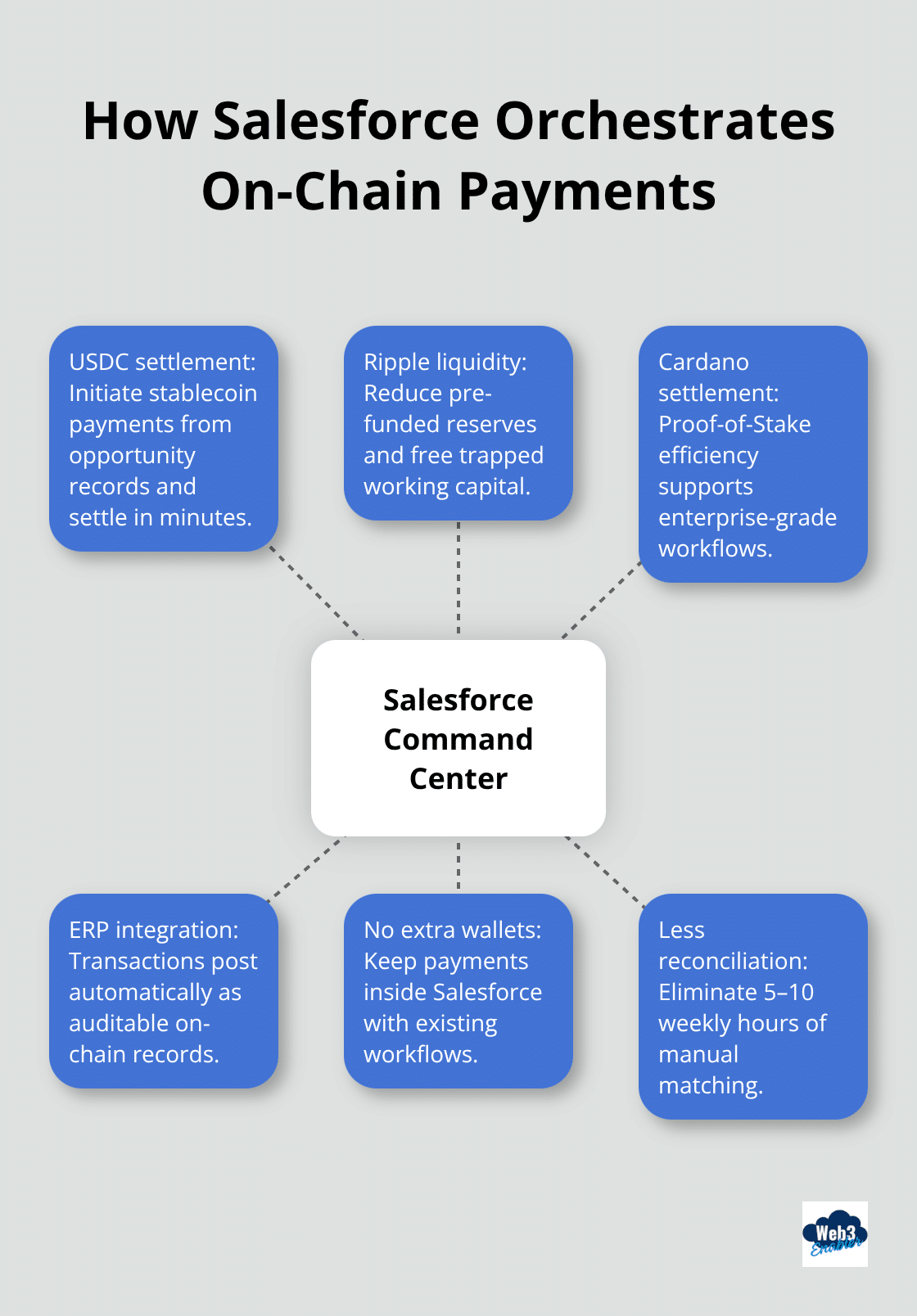
No API wrestling. No separate crypto wallets scattered across different services. The payment flows through the same interface where your team already works.
Routing Payments Through Your Treasury Policy
Connecting these rails transforms Salesforce into the command center for global money movement. When you send a payment via USDC on Circle’s multi-blockchain infrastructure, you choose the settlement layer based on cost and compliance needs for that specific corridor. A payment to Europe might route through one chain while an Asia-Pacific transaction uses another, all determined by your treasury policy rules built into Salesforce workflows. Ripple’s pre-funded liquidity model cuts the reserve capital you need sitting idle, freeing up millions that were trapped in nostro accounts. Cardano’s energy-efficient Proof-of-Stake architecture means your CFO stops hearing complaints about carbon footprint during board meetings.
Embedding Compliance Into Payment Flows
Custom implementations let your compliance team embed KYC/AML screening directly into the payment approval workflow. Prohibited entities get flagged before transactions settle. Your payment costs drop while settlement compresses from days to minutes. Your finance team stops chasing wire confirmations and starts focusing on strategy. This operational infrastructure works because it lives inside the system your team already uses every day-not bolted on as an afterthought or hidden in a separate dashboard.
The mechanics are solid. But what does this actually look like when your business starts moving real money on chain?
What Your Business Can Actually Do With Stablecoin Payments Right Now
Accept Stablecoin Payments and Cut Reconciliation Work
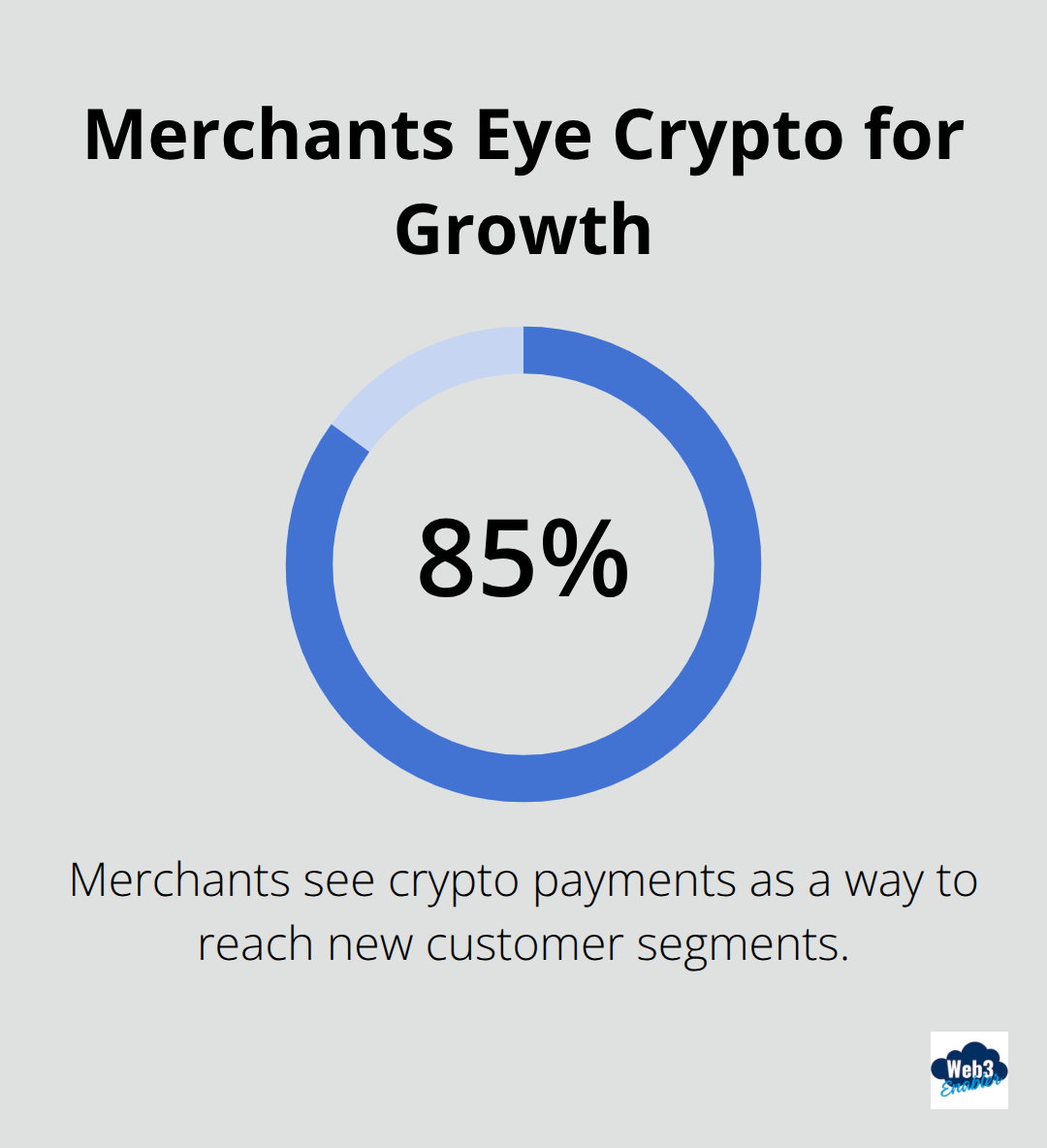
Your finance team wastes roughly 15-20 hours per week on stablecoin payments eliminate reconciliation waste. Stablecoin payments eliminate that waste entirely. When a customer pays you in USDC, the transaction settles in minutes and appears automatically in your Salesforce records as an auditable on-chain entry. Deloitte found that 85% of merchants see crypto payments as a way to reach new customer segments, especially younger tech-savvy buyers, yet most enterprises still treat it as a future experiment rather than a present revenue channel.
Start small by offering stablecoin payment options to your largest international customers first. Measure three metrics during your pilot: settlement speed (compare minutes on-chain versus 3-5 days for wires), cost per transaction (stablecoins cost dramatically less than the 1.5-3.5% card networks charge), and reconciliation effort (hours saved per week when payments flow directly into your ERP). Luxury brands like Gucci and TAG Heuer already accept crypto in stores. Enterprise software giants like Microsoft and AT&T process crypto payments through established processors. Your business doesn’t need to be a crypto evangelist to benefit from faster, cheaper settlement.
Move Money Globally Without the Banking Headache
Sending payments abroad destroys your cash flow timeline. A wire to Singapore costs 1-3% in fees and leaves you waiting 3-5 days for confirmation. Ripple’s cross-border rails reduce the pre-funded reserves you need sitting idle in nostro accounts, potentially freeing millions of capital. Circle’s USDC works across multiple blockchains, so you choose the settlement layer based on which corridor you’re paying into and what compliance framework applies.
Your first international payment pilot should target a single corridor with a trusted supplier. Send a test payment worth $50,000-$100,000 via USDC through your chosen blockchain rail. Track the total time from initiation to settlement, count every fee charged, and compare the experience to your last wire transfer. You’ll likely save 2-3 days and 20-30% in fees. Cardano’s Proof-of-Stake architecture means your CFO stops hearing complaints about energy consumption compared to other settlement networks. McKinsey research shows that combining fiat and digital payment rails optimizes liquidity management and FX risk. Your treasury doesn’t need to choose between traditional banking and blockchain-it needs both, routed intelligently based on corridor, amount, and regulatory requirements.
Display Crypto Holdings and Automate Compliance
Financial advisors and wealth managers need to see their clients’ crypto positions alongside traditional assets. Web3 Enabler’s Salesforce Native solutions display stablecoin balances, transaction histories, and portfolio exposure directly within Salesforce, eliminating the need to log into separate crypto platforms or spreadsheets. Your compliance team can embed KYC/AML screening directly into payment workflows so prohibited entities get flagged before transactions settle.
The IRS treats crypto as property for tax purposes, so your accounting team needs accurate cost-basis tracking and transaction records. Integrate tax-reporting tools into your payment flow so every transaction automatically feeds into your tax documentation rather than requiring manual export and reconciliation. Blockchain payments create immutable transaction records that simplify reconciliation in ERP systems and prevent chargeback fraud entirely. Your finance team stops losing hours to payment disputes. Your legal team stops fielding questions about transaction authenticity. The audit trail lives on-chain, permanently.
Final Thoughts
Blockchain payments aren’t coming to enterprise finance-they’re already here. Circle, Ripple, Cardano, and Salesforce have built the infrastructure. Microsoft, AT&T, and luxury brands process real transactions right now. Your competitors measure settlement speed and cost savings while you still wait for wire confirmations.
The financial case is undeniable. Stablecoin payments settle in minutes instead of days, cost 20-30% less than traditional wires, and create auditable records that integrate directly with your ERP systems. Your finance team stops chasing payment status updates and starts focusing on strategy. Your cash flow improves. Your international suppliers get paid faster.
We at Web3 Enabler built 100% Salesforce Native blockchain solutions for this exact moment. Our tools connect Circle’s USDC rails, Ripple’s cross-border liquidity, and Cardano’s settlement layer directly into your existing workflows. Start with Web3 Enabler and see what faster, cheaper, auditable payments actually look like.