


 Enterprise blockchain spending hit $67 billion in 2024, yet many businesses still hesitate to embrace Web3 technologies. This reluctance costs companies competitive advantages in efficiency, transparency, and global operations.
At Web3 Enabler, we see organizations transform their operations through strategic Web3 adoption. The question isn’t whether your business should integrate these technologies, but how quickly you can implement them effectively.
Current State of Web3 Adoption in Enterprise
The enterprise blockchain market demonstrates rapid acceleration across multiple sectors. Blockchain technology will expand from $1,273.58 billion in 2025 to $7,639.7 billion by 2032, which represents a 29.2% compound annual growth rate. This explosive growth reflects genuine business transformation rather than speculative investment. J.P. Morgan leads financial services adoption with blockchain-based payment systems, while MediLedger Project shows supply chain excellence in pharmaceuticals. These implementations produce measurable results: reduced transaction costs, faster settlement times, and enhanced operational transparency.
Enterprise Blockchain Spending Reaches Record Levels
Corporate blockchain investments hit $67 billion in 2024, with financial services and logistics companies accounting for the largest share. Banks report settlement times that drop from days to minutes, while supply chain operators achieve real-time tracking capabilities that traditional systems cannot match. The EU’s MiCA regulation and emerging U.S. digital asset frameworks provide regulatory clarity that accelerates corporate adoption. Companies in these sectors recognize that Web3 represents operational infrastructure that delivers competitive advantages through cost reduction and process automation.
Major Corporations Lead Web3 Integration
Fortune 500 companies drive Web3 adoption through strategic implementations rather than experimental pilots. Healthcare organizations implement permissioned blockchains for patient data security, while retail companies deploy blockchain-based loyalty programs to combat fraud. Energy sector applications include peer-to-peer trading and grid optimization through decentralized solutions. Real estate firms leverage blockchain for title management and fractional ownership opportunities (creating new revenue streams and operational efficiencies).
Industry-Specific Adoption Patterns Show Clear Winners
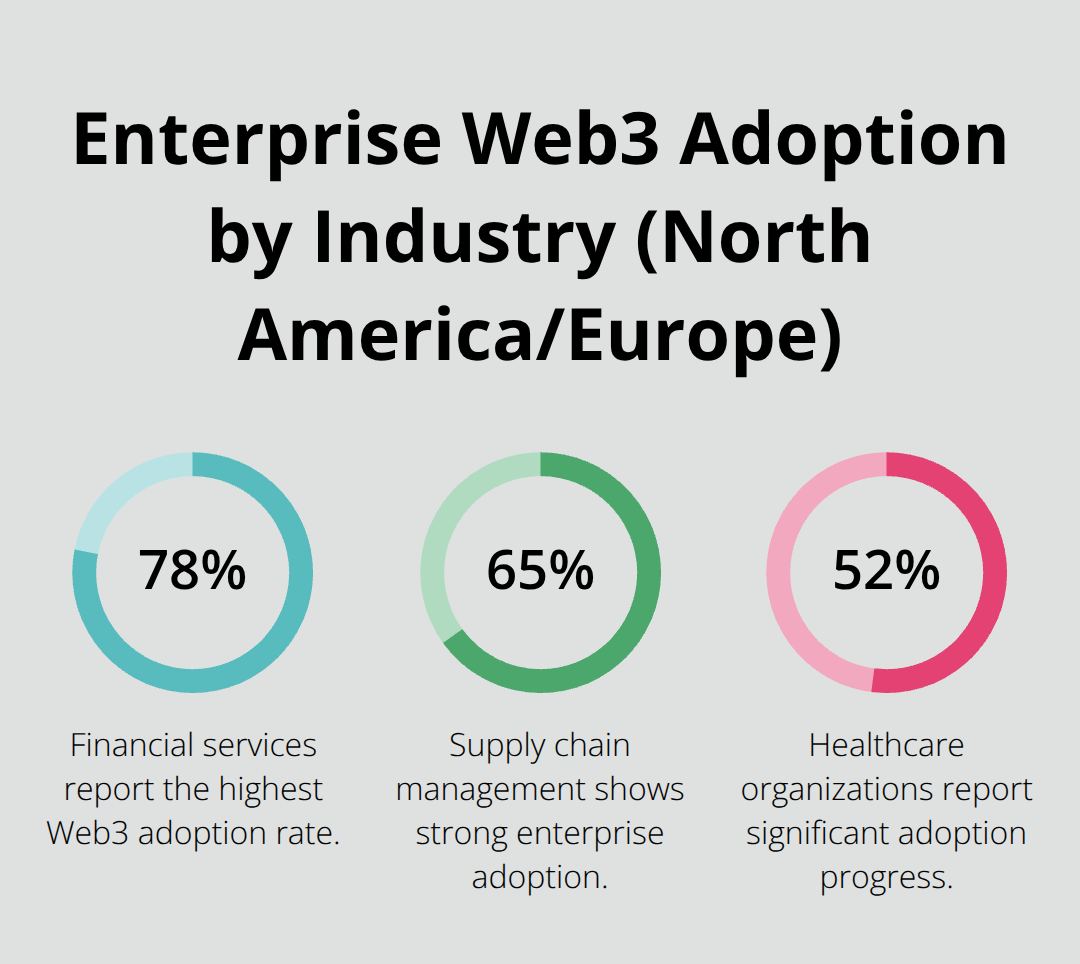
North American and European enterprises lead Web3 adoption, with Asia-Pacific markets following rapidly. Financial services report the highest adoption rates at 78%, followed by supply chain management at 65% and healthcare at 52%.
Insurance companies automate claims processing through smart contracts, while government agencies explore blockchain for voting systems and identity verification. These sector-specific applications demonstrate that successful Web3 adoption requires targeted implementation strategies rather than broad technological experiments.
The data reveals a clear pattern: organizations that implement Web3 solutions strategically gain significant operational advantages, which raises the question of what specific benefits drive this widespread corporate adoption.
Key Business Benefits of Web3 Integration
Web3 integration transforms business operations through measurable cost reductions and operational improvements. Companies that implement blockchain solutions report transaction cost savings of 30-50% compared to traditional payment systems, with settlement times that drop from 3-5 business days to under 10 minutes.
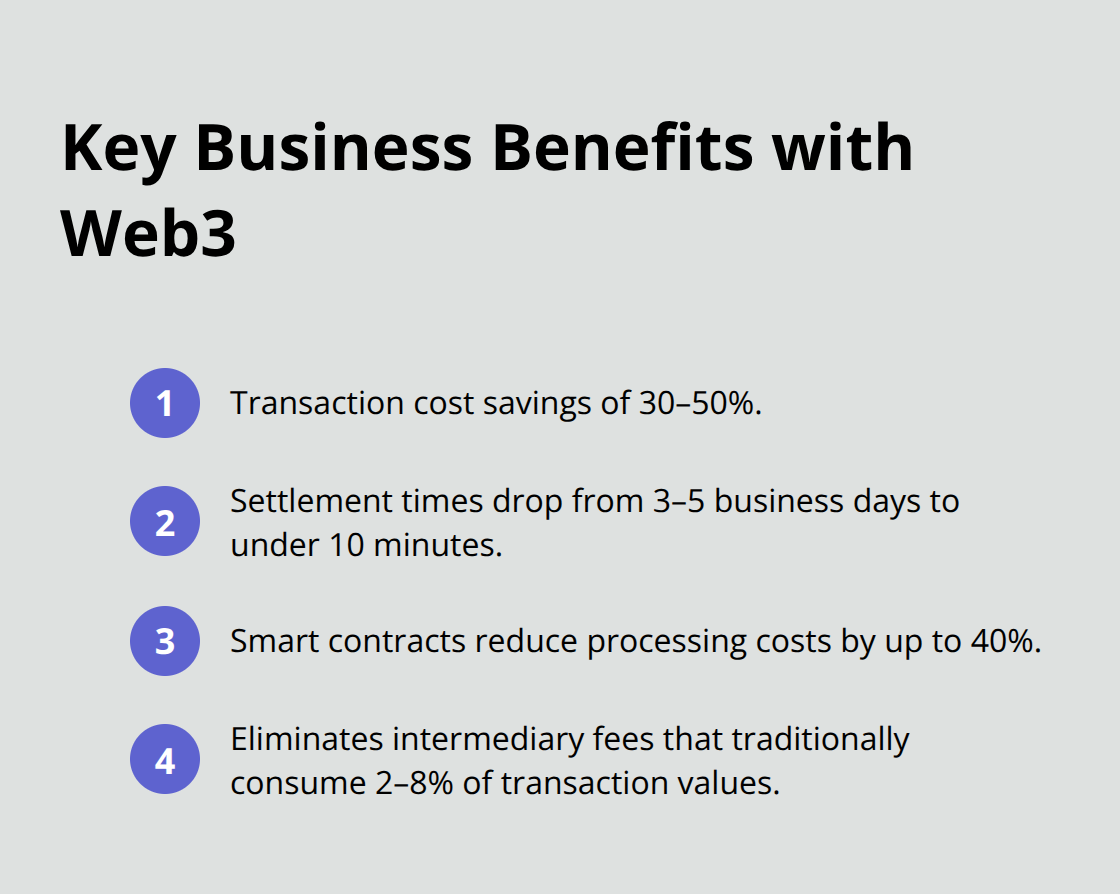
JPMorgan’s JPM Coin processes over $1 billion in daily transactions, which demonstrates that enterprise blockchain delivers immediate operational benefits rather than theoretical advantages. Organizations that use smart contracts for supply chain management reduce processing costs by up to 40% while they eliminate intermediary fees that traditionally consume 2-8% of transaction values.
Transaction Speed Creates Competitive Advantages
Modern blockchain networks process transactions at speeds that traditional banking cannot match. Ethereum Layer 2 solutions like Arbitrum achieve 40,000 transactions per second, while enterprise blockchain networks achieve even higher throughput rates. Companies that leverage these capabilities gain immediate cash flow advantages through faster receivables processing and reduced working capital requirements. Insurance firms that use blockchain for claims processing report settlement times that improve from weeks to hours (directly impacting customer satisfaction and operational efficiency). The Federal Reserve’s 2024 data shows that blockchain-based B2B payments settle 95% faster than ACH transfers, which creates substantial competitive advantages for early adopters.
Transparency Builds Trust and Reduces Compliance Costs
Blockchain’s immutable ledger provides audit trails that reduce compliance costs by 60-70% according to recent enterprise implementations. Every transaction receives cryptographic verification, which creates documentation that satisfies regulatory requirements without manual intervention. Healthcare organizations that use blockchain for supply chain tracking report 100% visibility into pharmaceutical origins (eliminating counterfeit products and reducing liability exposure). Financial institutions benefit from automated compliance reporting, with blockchain systems that generate regulatory documentation that previously required extensive manual processes and third-party verification services.
Global Operations Become Seamless and Cost-Effective
Cross-border payments through blockchain networks cost 90% less than traditional wire transfers while they settle in minutes rather than days. Companies with international operations report significant savings on foreign exchange fees and correspondent banking charges. Cryptocurrency payments eliminate the need for multiple currency conversions, which reduces transaction costs from 3-7% to under 1% for international transfers. Organizations that use blockchain for international contractor payments avoid traditional banking delays and reduce administrative overhead through the elimination of complex approval processes required for international wire transfers.
These financial benefits represent just the beginning of Web3’s transformative potential, but successful implementation requires addressing specific technical and organizational challenges that many enterprises face.
Overcoming Web3 Implementation Challenges
Web3 implementation fails when organizations treat it as a standalone technology project rather than integrate it with existing business systems. Companies that succeed connect blockchain capabilities directly to their operational infrastructure, particularly CRM systems like Salesforce where transaction data, customer relationships, and financial processes already exist. The technical complexity that stops most enterprises dissolves when Web3 functions operate within familiar business workflows rather than require separate platforms and extensive retraining.
Native Integration Eliminates Adoption Barriers
Native Salesforce blockchain solutions remove the steepest implementation hurdle: user adoption. Employees already familiar with Salesforce interfaces can process cryptocurrency payments, track digital asset portfolios, and manage international transfers without learning new systems.
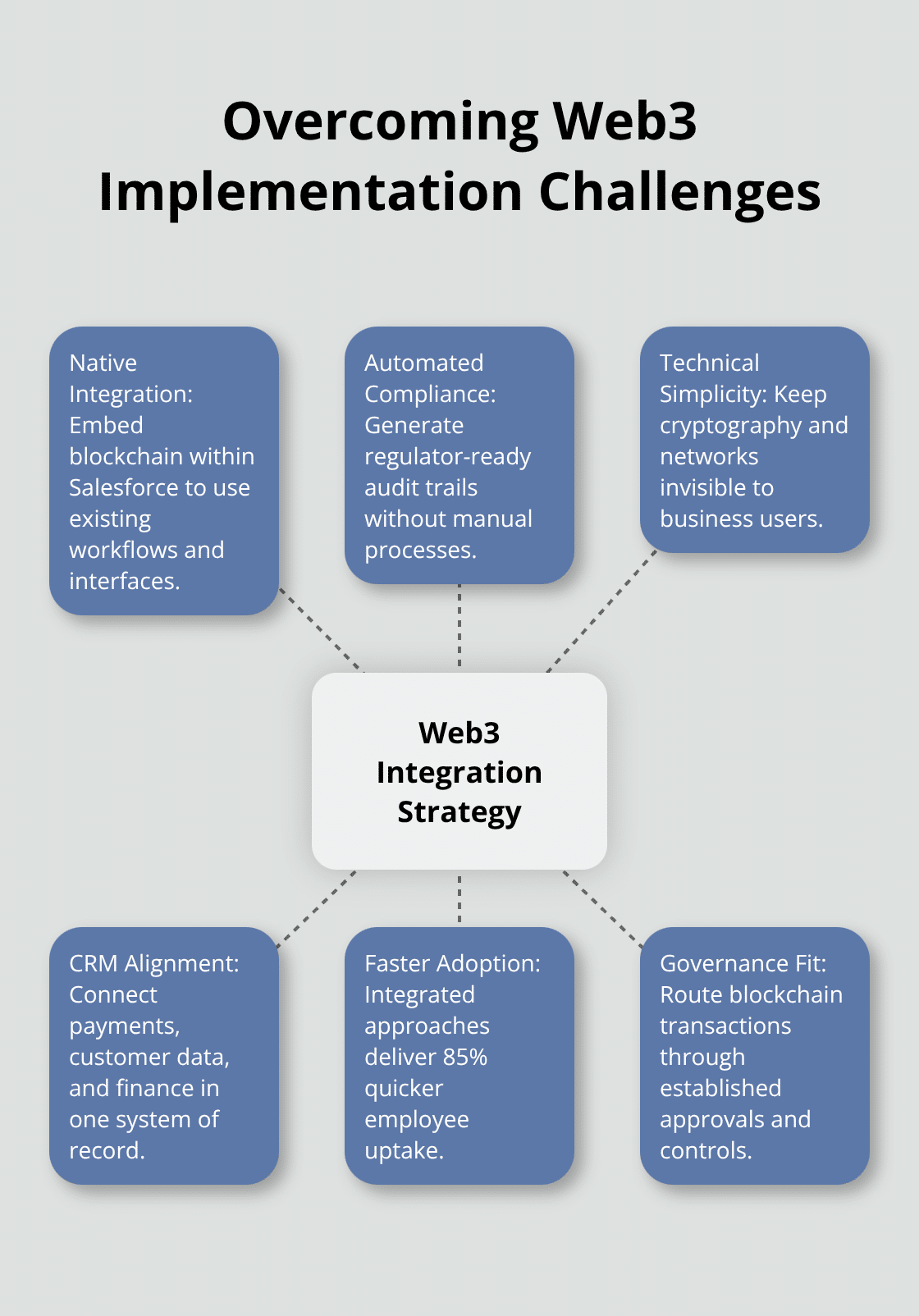
Organizations report 85% faster employee adoption when Web3 capabilities integrate with current workflows rather than require separate blockchain platforms. The key lies in treating blockchain as a payment method rather than a technology transformation, which reduces resistance and accelerates deployment timelines significantly.
Automated Compliance Replaces Manual Processes
Smart regulatory frameworks require automated compliance reports, not manual blockchain expertise. Modern Web3 platforms generate audit trails that satisfy SEC, CFTC, and international regulatory requirements without additional documentation processes. Companies that integrate blockchain payments within established business systems automatically create the transaction records that regulators expect (while standalone blockchain implementations often require expensive compliance consulting and manual procedures). Risk assessment becomes straightforward when blockchain transactions flow through existing approval workflows and financial controls rather than operate outside established corporate governance structures.
Technical Complexity Becomes Business Simplicity
Enterprise blockchain adoption succeeds when technical infrastructure remains invisible to end users. Staff members process international payments through familiar Salesforce interfaces while blockchain networks handle the complex cryptographic operations behind the scenes. This approach eliminates the 6-month training periods that typically accompany blockchain implementations and reduces IT overhead through existing system maintenance protocols. Organizations avoid the common pitfall of blockchain projects that require dedicated technical teams and specialized knowledge for routine business operations.
Final Thoughts
Web3 adoption represents a strategic imperative that separates market leaders from followers in 2025. Companies that delay implementation face mounting disadvantages as competitors achieve 30-50% cost reductions and settlement times that drop from days to minutes. The $67 billion in enterprise blockchain spending demonstrates that Web3 has moved beyond experimental phases into operational necessity.
Successful Web3 integration requires three critical elements: native system integration, automated compliance frameworks, and invisible technical complexity. Organizations that connect blockchain capabilities directly to existing Salesforce infrastructure report 85% faster employee adoption rates compared to standalone implementations. This approach eliminates the training barriers and technical overhead that typically derail blockchain projects (while maintaining familiar business workflows).
The roadmap for enterprise Web3 adoption starts with identification of high-impact use cases like international payments, supply chain tracking, or automated compliance reports. Companies should prioritize solutions that integrate with current business workflows rather than require separate platforms or extensive retraining programs. Web3 Enabler provides the seamless interface between Salesforce and blockchain networks that makes this transformation possible within your existing corporate infrastructure.