


 Global transactions remain one of the biggest operational headaches for enterprise teams. Traditional payment systems drain resources through high fees, slow processing times, and complex compliance requirements.
We at Web3 Enabler see companies struggling with cross-border payments that take days to settle while eating into profit margins. Salesforce integration with blockchain technology changes this entire equation for finance and sales teams worldwide.
Why Traditional Payment Systems Fail Global Businesses
Transaction Costs That Destroy Profit Margins
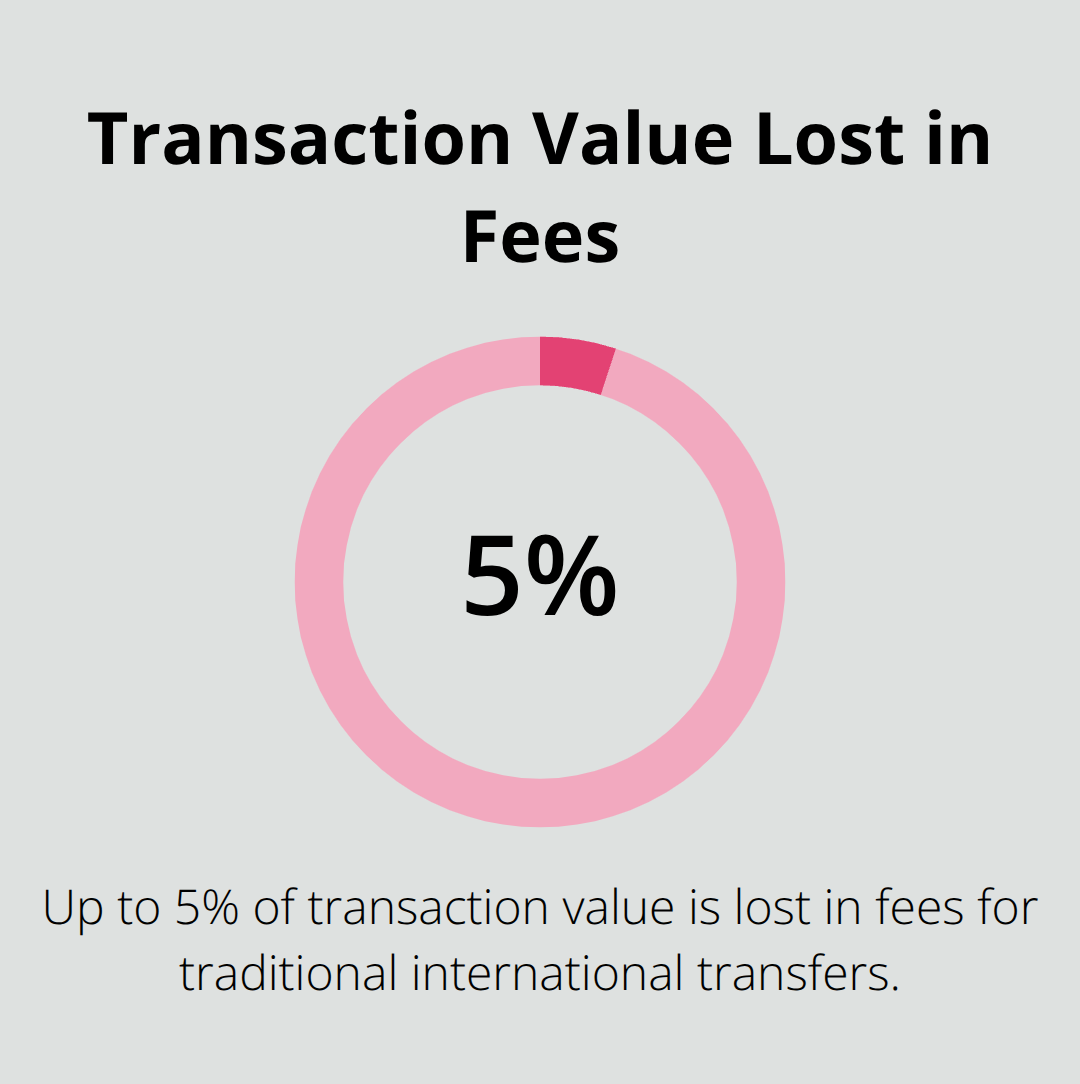
Traditional bank-to-bank SWIFT transactions cost USD 20–50 per transaction, which creates a financial burden that scales with business growth. International wire transfers eat into margins through exchange rate spreads, correspondent banking fees, and processing charges that compound across multiple intermediaries. Finance teams watch helplessly as 3-5% of transaction value disappears in fees before payments reach recipients.
Settlement delays compound these cost issues. Standard international transfers take 1–3 days, which forces companies to maintain larger cash reserves and creates cash flow gaps that impact working capital. Sales teams lose deals because payment processing delays frustrate international clients who expect modern, efficient transaction experiences.
Compliance Complexity That Slows Operations
Regulatory requirements across different jurisdictions create operational nightmares for finance teams. Each country demands specific documentation, reporting formats, and approval workflows that vary by transaction size and destination. Anti-money laundering checks, know-your-customer verification, and sanctions screening add layers of manual review that extend processing times.
Finance teams spend countless hours managing compliance documentation across multiple systems. Transaction monitoring requires constant attention to regulatory changes in dozens of countries (often exceeding 50 jurisdictions for global enterprises), which creates risk exposure when teams miss updates or misinterpret requirements.
Zero Transaction Visibility Creates Business Risk
Most traditional payment systems offer minimal tracking capabilities once transactions leave the originating bank. Finance teams have no real-time visibility into where payments sit in the correspondent banking chain or when they will complete. This opacity creates customer service issues when clients ask about payment status and internal forecasting problems when cash flow timing remains uncertain.
The lack of transparency extends beyond simple tracking. Traditional systems provide no audit trail for compliance teams, no automated reporting for finance departments, and no integration capabilities with existing CRM platforms. These limitations force businesses to operate with fragmented financial data across multiple systems, making strategic decision-making nearly impossible.
Modern blockchain-powered solutions within Salesforce environments address these fundamental weaknesses through native integration and real-time processing capabilities.
How Salesforce Native Blockchain Integration Works
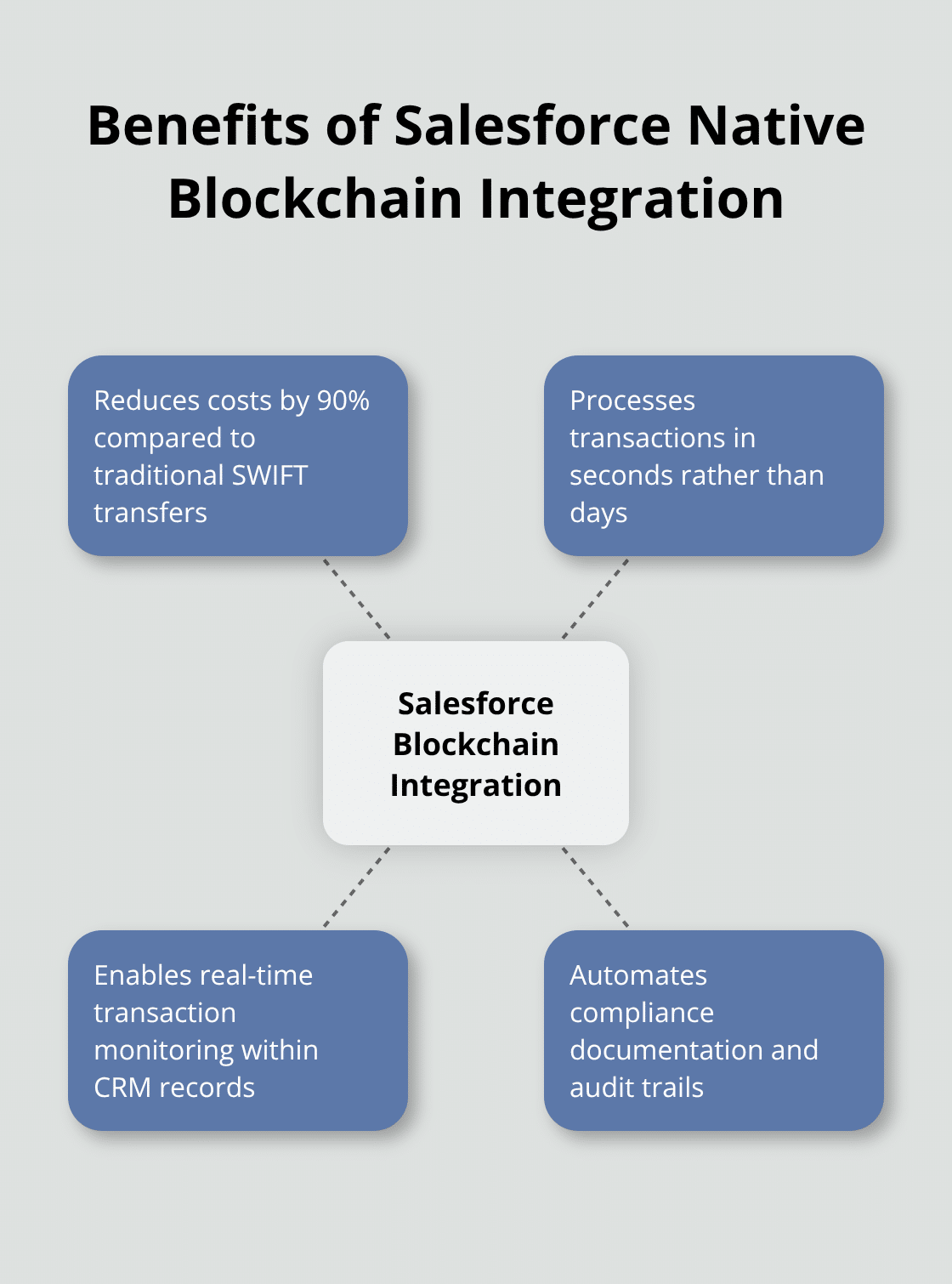
Salesforce environments now support direct cryptocurrency transactions through native blockchain integration, which eliminates the need for third-party payment processors or external wallet management systems. We at Web3 Enabler have built the only native blockchain payments app on the Salesforce AppExchange, which processes transactions in seconds rather than days while reducing costs by 90% compared to traditional SWIFT transfers. Finance teams can execute international payments directly from their CRM records, with stablecoin transactions allowing near-instant global payments with reduced fees compared to traditional bank transfers.
Real-Time Transaction Monitoring Within CRM Records
Transaction visibility transforms from complete opacity to real-time monitoring within existing Salesforce workflows. Every blockchain payment appears instantly in the associated account, opportunity, or contract record with complete transaction history, wallet addresses, and settlement confirmations. Finance teams can track payment status, generate compliance reports, and forecast cash flow using live transaction data that updates automatically.
Sales teams can confirm payment receipt to clients immediately rather than wait days for bank confirmation. Finance departments can close books faster with real-time settlement data that flows directly into existing reporting dashboards (eliminating the typical 3-day reconciliation cycle).
Automated Compliance Documentation and Audit Trails
Blockchain transactions create immutable audit trails that satisfy regulatory requirements across multiple jurisdictions without manual documentation. Smart contracts automatically generate compliance reports for anti-money laundering checks, transaction monitoring, and regulatory filing requirements. The system maintains complete transaction histories with cryptographic proof of authenticity, which eliminates the documentation burden that typically consumes hours of finance team time.
Automated sanctions screening and know-your-customer verification occur at the transaction level. Regulatory reporting generates automatically for finance teams managing compliance across dozens of international markets (often exceeding 50 jurisdictions for global enterprises).
These operational improvements create measurable business benefits that extend far beyond simple cost savings, transforming how global enterprises manage their international payment operations.
What Financial Benefits Drive Enterprise Blockchain Adoption
Transaction Economics That Transform Business Operations
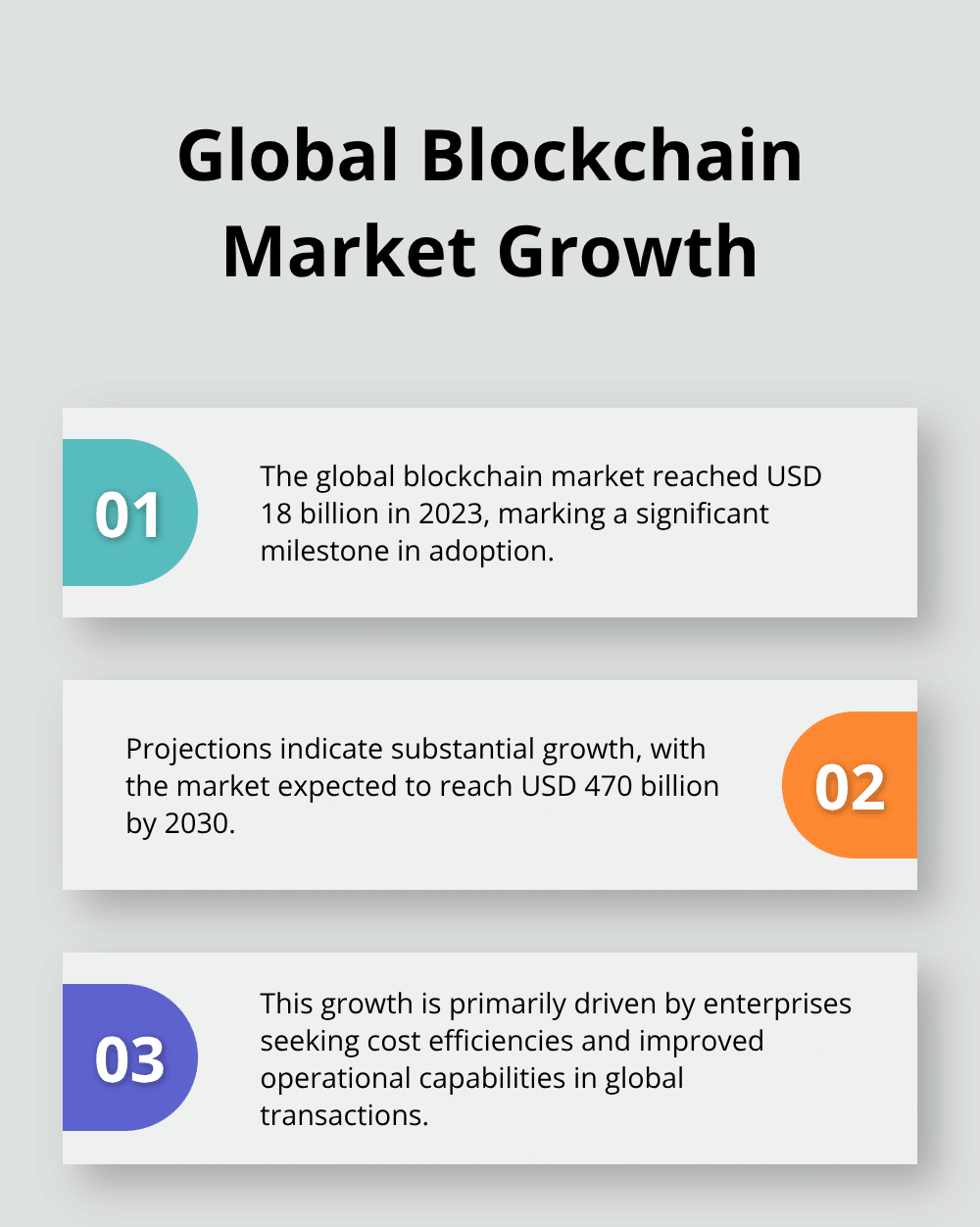
Blockchain-powered global transactions deliver measurable cost reductions that directly impact enterprise profitability. Peer-to-peer stablecoin payments incur transaction fees that are significantly lower than traditional banking costs, while traditional banks charge 3-8% per transaction for cross-border payments, which creates savings that compound across thousands of annual transactions. The global blockchain market reached USD 18 billion in 2023 and projects growth to USD 470 billion by 2030, driven primarily by enterprises that seek these cost efficiencies.
Settlement speed improvements eliminate the working capital strain that multi-day processing delays cause. Blockchain transactions complete within seconds, which allows finance teams to optimize cash positions and reduce the reserve requirements that traditional banking delays necessitate. Companies that process high-volume international payments see immediate improvements in cash flow predictability when settlement times drop from 3-5 business days to under 30 seconds.
Security Architecture That Prevents Financial Fraud
Cryptographic security protocols in blockchain systems provide fraud prevention capabilities that exceed traditional banking security measures. Each transaction receives cryptographic signatures that create tamper-proof records, while distributed ledger technology eliminates single points of failure that hackers typically exploit in centralized payment systems. The immutable nature of blockchain records means that once transactions complete, they cannot be altered or reversed without network consensus.
Smart contract automation removes human error from payment processing while it maintains strict security protocols. Automated compliance checks occur at the transaction level, which screen for sanctions violations and suspicious activity patterns without manual intervention. Finance teams gain confidence in payment security while they reduce the operational overhead typically required for fraud monitoring across multiple payment channels.
Cash Flow Optimization Through Real-Time Financial Data
Real-time transaction settlement enables precise cash flow management that traditional systems cannot match. Finance teams can accurately forecast working capital requirements when payment timing becomes predictable, which eliminates the uncertainty that forces companies to maintain excessive cash reserves. Automated reporting generates instant financial insights that support strategic decision-making without waiting for bank reconciliation cycles (typically 3-5 business days).
Integration with existing Salesforce workflows means that payment data flows directly into financial forecasting models and customer relationship records. Sales teams can offer clients immediate payment confirmation, while finance departments can close accounting periods faster with real-time settlement data that eliminates traditional reconciliation delays (often reducing month-end close from 10 days to 2 days).
Final Thoughts
Global transactions through Salesforce blockchain integration deliver measurable operational improvements that transform enterprise payment operations. Companies reduce transaction costs by 90% while they achieve settlement times under 30 seconds compared to traditional 3-5 day cycles. Real-time visibility eliminates the opacity that creates cash flow uncertainty and customer service issues in conventional systems.
The strategic advantages extend beyond cost savings. Finance teams gain automated compliance documentation across multiple jurisdictions, while sales departments confirm payments instantly to international clients. Cash flow forecasts become precise when settlement shifts from unpredictable to immediate (companies optimize working capital requirements with this predictability).
Implementation starts with evaluation of current payment volumes and identification of high-cost international transfer patterns. Web3 Enabler provides native blockchain payments solutions on the Salesforce AppExchange, which enables businesses to manage digital assets and process international payments directly within existing CRM workflows. The platform connects blockchain transactions to corporate infrastructure while it maintains the security and compliance standards that enterprise operations require.