



Your Salesforce environment handles everything from customer relationships to revenue operations. But it’s missing a critical capability: the ability to accept and send stablecoin payments natively within your CRM.
We at Web3 Enabler have built that capability directly into Salesforce. No external wallets, no separate platforms, no friction. Your teams can manage blockchain payments the same way they manage everything else-right where they work.
Why Stablecoins Matter Now
Stablecoins now power enterprise payments across treasury flows, cross-border payouts, embedded finance, and intelligent systems. Global banks actively issue USD-backed stablecoins on public blockchains, signaling that this isn’t a niche trend anymore-it’s infrastructure. Your competitors are already exploring how to integrate them into their payment stacks. The question isn’t whether stablecoins will matter to your business; it’s whether you’ll move fast enough to capture the efficiency gains before they become table stakes.
Speed and Settlement That Actually Works
Traditional cross-border payments take days. A wire transfer from New York to London still requires multiple intermediaries, each adding friction and cost. Stablecoins settle in minutes on public blockchains, giving your treasury team real-time visibility into cash positions instead of waiting for nostro account confirmations. This matters for concrete reasons: faster settlement means faster revenue recognition for your finance team, lower working capital requirements, and the ability to redeploy capital immediately rather than having it locked in transit. For e-commerce merchants, accepting stablecoins eliminates the 2-3 day settlement window that credit card processors enforce, meaning cash hits your account faster.
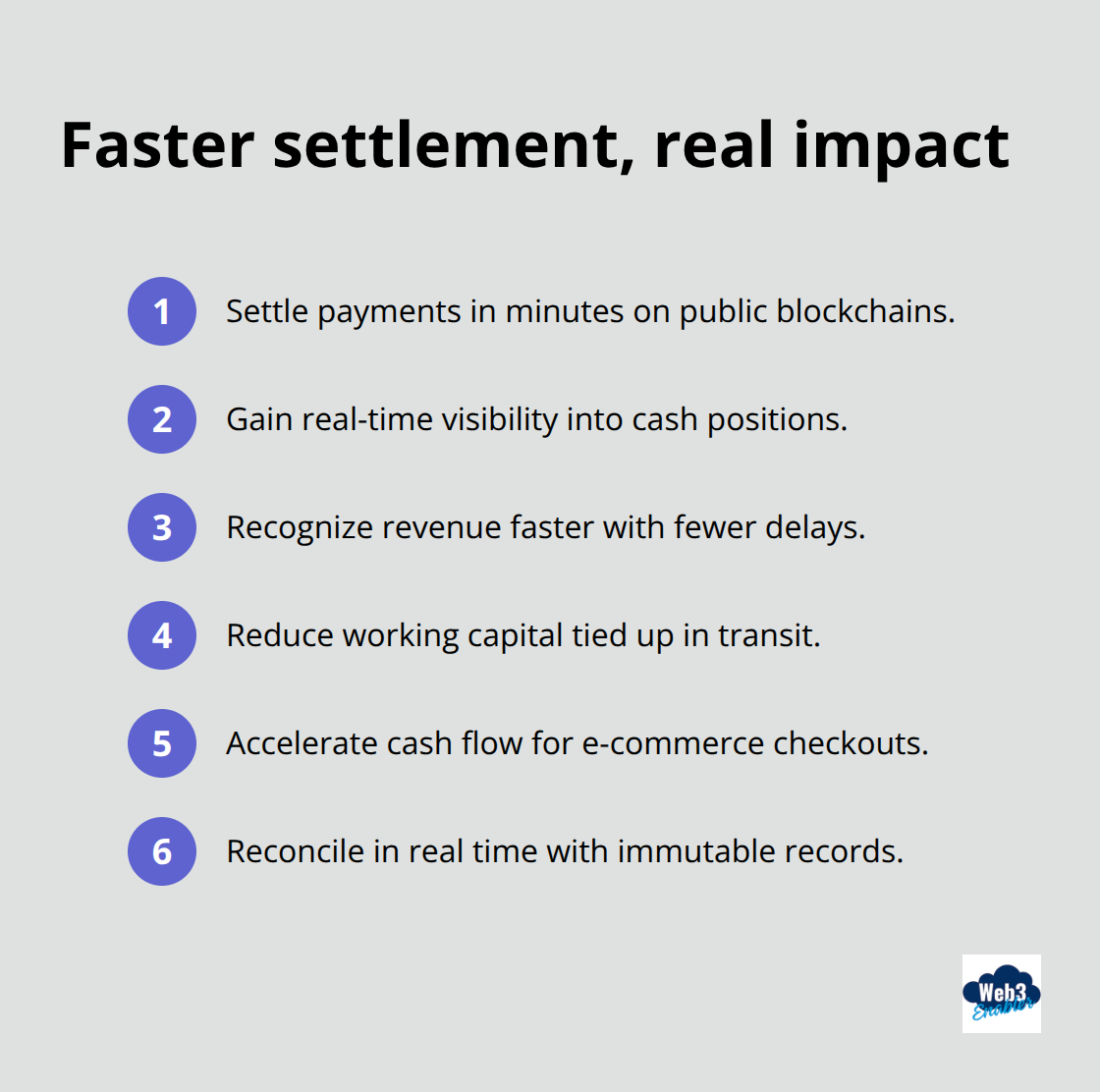
Real-time reconciliation becomes possible because every transaction creates an immutable record on the blockchain-no more chasing down discrepancies between payment processors and your ERP system.
Cost Reduction That Compounds
International payment fees are brutal. Banks typically charge 1-3% per transaction for cross-border transfers, and that’s before intermediary fees stack on top. Stablecoins operate on public blockchains with transaction costs measured in cents, not percentages. For a treasury operation moving $10 million monthly across borders, that difference amounts to thousands of dollars saved per month. Merchants expanding into new markets face similar headwinds: payment processors charge different rates for different regions, and chargebacks create operational overhead. Stablecoins reduce that complexity. A merchant in Singapore can accept payment from a customer in Brazil without worrying about currency conversion delays or regional payment processor availability. The cost savings accumulate quickly when you process high-volume transactions or manage global operations across multiple currencies.
Why Your Salesforce Environment Needs This Capability
Your finance and operations teams already live in Salesforce. They manage customer relationships, revenue cycles, and compliance workflows there every day. Adding stablecoin payments to that environment means your teams no longer toggle between platforms to complete a transaction. Web3 Enabler brings stablecoin payments directly into Financial Services Cloud, Commerce Cloud, and Revenue Cloud-so your advisors, merchants, and treasury professionals handle blockchain payments the same way they handle everything else. The result: faster adoption, fewer errors, and teams that actually use the technology because it fits their workflow rather than disrupting it.
Building Stablecoin Payments Into Your Salesforce Workflows
Native Integration Across Your Salesforce Environment
Your Salesforce environment already connects to your payment processors, banking partners, and financial data systems. Web3 Enabler extends that architecture by adding blockchain-native payment rails directly into Financial Services Cloud, Commerce Cloud, and Revenue Cloud. This matters because your teams no longer need external wallets, bridge platforms, or separate dashboards to send and accept stablecoins. A financial advisor in Financial Services Cloud views a client’s on-chain wallet balance and stablecoin positions within the same interface where they manage account relationships. A merchant in Commerce Cloud accepts USDC or USDT payments at checkout without redirecting customers to a third-party payment gateway. A treasury professional in Revenue Cloud initiates a cross-border settlement, watches it clear in minutes on the blockchain, and has the transaction automatically reconciled against your general ledger. The integration works because Web3 Enabler builds on Salesforce’s native objects and automation layers, meaning your compliance workflows, audit trails, and data governance rules apply to blockchain transactions exactly as they apply to traditional payments.
Real-Time On-Chain Visibility and Compliance
Traditional international payments disappear into the banking system for 2-3 days, leaving your finance team blind to cash positions and unable to reconcile until settlement completes. Stablecoin transactions on public blockchains create immutable records that appear instantly in your Salesforce environment. Web3 Enabler surfaces this data through automated compliance tracking, meaning every transaction receives tagging with source-of-funds verification, OFAC screening results, and counterparty risk assessments before it settles. For treasury teams managing multiple currencies across regions, this eliminates manual reconciliation work and reduces the window for compliance violations.
Operational Advantages That Compound
For merchants, accepting stablecoins means settlement occurs within minutes rather than days, improving cash flow forecasting and reducing working capital tied up in payment processing float. Financial Services Cloud users gain the ability to monitor client digital asset positions in real time, enabling advisors to make recommendations based on current market conditions rather than stale data from the previous day. The speed and transparency aren’t optional features-they’re structural advantages that compound over time as transaction volumes increase and your teams build processes around real-time settlement rather than batch-based workflows. When your finance team stops waiting for nostro account confirmations and starts making decisions based on blockchain-verified transactions, the efficiency gains ripple across your entire operation.
Where Stablecoins Create Real Business Impact
Financial Services Cloud: Real-Time Digital Asset Visibility
Financial Services Cloud advisors currently manage client relationships and investment portfolios through Salesforce, but they lack visibility into the fastest-growing asset class their clients hold: digital assets. When a client’s wealth includes stablecoin positions or on-chain holdings, advisors make recommendations based on incomplete information. Web3 Enabler surfaces on-chain wallet balances and digital asset positions directly within the advisor’s workspace, enabling real-time guidance on asset allocation and liquidity management. An advisor working with a high-net-worth client who holds $500,000 in USDC across multiple wallets can now see those positions consolidated in Financial Services Cloud, assess their role in the overall portfolio, and make recommendations without asking the client to extract data from external blockchain explorers. Advisors who understand and actively manage digital asset exposure build stronger client relationships and unlock advisory fees on a growing segment of client wealth. When market conditions shift, advisors see updated wallet balances in real time rather than waiting for clients to manually report their positions.
Commerce Cloud: Borderless Payments for Global Merchants
E-commerce merchants expanding into emerging markets face brutal payment processing realities. A merchant in the United States selling to customers in Southeast Asia through traditional payment processors pays 2-4% in fees, waits 5-7 days for settlement, and navigates regional payment method fragmentation that requires integrating with dozens of local processors. The same merchant accepting stablecoins through Commerce Cloud integration sees settlement in minutes, pays transaction costs measured in cents rather than percentages, and serves any customer globally without regional processor complexity. For a merchant processing $100,000 monthly in cross-border transactions, the difference between traditional rails and stablecoin settlement amounts to $2,000-4,000 saved monthly.
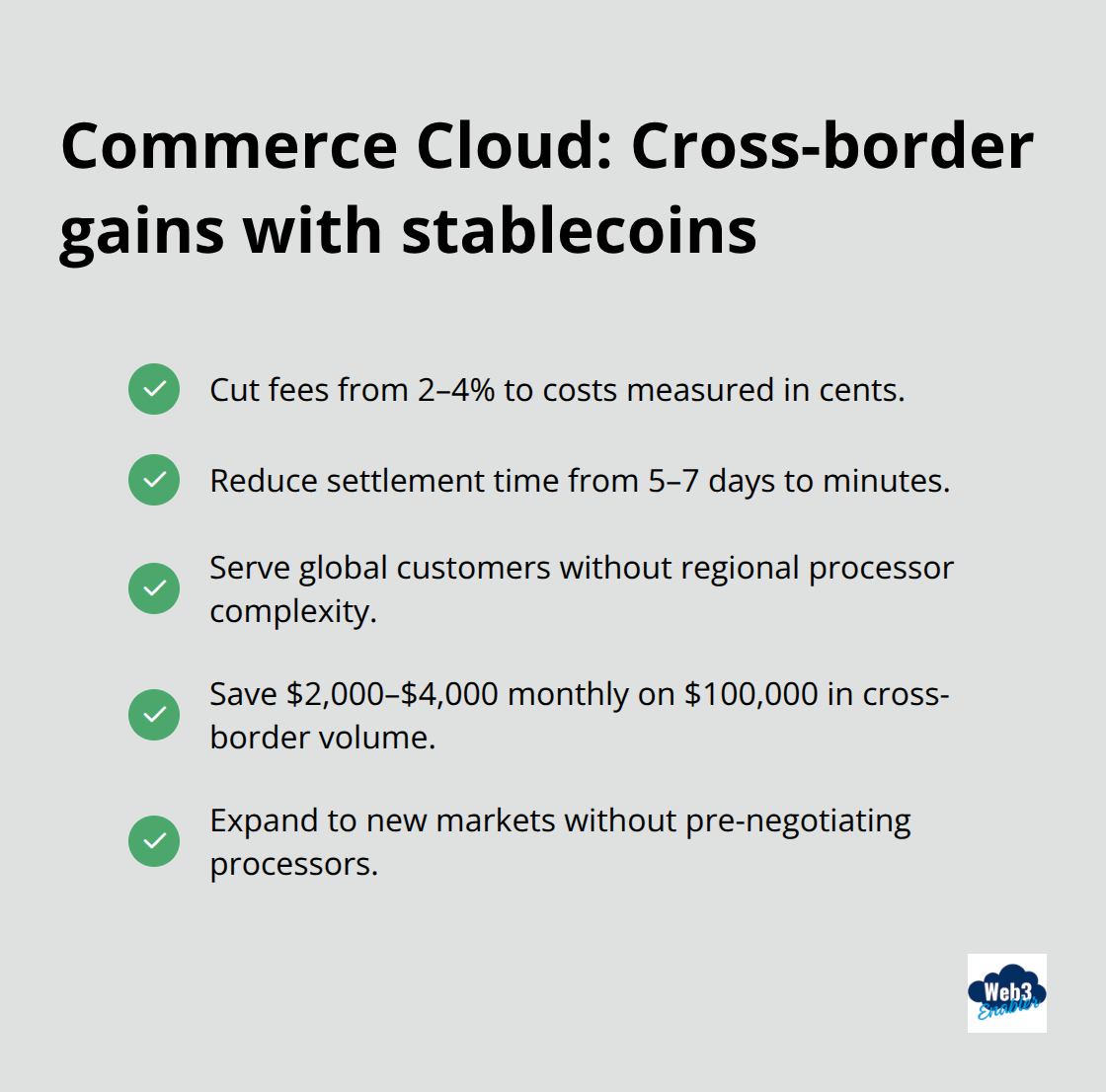
The merchant gains the ability to expand into new markets without pre-negotiating payment processor relationships in each region.
Revenue Cloud: Treasury Operations at Speed
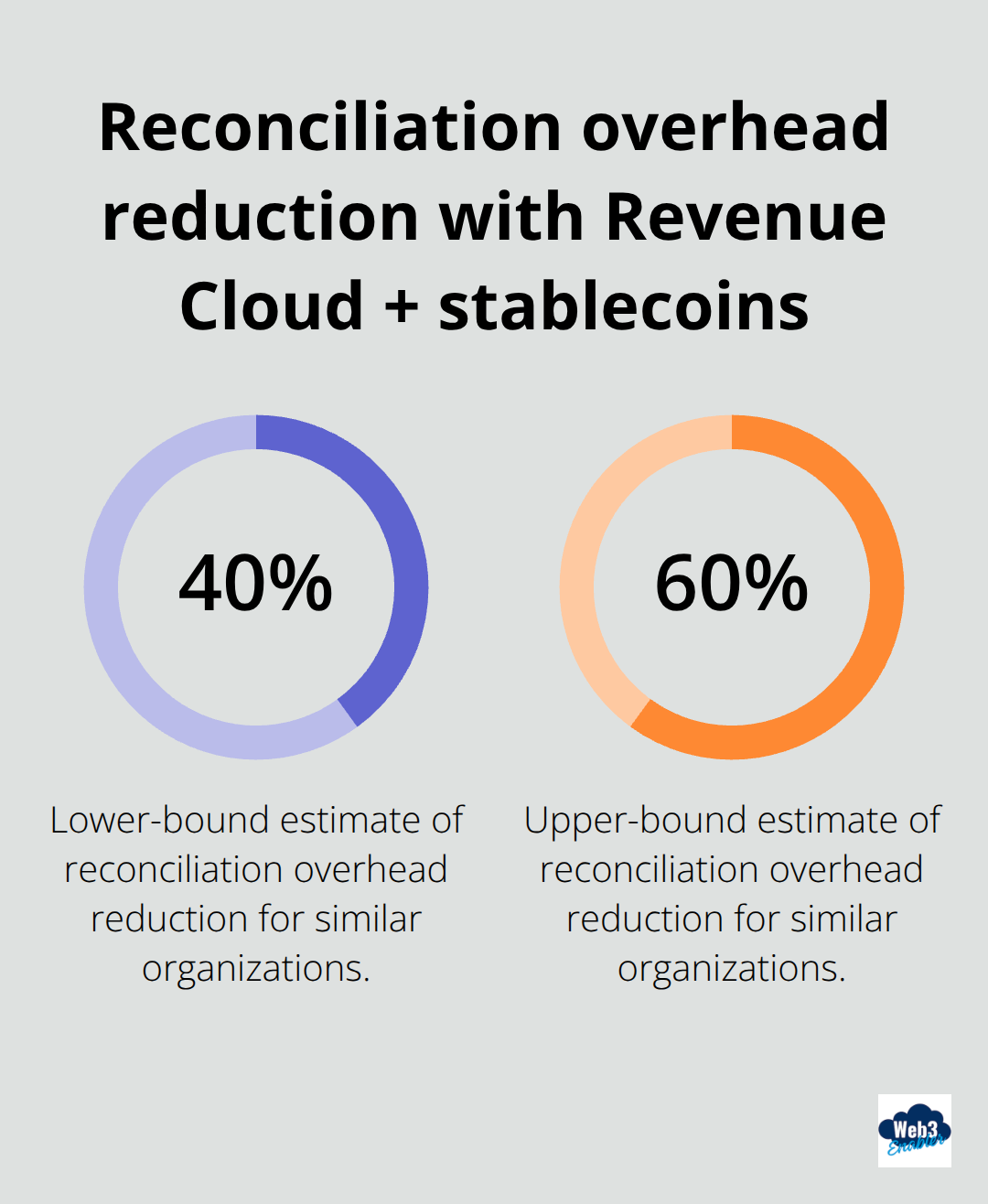
Treasury operations teams face the most compelling case for immediate adoption. A multinational corporation with subsidiaries across Europe, Asia, and the Americas currently manages cross-border settlements through a patchwork of banking relationships, each adding days to the settlement timeline and creating reconciliation nightmares. Treasury professionals spend substantial time chasing confirmations across multiple nostro accounts, reconciling discrepancies between banking statements and internal records, and forecasting cash positions with stale data from yesterday’s settlement batches. Web3 Enabler integrates stablecoin settlement directly into Revenue Cloud, meaning treasury teams initiate a cross-border payout, watch it settle on the blockchain within minutes, and have the transaction automatically reconciled against the general ledger with full audit trails. For a corporation moving $50 million monthly across borders, this eliminates weeks of working capital tied up in settlement float and reduces the operational overhead of reconciliation by an estimated 40-60% based on organizations managing similar transaction volumes through traditional banking infrastructure.
Final Thoughts
Stablecoin payments are no longer a future capability-they exist now within your Salesforce environment. The friction that has defined cross-border payments, treasury operations, and global commerce for decades no longer needs to persist. Your finance teams, merchants, and advisors accept and send stablecoins directly from the platforms where they already work, eliminating external wallets, separate dashboards, and manual reconciliation processes.
A Salesforce stablecoin integration transforms how your organization moves money. Treasury teams stop waiting days for settlement confirmations and start making decisions based on real-time blockchain data. Merchants expand into new markets without negotiating payment processor relationships in each region, while financial advisors gain visibility into client digital asset positions and deliver guidance based on complete information rather than incomplete snapshots.
Implementation speed matters because the longer you delay, the more competitive advantage your peers capture through faster settlements, lower payment costs, and real-time liquidity visibility. Web3 Enabler removes the complexity from blockchain adoption by building stablecoin payments natively into Financial Services Cloud, Commerce Cloud, and Revenue Cloud, enabling your teams to modernize payments, streamline settlements, and gain real-time visibility into on-chain transactions without leaving your CRM.