


 Your payment data is sitting there like a goldmine, but most businesses treat USDC transactions like boring receipts. Big mistake.
USDC analytics can transform how you understand customer behavior, optimize cash flow, and make smarter business decisions. We at Web3 Enabler see companies missing massive opportunities by ignoring their stablecoin payment patterns.
Time to turn those transaction records into your competitive advantage.
What USDC Payment Data Actually Tells You
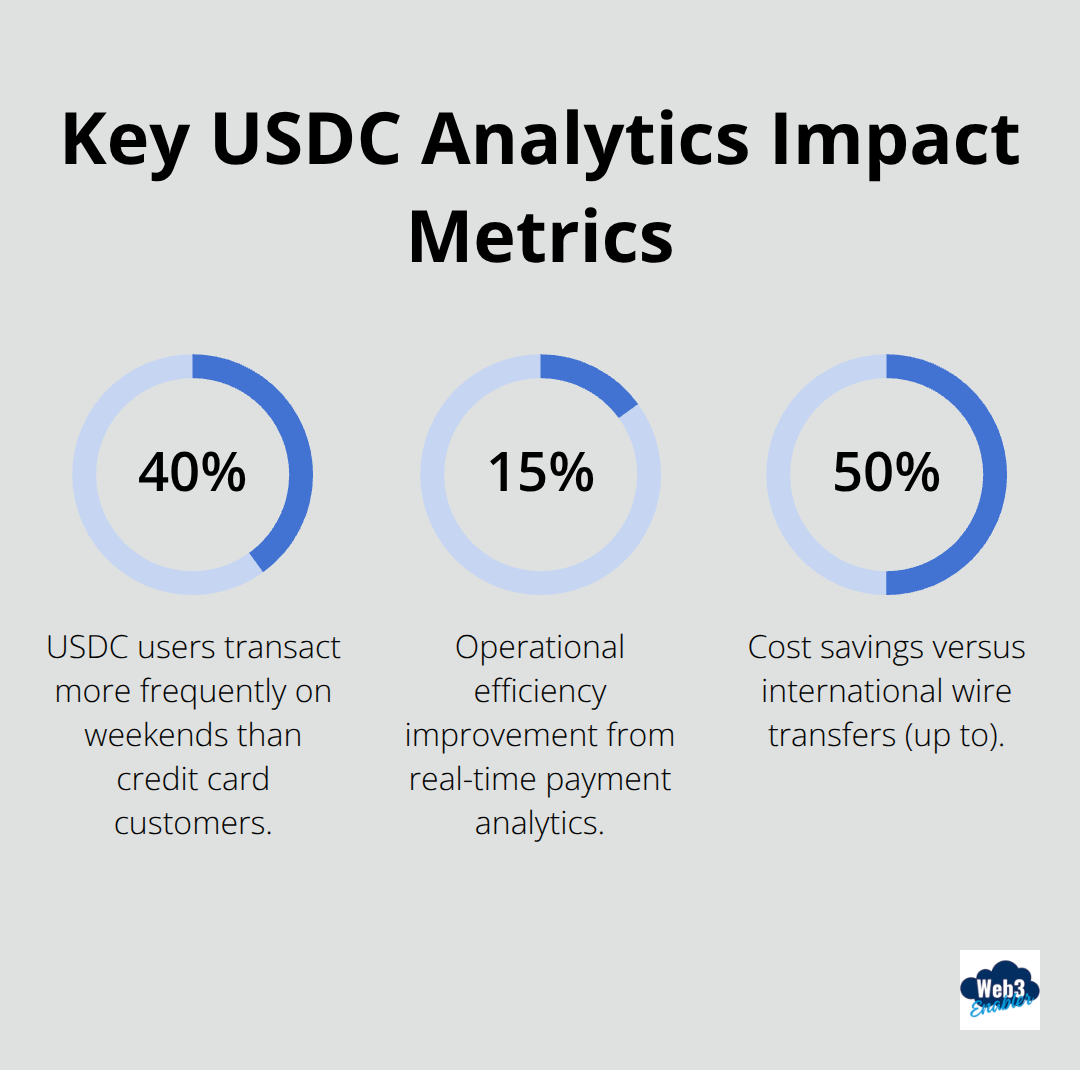
USDC payment data reveals customer behavior patterns that traditional payment methods completely miss. Transaction timestamps expose peak hours when customers prefer digital payments, with many businesses discovering their USDC users transact 40% more frequently during weekends compared to credit card customers.
Geographic data from blockchain transactions uncovers market opportunities you never suspected existed. Companies that process USDC payments report transaction patterns that differ from traditional methods, though stablecoins are currently mostly used for crypto trades with potential for broader payment applications. Payment frequency patterns indicate customer loyalty levels, while settlement speed preferences show which customers prioritize instant results versus cost savings.
Peak Transaction Windows Drive Revenue Optimization
Real-time USDC analytics destroy historical data for revenue decisions. Live transaction monitoring reveals customer behavior shifts within hours, not weeks. Businesses that track real-time USDC flows identify pricing sweet spots faster than competitors who analyze last month’s credit card statements.
Harvard Business Review found companies that use real-time payment analytics boost operational efficiency by 15%. Historical data works for trend analysis, but real-time metrics win for cash flow management. Transaction velocity data helps predict inventory needs, while instant settlement tracking optimizes working capital.
Geographic Trends Shape Global Strategy
USDC geographic data exposes untapped markets that traditional payment processors hide. Transaction clusters show where customers concentrate, which helps optimize shipping routes and local partnerships. Cross-border payment patterns indicate expansion opportunities, with businesses often finding 30% of USDC volume comes from unexpected regions.
Time zone analysis of payment flows helps staff customer service teams effectively. Regional variations guide localized marketing campaigns, while currency conversion patterns show market maturity levels across different countries.
Transaction Value Patterns Predict Customer Lifetime Value
Large USDC transactions often signal high-value customers who prefer digital assets for major purchases. Small, frequent payments indicate subscription-based or loyalty program participants. Transaction size distribution helps segment customers more accurately than traditional payment data alone.
These insights become even more powerful when you integrate them with your existing business systems and create automated reporting dashboards.
How Do You Actually Set Up USDC Analytics
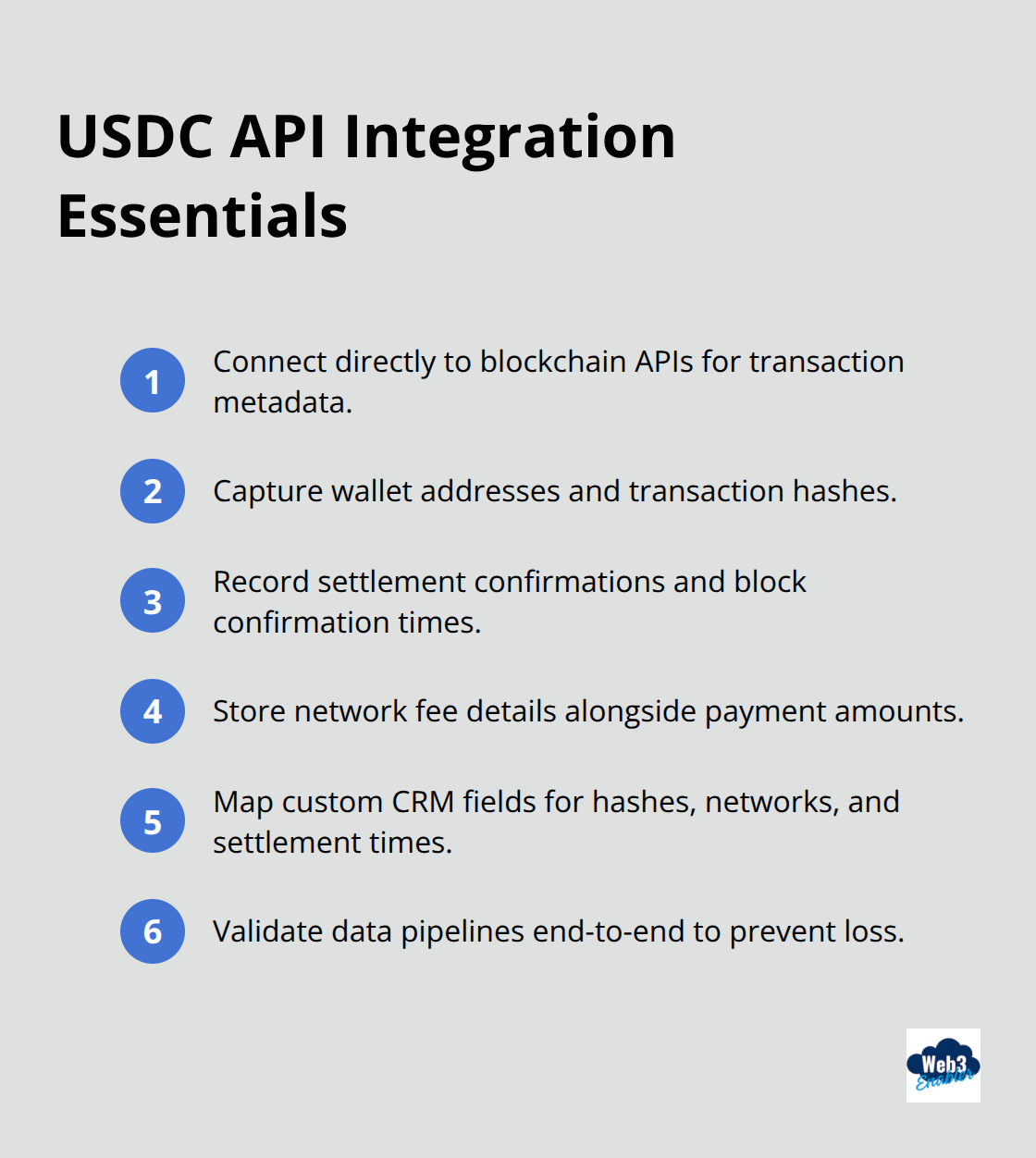
Most businesses fumble USDC analytics integration because they treat it like another payment processor. Wrong approach. USDC data flows differently than traditional payment systems and requires specific API connections plus blockchain data parsing tools. Modern CRM platforms like Salesforce need custom field configurations to capture transaction hashes, settlement times, and blockchain network information that standard payment fields miss. Companies that nail this integration see faster customer insights, but only if they configure data pipelines correctly from day one.
API Integration Requires Blockchain-Specific Configuration
Standard payment APIs won’t cut it for USDC transaction data. You need direct blockchain API connections that pull transaction metadata, settlement confirmations, and network fee information. Configure your systems to capture wallet addresses, transaction hashes, and block confirmation times (not just payment amounts and timestamps).
Most businesses skip this step and lose valuable behavioral insights that only blockchain data provides.
Real-Time Dashboard Configuration Beats Monthly Reports
Automated USDC reporting transforms decision speed from weeks to minutes. Set up dashboards that track transaction velocity, geographic distribution, and settlement patterns in real-time rather than static monthly summaries. Tools like Tableau or Power BI connect directly to blockchain APIs and pull live transaction data without manual exports. Configure alerts for transaction volume spikes, unusual geographic patterns, or settlement delays that indicate operational issues. Companies that use automated USDC dashboards reduce payment processing errors while they identify revenue opportunities faster than manual analysis.
Team Training Focuses on Pattern Recognition Over Technical Details
Your finance team needs pattern recognition skills, not blockchain knowledge. Train them to identify customer behavior shifts through transaction clusters, seasonal payment preferences, and cross-border flow changes. Focus training on settlement speed preferences, payment size distributions, and geographic concentration patterns rather than blockchain mechanics. Effective training programs take two weeks maximum and concentrate on actionable insights rather than technical complexity. Teams that complete focused USDC analytics training improve cash flow forecasting accuracy within their first quarter.
These analytics capabilities become powerful when you apply them to specific business challenges like cash flow optimization and customer behavior analysis.
How USDC Analytics Transform Revenue Operations
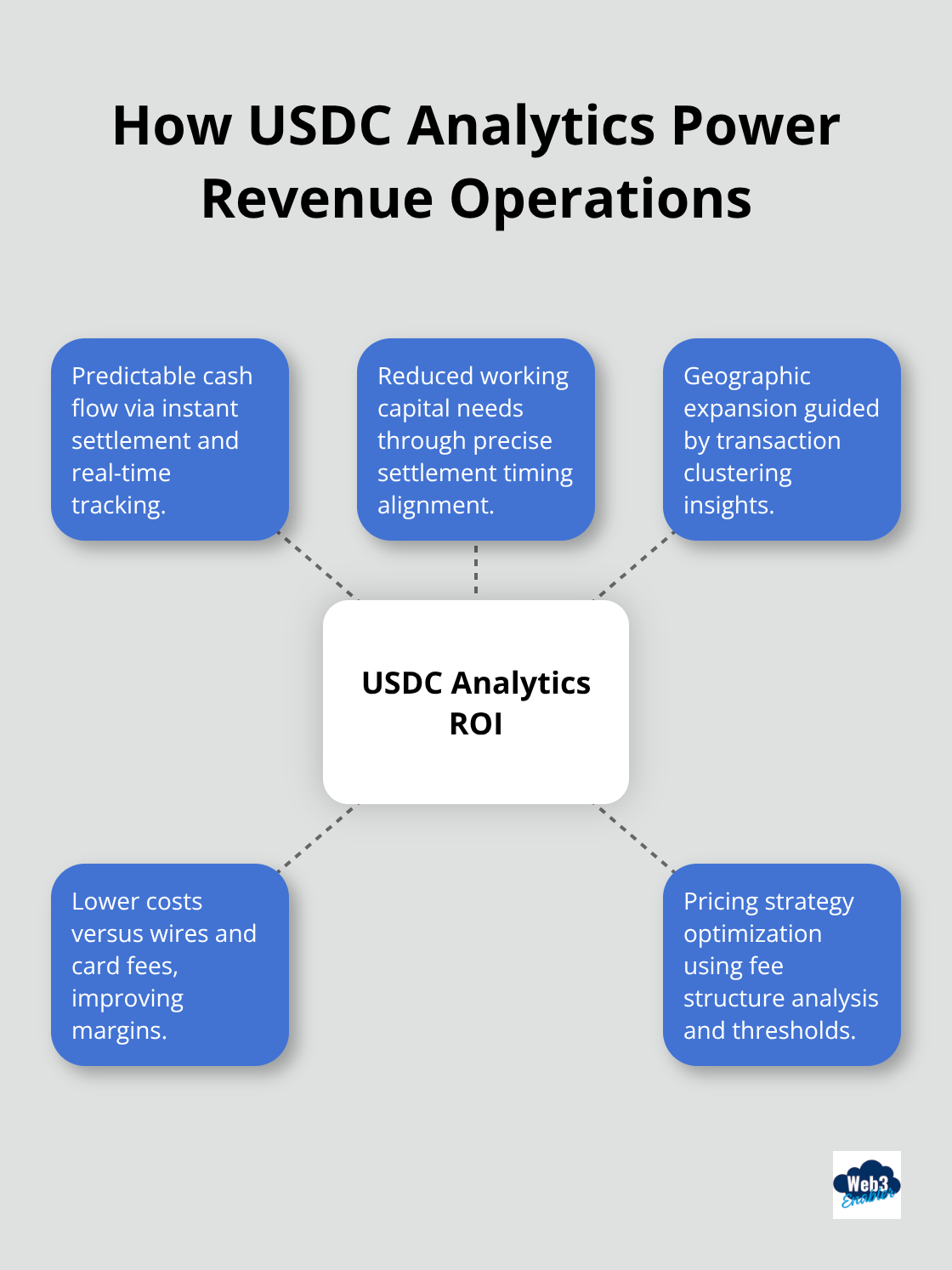
USDC settlement speed creates predictable cash flow management that traditional payments cannot match. Instant blockchain settlement eliminates the 2-3 day wait for credit card processing, which means businesses can optimize working capital with precision timing. Companies using USDC benefit from payment system efficiency improvements, while transaction cost analysis reveals savings up to 50% compared to international wire transfers (as documented in Deloitte research).
Real-time settlement tracking helps predict daily cash positions accurately, while automated alerts for large transactions prevent liquidity surprises that hurt operational planning.
Settlement Speed Optimization Reduces Working Capital Requirements
USDC transactions settle within minutes rather than days, which transforms cash flow forecasting from guesswork into exact science. Businesses that track settlement patterns discover peak transaction windows align with inventory restocking needs, which creates natural cash flow synchronization. Transaction timing analysis shows customer payment preferences cluster around specific hours, which helps optimize staff scheduling and inventory management. Companies that process over $1 million monthly in USDC payments reduce working capital requirements by 15-20% through precise settlement timing predictions.
Geographic Payment Patterns Expose Market Expansion Opportunities
USDC transaction data reveals customer concentrations that traditional payment processors hide behind privacy walls. Geographic clustering analysis identifies regions with high transaction values but low customer acquisition costs, which creates expansion targets with built-in demand validation. Cross-border payment flows indicate market readiness for international expansion, with businesses often finding 30% of revenue potential exists in previously ignored regions. Transaction frequency mapping across time zones helps optimize customer service coverage while it reduces operational costs through strategic resource allocation.
Cost Structure Analysis Drives Pricing Strategy Optimization
USDC transaction fees remain consistent regardless of payment size, which creates pricing advantages for high-value transactions that credit cards penalize with percentage-based fees. Fee structure analysis shows businesses save 2-4% on transactions over $10,000 compared to traditional payment methods, while micro-payment viability improves through fixed blockchain fees rather than minimum payment processor charges. Transaction cost tracking identifies optimal payment thresholds where USDC becomes more profitable than alternatives (helping businesses incentivize customer payment method choices through strategic pricing adjustments).
Final Thoughts
USDC analytics transforms payment data from boring transaction records into strategic business intelligence that drives real revenue growth. Companies that implement stablecoin payment tracking gain competitive advantages through predictable cash flow management, geographic market insights, and cost optimization opportunities that traditional payment methods simply cannot provide. Smart businesses recognize these patterns and act on them immediately.
Your next step involves integration of USDC data with existing CRM systems and team training to recognize payment patterns rather than technical blockchain details. Focus on automated dashboards that track settlement speeds, geographic clusters, and transaction value distributions in real-time. Most businesses complete effective implementation within 30 days when they prioritize actionable insights over technical complexity.
The long-term strategic value of USDC analytics extends beyond immediate cost savings into global expansion opportunities, improved customer segmentation, and operational efficiency gains that compound over time. As stablecoin adoption accelerates, companies with established analytics capabilities will outperform competitors who treat digital payments as simple transaction processing. Web3 Enabler provides Salesforce Native blockchain solutions that connect USDC payment data directly with your existing business infrastructure (making implementation straightforward for teams already using Salesforce systems).

![Flexible Payment Terms Using Stablecoin Technology [2025]](https://web3enabler.com/wp-content/uploads/emplibot/stablecoin-terms-hero-1764936594.jpeg)