



Enterprise blockchain technology is moving from pilot projects into production environments across financial services, supply chain, and treasury operations. At Web3 Enabler, we’ve seen firsthand how organizations struggle with integration complexity and unclear ROI expectations.
This guide walks you through the practical steps to deploy blockchain systems that actually connect with your existing infrastructure and deliver measurable business value.
What Enterprise Blockchain Actually Solves
Infrastructure Integration, Not Decentralization
Enterprise blockchain differs fundamentally from public systems in one critical way: it prioritizes integration with existing business infrastructure over decentralization theater. Public blockchains like Bitcoin and Ethereum operate as standalone networks where enterprises participate as external users. Enterprise blockchain solutions, by contrast, embed directly into your operational stack-your ERP, CRM, treasury management, and payment systems. This distinction matters because most organizations don’t care about owning infrastructure; they care about solving specific business problems faster and cheaper.
The Three Core Business Outcomes
The practical capabilities that drive real adoption are settlement speed, cost reduction, and transparency. Stablecoin payments on blockchain rails settle in minutes at a fraction of traditional cross-border payment costs, which explains why Nigerian users show 95% preference for receiving payments in stablecoins rather than local currency according to the YouGov-BVNK Stablecoin Utility Report. Stablecoins now represent roughly 43% of all Sub-Saharan Africa cryptocurrency transaction volumes, signaling that enterprises in these regions have already moved beyond pilot phase into operational use.
Where Enterprises Start
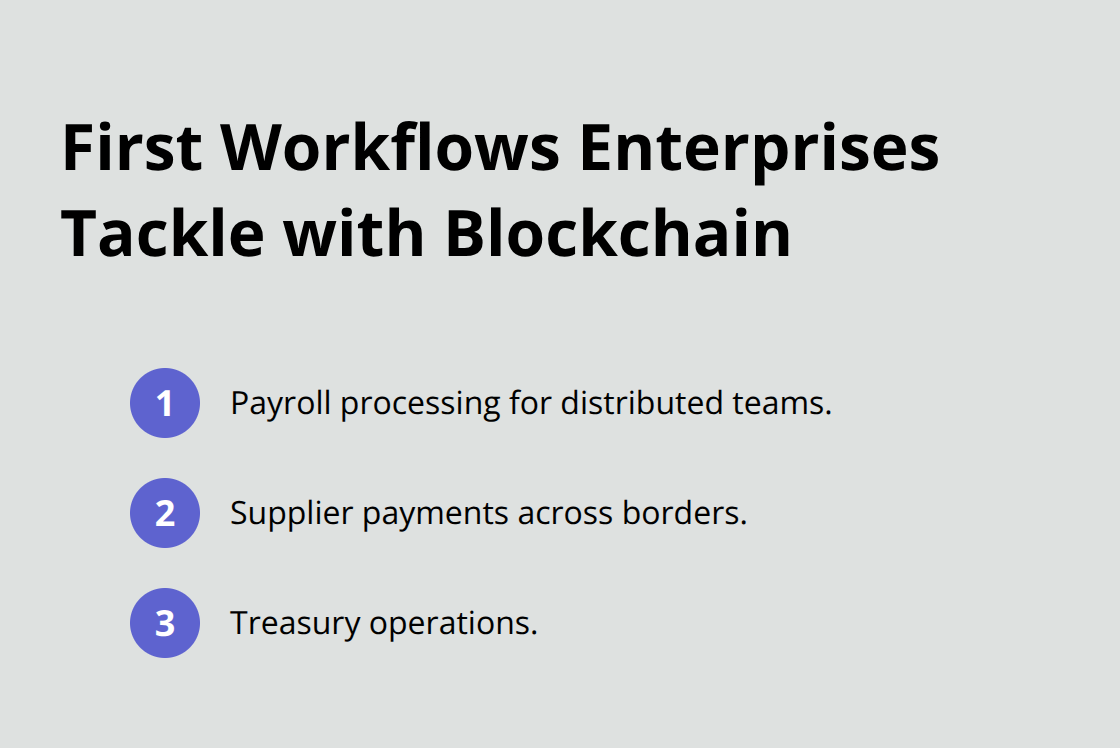
Companies adopting enterprise blockchain typically target three workflows first: payroll processing for distributed teams, supplier payments across borders, and treasury operations. The US Genius Act of 2025 established 1:1 reserve requirements and AML/CFT compliance standards for stablecoins, removing regulatory uncertainty that previously blocked corporate adoption.
Organizations implementing blockchain solutions report measurable gains in reconciliation time reduction, liquidity access, and fee compression-metrics that directly impact operating margins.
Measuring Value Through ROI
The shift from speculation to utility means enterprises evaluate blockchain based on specific ROI outcomes, not technological novelty. Companies measure success through concrete metrics: how much faster payments settle, how much they save on fees, and how much time their teams reclaim from manual reconciliation. These outcomes determine whether a blockchain initiative survives beyond the pilot phase or becomes standard operational practice.
The next critical step involves selecting the right platform and integration approach-decisions that separate successful deployments from those that create more friction than they resolve.
Connecting Blockchain to Systems That Actually Matter
Why Your Existing Infrastructure Stays Central
Your existing infrastructure won’t suddenly disappear when you implement blockchain. ERP systems, treasury platforms, accounting software, and CRM dashboards remain central to how your organization operates. The real integration challenge involves creating a seamless data bridge between blockchain transactions and the systems your finance, operations, and compliance teams rely on daily.
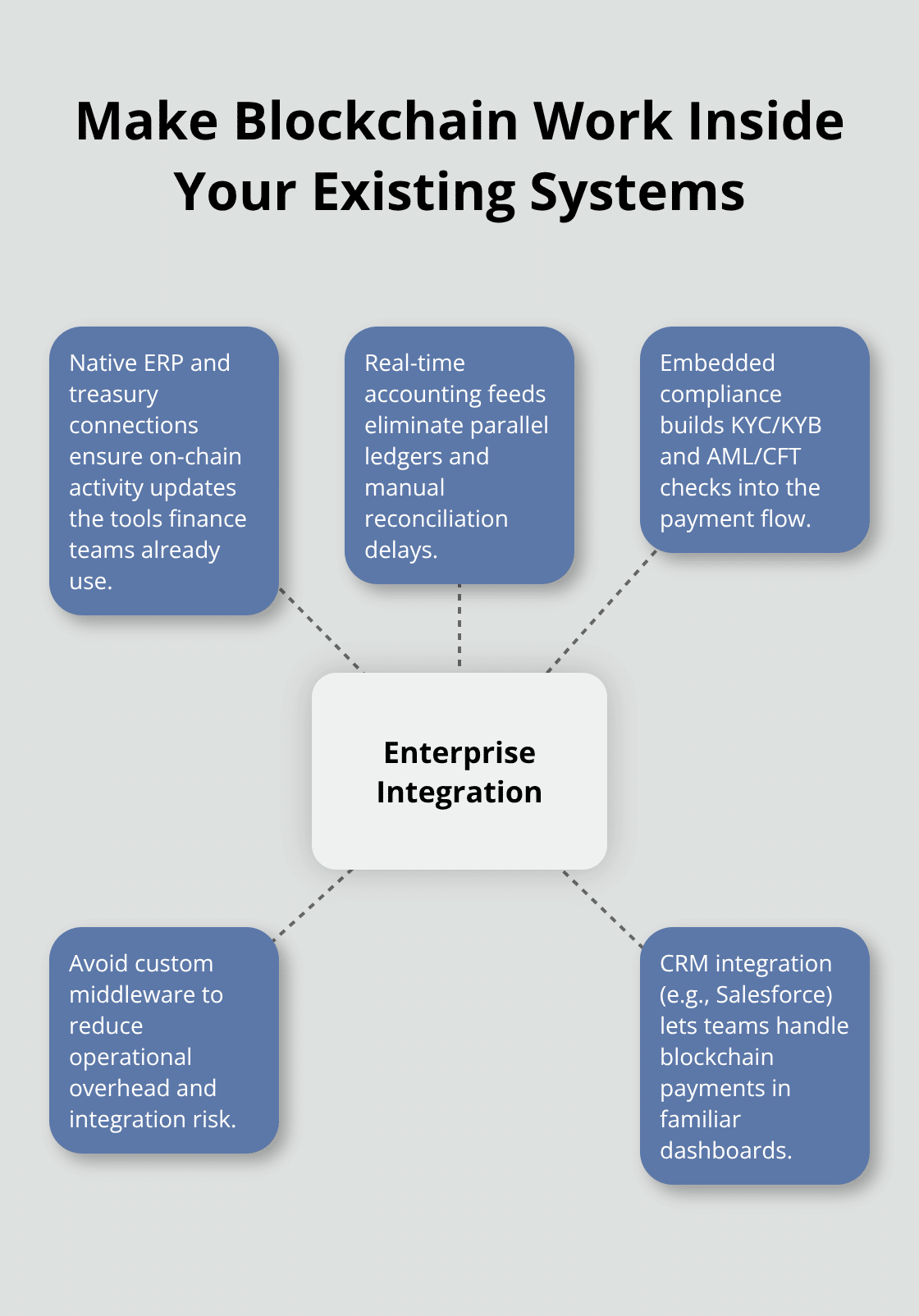
Most enterprises fail at this step because they treat blockchain as a separate technology rather than as a component that feeds directly into existing workflows.
Building the Data Bridge Without Custom Middleware
Traditional payment gateways like BitPay require separate systems management, creating friction and operational overhead. Web3 Enabler solves this by providing 100% native Salesforce support, meaning blockchain transactions connect directly to your CRM without custom middleware, API wrangling, or dedicated integration teams. When your blockchain transactions settle in your CRM environment alongside customer data, payment history, and contract terms, your teams stop treating crypto as an isolated experiment and start treating it as a standard payment rail.
The practical benefit emerges immediately: your accounts payable team sees stablecoin payments appear in Salesforce exactly like wire transfers, reducing reconciliation time and manual data entry. Companies operating across Africa and the Middle East particularly benefit from this approach, since cross-border supplier payments that traditionally took three to five days now settle in minutes while your accounting records update automatically.
Connecting Accounting Systems to Blockchain Rails
Your accounting and treasury systems must integrate with blockchain rails without requiring parallel record-keeping. When you implement blockchain for treasury operations, QuickBooks, NetSuite, or SAP must receive real-time transaction data so your balance sheets reflect on-chain activity immediately.
This integration prevents the common scenario where blockchain transactions exist in a separate ledger until someone manually reconciles them weeks later. For companies managing supplier payments across multiple countries, this connection eliminates the gap between when a stablecoin payment settles on-chain and when it appears in your books. Nigerian enterprises sending payments to regional suppliers can now process payroll and supplier invoices through a single stablecoin rail, with all transactions flowing into their accounting system without manual intervention.
Embedding Compliance Into Your Payment Flows
The compliance layer matters equally to the technical integration. Built-in KYC and KYB checks through integration partners ensure your blockchain transactions meet AML/CFT standards before they ever reach your systems, preventing regulatory friction downstream. This approach transforms compliance from a post-transaction review into an embedded control that operates within your payment workflow.
When you select a blockchain platform for enterprise use, the integration capabilities determine whether your deployment accelerates operations or creates additional work for your teams. The platform you choose must connect seamlessly to your existing systems while maintaining the compliance standards your organization requires.
Setting Business Objectives Before You Choose Technology
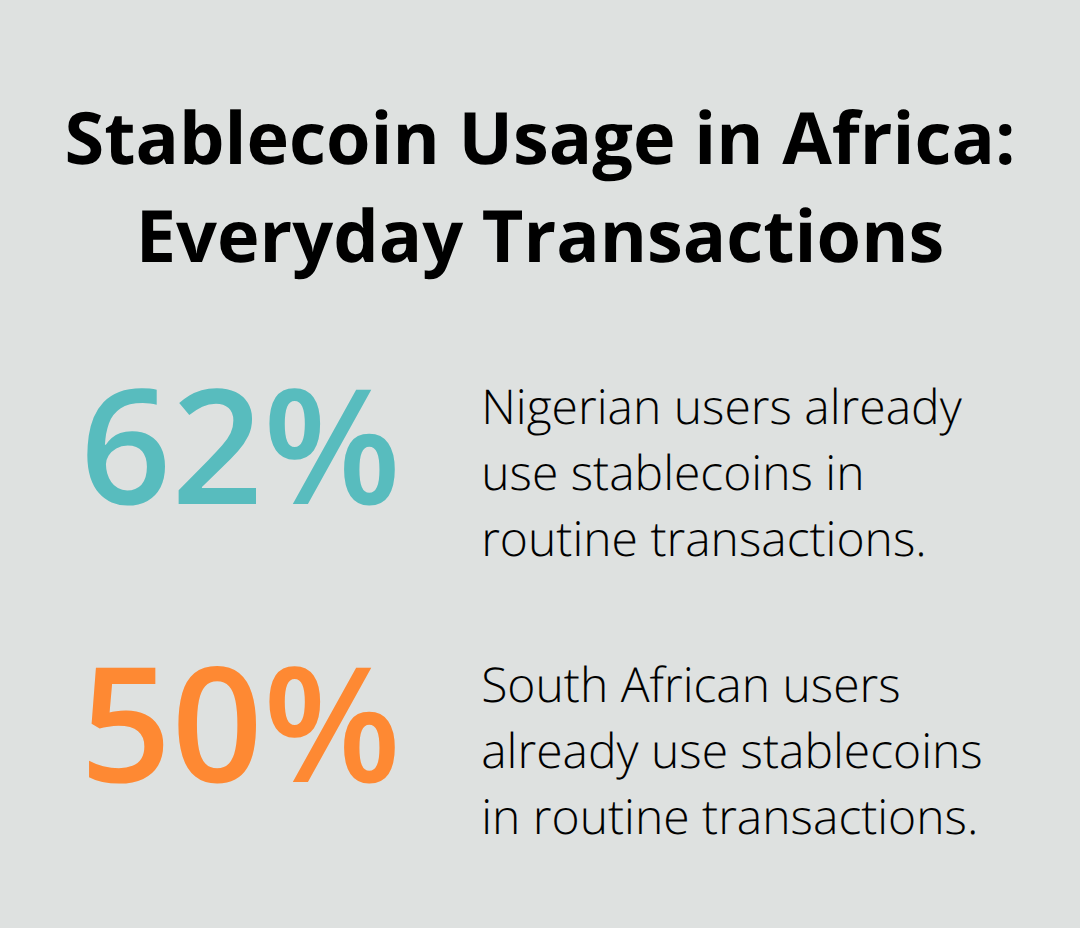
Start with the specific business problem you want blockchain to solve, not with blockchain itself. Organizations that succeed identify a concrete workflow causing operational friction: payroll delays for distributed teams, supplier payment bottlenecks across borders, or treasury reconciliation consuming too much manual effort. The YouGov-BVNK Stablecoin Utility Report shows that 62% of Nigerian users and 50% of South African users already use stablecoins in routine transactions, demonstrating that the market has moved past experimental phase into workflows where speed and cost matter operationally. Your objective must connect directly to measurable outcomes your finance or operations team tracks today.
If your supplier payments currently take three to five days to settle and cost $30 per $100 transferred internationally, your objective becomes cutting settlement time to under one hour and reducing fees by 80%. This specificity prevents blockchain from becoming a technology project that no one actually needs.
Define Success Metrics That Matter to Your Business
Define success metrics before you evaluate platforms. Traditional approaches measure blockchain success by transaction throughput or decentralization score, but enterprises measure success through reconciliation time reduction, fee compression, and liquidity improvement. When your treasury team currently spends two hours daily reconciling cross-border payments, your metric becomes reducing that to 15 minutes through automated settlement and accounting integration. When your payroll team manages contractor payments across five currencies with exchange rate losses, your metric becomes eliminating currency conversion friction. The US Genius Act of 2025 established regulatory clarity around stablecoin reserves and AML/CFT compliance, meaning your objectives should now include regulatory alignment as a non-negotiable requirement rather than a future concern. Document these metrics in writing before you speak with any technology vendor, because vendors will otherwise shape your objectives around their product capabilities rather than your actual business needs.
Evaluate Platforms on Integration Capability, Not Technology Features
The blockchain platform you select matters far less than the integration ecosystem surrounding it. Most enterprises evaluate platforms based on transaction speed or security features, but the real differentiator is whether the platform connects seamlessly to your existing systems without custom development. If your organization runs Salesforce for CRM, treasury management, or financial services, Web3 Enabler provides 100% native Salesforce support, meaning blockchain transactions flow directly into your existing dashboards and workflows without requiring a separate integration layer. Generic payment gateways force you to maintain parallel systems, creating operational overhead and reconciliation delays that eliminate the efficiency gains blockchain promises.
When you evaluate platforms, ask three specific questions: Does this platform integrate natively with my existing ERP or treasury software? Can my accounting system receive real-time transaction data without manual intervention? Are compliance controls embedded in the payment flow, or do I need to add them afterward? If a vendor cannot clearly answer these questions with specific technical documentation, the platform will create friction rather than eliminate it. Your finance team should see blockchain transactions in their accounting software within seconds of settlement, not days later after manual reconciliation.
Assign Blockchain Responsibilities to Your Existing Teams
Your team structure determines whether blockchain deployment succeeds or fails. Do not hire a dedicated blockchain team. Instead, assign blockchain responsibilities to your existing finance, operations, and compliance staff who understand your current workflows. These people know where friction exists and can immediately recognize whether blockchain actually solves their problems or creates new ones. A blockchain specialist hired from outside your organization will advocate for blockchain adoption regardless of fit, but your internal finance team has no incentive to implement technology that makes their jobs harder.
Train Your Teams on Operational Workflows, Not Blockchain Theory
Training should focus on operational workflows, not blockchain theory. Your accounts payable team does not need to understand consensus mechanisms or smart contract architecture. They need to know that stablecoin payments settle faster than wire transfers and that their accounting software receives transaction data automatically. Your compliance team needs to understand that KYC and KYB checks happen within the payment flow before transactions reach your systems. This practical training takes two to three days, not weeks of blockchain education. Allocate budget for ongoing support from your technology partner, because your team will encounter edge cases and integration challenges that require vendor expertise to resolve quickly.
Final Thoughts
Enterprise blockchain technology succeeds when it solves specific operational problems your teams face today. Organizations seeing real returns on blockchain investments started with concrete business objectives, selected platforms that integrate seamlessly with existing systems, and trained their teams on practical workflows rather than blockchain theory. Your success metrics should reflect what your finance and operations teams already measure: settlement speed, fee reduction, and reconciliation time.
When blockchain transactions flow directly into your existing ERP, treasury, and accounting systems without custom middleware, your teams stop treating crypto as an isolated experiment and start treating it as a standard payment rail. This seamless integration separates deployments that create operational value from those that create additional work. Web3 Enabler provides native Salesforce support, connecting blockchain transactions directly to your CRM so your accounts payable team sees stablecoin payments appear exactly like traditional wire transfers, your accounting software receives real-time transaction data automatically, and your compliance controls operate within the payment flow before transactions reach your systems.
Start with your biggest operational friction point and define success metrics in writing before evaluating vendors. Assign blockchain responsibilities to your existing teams who understand your workflows, then train them on practical operations rather than blockchain theory. This approach transforms enterprise blockchain from a technology project into a business capability that delivers measurable returns.