



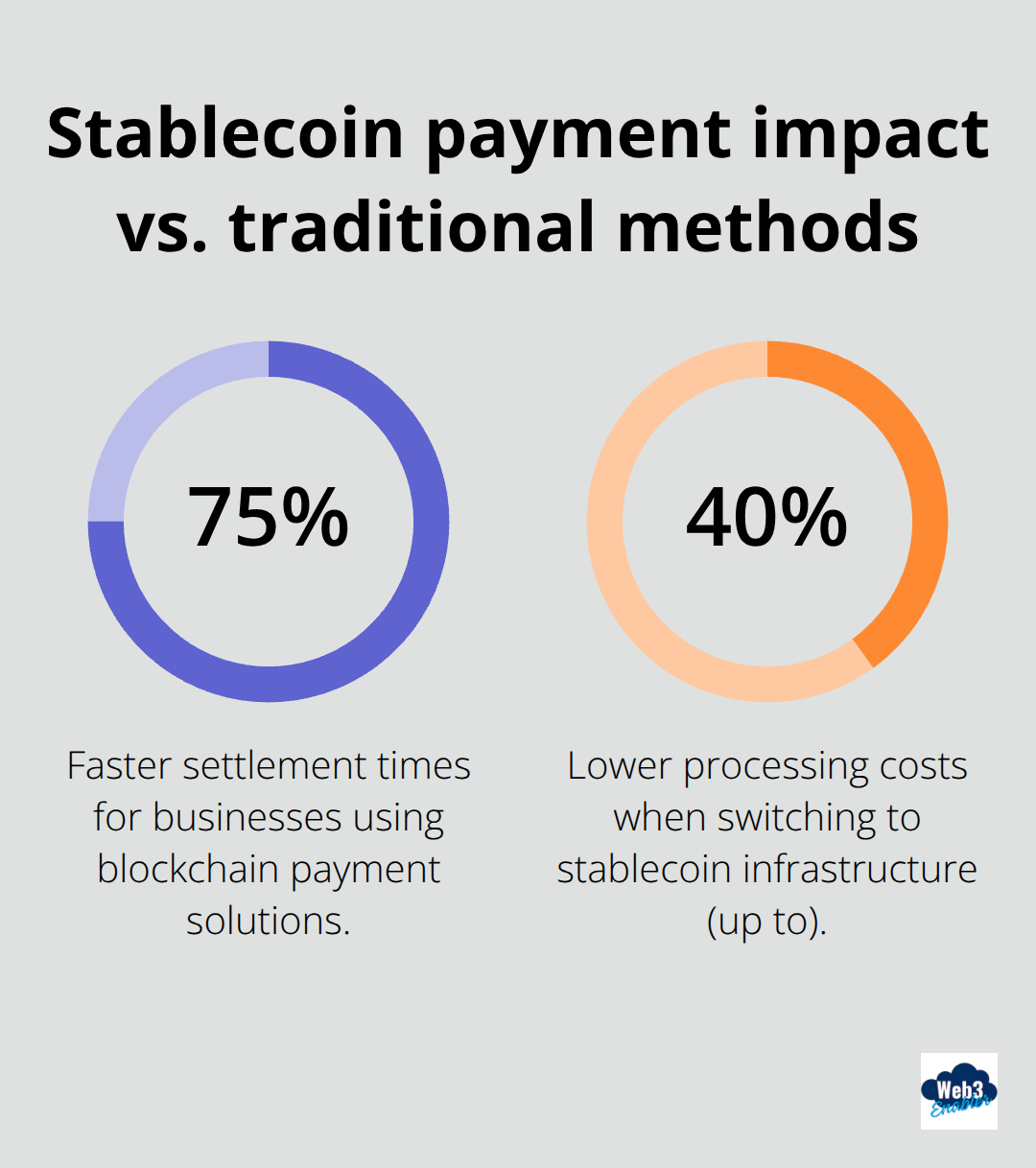
Commerce Cloud stablecoin payments are transforming how businesses handle digital transactions. Companies using blockchain payment solutions report 75% faster settlement times compared to traditional methods.
We at Web3 Enabler see businesses cutting payment processing costs by up to 40% when they switch to stablecoin infrastructure. The technology eliminates intermediary fees while providing instant global transfers.
What Infrastructure Do You Need for Stablecoin Payments?
Commerce Cloud stablecoin payment infrastructure requires three foundational components that work together seamlessly. Your environment needs direct blockchain connectivity, secure wallet management, and robust API integration to handle real-time transactions. Most businesses underestimate the technical requirements, which leads to failed implementations and security vulnerabilities. Blockchain Payments for Salesforce has a B2B Commerce Cloud plugin coming in late December or early January.
Core Technical Requirements
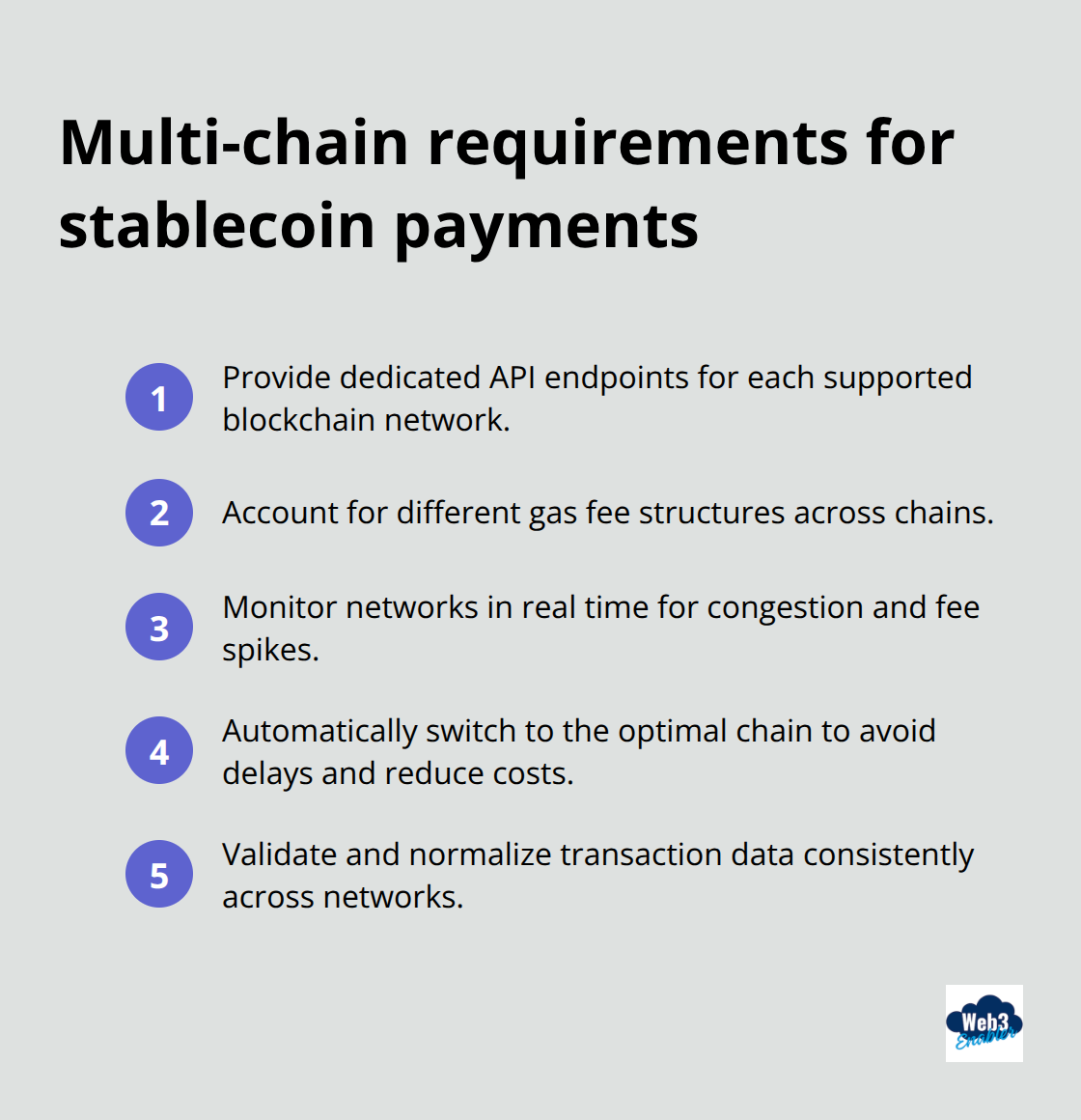
Your infrastructure must support multiple blockchain networks simultaneously. USDC operates across Ethereum, Polygon, and Solana, while USDT runs on Ethereum, Tron, and BSC networks. Each network requires specific API endpoints and different gas fee structures. Ethereum transactions cost approximately $2-15 in network fees, while Polygon transactions typically cost under $0.01.
Smart network selection based on cost and speed becomes essential for transaction optimization. Your system needs real-time network monitoring to automatically switch between blockchains when one experiences congestion or high fees. This automated approach prevents payment delays and reduces operational costs significantly.
Wallet Integration Architecture
Enterprise-grade wallet solutions demand multi-signature security and automated key management. Circle’s Web3 Wallet technology provides institutional-level security with automated on-ramping and off-ramping capabilities. Your Commerce Cloud integration requires webhook endpoints that process transaction confirmations within 30 seconds of blockchain settlement.
Failed webhook processing creates reconciliation nightmares, so implement retry mechanisms with exponential backoff. Transaction monitoring systems must track pending, confirmed, and failed states across all supported networks. Native Salesforce integrations eliminate the need for separate wallet management systems (reducing complexity and maintenance overhead).
API Configuration Standards
Payment gateway APIs must validate transactions through smart contract automation while maintaining sub-second response times. Your endpoint configuration needs separate environments for testnet and mainnet operations. Rate limits become critical when processing high-volume transactions, with most providers allowing 100-1000 requests per minute.
Implement circuit breakers that automatically pause payment processing when blockchain networks experience outages. Your API keys require rotation every 30-90 days for security compliance, and all endpoints must use TLS 1.3 encryption standards. These security measures protect both merchant and customer data throughout the payment process.
Network Monitoring and Failover Systems
Real-time blockchain monitoring prevents transaction failures and customer frustration. Your system should track network congestion, gas prices, and block confirmation times across all supported chains. Automated failover mechanisms switch transactions to alternative networks when primary chains experience delays or high costs.
Transaction status updates must reach customers within seconds of blockchain confirmation. This transparency builds trust and reduces support inquiries about payment status. Your monitoring dashboard should display network health, transaction volumes, and success rates for operational oversight.
With your infrastructure foundation established, the next step involves creating seamless checkout experiences that customers actually want to use.
How Do You Build Checkout Flows That Convert?
Your stablecoin checkout interface determines whether customers complete transactions or abandon their carts. Recent studies show that conversion rates were 49% lower in January 2025 and 38% lower more recently, highlighting the importance of optimized checkout flows. The key lies in making blockchain payments feel as familiar as traditional credit card transactions.
Display Clear Payment Information
Your interface should display payment amounts in both USD and stablecoin values, with real-time exchange rate updates every 30 seconds. Customers need immediate clarity on exactly what they pay without confusion about conversion rates or hidden fees.
Customer wallets like MetaMask, Coinbase Wallet, and WalletConnect require different connection protocols. Implement universal wallet detection that automatically identifies available options and presents them clearly to users.
Optimize Transaction Speed
Transaction processing must complete within 15 seconds to match customer expectations from traditional payments. Real-time blockchain transaction processing demands sub-second response times from your payment gateway.
Your system needs automatic gas fee estimation that updates every block to prevent failed transactions due to insufficient fees. Ethereum transactions require 12-15 block confirmations for finality, while Polygon needs only 2-3 confirmations (making it significantly faster for customer satisfaction).
Smart routing algorithms should automatically select the fastest, cheapest blockchain network based on current conditions. This optimization happens behind the scenes without customer intervention.
Handle Transaction Status Updates
Transaction status updates must push to customers immediately through WebSocket connections, showing pending, confirmed, and completed states. Failed transactions require automatic retry mechanisms with different gas prices, and your system should provide clear error messages when payments cannot be processed.
Receipt generation happens instantly upon blockchain confirmation, with transaction hashes serving as permanent proof of payment. Integration with existing order management systems allows automatic inventory updates and shipping notifications once stablecoin payments settle on-chain.
Your checkout optimization directly impacts the operational efficiency of settlement and reconciliation processes that follow each successful transaction. For businesses looking to expand beyond one-time payments, crypto subscription payments offer additional opportunities to streamline operations and boost revenue.
How Do You Automate Stablecoin Operations
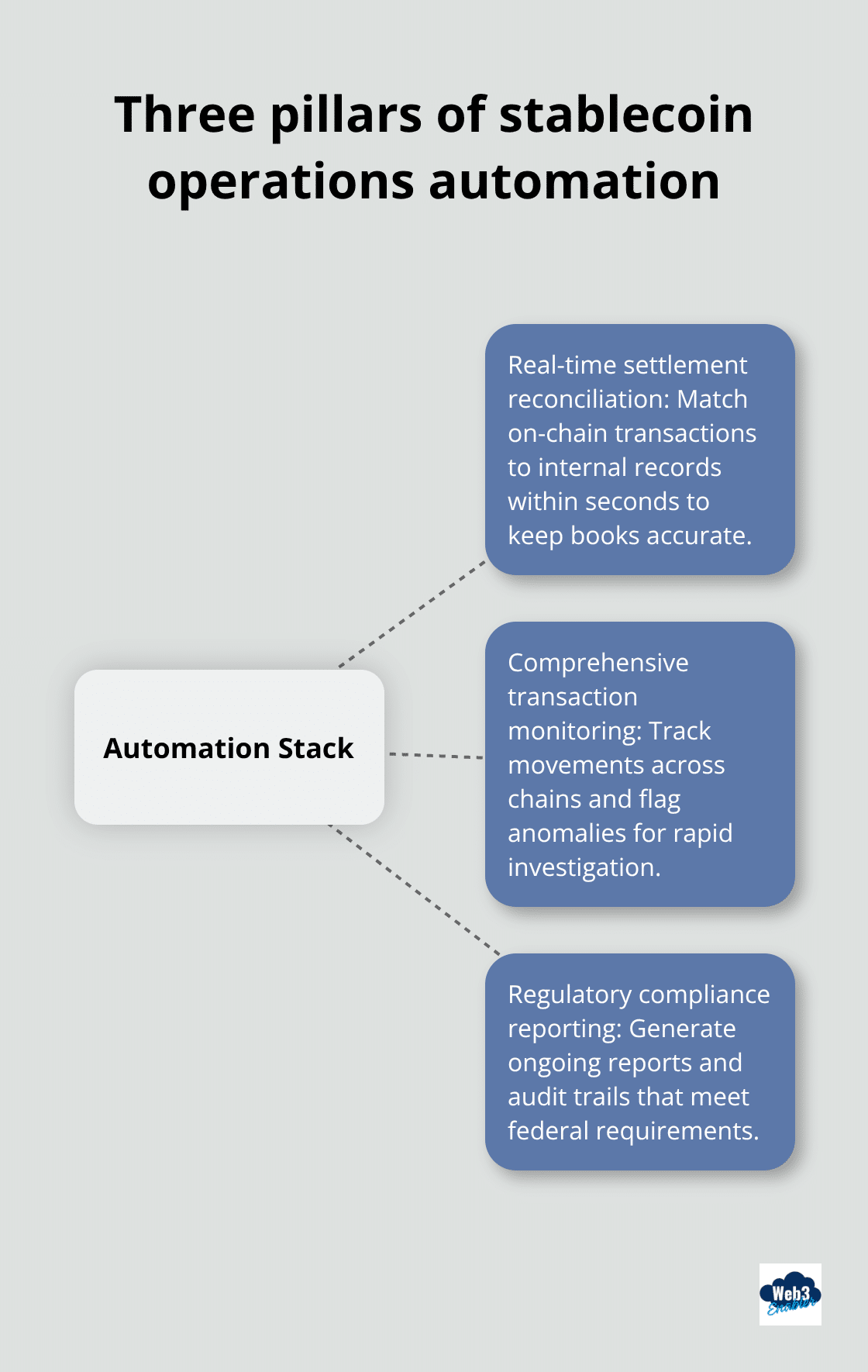
Stablecoin operations require automated systems that handle settlement, monitoring, and compliance without manual intervention. Businesses that process over 1,000 monthly transactions save approximately 15 hours per week through automation, according to enterprise blockchain adoption studies. Your operational framework needs three automated components: real-time settlement reconciliation, comprehensive transaction monitoring, and regulatory compliance reporting that updates continuously.
Automated Settlement and Reconciliation
Your settlement system must reconcile blockchain transactions with internal accounting records within 60 seconds of confirmation. Traditional ACH settlements take 1-3 business days and cost $0.29 per transaction, while automated stablecoin settlements complete instantly and cost under $0.01. Automated reconciliation eliminates the 2-4% error rate common in manual processes.
Your system should automatically match transaction hashes to invoice numbers, update customer balances, and generate accounting entries in your ERP system. Failed reconciliations trigger immediate alerts to prevent discrepancies from accumulating over time.
Integration with existing accounting software like QuickBooks or SAP requires webhook configurations that process settlement data automatically (reducing month-end closing time by 60-70%). This automation removes the need for manual data entry and reduces human error significantly.
Transaction Monitoring and Fraud Detection
Real-time transaction monitoring systems track all stablecoin movements across multiple blockchain networks simultaneously. Your monitoring infrastructure must flag suspicious transactions that exceed $10,000 within 30 seconds for AML compliance under the Bank Secrecy Act.
Automated pattern recognition identifies unusual transaction behaviors, multiple small payments from single wallets, and rapid-fire transactions that indicate potential fraud. Machine learning algorithms analyze transaction velocity, amounts, and wallet histories to score risk levels automatically.
Your system should maintain detailed logs of all flagged transactions, create case files for compliance review, and generate alerts for manual investigation when necessary. This proactive approach prevents fraudulent activity before it impacts your business operations.
Regulatory Compliance Automation
Automated KYC verification processes validate customer identities before processing first transactions, enabling faster onboarding and improved compliance. The GENIUS Act requires stablecoin issuers to maintain full reserves and provide monthly attestations (making compliance automation essential for operational efficiency).
Your system should generate compliance reports automatically, track transaction patterns for regulatory reporting, and maintain audit trails that satisfy federal requirements. Integration with compliance platforms reduces manual review time by 80% while improving accuracy and reducing regulatory risk significantly.
Automated reporting systems compile transaction data, customer verification status, and suspicious activity reports for regulatory submission. These systems update continuously and provide real-time compliance dashboards for oversight teams.
Final Thoughts
Commerce Cloud stablecoin payments deliver measurable business value through 75% faster settlements and 40% lower processing costs compared to traditional payment methods. Your implementation success depends on robust infrastructure plans, intuitive checkout design, and comprehensive automation systems that handle operations without manual intervention. The most successful implementations prioritize security through multi-signature wallets, maintain real-time transaction monitoring, and automate compliance reports from day one.
Businesses that skip these foundational elements face operational challenges and regulatory risks that outweigh potential cost savings. Start with pilot programs that process 100-500 transactions monthly to validate your technical architecture and operational procedures. This approach allows you to identify integration gaps and optimize performance before you scale to enterprise volumes.
Web3 Enabler provides native blockchain integration on Salesforce AppExchange, which enables seamless stablecoin payment integration within Commerce Cloud without leaving your existing CRM environment. Our certified Salesforce ISV partnership provides enterprise-grade security and compliance while delivering the operational efficiency your finance teams need for global payment processing (without the complexity of managing separate systems).