


 B2B companies are experiencing a fundamental shift as blockchain technology reshapes traditional business operations. Digital transformation through distributed ledger systems is moving beyond cryptocurrency into core enterprise functions.
We at Web3 Enabler see organizations achieving measurable improvements in supply chain transparency, payment processing, and contract automation. The technology addresses critical pain points that have plagued B2B operations for decades.
How Blockchain Transforms Core B2B Operations
Blockchain technology restructures how B2B companies manage their most critical operations, delivering measurable improvements across three core areas. Supply chain transparency has become a competitive advantage rather than a compliance checkbox, with companies like Walmart reducing contamination response times from weeks to seconds through blockchain traceability systems. The technology creates an immutable record of every transaction and movement, enabling businesses to track products from origin to destination with unprecedented accuracy. Smart contracts automate complex business agreements, cutting settlement times for perishable goods transactions from over a week to under four hours according to industry reports. This automation eliminates manual verification processes and reduces disputes through automatic enforcement of business rules within the blockchain framework.
Real-Time Supply Chain Visibility
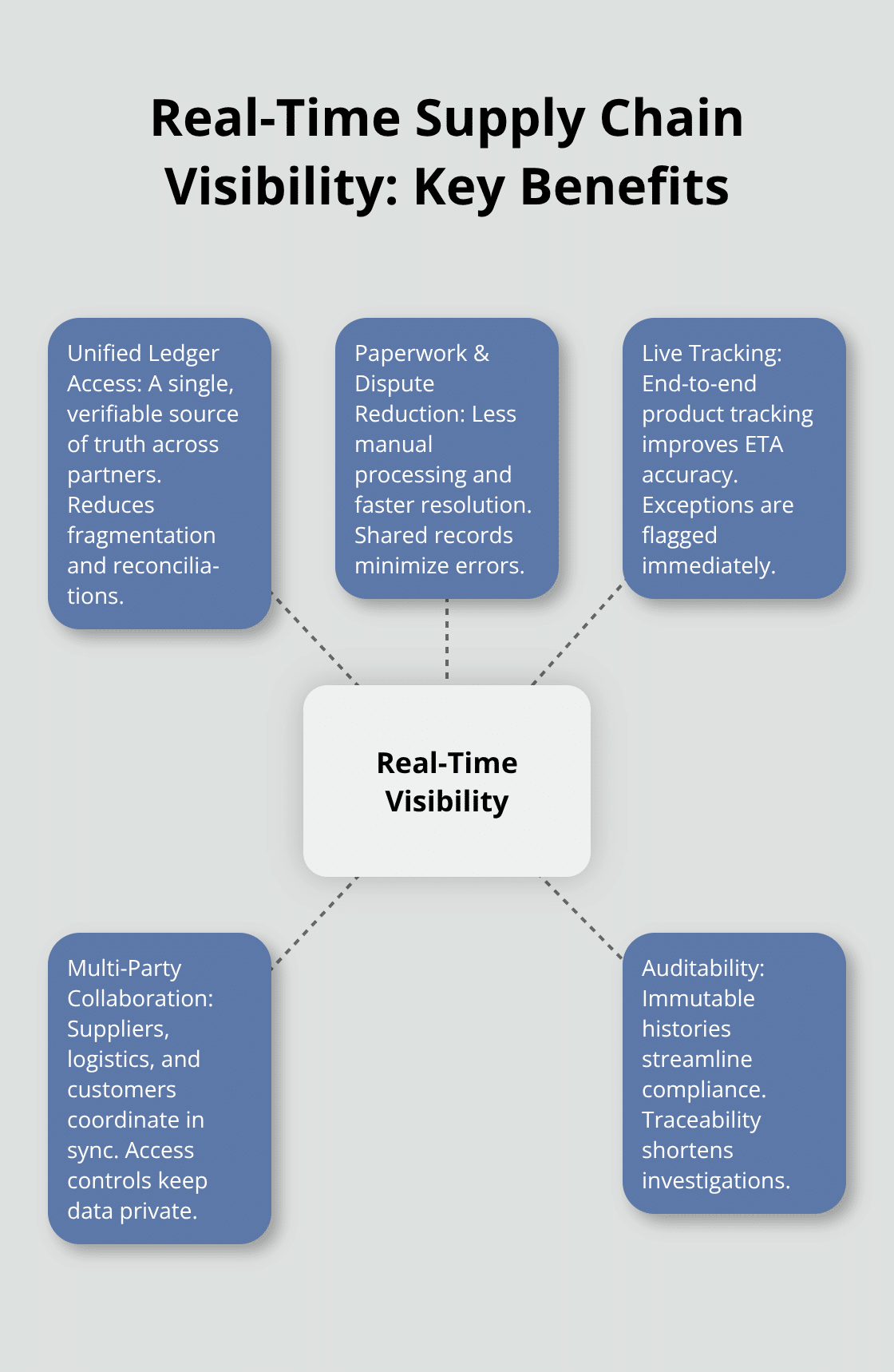
Modern supply chains generate massive amounts of fragmented data across multiple systems, creating inefficiencies that cost businesses millions annually. Blockchain unifies this scattered information into a single, verifiable ledger that all authorized parties can access simultaneously. Companies that implement blockchain for supply chain management report significant reductions in paperwork processing and dispute resolution costs. The technology provides real-time tracking capabilities that enhance collaboration between suppliers, logistics providers, and customers. Organizations recognize these operational benefits as blockchain adoption continues to grow across industries.
Enhanced Security Through Decentralization
Traditional centralized data systems create single points of failure that cybercriminals exploit regularly. Blockchain’s distributed architecture makes it nearly impossible to introduce fraudulent information, as transactions require collective verification through consensus mechanisms. The cybersecurity market was valued at USD 193.73 billion in 2024 and is projected to grow to USD 562.77 billion, highlighting the increasing importance of security solutions. The cryptographic security inherent in blockchain systems provides tamper-proof audit trails that regulatory bodies increasingly demand for compliance verification.
Smart Contract Automation
Manual contract execution creates bottlenecks that slow business operations and increase error rates. Smart contracts execute automatically when predetermined conditions are met, eliminating human intervention and reducing processing delays. Organizations that leverage smart contract technology report cost reductions of up to 80% in transaction processing through the removal of intermediaries from complex business agreements. These programmable contracts handle everything from automated payments to compliance checks, creating more efficient operations with fewer errors and disputes.
The operational benefits of blockchain extend far beyond internal process improvements. B2B companies now apply this technology to transform their external relationships and market interactions in ways that create entirely new business opportunities.
What Business Applications Drive Blockchain Adoption
Financial settlements represent the most immediate blockchain application that transforms B2B operations today. Cross-border payments through traditional banks take 3-5 business days and cost businesses an average of $25-50 per transaction in fees and currency conversion charges. Blockchain-based payment systems reduce these settlement times to seconds while they cut costs by up to 80% through the elimination of correspondent banks. JP Morgan predicts stablecoins will create $1.4 trillion in additional dollar demand by 2027, as enterprises adopt digital currencies for instant international transactions. Companies that process high volumes of international payments report monthly savings of $50,000-200,000 when they switch from SWIFT networks to blockchain-based settlement systems.
Enterprise Identity Management
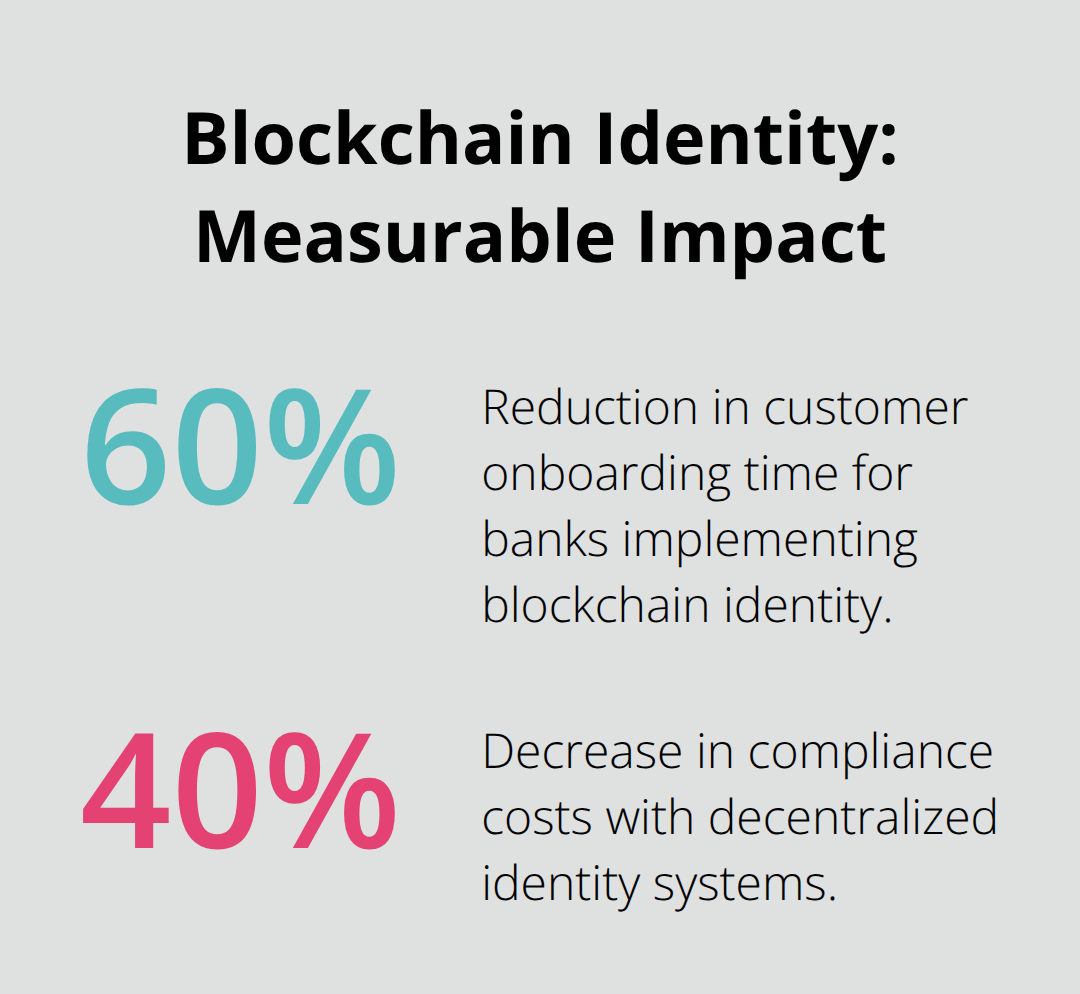
Identity verification costs financial institutions billions annually, with KYC processes that average $500 per customer onboard. Blockchain creates decentralized identity systems where customers control their verification data, which reduces repetitive compliance checks across multiple service providers. Banks that implement blockchain identity solutions report 60% reductions in customer onboard times and 40% decreases in compliance costs.
The technology enables one-time identity verification that multiple organizations can access with customer consent, which streamlines B2B relationship establishment while it maintains regulatory compliance standards.
Digital Asset Creation
Asset tokenization transforms illiquid business assets into tradeable digital securities, with the real estate tokenization market projected to reach $16 trillion by 2030 (according to industry analysts). Manufacturing companies tokenize equipment and inventory to improve cash flow management, while service businesses create fractional ownership of intellectual property and contracts. Tokenized assets enable businesses to access capital markets previously reserved for large corporations, with minimum investment thresholds that drop from millions to thousands of dollars. Companies that tokenize high-value assets report 25-40% improvements in asset utilization rates and faster access to capital through fractional sales to institutional investors.
Supply Chain Authentication
Counterfeit goods cost the global economy over $500 billion annually, with luxury brands and pharmaceutical companies hit hardest. Blockchain creates immutable records of product authenticity from manufacture to final sale, which makes counterfeits nearly impossible to introduce into legitimate supply chains. Companies like VeChain demonstrate how blockchain verification systems reduce fraud rates by over 90% in high-value product categories. The technology enables consumers and business buyers to verify product authenticity through simple smartphone scans, which builds trust and protects brand reputation.
These practical applications demonstrate blockchain’s immediate value, but successful implementation requires careful planning and strategic integration with existing business systems.
How Should Your Business Start With Blockchain
Most B2B organizations waste six months and $100,000-500,000 on failed blockchain pilots because they skip fundamental readiness assessments. Companies that succeed start with a focused evaluation of their current technology stack and identify specific pain points that blockchain can address immediately. The assessment phase requires teams to map existing data flows, document manual processes that cost over $50 per hour in labor, and identify compliance requirements that blockchain can streamline. Organizations must evaluate their network infrastructure capacity, as blockchain applications typically require 40-60% more bandwidth than traditional systems. Blockchain technology is transforming industries like finance, healthcare, manufacturing, energy, and government with real-world applications that companies with modern API-enabled systems can leverage more effectively than those running legacy infrastructure without proper connectivity protocols.
Technical Infrastructure Requirements
Enterprise blockchain deployment demands specific technical prerequisites that many organizations overlook during the planning phase. Your existing systems need REST API capabilities, real-time data synchronization tools, and database architectures that support immutable record storage. Companies that run SAP, Oracle, or Salesforce platforms typically require 3-6 months for proper integration, while organizations with custom-built systems face 6-12 month implementation timelines. Network security protocols must accommodate blockchain’s distributed architecture, which means firewall configurations and VPN settings require updates to handle peer-to-peer communications. The most successful implementations start with pilot programs that process 1,000-5,000 transactions monthly before teams scale to full production volumes.
Staff Education and Change Management
Technical teams need 40-80 hours of blockchain-specific education to manage enterprise implementations effectively, yet 60% of companies underestimate this requirement (according to Deloitte research). Development teams must learn smart contract programming languages like Solidity, while operations staff need education on distributed system monitoring and troubleshooting. Finance departments require education on cryptocurrency accounting standards and regulatory compliance frameworks that differ significantly from traditional financial reporting. The most effective education programs combine technical workshops with hands-on pilot project experience, which allows teams to build expertise while they deliver real business value.
Implementation Timeline and Resource Allocation
Organizations that succeed allocate dedicated project teams with clear accountability structures and realistic timelines. Technical implementation typically spans 4-8 months for mid-market companies, while enterprise deployments can extend 12-18 months depending on system complexity. Companies must budget for ongoing maintenance costs that average 15-20% of initial implementation expenses annually.
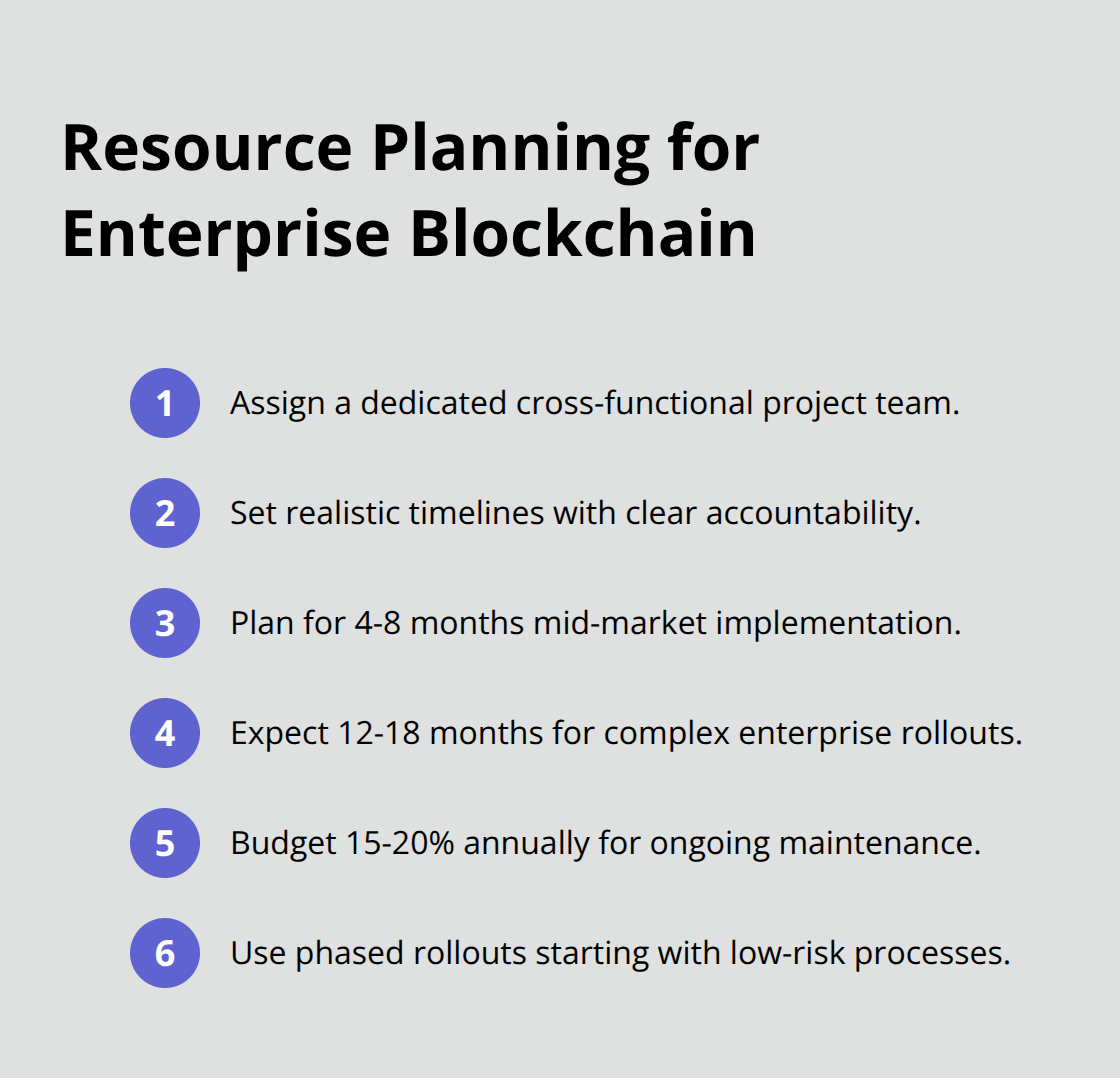
The most effective approach involves phased rollouts that start with low-risk processes before teams expand to mission-critical operations. Implementing blockchain in your business requires careful planning and dedicated resources to ensure successful adoption.
Final Thoughts
Blockchain technology represents the most significant digital transformation opportunity for B2B companies since the internet revolutionized business communications. Organizations that implement blockchain solutions report cost reductions of 30-80% in transaction processing, settlement times that drop from days to seconds, and operational efficiencies that create competitive advantages in their markets. Success requires strategic planning rather than rushed implementation.
Companies must assess their technical infrastructure, allocate dedicated resources for 4-18 month deployment timelines, and invest in comprehensive staff education programs. The organizations that thrive focus on specific business problems rather than broad technology adoption. The blockchain market will grow from $26.91 billion in 2024 to $1,879.30 billion by 2034 (with enterprise adoption accelerating as regulatory frameworks mature).
B2B companies that delay blockchain integration risk market position losses to competitors who leverage these operational advantages. Web3 Enabler provides the bridge between blockchain innovation and enterprise systems through native Salesforce integration. Our platform enables businesses to manage digital assets, process international payments, and track investment returns within existing corporate infrastructure.