



Your customers want to pay with crypto. Your finance team wants to keep things simple. We at Web3 Enabler know that crypto integration with Salesforce payments doesn’t have to be complicated-it’s actually the fastest way to accept stablecoins without overhauling your entire billing system.
The good news? It works seamlessly with what you already have.
Why Your Customers Are Already Demanding Crypto Payments
The Market Reality You Can’t Ignore
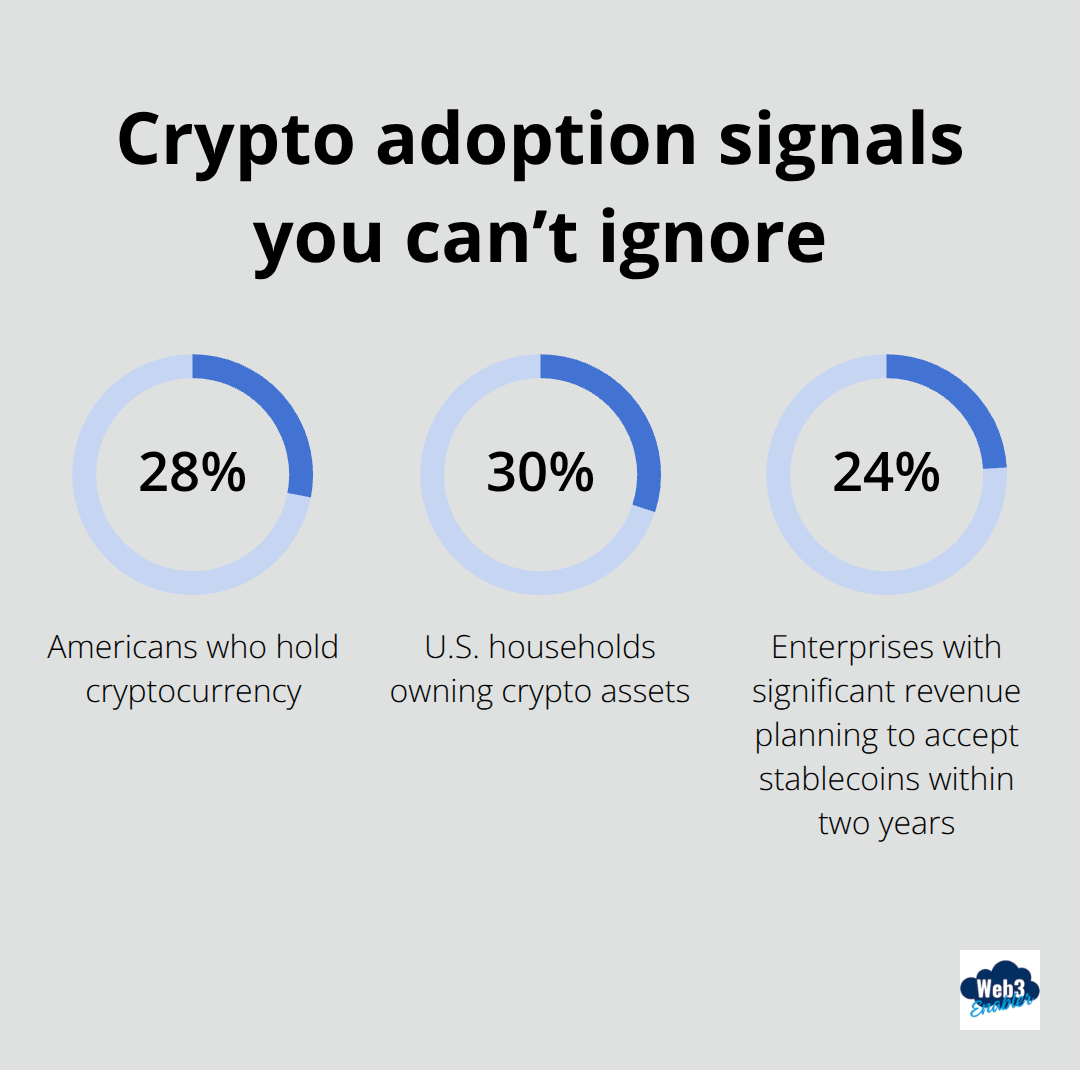
About 28% of Americans now hold cryptocurrency, and roughly 30% of households own crypto assets. That’s not a fringe group anymore-that’s a meaningful chunk of your potential customer base actively looking for checkout options that match their financial reality. Among larger enterprises, the shift accelerates even faster: about 15% of CFOs plan to accept stablecoins within two years, climbing to 24% among enterprises with significant revenue, according to Stripe research.
Your competitors are already watching this trend. If you’re not offering crypto as a payment option, you’re essentially telling a growing segment of customers that their preferred method doesn’t matter to you.
Speed and Cost Win Every Time
The real advantage isn’t about chasing hype-it’s about speed and cost. Stablecoin payments settle in minutes on blockchain rails instead of days through traditional banking channels, which means your cash flow improves dramatically on international transfers. Cross-border payments that normally take three to five business days through wire transfers happen in under an hour with blockchain settlement. For businesses operating globally, this directly impacts working capital. Stablecoins also eliminate the volatility problem that makes crypto scary for finance teams.
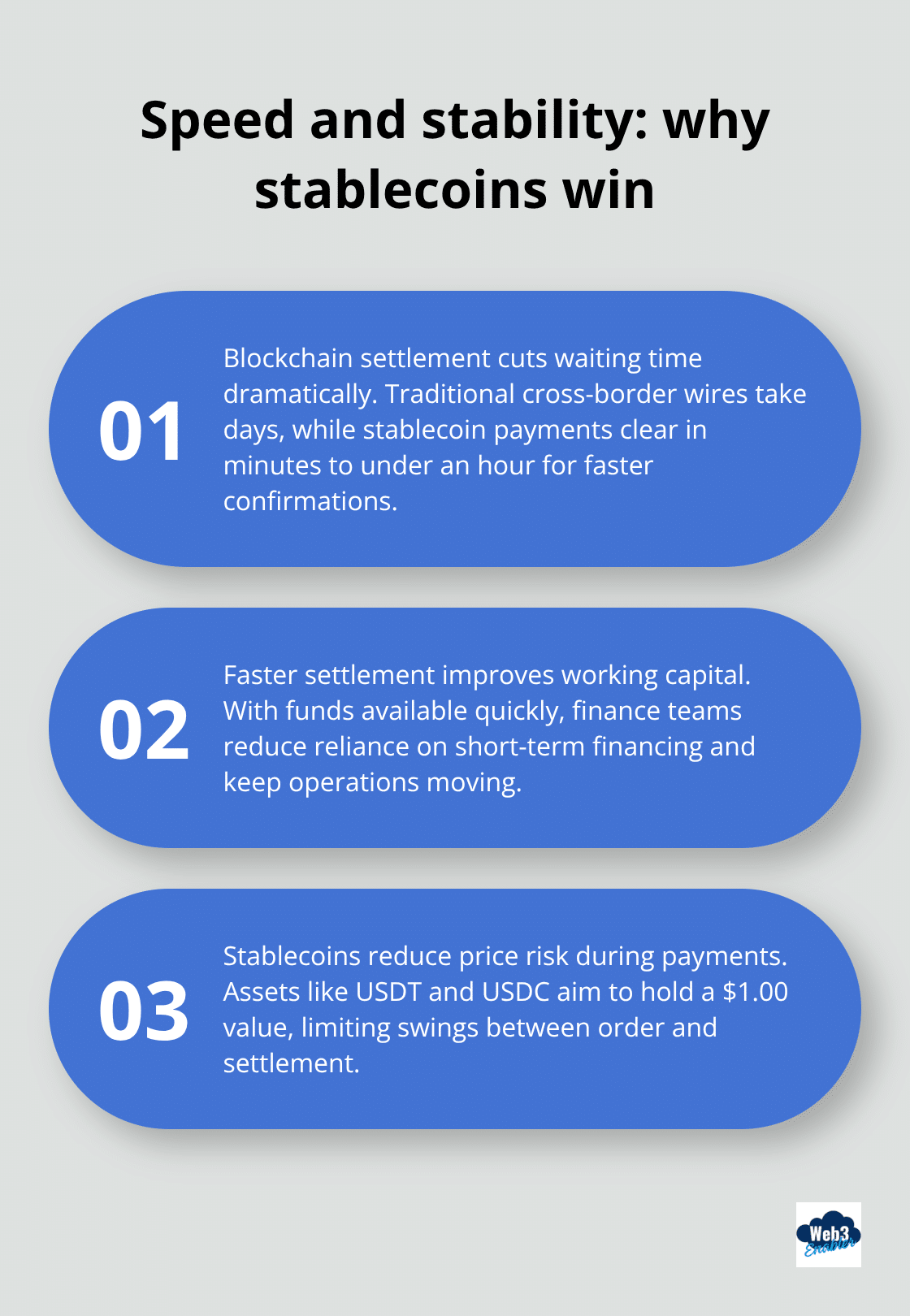
USDT, USDC, and XRP maintain stable value at or near $1.00, so you avoid price swings between order and settlement.
Regulation Finally Caught Up
The regulatory landscape now supports enterprise adoption. The Genius Act, passed in 2025, established the first federal US framework for stablecoins with 1:1 reserve requirements and AML/KYC compliance, giving enterprises the legal certainty they’ve been waiting for. Meanwhile, the EU’s MiCA regulations have been in place since 2023, creating clear guardrails for cross-border crypto adoption in Europe. These frameworks transform stablecoins from experimental to legitimate business infrastructure.
Why Native Integration Matters
The fastest path forward accepts stablecoins directly within your existing billing infrastructure, not external gateways that create reconciliation nightmares. Web3 Enabler provides 100% Salesforce Native blockchain solutions available on the Salesforce AppExchange, built specifically for businesses that need to connect blockchain technology with existing corporate infrastructure without separate systems or technical gymnastics. This approach means your finance team works within the tools they already know, your data stays unified, and your compliance team maintains visibility across every transaction. The alternative-bolting on external payment processors-creates exactly the kind of operational friction that slows adoption and frustrates your team.
Now that you understand why crypto payments matter, let’s look at how they actually work inside Salesforce.
Inside Salesforce: How Crypto Payments Actually Process
Real-Time Payment Processing Without the Friction
A customer selects stablecoins at checkout in your Salesforce billing system, and the transaction flows directly through your existing infrastructure without external detours. Your finance team watches the payment appear in real-time within the same dashboard where they track every other transaction-no separate logins, no manual reconciliation spreadsheets, no guessing whether a payment actually landed. The payment data syncs automatically with your order records, invoice history, and customer profiles, so your team maintains a single source of truth across sales, billing, and compliance.
External payment gateways typically force you to export data, match it manually, and hope nothing falls through the cracks. With blockchain payments processed directly inside Salesforce, each transaction creates an immutable on-chain record that matches your order ID, timestamp, and fiat equivalent automatically. Your accounting team closes the month without the delays that plague traditional wire transfers or ACH payments, which settle in batches rather than continuously.
Compliance Runs Parallel, Not After the Fact
Compliance and regulatory monitoring happen in parallel with transaction processing, not as an afterthought. When a customer initiates a stablecoin payment, the system runs real-time AML checks through integrated compliance partners, flagging any transactions that don’t meet your risk parameters before settlement occurs. You control the rules: set thresholds for transaction amounts, geographic restrictions, customer risk profiles, and settlement currency preferences all within Salesforce itself.
For cross-border payments, the system handles currency conversion at the moment of payment initiation rather than at settlement, protecting your revenue against the price volatility that makes crypto payments risky for businesses. Stablecoins like USDT and USDC maintain their $1.00 peg, so you avoid the swings that would wreck your margins. The entire transaction trail remains auditable and compliant with both the Genius Act framework in the US and MiCA regulations in Europe, which means your legal team sleeps better and your auditors spend less time questioning your payment processes.
What Happens Next: Real Results in the Wild
Now that you understand how the mechanics work inside Salesforce, the question shifts to what actually happens when businesses put this into practice.
Where Crypto Payments Actually Save Money
The Cost Advantage That Hits Your Bottom Line
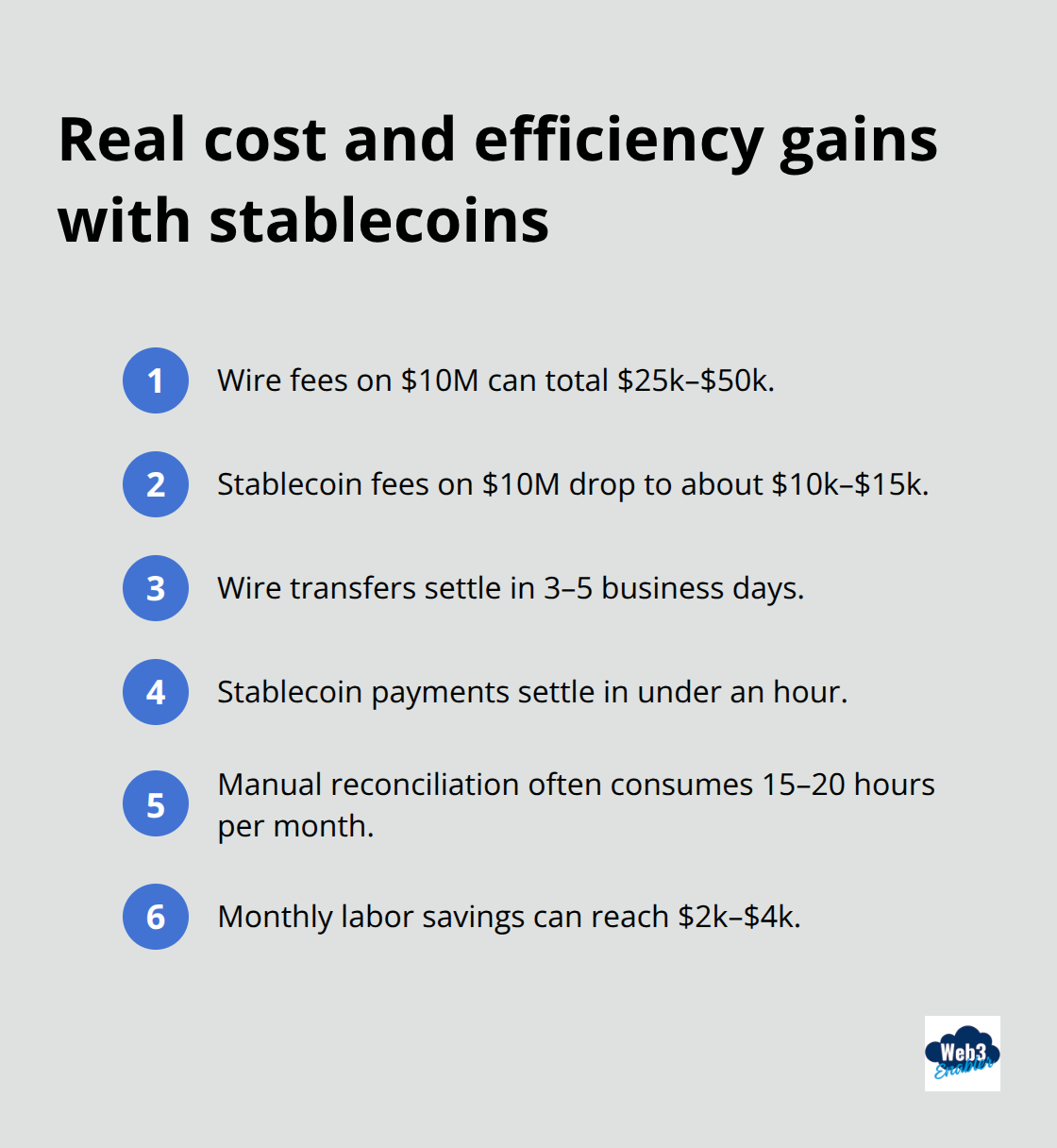
The theory sounds good. The reality is messier, which is exactly why you need concrete numbers before committing budget. E-commerce companies operating globally have discovered that stablecoin settlements cut their cross-border payment costs through lower fees, improved security, and global access compared to traditional wire transfers. A company processing $10 million in annual international transactions through wire transfers might pay $25,000 to $50,000 in fees alone. Switch those payments to stablecoins, and you’re looking at $10,000 to $15,000 instead. That’s real money that stays in your operating budget rather than disappearing into banking infrastructure designed for a slower world.
Settlement speed matters just as much as cost. Wire transfers settle in three to five business days, which means your working capital sits frozen while payment confirmation bounces between correspondent banks. Stablecoin payments settle in under an hour, which accelerates your cash conversion cycle and reduces the need to finance operations during that waiting period. For businesses with tight working capital, this difference between three-day and one-hour settlement directly impacts quarterly cash flow and your ability to pay suppliers on time.
Portfolio Visibility That Changes Advisor Conversations
Financial advisors working within Salesforce Financial Services Cloud now display client cryptocurrency holdings alongside traditional investments, which gives them a complete portfolio view without switching systems. An advisor managing a client with $500,000 in traditional assets and $150,000 in crypto can now see the total $650,000 picture within a single dashboard rather than tracking crypto balances separately in external wallets or spreadsheets. This consolidated view improves allocation decisions and client communication because advisors rebalance across both asset classes without manual data reconciliation.
Compliance That Eliminates Manual Work
The compliance advantage extends beyond convenience. Every transaction leaves an immutable on-chain record that matches your order data automatically, which means your accounting team avoids the manual reconciliation that typically consumes 15 to 20 hours per month for crypto payments processed through external gateways. That’s roughly $2,000 to $4,000 in monthly labor costs eliminated, depending on your team’s hourly rates. External auditors spend significantly less time questioning transaction authenticity when they can trace payments directly on-chain and match them to your Salesforce records without hunting through email confirmations or bank statements.
This efficiency compounds across your entire payment operation, particularly when you process hundreds of transactions monthly across multiple currencies and geographies.
Final Thoughts
Crypto payments happen right now, and businesses that ignore them leave money on the table while competitors capture faster settlements, lower costs, and happier customers. The shift toward stablecoins and blockchain-based payments accelerates because the math works: reduced fees, instant settlement, and compliance frameworks that actually exist. Your finance team gains real-time visibility, your customers access payment options that match their reality, and your cash flow improves dramatically.
Crypto integration with Salesforce payments requires no rip-and-replace of your existing infrastructure or blockchain engineering teams. Native Salesforce solutions handle the complexity while your team works within familiar tools. Your data stays unified, your compliance remains auditable, and your operations stay simple. The future of billing offers both traditional payments and crypto seamlessly within the same system, letting your customers pick what works for them while your finance team tracks everything in one place.
Web3 Enabler specializes in connecting blockchain technology with your existing Salesforce infrastructure to accept stablecoin payments, send global payments faster, and give your advisors visibility into client crypto holdings without leaving Salesforce. Start with a pilot, measure the impact on your cash flow and reconciliation, and scale from there. Visit Web3 Enabler to explore how native crypto integration transforms your billing operations.